As microelectronics equipment becomes increasingly compact, its internal components are getting smaller. Even a slight deviation in a mounting hole can affect the assembly of an entire mechanism. Aluminum alloys are widely used in semiconductor equipment housings, mounting brackets, precision platforms, and structural components because they are lightweight, offer good thermal conductivity, and are easy to machine. However, achieving the required precision is not as simple as cutting the material. Thin-wall deformation, burrs, hole position deviations, and surface scratches can all create machining challenges. To produce components that are both lightweight and stable, CNC machining processes must be carefully planned to control critical dimensions and surface quality.
Why Is Aluminum CNC Machining Commonly Used for Microelectronics Equipment?
Semiconductor and microelectronics equipment requires components with controlled weight, dimensional accuracy, and reliable assembly performance. Aluminum alloys are relatively easy to machine and can undergo various surface treatments to meet equipment requirements, making them a popular choice for precision structural components. However, different parts have different structures and operating environments, so material selection should not be based on machining cost alone.

Aluminum Alloys Are Ideal for Lightweight Equipment Components
Support bases, mounting plates, and protective housings need sufficient rigidity without adding excessive weight to the equipment. Aluminum alloys offer a good balance between weight and strength, making them suitable for components that require frequent installation, removal, or movement. CNC machining can also produce complex slots, threaded holes, and irregular contours, reducing the need for additional assembly work.
Common Aluminum Alloy Grades for Microelectronics Components
Different aluminum grades have different cutting properties, strength levels, and corrosion resistance. Selecting the right material before machining can help prevent deformation and reduce problems during surface treatment.
| Aluminum Alloy Grade | Main Characteristics | Typical Microelectronics Applications |
| 6061-T6 | Good strength and stable machinability | Mounting bases, brackets, equipment base plates |
| 6063 | Good surface finishing properties | Housings, frames, structural profiles |
| 7075-T6 | High strength, suitable for heavier loads | High-strength connectors, precision support components |
| 5052 | Good corrosion resistance | Protective panels, equipment enclosures |
After selecting the material, the required surface treatment must also be considered. Processes such as anodizing and sandblasting may affect the final dimensions of a component. Additional machining allowances may be necessary for precision fitting areas.
CNC Machining Supports Complex Miniature Structures
Microelectronics equipment components often contain closely spaced holes, narrow slots, counterbores, and stepped features. Conventional machining methods may struggle to maintain accurate dimensional relationships between these features. CNC milling uses programmed tool paths to machine different features from consistent reference points, helping reduce errors caused by repeated workpiece setups.
What Are the Main Challenges of Aluminum CNC Machining for Microelectronics Equipment?
Although aluminum alloys are relatively easy to machine, producing precision components is not always straightforward. Thin-wall parts, small holes, and complex cavities are particularly sensitive to cutting forces, tool conditions, and workholding methods. Machining processes must be planned carefully rather than relying on higher spindle speeds alone.
How to Prevent Deformation When Machining Thin-Wall Aluminum Parts?
Some mounting plates and equipment housings used in microelectronics equipment have relatively thin walls. During cutting, clamping forces and tool pressure can cause these components to deform. Removing too much material in one operation may lead to warping, and dimensions may change further after the workpiece is released from the fixture.
- Use layered cutting to avoid removing large amounts of material in a single pass.
- Arrange workholding positions carefully to reduce concentrated stress.
- Plan rough machining, stress relief, and finish machining for components that are prone to deformation.
- Retain temporary connecting structures in thin-wall areas where possible, removing them after the main machining operations are stable.
How to Maintain Accuracy in Small Holes and Precision Slots?
Microelectronics components may contain small positioning holes, threaded holes, and narrow grooves. Tool diameter, cutting-edge condition, and chip evacuation all affect the quality of the finished features. Suitable cutting tools and controlled feed rates and cutting depths help prevent burrs, hole diameter deviations, and material buildup at the bottom of slots.
How to Control Aluminum Surface Finish During CNC Machining?
Aluminum can be prone to tool adhesion and built-up edges during cutting. If these issues are not properly controlled, they may cause surface scratches and inconsistent roughness. Sharp cutting tools, suitable machining parameters, and clean cutting areas help produce more uniform surfaces. For equipment housings with appearance requirements, post-processing methods such as sandblasting and anodizing should also be planned in advance.
Which CNC Machining Processes Are Suitable for Aluminum Semiconductor Equipment Components?
Different component structures require different machining methods. A simple mounting plate may only need three-axis milling, while a part with multiple angled surfaces, deep cavities, and complex hole patterns may require four-axis or five-axis machining. Choosing the right process helps maintain accuracy while reducing repeated setups and machining time.
CNC Milling for Equipment Base Plates and Mounting Bases
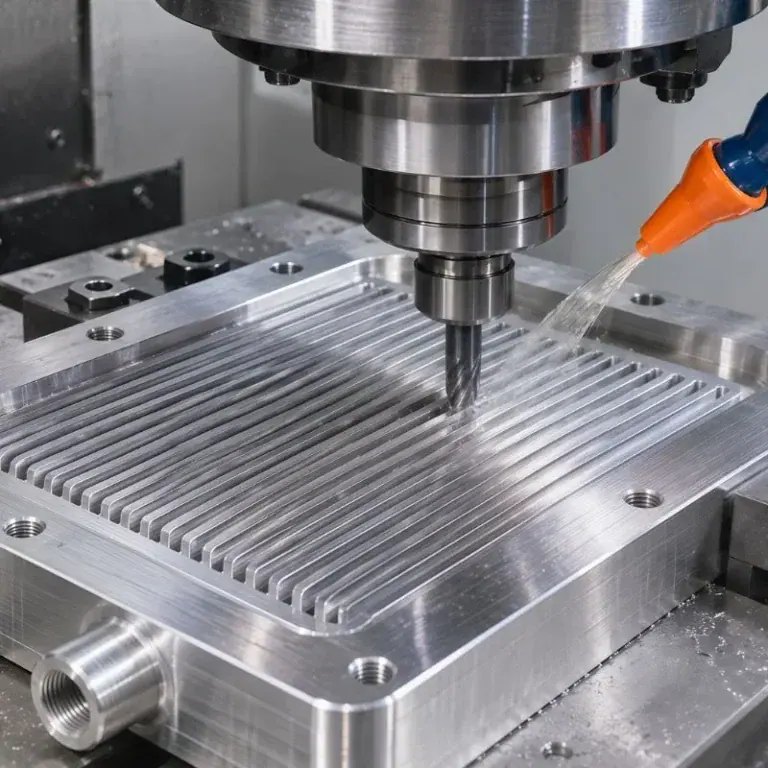
Equipment base plates, mounting bases, and connecting plates often contain flat surfaces, steps, threaded holes, and positioning slots. CNC milling can produce several features in one setup. The key is to maintain consistent machining references and prevent positional deviations between operations. Components with strict flatness requirements may also need dedicated finishing passes.
Multi-Axis CNC Machining for Complex Aluminum Structures
When a component has multiple machining surfaces, angled holes, or complex curved features, multi-axis machining can reduce workpiece repositioning and repeated alignment. This helps maintain more accurate positional relationships between different features. Common component types and their machining requirements are listed below.
| Component Type | Recommended Machining Processes | Key Quality Requirements |
| Semiconductor equipment platforms | CNC milling, precision boring | Flatness, hole spacing, positional accuracy |
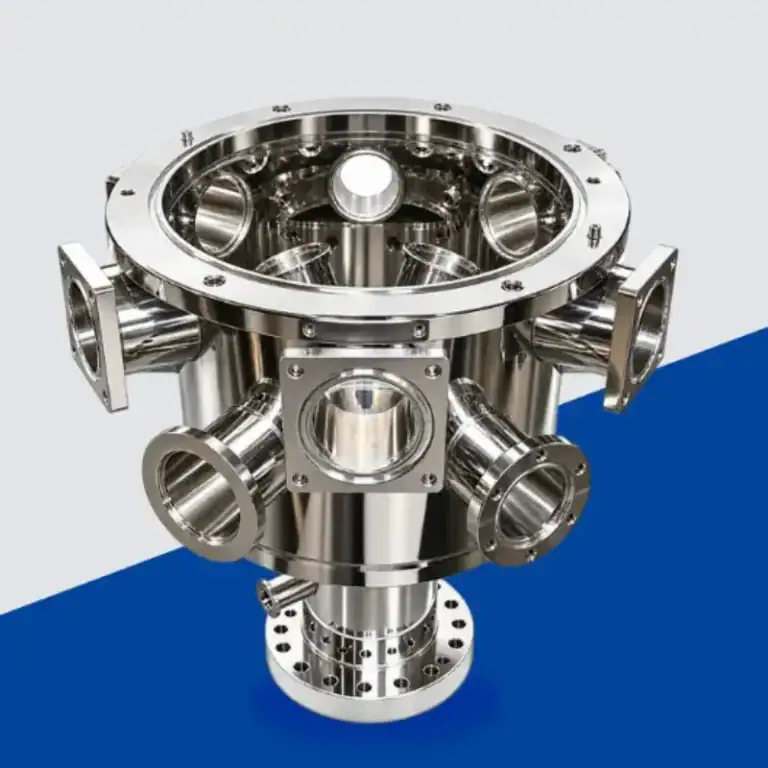
| Aluminum vacuum chambers | Multi-axis milling, drilling | Sealing surfaces, internal structures, hole positions |
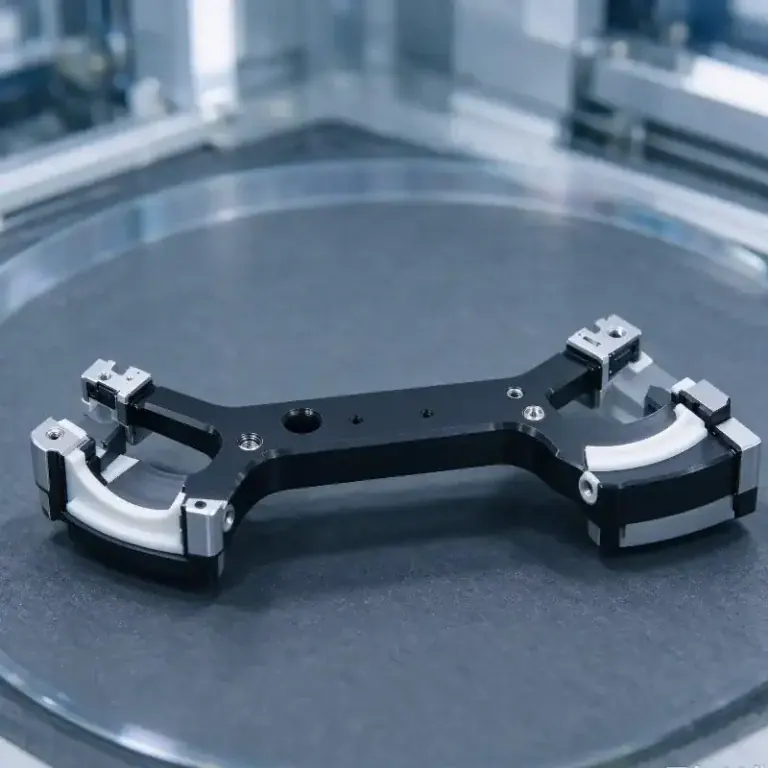
| Microelectronics equipment brackets | Three-axis or four-axis milling | Mounting dimensions, rigidity, perpendicularity |
| Precision positioning plates | CNC milling, precision drilling | Positioning hole accuracy, surface flatness |
Proper Coordination Between Finish Machining and Surface Treatment
Some aluminum components require anodizing to improve wear resistance and surface protection. However, the anodized layer adds a certain amount of thickness. If a component contains precision holes, threads, or fitting surfaces, the machining sequence must be planned in advance. Critical areas may need masking or additional finishing operations to ensure that the component can still be assembled correctly after treatment.
How to Ensure the Quality of CNC-Machined Aluminum Semiconductor Components?
A component’s suitability for installation cannot be judged by its external appearance alone. Hole positions, flatness, dimensional tolerances, and surface condition must all meet the equipment’s requirements. Some semiconductor equipment components also have cleanliness and sealing requirements, making it important to define machining and inspection standards before production.
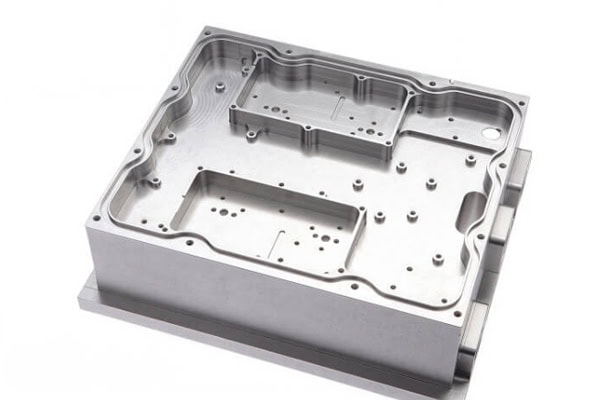
Confirm Drawings and Critical Dimensions Before Machining
Before production begins, the aluminum alloy grade, dimensional tolerances, surface roughness, and post-processing requirements should be clearly specified. If an existing component or assembly sample is available, it can also serve as a reference for confirming installation positions and actual fitting relationships.
Perform Precision Inspection After CNC Machining
After machining, critical dimensions can be inspected using coordinate measuring machines, height gauges, surface roughness testers, and precision measuring tools. Important inspection items include:
- Diameter, spacing, and positional deviations of mounting holes.
- Flatness and perpendicularity of mating surfaces.
- Warping or local deformation in thin-wall sections.
- Burrs, scratches, and noticeable tool marks on finished surfaces.
Maintain Consistency in Batch CNC Production
Semiconductor equipment components may need to be delivered in multiple production batches. If workholding methods and machining references change between batches, dimensional variations can occur. Standardized machining procedures, tool management, and inspection requirements help reduce these differences, ensuring that replacement parts and repeat orders maintain consistent assembly performance.
As microelectronics equipment continues to demand greater precision and structural stability, aluminum CNC machining must deliver more than accurate dimensions. It also needs to control thin-wall deformation, surface quality, and assembly performance. Selecting suitable materials, planning cutting operations, and carrying out proper inspections help ensure that components perform reliably in semiconductor equipment. TIRAPID provides custom CNC machining services and develops machining solutions based on aluminum component drawings, material specifications, and precision requirements. Contact us to discuss your microelectronics equipment machining needs.