Aerospace housing parts are widely used in aircraft, engines, avionics equipment, satellites, and spacecraft. They provide structural support, component protection, sealing, and internal component mounting. Compared with conventional mechanical housings, aerospace housing parts often feature thin walls, complex surfaces, multiple holes, and demanding assembly requirements. These characteristics require strict control of material performance, dimensional tolerances, surface finish, and machining stability. CNC precision machining and 5-axis CNC machining can provide effective manufacturing solutions for complex aerospace housing components.
Get 20% offf
Your First Order
Need custom metal and plastic parts?
Key Challenges in Aerospace Housing Parts Machining
Thin-Wall Structures Can Easily Deform
Lightweight design is an important requirement in aerospace manufacturing. Housing components are often made from lightweight, high-strength materials such as aluminum alloys and titanium alloys and may incorporate thin-wall structures. Improper cutting parameters, tool paths, or fixturing methods can result in vibration, deformation, and dimensional deviations during machining.
Complex Structures Increase Machining Difficulty
Aerospace housings commonly include deep cavities, curved surfaces, inclined surfaces, mounting holes, threaded holes, and sealing grooves. Traditional 3-axis machining may require multiple setups, increasing machining time and the risk of accumulated positioning errors. 5-axis CNC machining allows the cutting tool to approach the workpiece from multiple directions, reducing the number of setups while improving access to complex features.
TiRapid provides 3-axis, 4-axis, and 5-axis CNC machining capabilities. Its 5-axis machining capability is suitable for components with complex geometries and demanding precision requirements.
Different Materials Require Different Machining Strategies
Common aerospace housing materials include 6061, 7075, and 2024 aluminum alloys, Ti-6Al-4V titanium alloy, as well as selected stainless steels and high-temperature alloys. These materials differ in hardness, thermal conductivity, machinability, and tool wear characteristics. Appropriate machining processes and cutting parameters should therefore be selected according to the material and component structure.
CNC Machining Solutions for Aerospace Housing Parts
CAD and DFM Process Analysis
Before machining, TiRapid can analyze the component based on the customer’s 3D model and engineering drawings. Key areas such as wall thickness, hole locations, radii, deep cavities, and fixturing positions can be evaluated in advance. DFM analysis helps identify potential manufacturing difficulties early, reducing rework risks and improving overall production efficiency.
5-Axis CNC Precision Machining
For aerospace housings with complex curved surfaces, multi-angle holes, and deep cavities, 5-axis CNC machining can reduce repositioning and improve the positional relationship between different machined surfaces. Optimized tool paths can also improve surface quality and reduce visible tool marks on curved surfaces.
Stable Machining of Thin-Wall Components
For thin-wall aerospace housings, cutting depth, feed rate, and tool load need to be carefully controlled. Proper fixturing and support are also important for maintaining machining stability. For components with strict dimensional requirements, rough machining, semi-finishing, and finishing can be performed in separate stages to reduce the influence of residual material stress on final dimensions.
Common Materials and Machining Requirements for Aerospace Housings
Material
Main Characteristics
Typical Applications
Machining Focus
6061 Aluminum Alloy
Lightweight and easy to machine
Equipment housings, structural components
Burr control and surface finish
7075 Aluminum Alloy
High strength and lightweight
Aerospace structural housings
Deformation control and tool wear
2024 Aluminum Alloy
Good strength and fatigue performance
Aircraft structural components
Cutting parameters and surface treatment
Ti-6Al-4V Titanium Alloy
High strength and high-temperature resistance
Aerospace structural components
Cutting heat and tool wear control
Stainless Steel
High strength and corrosion resistance
Precision equipment housings
Machining efficiency and surface roughness
TiRapid supports a variety of metal and plastic materials and can recommend suitable material options based on specific project requirements.
Quality Control for Aerospace Housing Machining
Dimensional and Tolerance Inspection
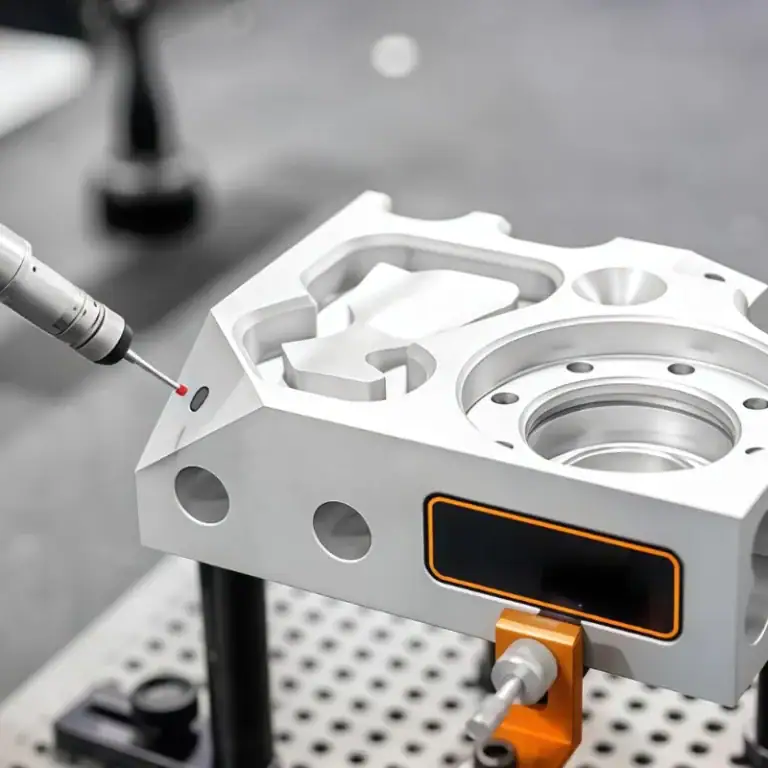
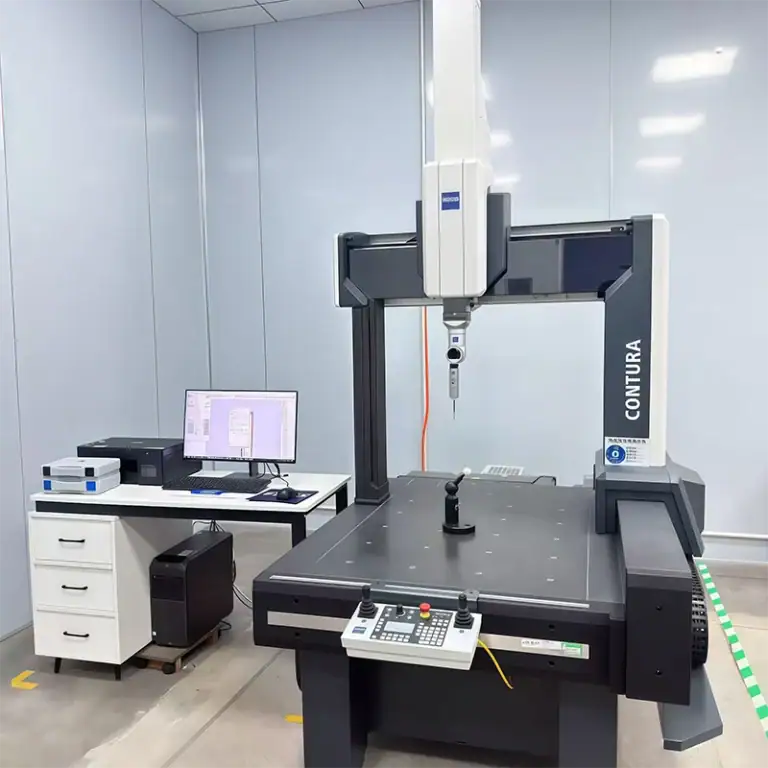
Aerospace housings often contain multiple assembly surfaces and connection holes. Critical dimensions, hole diameters, hole-to-hole distances, flatness, and positional tolerances therefore need to be carefully inspected. TiRapid’s CNC machining services support high-precision dimensional control, with certain CNC machining processes capable of tolerances down to approximately ±0.01 mm, depending on the component structure, material, and drawing requirements.
Surface Quality Control
Surface quality is important for aerospace housings because it can affect appearance, sealing performance, assembly, and subsequent surface treatment. Depending on project requirements, post-machining processes such as anodizing and sandblasting can be used to improve corrosion resistance and functional performance.
From Prototyping to Small-Batch Production
Aerospace projects often go through prototype validation, design optimization, and small-batch production. CNC machining does not require dedicated molds, making it suitable for rapid prototyping of complex components. Once the design is finalized, the same manufacturing approach can also support small-volume production. TiRapid provides CNC manufacturing services from prototype development to small-batch production and supports DFM optimization.
Why Choose TiRapid for Aerospace Housing Machining?
Aerospace housing parts require high precision, stable machining processes, and consistent production quality. A capable manufacturer needs experience in multi-axis machining, material selection, quality control, and engineering optimization.
TiRapid provides 3-axis, 4-axis, 5-axis, and large CNC machining capabilities for precision components used in industries including aerospace. With more than 16 years of CNC machining experience and ISO 9001 quality management certification, TiRapid provides professional manufacturing support for demanding precision machining projects.
From complex thin-wall housings to high-strength aerospace structural components, an optimized machining process can effectively control deformation, improve dimensional consistency, and shorten product development cycles. TiRapid can develop customized aerospace CNC machining solutions based on customer drawings, 3D models, material specifications, and tolerance requirements, providing integrated support for prototyping, small-batch production, and precision component manufacturing.
Author
Galen Director and Founder
Committed to ensuring we provide the best possible service in the manufacturing industry.
Limits, fits and tolerances define the acceptable dimensional variation and assembly relationships between mating mechanical components. Limits establish the maximum and minimum permitted sizes, tolerances define the allowable variation, and
Ejector pins are small mold components, but they play a major role in whether an injection molded part can leave the mold cleanly and consistently. After plastic cools around the
A machined housing can have a flat mounting face, a deep pocket, a bearing seat, and threaded holes. A shaft may need finished diameters, grooves, and an axial bore. Each
CNC plastic machining is a subtractive manufacturing process that uses computer-controlled cutting tools to produce precision components from engineering plastics. It is widely used for prototypes, custom housings, bushings, gears,
A flat mounting face, a deep pocket, and a curved mold surface call for different cutting approaches. Choosing a milling cutter starts with understanding the feature to be produced, then
Aluminum is a weakly paramagnetic metal, meaning it responds slightly to an external magnetic field but does not behave like iron or ordinary carbon steel. A typical refrigerator magnet will
Stiffness and strength are often treated as if they describe the same material behavior, but they answer different engineering questions. Stiffness tells you how much a material or part deforms
CNC machining is used to manufacture precise metal and plastic components for automotive, medical, aerospace, industrial equipment, and electronic products. It transforms raw material into functional parts through computer-controlled milling,
A shaft must enter its mating bore, a bearing must stay seated, and a cover must locate correctly on its housing. Each function permits some dimensional variation. The engineering task
SFM machining uses surface feet per minute to measure the cutting speed between a rotating tool and the workpiece. It helps machinists calculate suitable spindle speeds, control cutting conditions, and
CNC is one of the core technologies behind modern manufacturing. It allows machines to follow programmed instructions and produce parts with controlled dimensions, repeatable movements, and less dependence on manual
A machined housing can have correctly sized holes and still fail to assemble if those holes are in the wrong locations. Checking each diameter tells you only part of the