When looking for precision CNC machining suppliers in China, overseas purchasing teams and mechanical design engineers often face several practical challenges: information gaps that make it difficult to distinguish actual manufacturing factories from outsourcing intermediaries; difficulties in accurately machining complex, irregular five-axis geometries according to drawings; stress-related deformation of ultra-thin-walled or large workpieces after cutting; and lengthy back-and-forth email exchanges to clarify technical details across borders.
For more than 16 years, TiRapid has been based in Zhongshan, Guangdong, a major manufacturing region in China, specializing in custom machining for customers in Europe, the United States, and markets worldwide. As a direct manufacturer with its own standardized workshops and a fully equipped inspection laboratory, we have completed and delivered more than 30,000 five-axis CNC machining projects for overseas customers. Whether it is a single prototype starting from just 1 piece or small-batch production in quantities of hundreds, our engineering and manufacturing teams organize every process around two priorities: accurately manufacturing parts according to the drawings and keeping delivery schedules transparent and under control.
Direct Manufacturing Factory and Engineering Team: Overcoming Barriers in Cross-Border Communication
In international machining projects, the most costly part is often not the machining itself, but repeated modifications or even scrapped parts caused by misunderstandings of drawings at the early stage. Unlike trading companies that rely solely on sales representatives to pass along technical information, TiRapid has assembled an engineering team with years of hands-on production experience. Our engineers participate directly in the initial drawing review and machining process planning.
Customers only need to send common 3D design files such as STEP, IGS, SolidWorks, or X_T. Our engineers communicate directly with customers to assess machinability, material suitability, and machining time and costs, and can normally provide a clearly organized quotation and technical feedback within 1 to 2 hours. For overseas R&D engineers who need to discuss design details directly, we offer fluent technical communication in English, ensuring that every tolerance requirement and surface finishing specification is accurately communicated to the production floor.
A Full Range of Part Sizes and Multi-Axis Machining Capabilities
Different industrial products have very different requirements for part sizes and geometric features. To prevent customers from having to split their orders among multiple machining factories with different equipment capabilities, TiRapid continues to expand and improve its workshop equipment, providing machining capabilities for everything from miniature precision components to large structural parts:
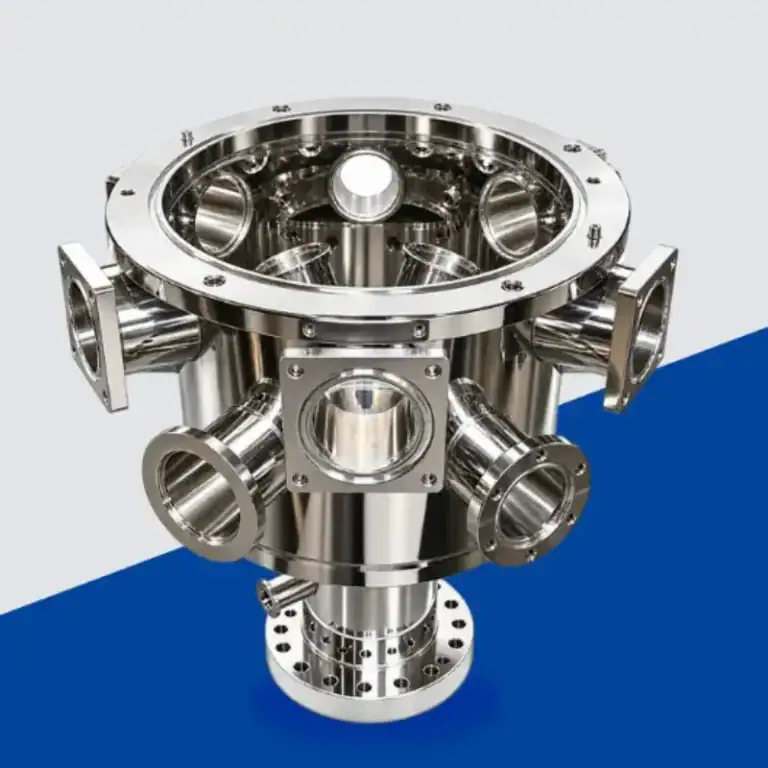
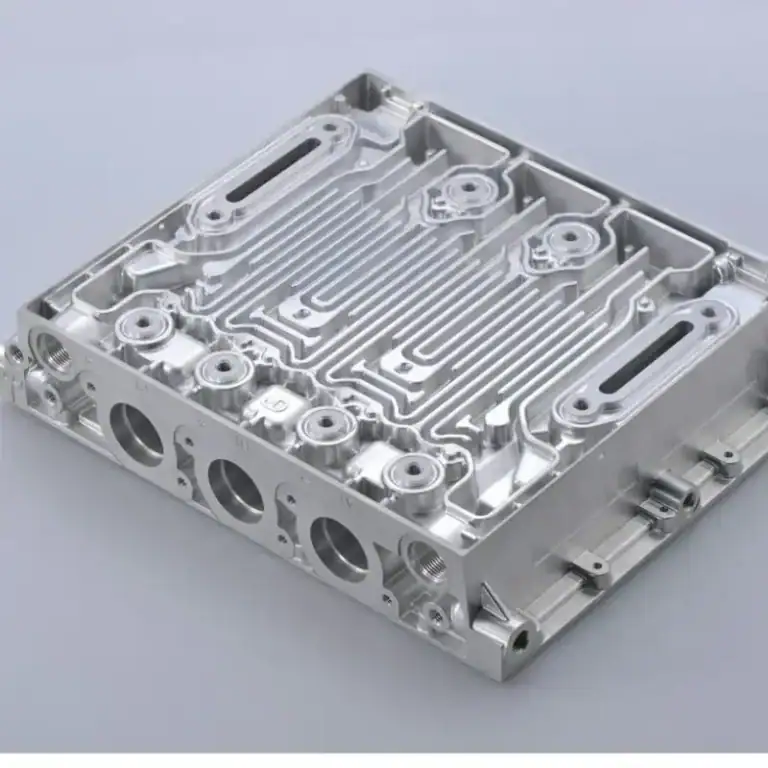
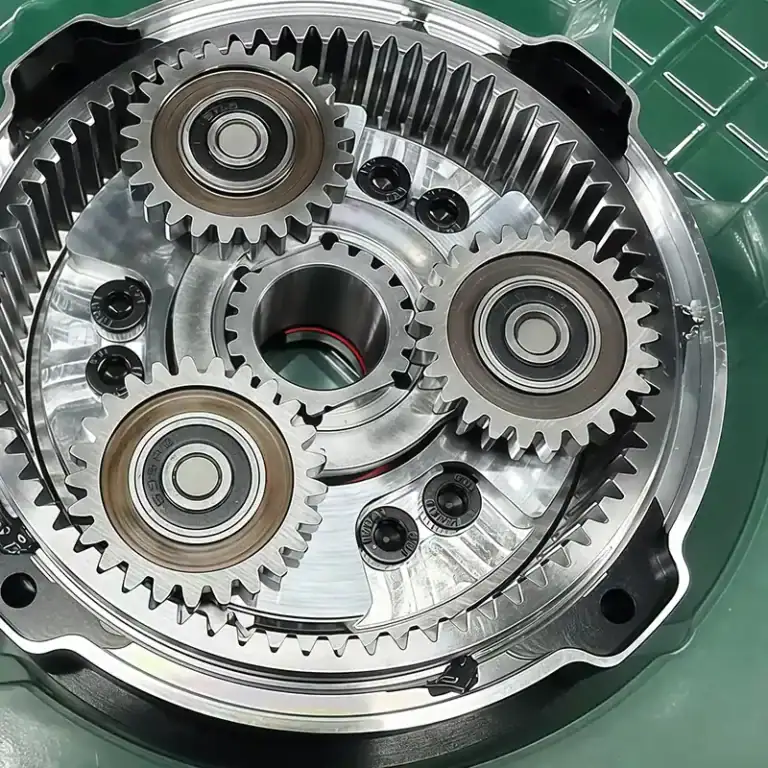
- Five-Axis Simultaneous CNC Machining: For parts with complex curved surfaces, numerous features on multiple faces, or geometries that require repeated flipping and clamping on conventional three-axis machines, we have multiple five-axis simultaneous machining centers. Coordinated multi-axis cutting allows features at different angles to be machined with fewer setups, effectively reducing accumulated errors caused by repeated positioning. Our five-axis machining capabilities currently cover precision workpieces up to 600 mm in size.
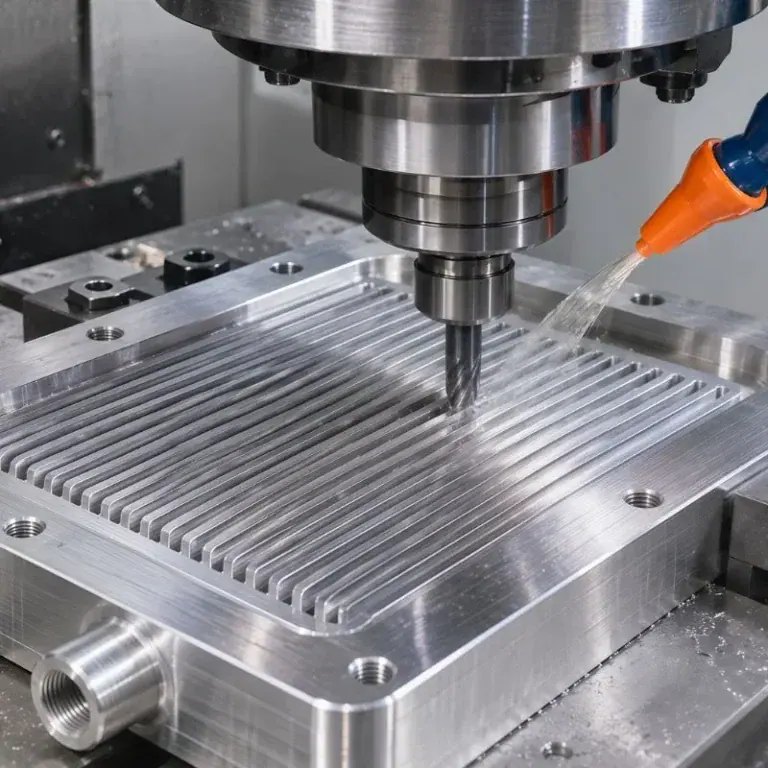
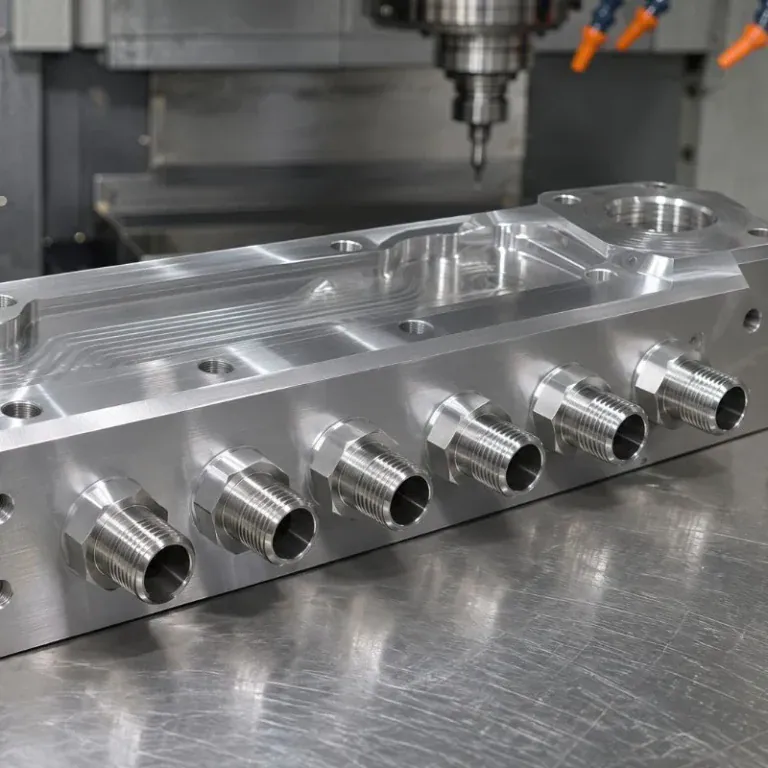
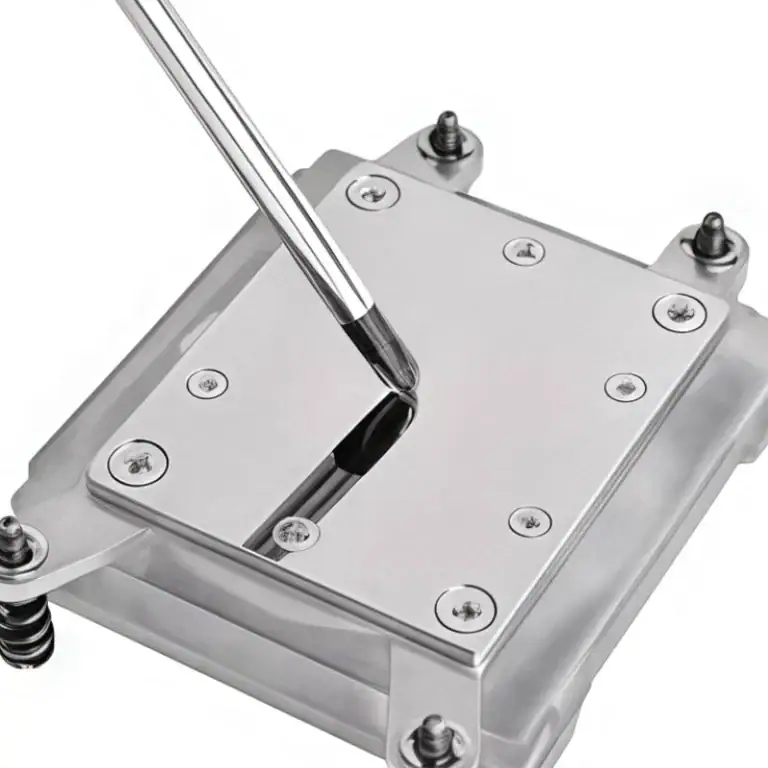
- Large Gantry CNC Milling and Ultra-Thin-Wall Machining: In large automation equipment, industrial frames, and semiconductor-related equipment, maintaining flatness over long workpieces is particularly challenging. TiRapid’s large milling equipment can machine parts up to 3,000 mm in length, enabling one-piece machining of extra-long and wide components. For ultra-thin-walled parts, widely recognized as difficult to machine, our process engineering team optimizes the distribution of material allowances between roughing and finishing, uses customized vacuum workholding or flexible auxiliary fixtures, and applies symmetrical stress-relieving toolpaths. These measures significantly reduce the risk of thin-wall deformation caused by cutting heat and clamping forces.
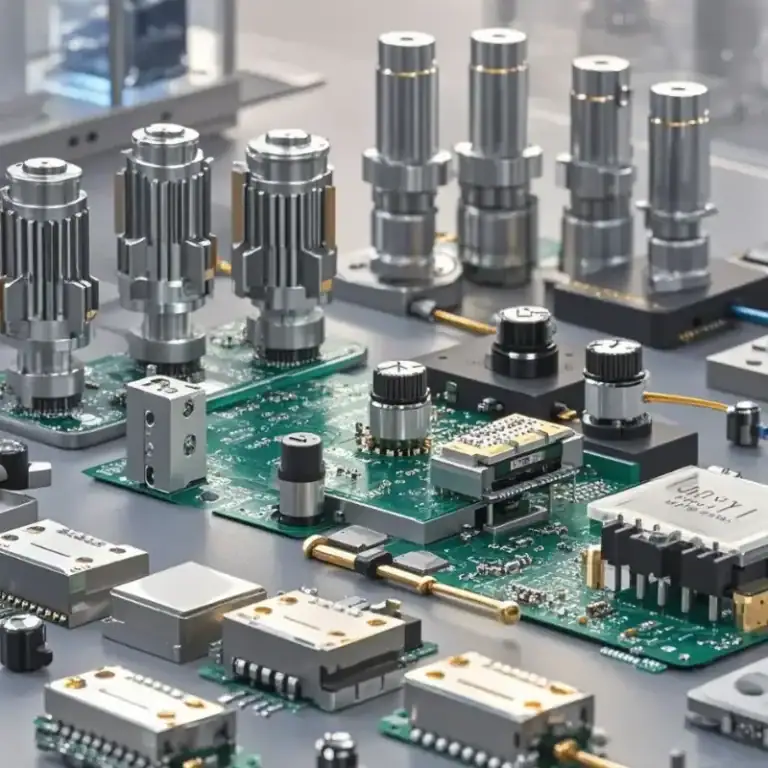
- Miniature Precision Turning and Swiss-Type Machining: For precision shafts, miniature bushings, and connector components, TiRapid is equipped with high-precision CNC lathes and Swiss-type automatic lathes. Our miniature turning capabilities accommodate part sizes as small as 2 mm. With dedicated cutting tools and carefully controlled machining parameters, a surface roughness of Ra 0.6 can routinely be achieved, meeting the requirements of high-precision assemblies and low-friction moving components.
- Precision Slow-Wire Electrical Discharge Machining (Wire EDM): For sharp internal corners, very narrow slots, hardened mold components, and complex internal contours that rotating cutting tools cannot reach, we use micron-level electrical discharge cutting to produce smooth, burr-free profiles.
For standard precision machining projects, depending on the specific part geometry and material characteristics, TiRapid can consistently control machining tolerances to within ±0.01 mm (±0.0004 in), providing a reliable dimensional foundation for subsequent assembly.
More Than 80 Metals and Engineering Plastics in Stock, with One-Stop Support for Multiple Manufacturing Processes
During product development and design iterations, teams often need to verify the mechanical and chemical properties of different materials. TiRapid has established a stable raw material supply chain and stocks and supports machining according to drawings for more than 80 types of metals and engineering plastics.
Our metal options include various grades of aluminum alloys (6061-T6, 7075-T6, 5052, 2024, etc.), stainless steels (303, 304, 316, 316L, 17-4PH, etc.), carbon steels and alloy steels, brass, copper, and titanium alloys (TC4/Grade 5). For specialty engineering plastics, our technical team understands the low-stress machining characteristics of PEEK, PTFE (polytetrafluoroethylene/Teflon), POM (acetal/Delrin), nylon (PA6/PA66), ABS, PC, and acrylic (PMMA). By controlling cutting temperatures and feed rates, we effectively prevent warping and cracking caused by internal stress after machining.
In addition to our core CNC milling and turning services, TiRapid also integrates supporting processes including sheet metal fabrication, vacuum casting, and injection molding. We offer one-stop surface finishing services such as clear and colored anodizing, hard anodizing, sandblasting, brushing, electroplating, electroless nickel plating, stainless steel passivation, and laser marking. Customers do not need to coordinate the transfer of semi-finished parts between different suppliers themselves. The entire process, from prototype production to small-batch delivery, can be completed within one factory system.
Free DFM Analysis: Optimizing Costs and Part Structures Before Machining Begins
Many 3D models appear structurally sound in design software, but when they are put into actual machining, hidden problems may emerge. These include difficulties removing chips from deep cavities, overly small internal corner radii that make cutting tools prone to breakage, or unnecessarily tight tolerances on non-mating surfaces that drive up manufacturing costs.
Before material cutting begins for each order, TiRapid has senior engineers provide customers with a free DFM (Design for Manufacturability) drawing review. Our review focuses on three practical areas:
- Wall Thickness and Structural Rigidity Assessment: Identifying areas that are too thin or unsupported and may be prone to tool chatter or deformation, and recommending practical options such as localized reinforcement or dividing a part into separately machined components.
- Tool Accessibility and Corner Radius Optimization: For deep cavities and sharp internal corners, recommending corner radii compatible with standard cutting tool sizes, reducing wear on special non-standard tools and helping customers avoid unnecessary machining hours.
- Appropriate Tolerance and Surface Roughness Specifications: Based on the actual assembly requirements of the part, recommending standard general tolerances for non-functional mating surfaces, helping optimize overall purchasing costs while fully maintaining product performance.
Implementing the ISO 9001 Quality Management System and Full-Process Inspection Traceability
Consistent delivery quality depends on systematic inspection procedures. TiRapid strictly follows the ISO 9001 quality management system, dividing quality control into three separate stages: incoming materials, production, and outgoing shipments.
- Incoming Quality Control (IQC): Before each batch of metal bars, plates, or engineering plastics is accepted into inventory, we verify the original manufacturer’s material certificates and carry out sample checks of material composition using spectrometers and other equipment, preventing material-grade mix-ups at the source.
- First Article Inspection and In-Process Quality Control (IPQC): Before a CNC machine begins full production, the first completed part must undergo a full dimensional inspection and be approved and signed off by a quality inspector. During production, critical dimensions are checked at fixed intervals so that small dimensional deviations caused by tool wear can be corrected promptly.
- Outgoing Quality Control and Inspection Laboratory Support (OQC): Our quality inspection laboratory is equipped with high-precision coordinate measuring machines (CMMs), 2D optical measuring systems, surface roughness testers, Rockwell hardness testers, and regularly calibrated micrometers and thread plug and ring gauges. For high-precision or structurally complex custom orders, we can provide complete, traceable dimensional inspection reports with the shipment.
No Minimum Order Quantity and a Transparent Global Delivery Process
To support the fast testing and iteration cycles of R&D teams, TiRapid has a no minimum order quantity (No MOQ) policy, with orders starting from just 1 piece. Whether a customer needs a single prototype for validation or a small trial production run of tens to hundreds of pieces, every order receives the same engineering assessment and quality control standards.
With a mature production scheduling system and sufficient machine capacity, TiRapid can complete machining and surface finishing for standard CNC prototype orders of moderate structural complexity in as little as 3 working days. Parts can then be shipped directly worldwide via DHL, FedEx, UPS, or dedicated air freight services. Throughout order fulfillment, customers can obtain clear production progress updates at any time, allowing them to keep their project schedules under control.
If your team is developing a new product or looking for a direct precision CNC machining factory in China with strong engineering capabilities and a transparent delivery process, you are welcome to send your 3D drawings and technical requirements to the TiRapid team at any time. We will provide a practical machining process assessment and a quotation for your reference within 1 to 2 hours.