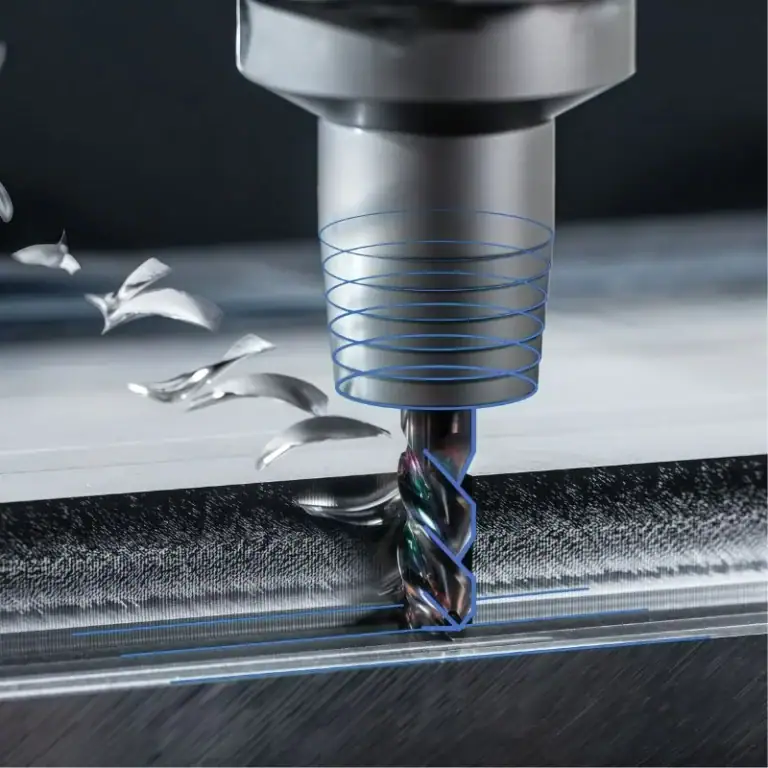
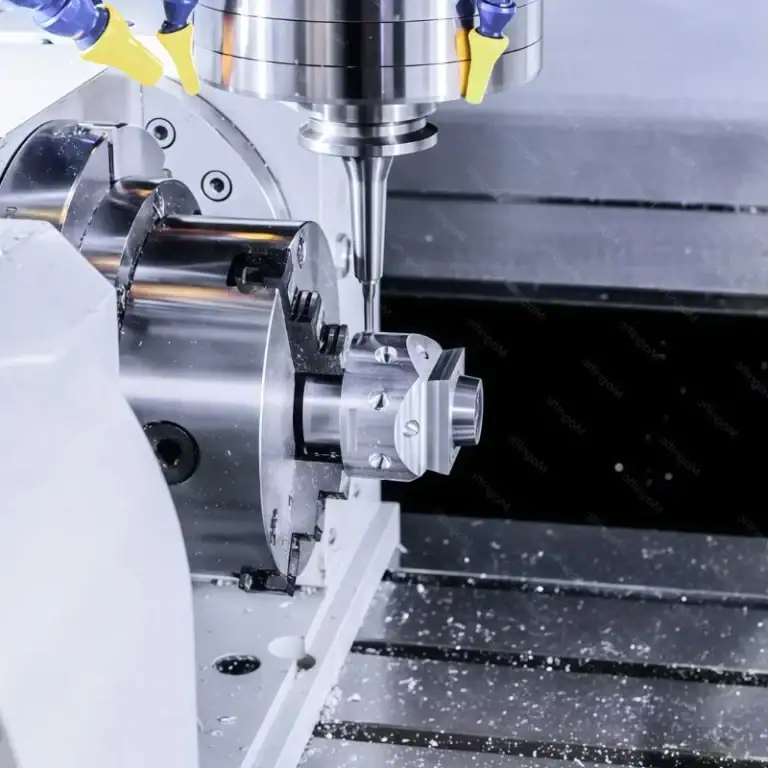
CNC Turning technology is one of the most widely used machining methods in modern manufacturing and precision engineering. It refers to a cutting process in which a workpiece rotates on a lathe while a cutting tool removes unwanted material to achieve specific dimensions, shapes, and surface finishes. As a core process in both conventional machining and advanced CNC manufacturing, turning technology is widely used for producing shafts, cylindrical components, sleeves, threaded parts, bushings, and many other rotationally symmetrical components. In industrial production, turning technology not only supports material removal, but also helps improve product precision, optimize production efficiency, reduce manufacturing costs, and support automated processing systems. Industries such as automotive, aerospace, energy equipment, medical devices, and industrial machinery rely heavily on turning processes for both mass production and high-precision custom manufacturing, making turning technology a foundational process in modern industry.
Definition and Working Principle of Turning Technology
Turning technology belongs to the category of subtractive manufacturing processes, and its fundamental principle is based on the interaction between a rotating workpiece and a cutting tool where the workpiece provides the main rotational cutting motion while the tool provides controlled feed movement so that material is gradually removed layer by layer until the required geometry is formed. This continuous and controlled material removal process makes turning one of the most effective methods for producing rotational components with high efficiency and precision, especially in industrial environments where consistency and repeatability are essential.
Operating Method of Turning Machining
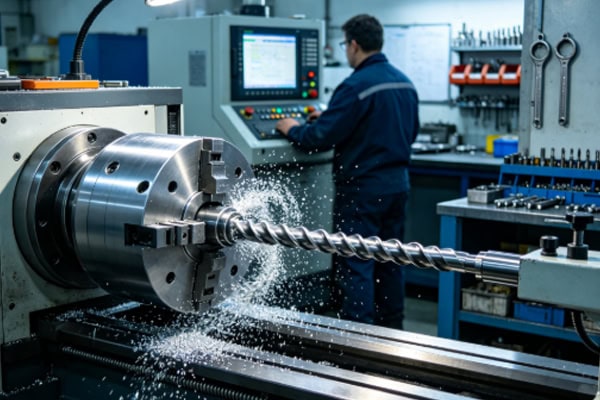
Turning operations are performed by clamping the workpiece in a lathe chuck and rotating it at a controlled speed while a cutting tool moves along programmed paths to remove material in a precise manner. In CNC turning systems, this process becomes highly automated, allowing multiple tools to work sequentially in a single setup. Rough machining, semi-finishing, and finishing operations are completed in an organized cycle, which improves efficiency and ensures stable machining quality. The entire process depends on machine rigidity, tool condition, and accurate programming control to achieve the desired result.
Core Machining Parameters in Turning
Before discussing specific parameters, it is important to understand that turning quality depends on the balance of multiple cutting conditions working together in a stable machining system.
- Cutting speed determines how fast material is removed and directly influences heat generation during machining. Proper control helps maintain tool life and surface quality stability.
- Feed rate controls the tool’s advancement along the workpiece and affects both surface roughness and machining efficiency. It must be adjusted according to finishing or roughing requirements.
- Depth of cut defines the thickness of material removed in each pass and influences cutting force, machine load, and process stability.
These parameters must always be optimized together rather than individually in order to achieve stable machining performance and consistent product quality.
What Types of Parts Are Suitable for Turning
Turning is mainly suitable for rotational parts where symmetry around a central axis is required, such as shafts, bushings, cylindrical housings, and threaded components. It is also widely used for stepped shafts, tapered surfaces, and grooved structures. With modern CNC technology, turning can also handle more complex geometries that require high precision, making it suitable for both standard industrial parts and customized high-precision components.
Common Types of Turning Technology
Turning technology includes several machining methods, each designed to achieve different geometric features and functional requirements in manufacturing processes.
External Turning
External turning is used to machine the outer cylindrical surface of a workpiece. It is commonly applied in the production of shafts, rollers, and sleeve components. The process usually begins with rough machining to quickly remove excess material and is followed by finishing operations to achieve accurate dimensions and improved surface quality. External turning is considered one of the most fundamental operations in mechanical manufacturing because of its wide application range and efficiency.
Internal Turning
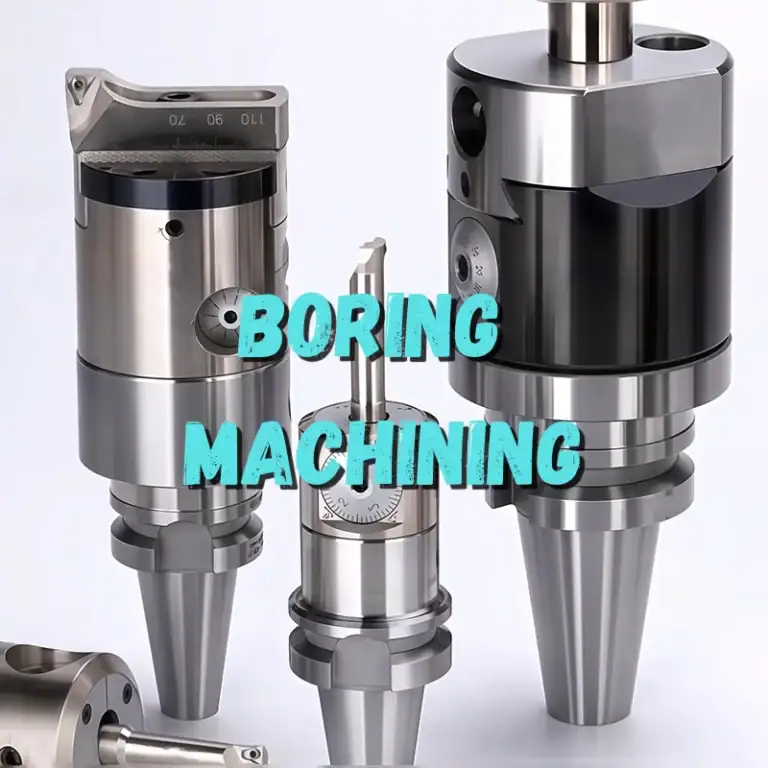
Internal turning is used to machine internal surfaces such as bores and cavities. It is commonly applied in hydraulic components, bearing housings, and precision mechanical assemblies. Because the cutting tool operates inside the workpiece, this process often requires specialized tooling and stable machining conditions to ensure accuracy and surface quality. Internal turning plays an important role in precision engineering applications where internal geometry is critical.
Facing
Facing is a machining process used to create a flat surface at the end of a workpiece. This operation is important for ensuring proper assembly alignment and establishing a reference surface for further machining operations. Facing is typically performed at the early stage of machining because it helps define a stable and accurate base surface for subsequent processes.
Thread Turning
Thread turning is used to produce internal and external threads by synchronizing spindle rotation with tool movement to form precise thread profiles. This process is widely used in fasteners, connectors, and mechanical assemblies where accuracy and consistency are essential. Thread turning allows flexible production of different thread types, including standard and custom designs, depending on engineering requirements.
Form Turning
Form turning is used to machine complex contour shapes using specially designed tools or programmed tool paths. It allows multiple geometric features to be produced in a single operation, reducing the need for multiple machining steps. This method is particularly useful in mass production environments where efficiency and repeatability are important.
Advantages of Turning Technology
Turning technology is widely used in manufacturing because it offers a strong balance of accuracy, efficiency, flexibility, and cost-effectiveness, making it suitable for a wide range of industrial applications.
High Machining Accuracy
Turning technology achieves high machining accuracy through rigid machine structures, precision cutting tools, and advanced CNC control systems. These factors work together to ensure stable dimensional control and surface quality, making it suitable for industries requiring strict tolerances such as aerospace and medical manufacturing.
High Production Efficiency
Turning provides high production efficiency through continuous machining and automation capabilities. CNC systems enable automatic tool changes and uninterrupted machining cycles, significantly reducing production time while increasing output consistency in both small and large batch production.
Broad Material Compatibility
Before discussing specific materials, it is important to understand that turning technology can adapt to a wide variety of industrial materials due to its flexible cutting characteristics.
- Carbon steel is widely used because of its stable cutting behavior and cost efficiency, making it suitable for general mechanical components.
- Stainless steel requires more controlled parameters but provides excellent corrosion resistance and durability in finished parts.
- Aluminum alloys support high-speed machining and are widely used in lightweight structural applications due to their excellent machinability.
These material types demonstrate that turning technology is highly adaptable across different manufacturing requirements and industrial environments.
High Process Flexibility
Turning technology offers high flexibility because it can handle both simple and complex geometries through adjustments in tooling and CNC programming. Manufacturers can quickly switch between different product designs without major equipment changes, making it suitable for prototyping, small batch production, and mass production.
Cost Efficiency
Turning technology provides strong cost advantages due to moderate equipment investment and efficient material removal rates. It helps reduce overall production costs while maintaining stable quality, making it a practical solution for many industrial manufacturing applications.
Development Trends in Modern Turning Technology
Turning technology continues to evolve alongside automation, digital manufacturing, and intelligent production systems, leading to improved efficiency and smarter machining processes.
Widespread Adoption of CNC Turning
CNC turning has become the standard in modern machining due to its ability to improve precision, repeatability, and automation, allowing complex parts to be manufactured with minimal manual intervention while maintaining consistent quality through digital control systems.
Rapid Growth of Turn-Mill Composite Machining
Turn-mill composite machining integrates turning and milling functions into a single machine system, reducing setup time and minimizing errors caused by multiple clamping operations. This improves efficiency and is widely used in high-precision component manufacturing.
Intelligent Monitoring and Automatic Compensation
Before explaining specific intelligent functions, it is important to recognize that modern turning systems increasingly rely on data-driven control to improve stability and performance.
- Tool wear monitoring detects tool degradation in real time, helping maintain stable machining conditions and extending tool life.
- Automatic compensation systems adjust machining parameters to maintain dimensional accuracy during long production cycles.
- Real-time monitoring systems identify machining anomalies early, reducing defect rates and improving production reliability.
These intelligent technologies significantly enhance machining stability, efficiency, and overall production quality.
Growing Demand for Ultra-Precision Turning
Ultra-precision turning is increasingly important in industries such as electronics, optics, and medical manufacturing where micron-level accuracy is required for miniature and high-performance components, making it a key development direction for advanced manufacturing technology.
Applications of Turning Technology
Turning technology is widely used across multiple industries and remains a core process in modern manufacturing systems.
Automotive Manufacturing
In automotive production, turning technology is used to manufacture engine components, transmission shafts, brake parts, and structural elements. These components require both high precision and large-scale production capability to meet industry demands.
Aerospace Industry
Aerospace manufacturing relies on turning technology for producing structural components, engine parts, and precision fasteners. These parts must meet extremely strict safety and performance requirements.
Mold and Machinery Manufacturing
Turning is widely used in mold and machinery production for manufacturing shafts, sleeves, guide components, and structural parts that require high durability and dimensional accuracy.
Medical Device Machining
Medical device manufacturing depends on turning technology for producing surgical tools, implants, and miniature precision components where surface quality and accuracy are critical for safety.
Automation and New Energy Equipment
Automation and new energy industries rely on precision-turned components for robotic systems, energy equipment, and automated mechanical systems. These components ensure reliable and long-term stable operation in advanced industrial environments.
Conclusion
Turning technology is a fundamental machining process that removes material through controlled rotation and cutting action, forming precise components essential to modern manufacturing. From traditional manual lathes to advanced CNC and turn-mill composite systems, turning continues to evolve toward higher precision, greater efficiency, and intelligent automation while maintaining its core role in global industrial production.