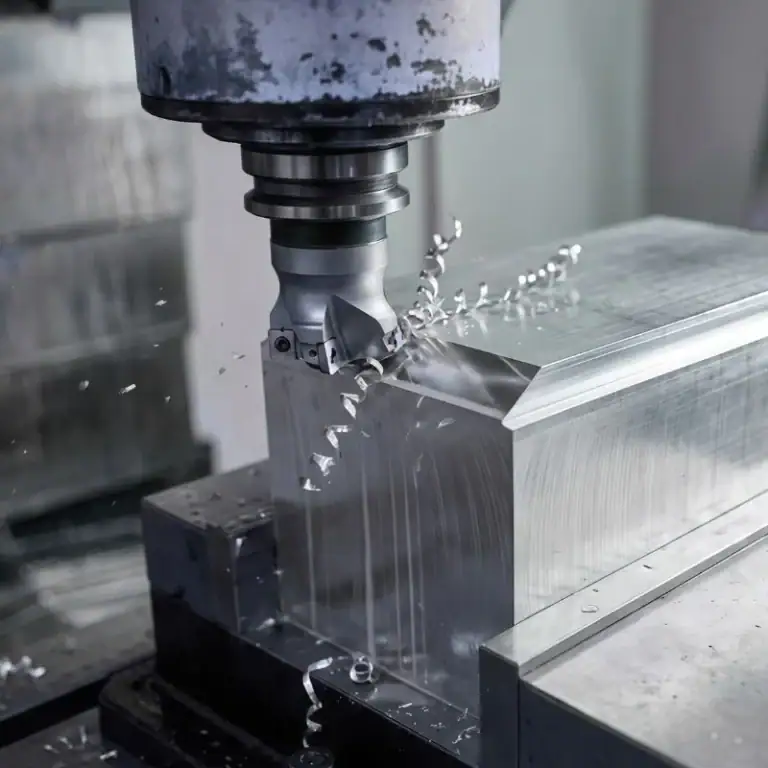
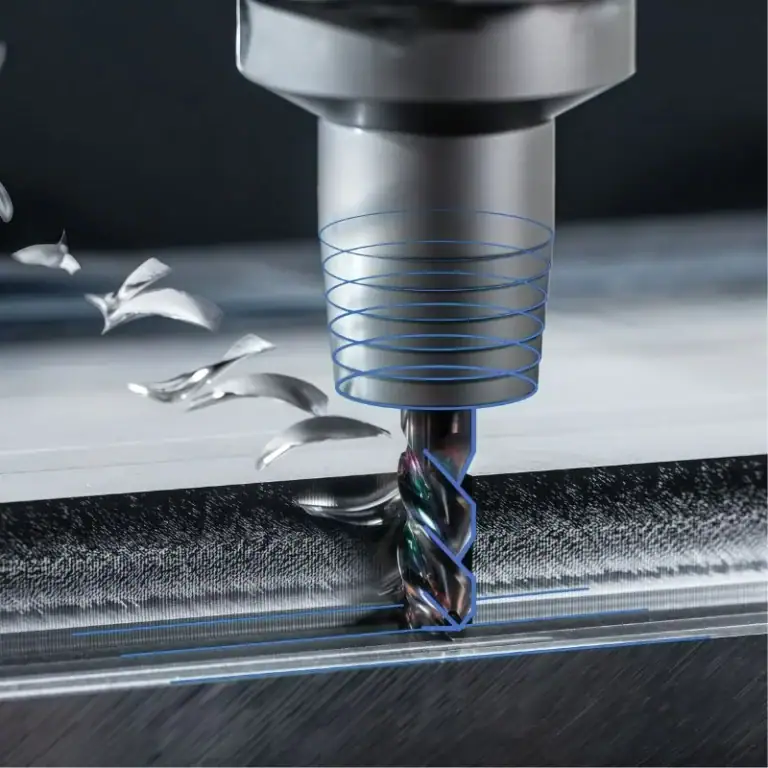
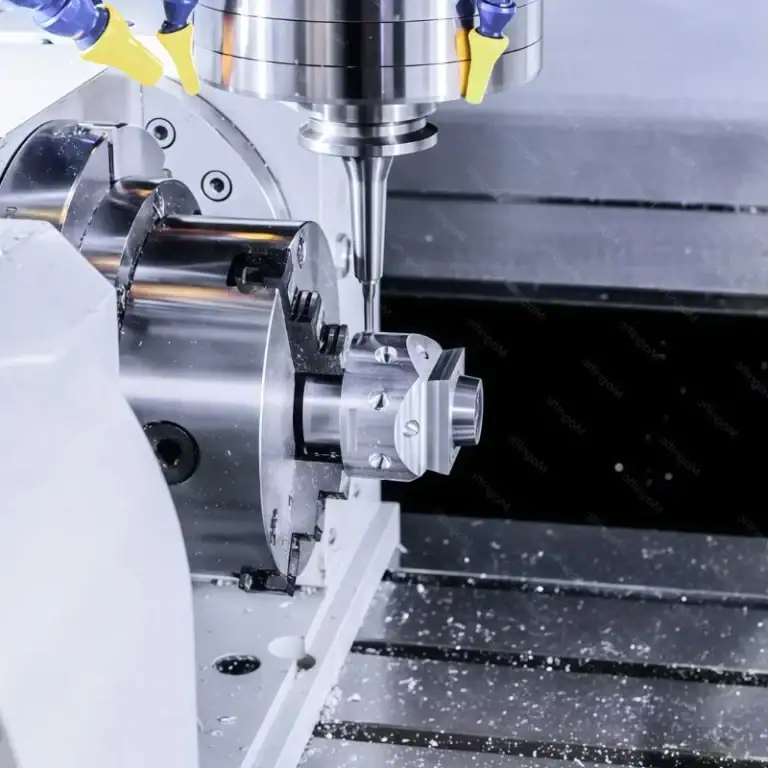
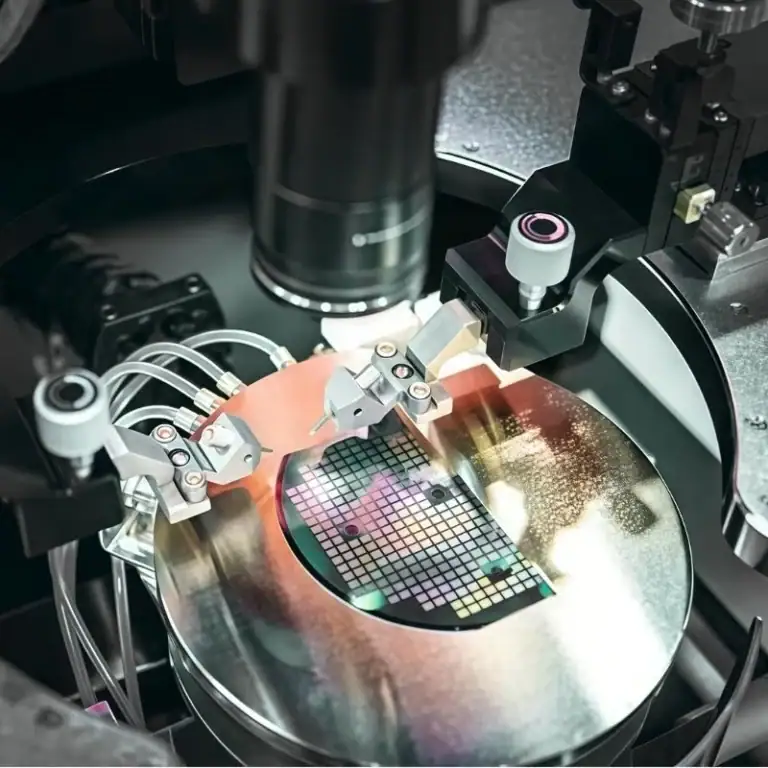
EDM machining is one of the most important precision manufacturing technologies used in modern industry because it can process extremely hard conductive materials and complex geometries that traditional cutting methods often struggle to produce. Different types of EDM machining, including wire EDM, sinker EDM, and small hole EDM, are used for different precision manufacturing applications. Unlike milling or turning, EDM removes material through electrical discharge instead of direct cutting force.
In this guide, you will learn what EDM machining is, how it works, the differences between wire EDM, sinker EDM, and small hole EDM, what materials can be processed, the advantages and limitations of EDM.
What Is EDM Machining?
EDM machining, also called electrical discharge machining or spark erosion machining, is a non-contact manufacturing process that removes conductive material through high-frequency electrical sparks. The process generates repeated pulse discharge between the electrode and the workpiece, creating extremely high local temperatures that instantly melt or vaporize small portions of metal.
In many aerospace and medical manufacturing projects, EDM is often used after CNC rough machining to finish the most difficult internal geometries and fine structures. Although the machining speed is slower than traditional milling, EDM provides much better dimensional stability and surface consistency on hard materials.
Typical EDM machining capability includes:
| Capability | Typical Range |
| Tolerance Accuracy | ±0.005–0.01 mm |
| Surface Roughness | Ra0.2–0.8 μm |
| Maximum Hardness | HRC70+ |
| Deep Cavity Depth | 50 mm+ |
| Micro Hole Diameter | 0.1 mm+ |
How EDM Works?
The EDM process works by generating controlled electrical discharge between two conductive electrodes separated by a very small gap. A pulsed direct current creates a plasma channel that can reach temperatures between 8000°C and 12000°C within microseconds.
During each discharge:
- The plasma channel forms between the electrode and the workpiece
- The metal surface instantly melts or vaporizes
- Dielectric fluid flushes away molten particles
- The gap stabilizes before the next discharge cycle
This process repeats thousands of times per second until the desired geometry is produced.
Unlike milling cutters or drills, EDM tools do not physically cut material. Because of this:
- Material hardness has minimal influence on machinability
- Extremely fine structures can be produced
- Thin-wall deformation is reduced significantly
- Internal cavities become easier to manufacture
For many precision industries, this stress-free machining capability is more important than machining speed itself.
Why EDM Is Used for Precision Manufacturing?
EDM is widely used in precision manufacturing because it can machine hard materials, deep cavities, thin walls, and micro features that traditional cutting tools often struggle to reach. Since it removes material by electrical discharge instead of cutting force, it helps reduce deformation and improve dimensional stability.
First, EDM can process extremely hard conductive materials such as tungsten carbide, hardened tool steel, titanium alloy, and nickel-based superalloys. These materials create severe tool wear in conventional machining, but EDM is largely unaffected by hardness.
Second, EDM can create complex internal geometries with high dimensional consistency. Deep narrow slots, sharp internal corners, micro holes, and deep cavities are all easier to produce with EDM than with traditional cutting tools.
Third, EDM generates almost no mechanical cutting force. This makes it highly suitable for:
- Thin-wall structures
- Fragile components
- High-precision assembly parts
- Complex mold cavities
- Micro-scale structures
For example, in many injection mold projects, conventional milling can rough-machine the cavity, but only EDM can accurately finish sharp corners and deep internal details.
Materials Suitable for EDM
EDM can machine almost all electrically conductive materials regardless of hardness level. The most important requirement is electrical conductivity rather than material softness.
Common EDM materials include:
| Material Type | Common Materials | Typical Applications |
| Tool Steel | H13, D2 | Injection molds, stamping dies |
| Carbide | Tungsten carbide | Precision tooling |
| Titanium Alloy | Ti-6Al-4V | Aerospace, medical |
| Nickel Alloy | Inconel | Turbine components |
| Copper Alloy | Beryllium copper | Mold inserts |
| Aluminum Alloy | 6061, 7075 | Precision structures |
| Stainless Steel | SUS304, SUS420 | Medical and industrial parts |
Although EDM can process many metals effectively, non-conductive materials such as ceramics and plastics usually cannot be machined using standard EDM technology.
Main Types of EDM Machining
There are three main types of EDM machining: wire EDM, sinker EDM, and small hole EDM. Although all of them use electrical discharge to remove conductive material, each process is designed for different structures, precision requirements, and manufacturing applications.
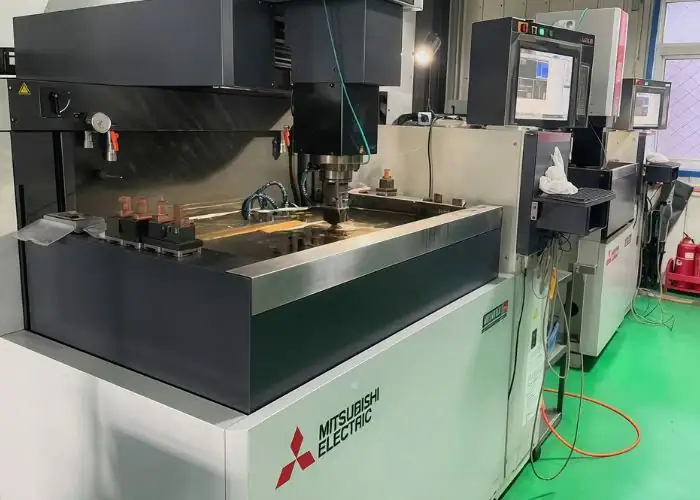
There are three main EDM machining methods used in modern manufacturing:
- Wire EDM
- Sinker EDM
- Small Hole EDM
Although all three methods use electrical discharge to remove material, their machining principles and applications are very different.
Wire EDM
Wire EDM uses a continuously moving thin wire electrode to cut conductive materials with extremely high contour accuracy. It is commonly used for precision profiles, punches, dies, and thin-wall structures.
Sinker EDM
Sinker EDM uses shaped copper or graphite electrodes to create deep cavities and complex internal geometries. It is widely used in injection molds, die-casting molds, and precision tooling.
Small Hole EDM
Small hole EDM uses rotating hollow electrodes to produce deep micro holes with high aspect ratios. It is especially important in aerospace cooling systems and medical precision structures.
Each EDM method is optimized for different manufacturing goals and part geometries.
Wire EDM: How It Works and When to Use It
Wire EDM is one of the most widely used EDM processes because of its excellent contour precision and dimensional stability. In mold manufacturing and aerospace precision machining, wire EDM is often considered the preferred process for hardened materials and narrow profile cutting.
Working Principle of Wire EDM
Wire EDM uses a continuously moving brass or zinc-coated wire electrode, typically between 0.1 and 0.25 mm in diameter. During machining, the wire follows a programmed CNC cutting path while thousands of electrical discharges occur every second between the wire and the workpiece surface.
Deionized water is used as the dielectric fluid to cool the cutting zone and remove molten debris particles.
Because the wire never physically contacts the material, there is almost no mechanical stress during machining. This allows wire EDM to cut extremely hard materials while maintaining excellent dimensional consistency.
Key Features of Wire EDM
One of the biggest advantages of wire EDM is its ability to maintain stable accuracy on complex contours and narrow structures.
Typical wire EDM capability includes:
| Parameter | Typical Value |
| Tolerance | ±0.005 mm |
| Surface Finish | Ra0.4 μm |
| Wire Diameter | 0.1–0.25 mm |
| Cutting Speed | 80–180 mm²/min |
Wire EDM also performs well on:
- Thin walls
- Sharp contours
- Precision slots
- Hardened steel
- Carbide structures
However, wire EDM also has limitations. Since the wire requires a discharge gap, perfectly sharp internal corners are impossible. Small radii must usually be compensated during design.
In addition, wire consumption contributes significantly to machining cost during long production cycles.
Typical Applications of Wire EDM
Wire EDM is widely used in:
- Stamping dies
- Punch tooling
- Mold inserts
- Aerospace contour parts
- Medical precision components
- Hard alloy profile cutting
For high-precision contour machining, wire EDM often provides much better dimensional consistency than traditional milling.
Sinker EDM: How It Works and When to Use It
Sinker EDM, also called RAM EDM or forming EDM, is mainly used to produce complex cavities and blind internal features that conventional cutting tools cannot easily reach.In many injection mold and die-casting mold projects, sinker EDM is considered one of the most important finishing processes.
Working Principle of Sinker EDM
Sinker EDM first requires manufacturing a copper or graphite electrode shaped like the reverse geometry of the final cavity.
The electrode repeatedly discharges against the workpiece inside dielectric oil. Each electrical pulse removes a tiny amount of metal until the cavity gradually forms.
Unlike wire EDM, sinker EDM is suitable for enclosed cavities and complex 3D geometries.
Key Features of Sinker EDM
The biggest advantage of sinker EDM is its ability to machine:
- Deep cavities
- Blind structures
- Sharp internal details
- Complex mold surfaces
- Fine texture features
Typical sinker EDM capability includes:
| Parameter | Typical Value |
| Tolerance | ±0.01 mm |
| Surface Finish | Ra0.4–1.2 μm |
| Deep Cavity Depth | 50 mm+ |
| Electrode Material | Copper or graphite |
Although sinker EDM provides excellent geometric capability, electrode manufacturing increases production time and cost. In many complex molds, electrode production alone may account for a large percentage of the total manufacturing cycle.
Typical Applications of Sinker EDM
Sinker EDM is commonly used for:
- Injection mold cavities
- Die-casting molds
- Forging dies
- Aerospace tooling
- Medical mold structures
- Complex cavity machining
In many mold projects, CNC milling performs rough machining while sinker EDM completes the final detailed geometry.
Small Hole EDM: How It Works and When to Use It
Small hole EDM is a specialized EDM process designed for deep micro-hole machining in conductive materials.In aerospace, medical equipment, and precision mold manufacturing, it is often the only practical solution for high-aspect-ratio micro holes.
Working Principle of Small Hole EDM
The process uses a rotating hollow electrode tube while dielectric fluid flows through the center of the electrode.
During machining:
- The electrode rotates at high speed
- Pulse discharge gradually erodes the material
- Dielectric fluid removes debris and cools the machining area
Because the process creates almost no cutting force, it can drill extremely deep and narrow holes without significant deformation.
Key Features of Small Hole EDM
Small hole EDM is especially suitable for:
- Deep cooling holes
- Precision vent holes
- Fuel injection holes
- Micro nozzle structures
Typical capability includes:
| Parameter | Typical Value |
| Hole Diameter | 0.1–3 mm |
| Tolerance | ±0.02 mm |
| Surface Finish | Ra0.8 μm |
| Aspect Ratio | 20:1+ |
Although the process is slower than conventional drilling, it offers much better consistency on hard materials and micro structures.
Typical Applications of Small Hole EDM
Small hole EDM is commonly used for:
- Turbine blade cooling holes
- Mold exhaust holes
- Precision nozzles
- Medical micro holes
- Aerospace cooling channels
In turbine blade manufacturing, dozens of cooling holes may be machined on a single component using small hole EDM.
Special EDM Methods
Besides standard EDM processes, several advanced EDM technologies are used for ultra-high precision and special manufacturing applications. These methods are designed to improve surface quality, reduce thermal damage, or create microscopic structures that conventional EDM cannot achieve efficiently.
Powder Mixed EDM
Powder mixed EDM adds conductive powder such as graphite or silicon into the dielectric fluid. The powder helps distribute the discharge energy more evenly across the machining zone, improving surface quality and reducing localized heat concentration.
Compared with standard EDM, powder mixed EDM offers:
- Better discharge stability
- Lower surface roughness
- Reduced electrode wear
- Improved surface uniformity
In many mirror-finish mold applications, powder mixed EDM can reduce surface roughness below Ra0.2 μm, minimizing or even eliminating manual polishing operations.
This method is especially suitable for:
- Optical molds
- Precision injection molds
- Medical cavity structures
- High-gloss surface applications
Dry EDM
Dry EDM replaces conventional dielectric liquid with compressed gas such as air or nitrogen. This process is cleaner and more environmentally friendly because it eliminates oil contamination and fluid disposal issues.
One of the major advantages of dry EDM is its reduced heat-affected zone. Compared with oil-based EDM:
- Surface hardening layers become thinner
- Thermal cracks are reduced
- Surface oxidation decreases
Dry EDM is often used for:
- Electronic micro components
- Precision slots
- Thin-wall structures
- Semiconductor applications
Although dry EDM is generally slower than traditional EDM, it offers significant advantages for contamination-sensitive industries.
Micro EDM
Micro EDM is designed for ultra-small structures and microscopic holes that cannot be produced using standard machining processes.
This process uses extremely small electrodes, sometimes below 0.05 mm in diameter, to create:
- Micro holes
- Micro slots
- MEMS structures
- Medical micro features
Typical micro EDM capability includes:
| Capability | Typical Range |
| Hole Diameter | 0.02–0.1 mm |
| Tolerance | ±0.005 mm |
| Aspect Ratio | 40:1 |
| Surface Finish | Ra0.1–0.3 μm |
Micro EDM is widely used in:
- Medical devices
- Semiconductor tooling
- Precision connectors
- Aerospace sensors
Although the machining speed is slow, micro EDM provides geometric capability that is almost impossible for conventional machining methods.
What Materials Can Be Machined by EDM?
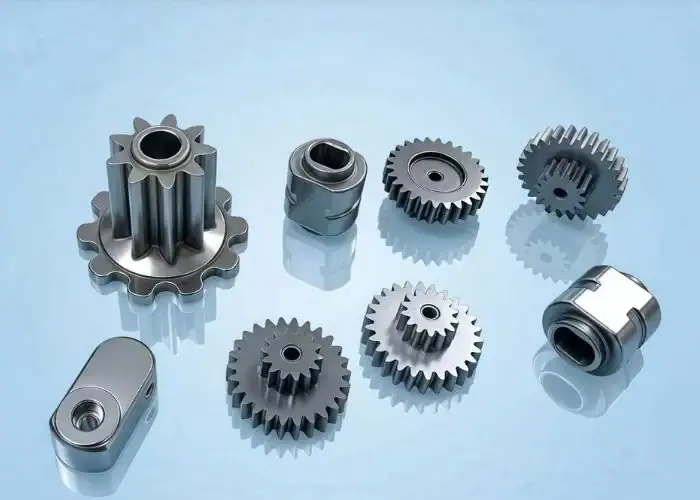
One of the biggest advantages of EDM is that material hardness has very little influence on machinability. As long as the material is electrically conductive, EDM can usually process it effectively.
Carbide and Tool Steel
Tungsten carbide and hardened tool steel are among the most common EDM materials because they create severe tool wear during conventional cutting.
EDM is widely used for:
- Punch dies
- Mold cavities
- Carbide tooling
- Wear-resistant components
Materials such as H13, D2, and carbide steel are commonly machined using wire EDM and sinker EDM.
Titanium and High-Temperature Alloys
Titanium alloy and nickel-based superalloys are difficult to machine conventionally due to heat concentration and rapid tool wear.
EDM provides several advantages for these materials:
- Lower thermal stress
- No cutting force
- Stable micro-feature machining
- Better deep cavity capability
Common applications include:
- Turbine blades
- Aerospace engine components
- Medical implants
- Heat-resistant structures
Copper and Aluminum Alloys
Although EDM is commonly associated with hard materials, copper and aluminum alloys can also be machined effectively.
Applications include:
- Precision electronic parts
- Mold inserts
- Aerospace housings
- High-precision conductive structures
However, because aluminum has high thermal conductivity, discharge efficiency may differ compared with hardened steel or carbide.
Advantages and Limitations of EDM Machining
EDM offers several unique manufacturing advantages that make it essential in precision industries. However, it also has practical limitations that must be considered during process selection.
Benefits of EDM Machining
The biggest advantage of EDM is its ability to process hard conductive materials and complex geometries without generating cutting stress.
Major EDM advantages include:
- No mechanical cutting force
- Excellent dimensional accuracy
- High surface quality
- Deep cavity capability
- Micro-feature machining
- Stable performance on hardened alloys
In many precision mold projects, EDM is the only practical solution for sharp corners, narrow slots, and deep internal structures.
EDM also provides excellent repeatability for high-volume precision tooling applications.
Limitations of EDM Machining
Despite its precision advantages, EDM is generally slower than conventional machining.
Main EDM disadvantages include:
- Low material removal rate
- Long production cycles
- Higher power consumption
- Electrode wear
- Additional electrode manufacturing cost
- Conductive materials only
For example, rough milling a mold cavity may require only several hours, while sinker EDM finishing can take significantly longer depending on cavity depth and surface quality requirements.
Because of this, EDM is often combined with CNC milling rather than replacing it entirely.
When EDM Is the Better Choice
EDM is usually the better manufacturing choice when:
- Material hardness exceeds conventional machining capability
- Thin walls risk deformation
- Deep narrow cavities are required
- Micro holes are needed
- Surface finish requirements are extremely strict
- Internal geometries are difficult to access
In aerospace and medical industries, EDM is often selected not because it is faster, but because it provides higher reliability and dimensional stability for difficult structures.
EDM Applications by Industry
EDM machining is widely used in industries that require high precision, complex geometries, and hard-to-machine materials. Because it can process conductive metals with excellent dimensional stability and minimal cutting stress, EDM is especially important in aerospace, medical, mold manufacturing, automotive, and electronics applications.
Aerospace Components
Aerospace manufacturing heavily relies on EDM for:
- Turbine blade cooling holes
- High-temperature alloy machining
- Engine components
- Precision aerospace tooling
Many turbine cooling channels require aspect ratios and surface consistency that conventional drilling cannot achieve.
Medical Device Parts
Medical manufacturing uses EDM for:
- Surgical instruments
- Implant tooling
- Stent molds
- Precision cavity structures
Micro EDM is especially important for miniature medical components requiring extremely high dimensional consistency.
Mold and Die Manufacturing
Mold manufacturing remains one of the largest EDM industries.
Typical applications include:
- Injection molds
- Die-casting molds
- Stamping dies
- Precision mold inserts
Sinker EDM is especially valuable for deep cavity structures and fine internal details.
Automotive Precision Parts
Automotive applications include:
- Precision dies
- Fuel injection systems
- Transmission components
- Hardened tooling structures
Wire EDM is commonly used for high-precision contour tooling in automotive production.
Electronics and Micro Components
Micro EDM and wire EDM are widely used in electronics manufacturing for:
- Connector structures
- Semiconductor tooling
- Conductive micro components
- Fine slot machining
As electronic products continue becoming smaller, EDM plays an increasingly important role in micro-feature manufacturing.
FAQs
How Many Types of EDM Machines Are There?
There are three main types of EDM machines: wire EDM, sinker EDM, and small hole EDM. Advanced options such as powder mixed EDM, dry EDM, and micro EDM are also used for special surface finish, clean machining, or micro-feature applications.
What Is the Difference Between Wire EDM and Sinker EDM?
Wire EDM uses a moving wire electrode to cut profiles, slots, and contours. Sinker EDM uses a shaped copper or graphite electrode to form deep cavities and blind internal features. Wire EDM is better for contour cutting, while sinker EDM is better for mold cavities and enclosed shapes.
What Is Small Hole EDM Used For?
Small hole EDM is used to machine deep micro holes in hard conductive materials. It is common in turbine blade cooling holes, mold vent holes, fuel injectors, nozzles, and medical micro parts.
Can EDM Machine Non-Conductive Materials?
Standard EDM cannot machine non-conductive materials because it relies on electrical discharge. It is mainly used for conductive metals such as tool steel, carbide, titanium, stainless steel, copper alloys, and aluminum alloys.
Is EDM Better Than CNC Milling?
EDM is better for hard materials, deep cavities, thin walls, micro holes, and complex internal features. CNC milling is better for faster material removal, general machining, lower cost, and larger external surfaces. In many projects, both processes are used together.
Conclusion
EDM machining is one of the most important precision manufacturing technologies for hard materials, deep cavities, and micro structures. Wire EDM, sinker EDM, and small hole EDM each provide unique advantages depending on the geometry, tolerance requirements, and application environment of the part.
At TiRapid, we provide precision EDM machining and CNC manufacturing services for custom metal components. Whether your project requires hard material machining, deep cavities, micro holes, or complex contours, our team can offer a tailored manufacturing solution based on your design needs.