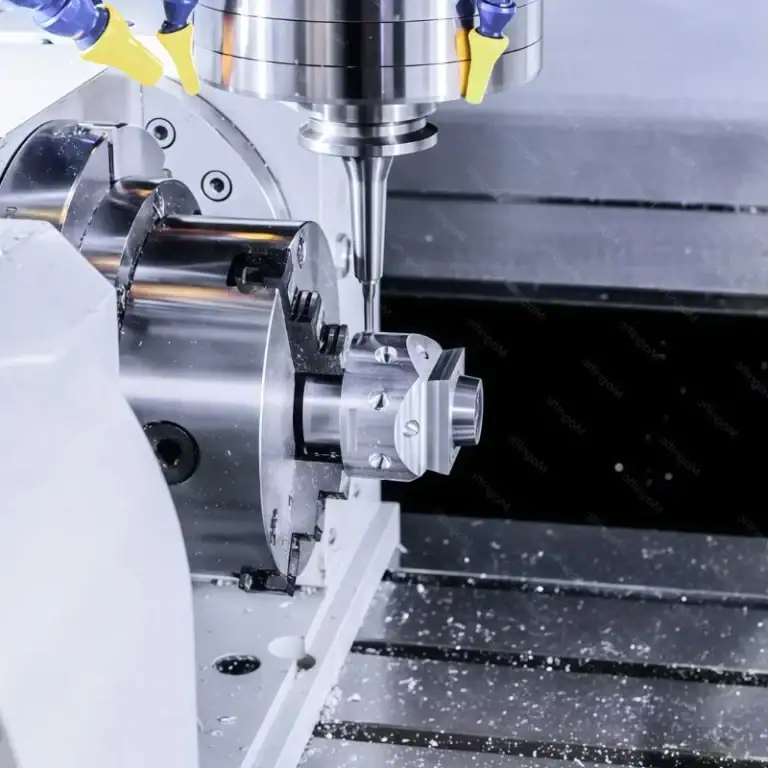
In CNC plastic machining, “machining failure” doesn’t just mean the part cannot be completed. More commonly, it includes problems such as dimensional inaccuracies, severe deformation, poor surface quality, or assembly abnormalities. These problems are often not caused by a single reason, but are the result of the combined effects of material properties, process flow, operational details, and material selection strategies. Therefore, to truly reduce the failure rate, a systematic analysis and optimization from multiple levels is necessary.
What Constitutes a CNC Plastic Machining Failure?
-
Definition and Common Manifestations of Machining Failure
CNC plastic machining failure generally refers to the workpiece failing to meet design requirements, including excessive dimensional deviations, structural deformation, surface roughness, or cracks. In actual production, failure does not necessarily mean complete scrap; some problems can be repaired through secondary machining, but this increases costs and time. For mass production, if problems recur, it will seriously affect delivery efficiency and corporate reputation.
-
Classification of Core Causes of Failure
Essentially, machining failures mainly stem from three categories of factors: material problems, process problems, and operational problems. Material problems include internal stress, poor hygroscopicity, or poor thermal stability; process problems involve unreasonable path design or incorrect processing sequence; operational problems include improper parameter settings or poor equipment condition. These three types of factors often overlap, making the problem more complex.
-
The Special Characteristics of Plastic Processing
Compared to metal processing, plastics are more sensitive to changes in temperature, pressure, and environment. For example, the same cutting parameters may run stably on metals, but may cause melting or deformation in plastics. Therefore, understanding the special characteristics of plastic materials is a prerequisite for avoiding processing failures.
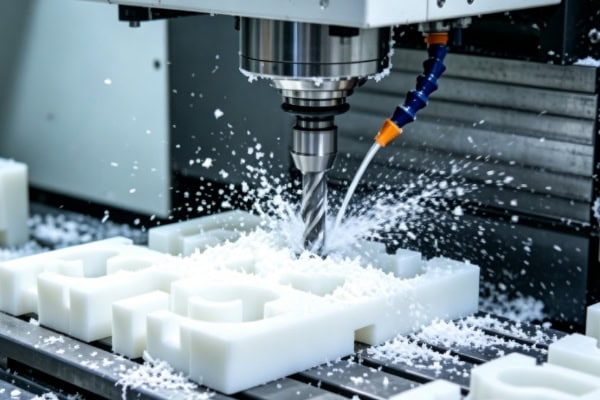
Situations that May Lead to Processing Failures
-
Problems Caused by Insufficient Pre-Processing Preparation
Many processing failures stem from insufficient pre-processing preparation. For example, failure to perform stress relief treatment on the material can lead to warping after processing; or failure to perform environmental adaptation treatment can cause dimensional instability due to changes in temperature and humidity. Furthermore, failure to plan the processing path and fixture scheme properly can also create hidden dangers in subsequent processing.
-
Lack of Control During Processing
Problems can easily occur if dynamic control is lacking during processing. For example, excessive cutting depth can lead to uneven stress on the material; too slow feed rate can cause localized overheating; poor chip removal increases friction, further exacerbating the risk of deformation. If these problems are not addressed in time, they will gradually amplify, ultimately leading to machining failure.
-
Neglected Post-Machining Treatment
Many companies proceed directly to the next stage after machining, neglecting the material’s “stabilization process.” Plastics may still release internal stress after machining, resulting in secondary deformation. Without resting or inspection, problems may only be discovered during assembly, leading to higher rework costs.
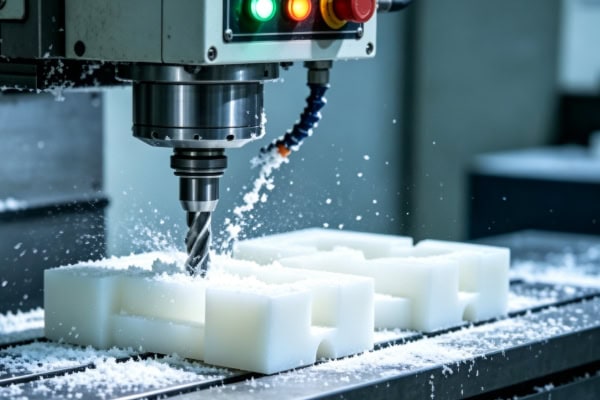
How to Improve Plastic Machining?
-
Adjusting Cutting Parameters
Cutting parameters are one of the core factors affecting machining quality. Excessive spindle speed can generate too much heat, softening or even melting the material; mismatched feed rates can increase tool friction. Reasonable parameter settings should be adjusted based on material characteristics, rather than applying fixed experience.
-
Optimizing Fixture Design
Fixture problems are one of the common causes of machining failure. Excessive clamping force can lead to stress release and deformation after machining; unstable clamping can cause vibration during machining, affecting accuracy. Therefore, fixture design needs to balance stability and flexible support to ensure uniform force distribution.
-
Select and Maintain Cutting Tools
The condition of the cutting tool directly affects machining quality. Using a dull tool increases friction and heat, resulting in surface roughness or even material burning. Furthermore, different types of cutting tools should be selected for different plastics; for example, single-edged tools are more suitable for soft materials to reduce cutting resistance.
-
Control Thermal Management
Temperature control is crucial in plastic machining. If the temperature in the machining area is too high, the material will soften or even deform. Therefore, temperature should be controlled through reasonable toolpath design, intermittent machining, and necessary cooling methods to ensure the material is machined in a stable state.
Why Choose Materials Carefully?
-
Insufficient Material Stability
If a material with poor dimensional stability or high internal stress is selected, even with optimized processes, deformation cannot be completely avoided. For example, some low-cost plastics, while easy to machine, are prone to problems in high-precision applications.
-
Impact of Hygroscopicity
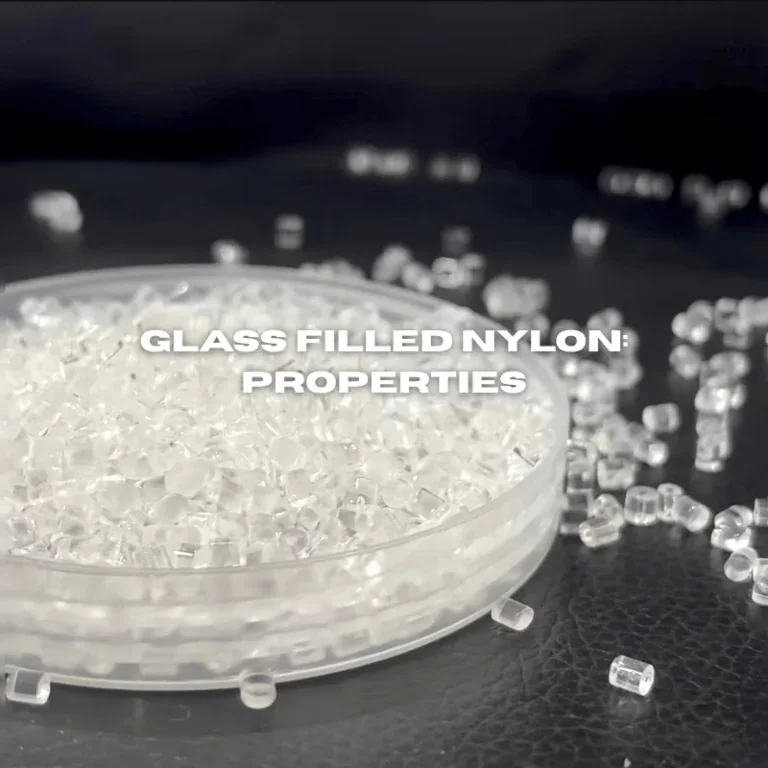
Materials like nylon are highly hygroscopic. If not dried properly, moisture evaporation during processing can cause dimensional changes and even blistering. Therefore, environmental factors must be considered during material selection, and proper pretreatment is essential.
-
Mismatched Thermal Properties
Different plastics have significantly different heat resistance properties. Using materials with poor heat resistance under high speed or high load conditions can easily lead to melting or deformation. Therefore, material selection must match processing conditions, not just cost.
-
Comprehensive Material Selection Approach
In practical applications, the product’s intended use, precision requirements, and processing conditions should be comprehensively considered. For example, high-precision parts can preferentially choose materials with high stability such as POM or PEEK, while in cost-sensitive projects, a balance must be found between performance and price.
Potential Customer Concerns
-
Why do samples pass but mass production frequently fail?
This is a common problem encountered by many customers in actual collaborations. In the sample stage, the processing quantity is usually small, the material state is relatively stable, and operations are more cautious, making it easier to achieve ideal results. In mass production, batch variations in materials, environmental changes, and temperature fluctuations from continuous equipment operation can amplify problems that were initially subtle. Furthermore, fixture wear or changes in tool condition can lead to decreased machining consistency. Therefore, mass production requires more stringent process control and quality monitoring.
-
How to reduce failure rates while maintaining cost control?
Reducing failure rates does not necessarily mean significantly increasing costs. By optimizing process flows, improving machining stability, and selecting appropriate materials, overall yield rates can be improved without significantly increasing material costs. In fact, reducing rework and scrap is itself a cost saving.
-
Can all deformations or problems be repaired through post-processing?
Not all problems can be repaired. For example, severe structural deformations or internal stress issues, even after dimensional adjustments through secondary machining, may deform again during subsequent use. Therefore, a more effective approach is prevention in the early stages of manufacturing, rather than relying on post-processing repairs.
conclusion
In summary, the reasons for CNC plastic machining failures may include inherent internal stress in the material or excessive hygroscopicity, which can easily lead to deformation after machining. Other causes include improper cutting parameter settings, such as excessively high spindle speed or mismatched feed rate, which can cause material overheating, softening, and even dimensional deviations. Inadequate fixture design and uneven stress distribution can also cause workpiece warping after machining or stress relief. Furthermore, dull tools, poor chip removal, or inadequate post-machining resting conditions can all increase the probability of failure. In short, any detail, if not properly controlled, can become a source of problems. Therefore, to reduce machining failures, it’s not enough to focus on a single point; a holistic optimization approach is needed, encompassing material selection, machining processes, and technical details. Standardizing and stabilizing each step is crucial to truly improving yield rates and making machining results more controllable and reliable.