In CNC plastic machining, material deformation is one of the key issues affecting dimensional accuracy, assembly performance, and product appearance. Compared to metals, plastics are more susceptible to the effects of temperature, stress, and processing methods, resulting in warping, shrinkage, or dimensional deviations.
Understanding the Essence of Plastic Machining Deformation
-
Definition and Manifestations of Material Deformation
In CNC plastic machining, material deformation refers to the phenomenon where the shape or size of a workpiece changes unpredictably during or after machining due to internal stress release, temperature changes, or external forces. This change may manifest as uneven surfaces, edge warping, hole misalignment, or even overall distortion. For precision parts, even minute deformation can directly affect assembly accuracy or functional achievement, thus requiring serious attention.
-
Core Causes of Deformation
Material deformation is usually formed by the combined effect of multiple factors. First, residual stress has accumulated in the material during the production process (such as extrusion or injection molding). Once part of the structure is removed during machining, this stress is redistributed and released, thus triggering deformation. Secondly, the heat generated during cutting softens the plastic locally, reducing its rigidity and making it more prone to deformation. Finally, uneven pressure applied by the fixture is released after machining, leading to springback deformation.
-
Differences in Machining Stability between Plastics and Metals
Compared to metals, plastics have a higher coefficient of thermal expansion and lower rigidity, meaning they are more sensitive to temperature changes and external forces. Additionally, some plastics are hygroscopic, causing dimensional changes with ambient humidity. Therefore, in CNC machining, plastics require more precise control of process parameters and cannot simply rely on metal machining experience.
Process from Pre-machining to Post-machining
-
Pre-machining Preparation
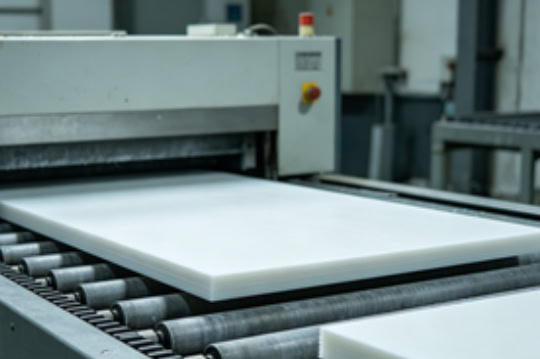
Before formal machining, the material must be pre-treated. First, internal stress is released through annealing or natural placement to bring the material to a relatively stable state. Second, the machining path needs to be rationally planned, adopting a phased strategy of “roughing—semi-finishing—finishing” to avoid cutting too much material at once and causing stress concentration. Furthermore, fixture design should be considered in advance to ensure uniform force distribution and avoid the risk of hidden deformation caused by localized compression.
-
Machining Process Control
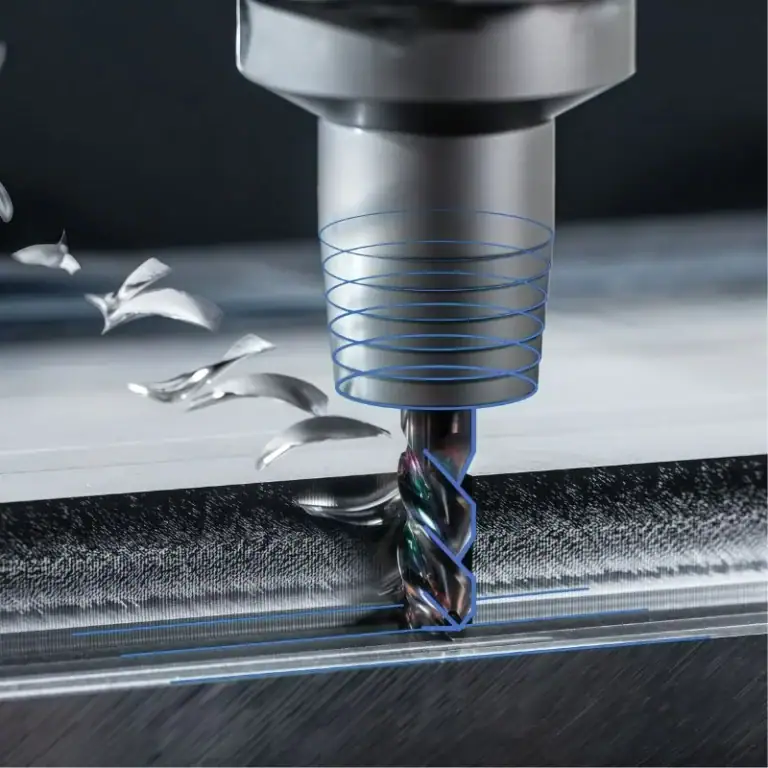
During machining, the risk of deformation should be reduced by reasonably controlling cutting parameters. For example, using small depths of cut and multiple passes can reduce stress changes caused by a single cut. Simultaneously, the spindle speed and feed rate need to be matched to avoid excessive heat generation due to friction. For cases of poor chip removal, the toolpath should be optimized promptly or air cooling should be used to reduce heat accumulation and maintain material structural stability.
-
Post-Machining Processing
After machining, the deformation problem is not yet solved. The workpiece should be placed in a stable environment to allow internal stress to further release. For high-precision parts, a second finishing process can be arranged to fine-tune key dimensions. Furthermore, verifying dimensions using inspection equipment helps to promptly identify and correct potential deformation problems, thereby improving the overall yield rate.
How to Control Technical Details?
-
Symmetrical Machining and Balanced Material Removal
During machining, the structural stress should be kept symmetrical as much as possible. For example, for sheet metal or thin-walled structures, alternating machining on both sides can be used to release stress evenly on both sides. This method effectively reduces warping caused by unilateral machining, resulting in a more stable final product.
-
Layered Cutting and Progressive Finishing
Dividing the overall machining process into multiple stages is a crucial method for controlling deformation. By removing material layer by layer, sudden stress changes caused by single-cutting can be avoided. Simultaneously, near the final dimensions, small-mass finishing should be used to minimize disturbance to the material structure. This “progressive machining” strategy helps improve dimensional accuracy and surface quality.
-
Fixture and Support Optimization
Fixtures not only fix the workpiece but also directly affect machining deformation. A well-designed fixture should maximize the contact area to reduce localized pressure. Flexible materials can be used as buffer layers to reduce the risk of deformation caused by clamping. Furthermore, for large or thin-walled workpieces, additional support points should be added to ensure uniform overall stress distribution.
-
Tooling and Thermal Control
The sharpness of the cutting tool directly affects the generation of cutting heat. A sharp tool reduces friction, making cutting smoother and thus reducing the risk of softening due to temperature rise. Meanwhile, appropriate rotation speed and feed parameters should be selected to avoid prolonged processing in the same area. If necessary, temperature can be controlled through air cooling or intermittent processing to ensure the material is processed under stable conditions.
How to reduce deformation risk from the source?
-
Prioritize High-Stability Materials
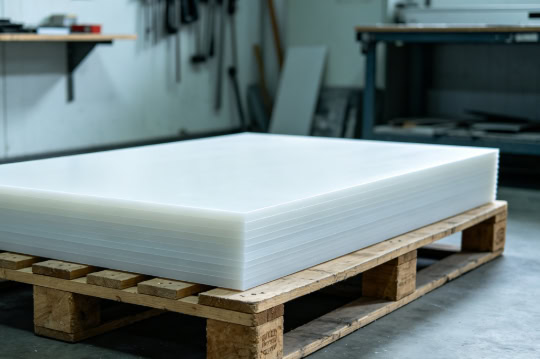
In projects with high dimensional accuracy requirements, engineering plastics with good stability should be prioritized. For example, polyoxymethylene (POM) has good dimensional stability and low moisture absorption, making it ideal for precision parts processing; while PEEK maintains a stable structure even at high temperatures, making it suitable for high-end applications. Although these materials are more expensive, they significantly reduce the risk of deformation.
-
Appropriate Use of Medium-Performance Materials
Materials such as ABS and PC exhibit a relatively balanced performance during processing, possessing both sufficient strength and good machinability. However, it should be noted that these materials may still deform under high temperatures or improper cutting conditions, therefore, closer attention must be paid to process control during use.
-
Cautious Use of Easily Deformable Materials
Some plastics, such as PVC or PMMA, are very sensitive to temperature and stress changes, making them more prone to warping or cracking during processing. If necessary, thorough process verification should be conducted beforehand, and cutting parameters and environmental conditions should be strictly controlled.
-
Comprehensive Principles of Material Selection
Materials should be selected comprehensively based on the product’s intended use, precision requirements, and operating environment. For example, in high-humidity environments, highly hygroscopic materials should be avoided; for transparent parts, a balance must be struck between aesthetics and stability. Appropriate material selection not only reduces processing difficulty but also fundamentally reduces deformation problems.
conclusion
Truly stable CNC plastic machining capability is not about “avoiding deformation,” but about “predictable and controllable micro-deformation management capability.” To truly control material deformation in CNC plastic machining, one cannot rely solely on a single technical point but needs to establish a systematic approach throughout the entire machining process. From initial material pretreatment and process planning, to cutting parameter control and fixture optimization during machining, and finally to stress release and dimensional stabilization after machining, each step directly affects the final result. Furthermore, the differences in the physical properties of different plastic materials determine their deformation risk level during machining. Therefore, appropriate material selection is the first line of defense against deformation. For components requiring high precision, materials with stronger dimensional stability should be selected first, and deformation should be controlled within an acceptable range by combining layered processing, thermal control, and symmetrical material removal processes.