Oil valve bodies are typical critical pressure-bearing components, and their manufacturing quality cannot be evaluated solely by the dimensional accuracy achieved after CNC machining. For high-pressure, corrosive, or demanding operating conditions, the valve body generally requires an appropriate casting, forging, or other compliant blank form selected according to the design and applicable standards. It is then precision-machined by CNC to form key structures such as the valve cavity, connection holes, and sealing surfaces, while material inspection, nondestructive testing, and pressure testing are also required to complete quality verification.
What Are the Core Requirements for High-Precision Machining of Oil Valve Bodies?
Valve body manufacturing requires a complete process chain from the blank to the finished product. CNC cutting alone cannot be regarded as a guarantee of pressure-bearing performance.
The Blank Form Determines the Foundation of Subsequent Manufacturing
For high-pressure oil valve bodies, the blank manufacturing route is generally determined according to the pressure rating, material, structure, and applicable standards. Common forms include forgings and castings, while certain special structures may use other manufacturing methods.
- Forged valve bodies are suitable for structures requiring high material density, strength, and overall pressure-bearing performance.
- Cast valve bodies are suitable for complex flow passages, cavities, and integrated structures, and can reduce the machining difficulty caused by complex internal geometries.
- Before the blank enters the machining process, material certification, dimensional inspection, and other necessary quality inspections should be carried out according to project requirements.
A suitable blank manufacturing route is the starting point for safe valve body production, while CNC machining completes the precise dimensional and structural forming based on a qualified blank.
CNC Machining Focuses on Pressure-Bearing and Sealing Structures
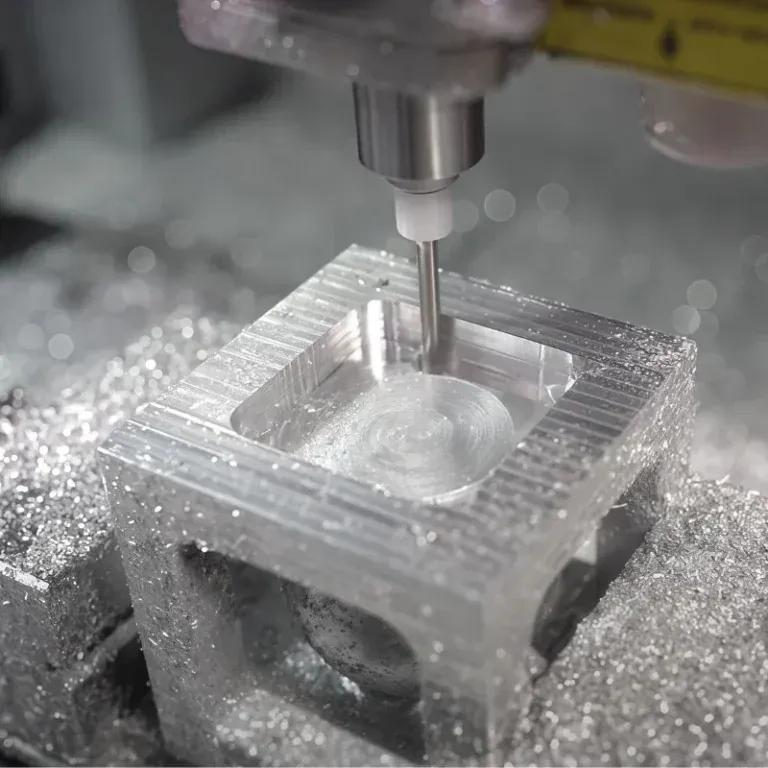
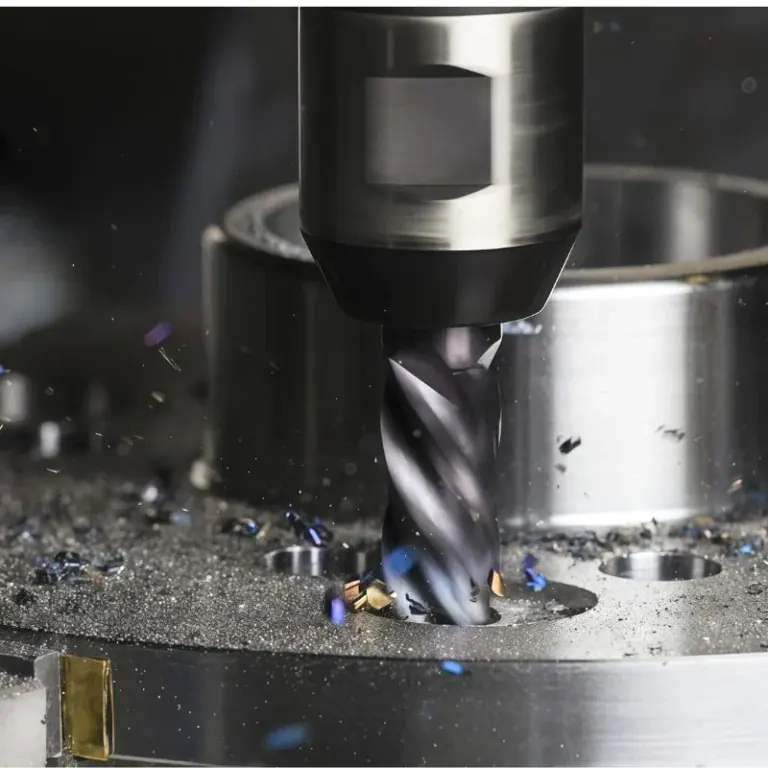
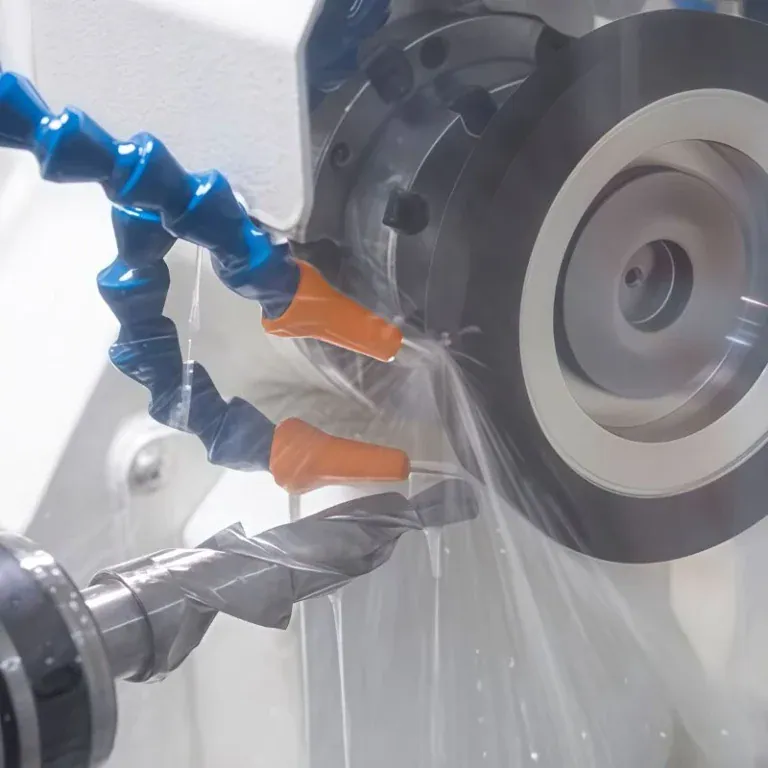
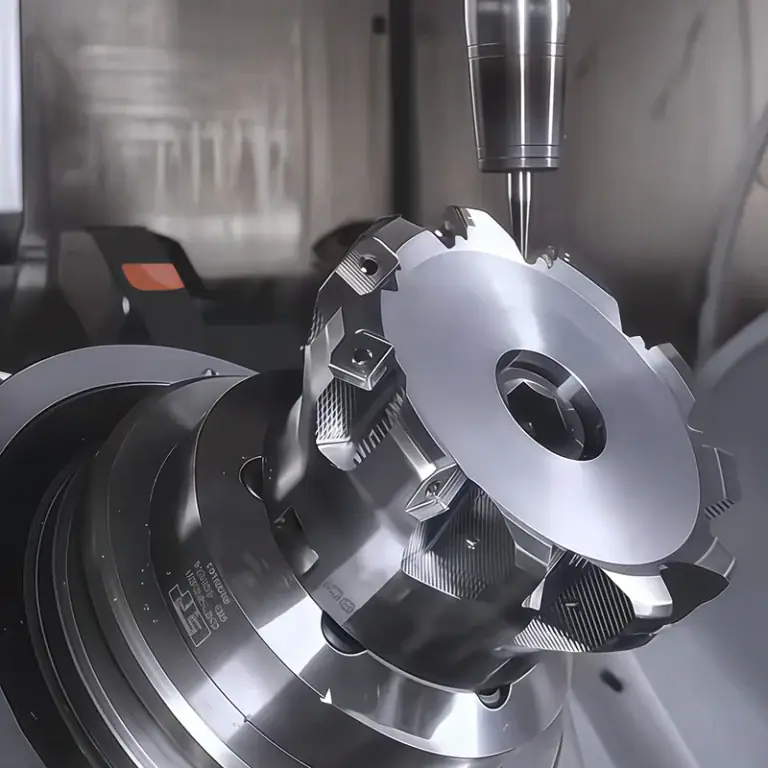
After the valve body blank has been formed, CNC machining is mainly responsible for machining critical dimensions to meet design requirements, including flanges, valve cavities, hole positions, sealing grooves, and mating surfaces. During machining, roughing, semi-finishing, and finishing operations should be arranged appropriately according to the structure, with particular attention paid to thin-wall areas, machining allowances, and deformation control. A stable CNC process provides an accurate geometric foundation for subsequent assembly, sealing, and pressure testing.
Material and Inspection Requirements Must Be Planned Together
Oil valve bodies may be made from carbon steel, alloy steel, stainless steel, and other materials. The specific material selection should be determined according to the medium, temperature, pressure, and design requirements.
| Manufacturing Requirement | Recommended Manufacturing Solution | Key Control Items |
| High-pressure valve body | Forging + precision CNC machining | Blank quality, dimensions, material properties |
| Valve body with complex flow passages | Casting + precision CNC machining | Internal casting quality, flow passage dimensions |
| High-precision connections | Precision CNC milling/turning | Flange surfaces, hole positions, tolerances |
| Sealing structure machining | Precision CNC machining + finishing | Sealing grooves, valve seat mating surfaces |
| Finished product quality verification | NDT + pressure testing | Internal and external defects, body and sealing performance |
A truly complete valve body manufacturing solution must plan the blank, machining, and quality verification as a continuous process.
How Does CNC Machining Ensure Consistency in Oil Valve Body Manufacturing?
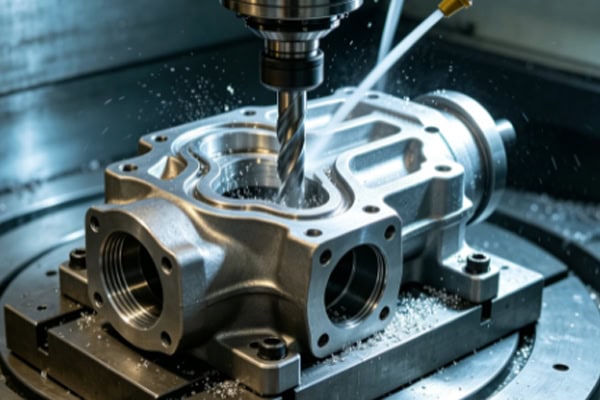
Oil valve bodies are commonly available in different pressure ratings, specifications, and structures. During mass production, machining accuracy must remain stable and consistent with the quality of the upstream blanks.
Precision Machining Starts with Qualified Blanks
A valve body should not be simply understood as a piece of metal subjected to extensive cutting. For pressure-bearing products, the appropriate forging, casting, or other blank manufacturing route should be determined according to the product design and applicable standards before the blank enters the CNC machining process.
- Verify the material grade and relevant material certificates.
- Control critical blank dimensions and machining allowances.
- Establish the workholding and machining datums according to the condition of the blank.
- Arrange machining operations appropriately for critical pressure-bearing areas.
This “blank first, precision machining second” process is more consistent with the manufacturing logic of pressure-bearing valve bodies.
Stable Processes Control Batch Dimensions
After entering the CNC machining stage, critical dimensions such as hole diameters, hole spacing, flange surfaces, and valve seat installation positions require clearly defined process controls. Standardized machining programs, appropriate cutting parameters, first-article approval, and in-process inspection can reduce batch-to-batch variation. For complex valve bodies, the effects of workholding deformation and tool wear on final dimensions must also be considered. Stable process control helps reduce batch rework and on-site assembly adjustments.
Nondestructive Testing Cannot Be Replaced by Dimensional Inspection
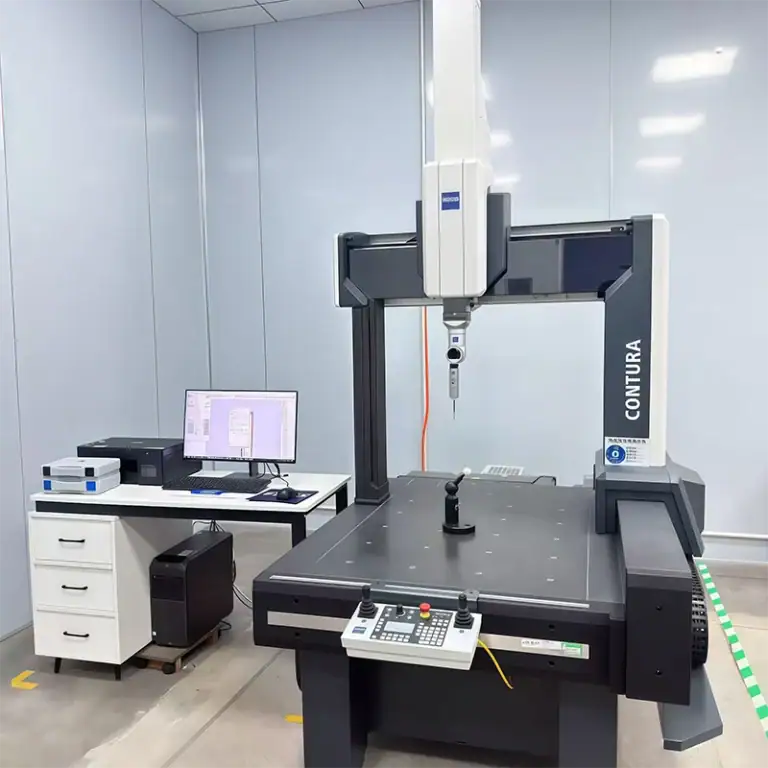
Valve bodies are pressure-bearing components. Coordinate measurement or conventional dimensional inspection alone cannot determine whether all potential internal or surface defects are present in the material. Depending on the product type, material, standards, and purchasing requirements, appropriate nondestructive testing methods may be specified.
- MT magnetic particle testing: Suitable for detecting surface and near-surface defects in magnetizable materials.
- UT ultrasonic testing: Can be used to evaluate internal material defects.
- For specific products and standards, other NDT methods such as PT and RT may also be required.
The specific inspection methods and acceptance criteria should be determined according to the product standards, design documents, and purchasing specifications.
What Quality Verification Is Required for Finished Oil Valve Bodies?
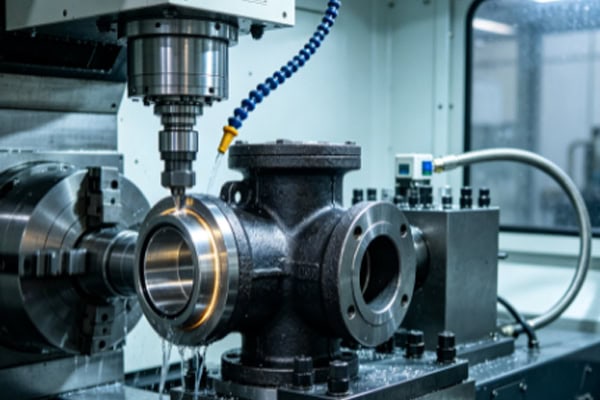
The completion of valve body machining does not mean that the manufacturing process is finished. Pressure-bearing capacity and sealing performance must also be verified through the required inspections and tests.
Body Pressure Testing Verifies Pressure-Boundary Integrity
Body pressure testing is an important inspection item before oil valve bodies are released from the factory. It is primarily used to confirm the integrity of the pressure boundary.
- Determine the test conditions according to the applicable standards and order requirements.
- Conduct the body test in accordance with relevant valve inspection and testing standards.
- Confirm the test pressure, medium, duration, and acceptance requirements according to the valve type.
- Check whether leakage, deformation, or other abnormalities occur under the specified pressure.
Body pressure testing provides further verification of the valve body’s pressure-bearing safety and manufacturing quality.
Sealing and Shutoff Performance Require Separate Verification
High valve body machining accuracy does not necessarily mean that the assembled valve will have qualified shutoff performance. After valve assembly, shutoff and leakage tests must be conducted according to the applicable standards, mainly including:
- Low-pressure shutoff test: Checks sealing performance under low pressure.
- High-pressure shutoff test: Verifies shutoff sealing capability under high pressure.
- Backseat test: Checks whether valves equipped with a backseat structure provide effective sealing.
- Leakage measurement: Detects leakage according to the applicable standards and customer requirements.
- Test items determined by valve type: The specific test content should be based on the applicable standards, product standards, and customer requirements.
Including sealing tests in the final inspection provides a more comprehensive confirmation of the valve’s shutoff performance and operational reliability.
Inspection Records Must Establish Quality Traceability
For oil valve body projects, customers are concerned not only with final dimensions but also with whether the entire manufacturing process is traceable. Quality documents typically include:
- Material certificates.
- Blank inspection records.
- Critical dimensional inspection reports.
- Nondestructive testing reports.
- Pressure test records.
Organizing complete quality records helps customers confirm the valve body’s manufacturing status, inspection results, and acceptance basis.
How Should You Choose a High-Precision Oil Valve Body Machining Supplier?
The capabilities of an oil valve body supplier cannot be judged solely by the number of CNC machines it operates. It is also necessary to evaluate whether the supplier can coordinate the complete manufacturing process for pressure-bearing components.
Evaluate the Supplier’s Ability to Integrate Blanks with CNC Processes
The supplier should understand how different blanks, such as castings and forgings, affect machining allowances, datum selection, and workholding methods, and should be able to develop a suitable CNC machining route according to the valve body structure. For R&D prototypes and special non-standard products, rapid CNC prototyping from solid material can be used as a design verification method, but it should not be directly equated with the mass-production blank route for formal high-pressure valve bodies.
Evaluate Supporting NDT and Pressure Testing Capabilities
The supplier should clearly identify which inspections are performed in-house and which are completed by qualified third-party or professional testing organizations, and should be able to provide the corresponding reports according to customer requirements.
- Confirm whether magnetic particle, ultrasonic, penetrant, radiographic, and other nondestructive testing items meet product requirements.
- Confirm the standards and acceptance conditions used for body, sealing, and shutoff tests.
- Verify the traceability relationship among material, inspection, and pressure test records.
A complete inspection system enables the valve body to progress from being merely “dimensionally qualified” to being “verified according to the applicable standards.”
Evaluate Whether the Supplier Can Provide Complete Manufacturing Coordination
For oil valve body projects, an ideal supply chain should include:
- Blank coordination: Select suitable cast or forged blanks according to the structure, material, and pressure rating.
- CNC machining: Finish critical areas such as the valve cavity, flanges, connection holes, and sealing grooves.
- Surface treatment: Apply corrosion protection, passivation, or coating treatment according to the material and operating environment.
- Quality inspection: Complete material, dimensional, visual, and necessary nondestructive inspections.
- Pressure testing: Conduct body, sealing, or shutoff tests to verify pressure-bearing and sealing performance.
- Document traceability: Manufacture according to the relevant standards specified by the customer and provide inspection records.
An oil valve body supplier should possess not only CNC machining capabilities but also the ability to coordinate the complete processes involving blanks, inspection, testing, and quality documentation.
Oil valve body projects require a machining solution based on product drawings, 3D models, pressure ratings, valve types, and customer purchasing specifications. TiRapid provides precision CNC machining and manufacturing coordination for valve bodies, supporting prototype, small-batch, and mass production. We help customers complete complex structural machining, critical dimensional control, and the coordination of relevant quality documentation. By coordinating machining, inspection, and delivery processes through a unified workflow, we can reduce the communication costs associated with multiple suppliers and improve project execution efficiency.