A dovetail groove is a specially shaped groove used to retain an O-ring securely in static sealing applications. It is commonly used when the seal must stay in place during assembly, maintenance, or repeated opening and closing of a component. Compared with a standard straight groove, a dovetail groove provides better seal retention but usually requires more careful design and machining.
In this guide, you will learn what a dovetail groove is, how it is machined, where it is commonly used, and what design factors should be considered when developing custom sealing parts.
What Is a Dovetail Groove?
A dovetail groove is a groove with angled side walls and a narrower opening that mechanically helps hold an O-ring in place. In sealing design, it is mainly used when a standard groove cannot reliably keep the seal positioned during handling or assembly.
Basic Definition of a Dovetail Groove
A dovetail groove is a retention-style gland for O-rings. Its geometry creates a locking effect that helps keep the seal seated before the mating parts are clamped together. This makes it different from a normal groove that mainly depends on compression after assembly.
Structural Features of a Dovetail Groove
The main features of a dovetail groove are angled walls, a controlled opening width, defined groove depth, and critical corner radii. These features work together to retain the O-ring while still allowing proper squeeze in service. Parker’s handbook also notes that the groove radius is critical because too small a radius can damage the O-ring during installation, while too large a radius can increase sealing risk.
Why Is a Dovetail Groove Commonly Used in Sealing Designs?
A dovetail groove is commonly used because it improves O-ring retention in static sealing assemblies. Its main benefit is better seal stability before final closure, not broader sealing capability in every situation.
O-Ring Retention Function
The primary function of a dovetail groove is to keep the O-ring from falling out. This is especially useful in bolted flanges, removable covers, and assemblies that are opened and closed during service. Marco’s guide specifically notes this type of groove is used to keep O-rings in place in bolted flanges or open-and-close lids.
Suitability for Static Sealing Applications
A dovetail groove is mainly intended for static sealing. Parker’s static O-ring handbook places dovetail and half-dovetail grooves within static sealing guidance, which is why this groove form is generally treated as a static gland solution rather than a standard dynamic sealing design.
Better Stability During Assembly and Maintenance
The groove improves assembly stability because the O-ring is less likely to shift during handling. In practical manufacturing, that can reduce installation errors, pinching, and seal displacement before final tightening. This is one of the main reasons dovetail groove design is selected despite its higher machining complexity.
When a Dovetail Groove Makes Sense
| Situation | Why Dovetail Groove Helps |
| Vertical installation | Reduces risk of O-ring dropping out |
| Serviceable cover or lid | Keeps seal positioned during reopening and reassembly |
| Face seal layout | Improves retention before compression |
| Limited assembly access | Helps maintain seal position during handling |
How Are Dovetail Groove Dimensions Commonly Defined?
Dovetail groove dimensions are commonly defined through published inch-based or metric-based gland charts and then adjusted if needed for the actual part structure, seal size, and machining method. In most cases, the key dimensions include groove width, groove depth, groove angle, corner radius, and groove diameter.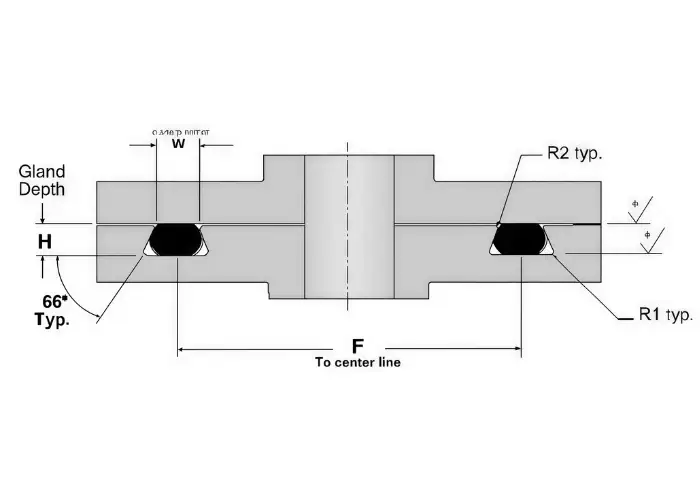
Inch-Based Designs
Inch-based dovetail groove dimensions are common when AS568 O-ring sizes are used or when the rest of the drawing is dimensioned in inches. Marco and Ace Seal both provide inch-based dovetail groove guidance for static applications, which makes inch charts the most common reference point in many North American sealing projects.
Metric Designs
Metric dovetail groove dimensions are used when the project follows metric O-ring sizing or metric part standards. Seal & Design separates standard and metric dovetail groove charts, which shows that metric design is treated as a normal design path rather than simply a converted inch format. Ace Seal also indicates that metric dovetail groove construction is generally recommended for O-rings with cross-sections of 3.53 mm and larger.
Standard Dimensions and Custom Dimensions
Standard dimensions are best suited to projects where the O-ring size, assembly style, and sealing layout match published reference charts. Custom dimensions are more suitable when the part has space limits, nonstandard sealing faces, or application-specific requirements. In real manufacturing projects, many dovetail grooves begin with standard dimensions but are later refined into custom machined features after design review.
| Dimension Type | What It Describes | Why It Matters |
| Groove Width | Internal seating width of the gland | Affects O-ring fit and gland fill |
| Groove Depth | Compression-related depth from sealing face | Controls sealing squeeze |
| Groove Diameter | Size relationship to the selected O-ring | Affects positioning and fit |
| Groove Angle | Retention wall geometry | Determines locking effect |
| Corner Radius | Transition shape at groove corners | Affects installation safety |
| Surface Finish | Roughness of sealing surfaces | Influences sealing reliability |
Typical Inch-Based Dovetail Groove Data
Marco’s default dovetail gland recommendations show that groove dimensions increase with O-ring cross-section. This makes the dimensioning logic easier to understand from a machining and design perspective.
| AS568 Series | O-Ring Cross Section (in) | Nominal Groove Width W (in) | Nominal Groove Depth H (in) | Corner Radius R (in) |
| -000 | 0.070 | 0.070 | 0.064 | 0.015 |
| -100 | 0.103 | 0.103 | 0.088 | 0.015 |
| -200 | 0.139 | 0.139 | 0.120 | 0.031 |
| -300 | 0.210 | 0.210 | 0.176 | 0.031 |
What Machining Methods Are Commonly Used for a Dovetail Groove?
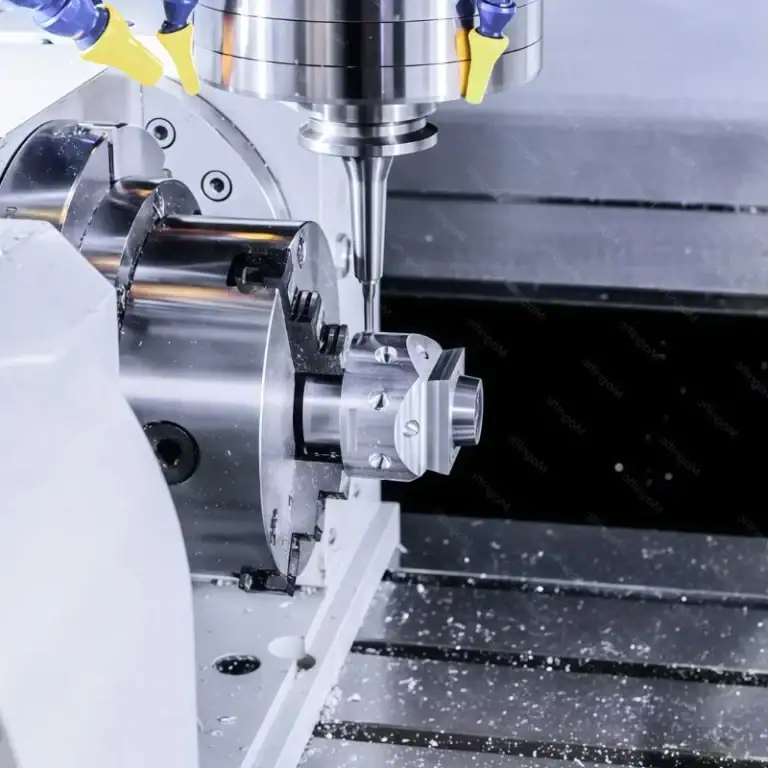
The machining methods commonly used for a dovetail groove include conventional milling, CNC milling, planing or slotting, wire EDM, and grinding. The actual method depends on groove size, material, tolerance, surface finish, and whether the groove is external, internal, open, or blind.
CNC Milling
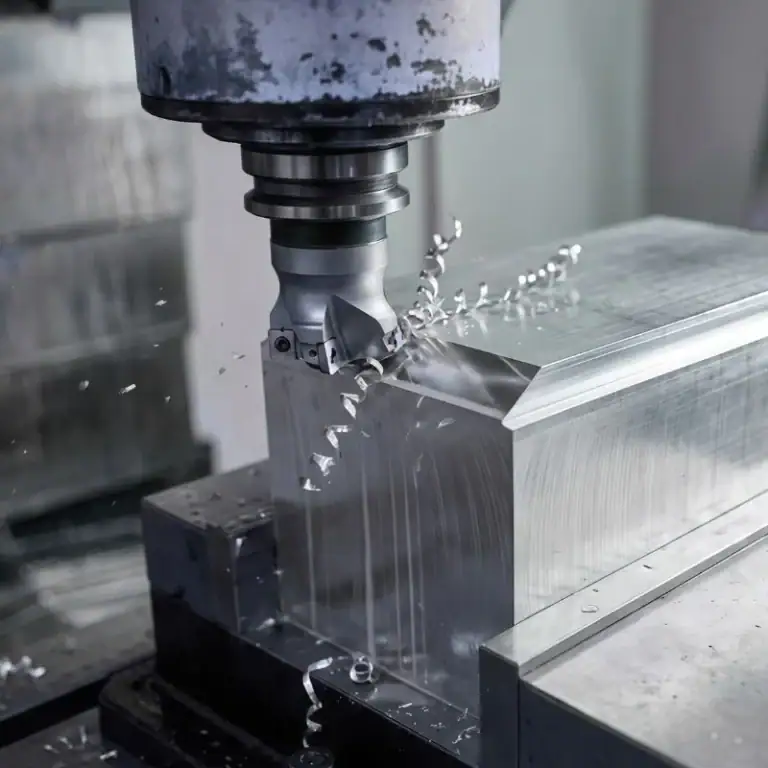
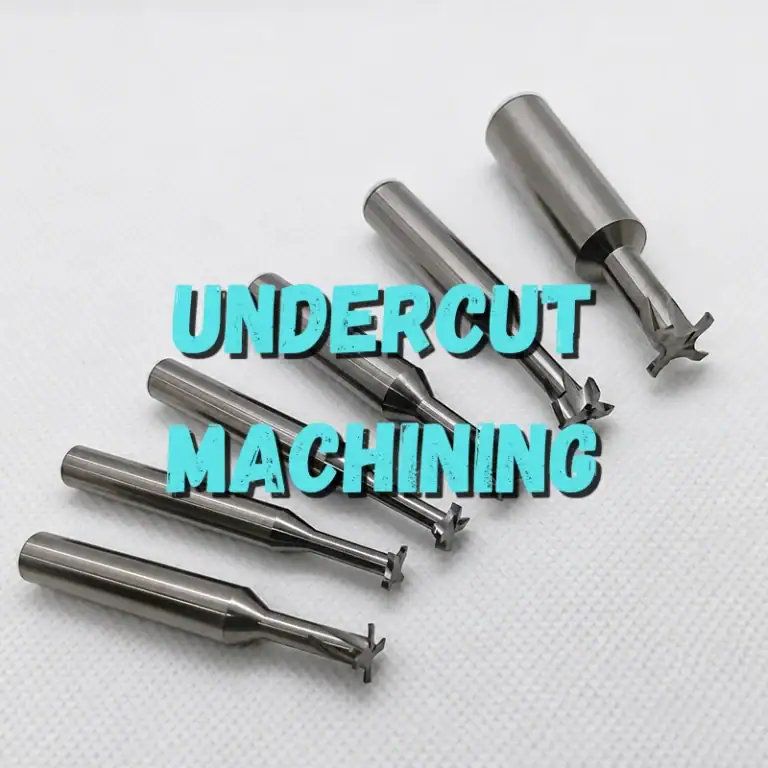
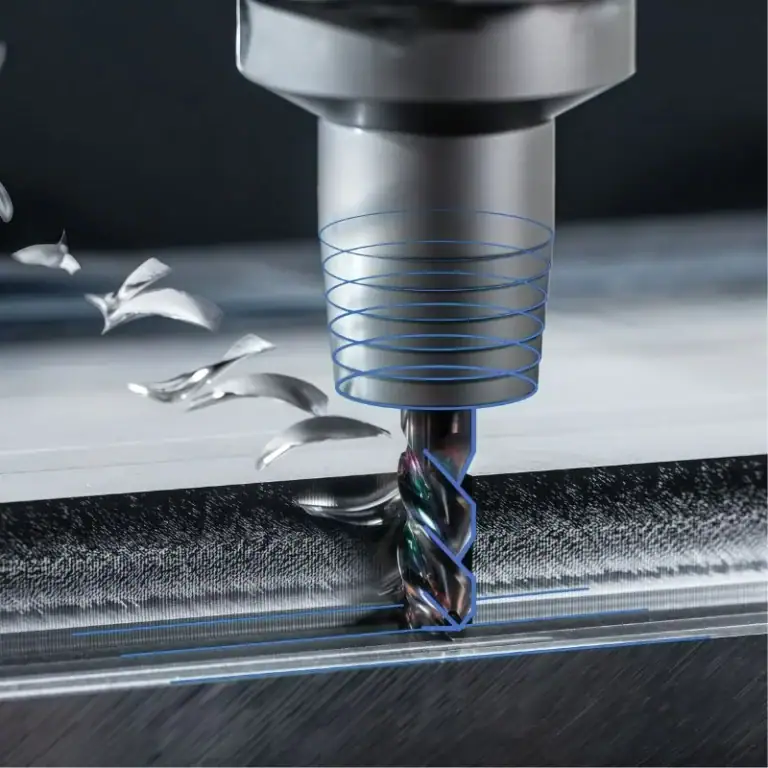
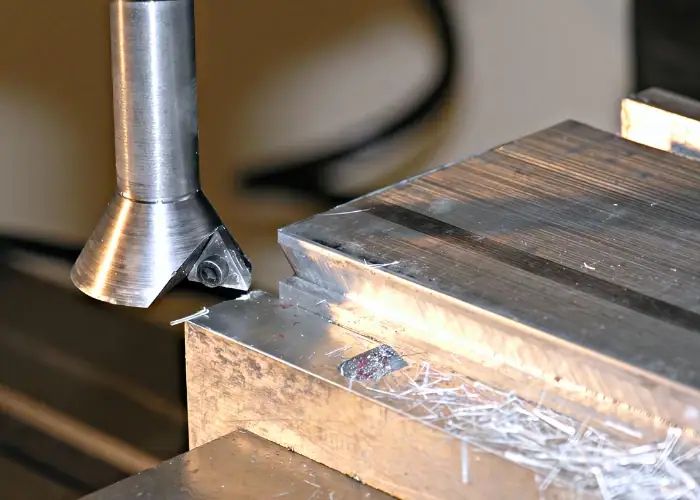
CNC milling is the most common method for dovetail groove machining in modern manufacturing. It can use an end mill to rough the slot first and then use a dovetail cutter to machine the angled walls, or it can use a form cutter directly when the geometry allows. This method offers better dimensional consistency, higher efficiency, and stronger repeatability than manual milling.
For aluminum alloys such as 6061, 6063, and 7075, CNC milling is usually the preferred option because it provides good surface quality, stable size control, and efficient production.
Planing and Slotting
Planing and slotting can also be used to machine dovetail grooves, especially for large parts, internal dovetail shapes, or heavy-duty mechanical components. These methods remove material with a single-point tool and are more common in traditional machine shops or specialized applications.
Today, they are used less often than milling, but they still have value in certain large-size or difficult-access groove structures.
Wire EDM
Wire EDM is suitable for dovetail grooves that require very high precision, narrow profile control, or machining in hard materials. Because it uses electrical discharge rather than conventional cutting force, it can reduce deformation and improve accuracy in some applications.
However, wire EDM is generally slower than milling, so it is more often used for precision parts, tooling components, or special groove shapes rather than routine production.
Grinding
Grinding is used when a dovetail groove requires higher surface quality, better straightness, or tighter geometric control after rough machining. It is more common in machine guideways, precision sliding surfaces, and other high-requirement parts than in general sealing grooves.
In most cases, grinding is a finishing process rather than the primary machining method.
| Machining Method | Typical Use | Main Advantage |
|---|---|---|
| CNC Milling | Aluminum parts, custom machined parts | High accuracy and repeatability |
| Planing and Slotting | Large parts, internal or heavy grooves | Useful for special structures |
| Wire EDM | Narrow grooves, hard materials, precision parts | High precision and low cutting force |
| Grinding | High-accuracy guideways and finish surfaces | Better straightness and surface quality |
What Key Parameters Should Be Considered in Dovetail Groove Design?
The most important parameters are width, depth, angle, tolerances, and surface finish. These directly affect retention, sealing, installation, and machining quality.
Width
Width controls how the seal fits laterally in the gland. In dovetail groove design, width cannot be treated like a simple slot width because the opening geometry and undercut form also influence installation and retention.
Depth
Depth controls the final squeeze on the O-ring. It is one of the most sensitive groove dimensions because even small deviations can change sealing behavior significantly.
Angle
Angle forms the retaining shape of the dovetail groove. It also directly affects how the feature can be machined, because angle determines cutter form, access, and side-wall control.
Tolerances
Tolerances are especially important for dovetail grooves because Parker describes them as especially critical. Since this groove is both a sealing feature and a retention feature, dimensional drift can affect more than one function at the same time.
Surface Finish
Surface finish matters because it affects sealing quality. Marco recommends a maximum surface finish of 16 Ra for gases and 32 Ra for fluids for dovetail groove applications, which is a useful benchmark when planning CNC finishing strategy.
| Parameter | Sealing Impact | Machining Impact |
| Width | Affects groove fill and fit | Requires profile accuracy |
| Depth | Controls squeeze | Sensitive to tool wear and setup |
| Angle | Controls retention | Needs suitable cutter geometry |
| Radius | Protects seal during installation | Hard to hold consistently in small grooves |
| Surface Finish | Affects leakage resistance | Depends on tooling and finishing pass |
What Are the Main Advantages of a Dovetail Groove?
The main advantages of a dovetail groove are better O-ring retention, improved assembly stability, and more reliable seal positioning in static applications. Although it is harder to machine than a standard straight groove, it offers clear benefits when the seal must stay in place during assembly, maintenance, or repeated opening and closing.
Better O-Ring Retention
A dovetail groove helps hold the O-ring in place more securely than a standard straight groove. This is especially useful when the seal might otherwise shift, fall out, or become misaligned before final assembly. In practical sealing design, this retention function is one of the main reasons a dovetail groove is selected instead of a simpler groove form.
Improved Assembly Stability
A dovetail groove improves assembly stability because the seal is less likely to move during installation. This can reduce assembly errors and make the sealing process more controlled in parts such as covers, lids, and serviceable housings. When repeated opening and closing is expected, this stability becomes even more valuable.
More Reliable Static Sealing Support
A dovetail groove supports static sealing by combining retention and sealing in one machined feature. When correctly designed, it can improve sealing dependability by helping the O-ring remain in the intended position throughout assembly and use. This makes it especially useful in static applications where seal displacement would create leakage risk.
Better Suitability for Serviceable Parts
A dovetail groove is often more suitable for parts that are opened and closed during maintenance. In these applications, retaining the O-ring in the groove can make servicing easier and reduce the risk of the seal being misplaced or damaged during reassembly. This practical advantage is important in many custom industrial sealing components.
| Advantage | Why It Matters |
| Better O-Ring Retention | Helps prevent seal movement before assembly |
| Improved Assembly Stability | Reduces installation errors |
| More Reliable Static Sealing Support | Improves seal positioning and consistency |
| Better Suitability for Serviceable Parts | Makes repeated opening and maintenance easier |
What Are the Main Machining Challenges of a Dovetail Groove?
The main machining challenges are the undercut form, critical radii, side-wall accuracy, and sealing-grade surface quality. Parker’s handbook clearly states that dovetail grooves are difficult and expensive to machine.
Toolpath Requirements for the Groove Shape
A dovetail groove needs a toolpath that can create the undercut profile without distorting the wall form. In CNC milling, this usually means the groove is not cut in one simple pass like a straight slot. The tool sequence must consider cavity access, wall geometry, and burr control. This machining difficulty is one reason the groove is reserved for cases where retention is necessary.
Control of Internal Corners and Side Walls
Corner and wall control are critical because they directly affect installation and seal life. Parker specifically warns that insufficient radius can damage the O-ring during installation, while excessive radius may contribute to extrusion. That means corner geometry is a function-critical feature, not just a drawing detail.
Dimensional Consistency and Surface Quality
Dimensional consistency matters because small errors in depth, angle, or wall profile can change groove performance. Surface quality matters because the groove is part of the sealing interface. In production, dovetail groove machining therefore requires tighter process control than a basic open slot.
| Challenge | Why It Matters |
| Undercut geometry | Harder to reach and form accurately |
| Wall angle control | Directly affects retention shape |
| Critical radius | Influences installation safety |
| Burr removal | Burrs can damage the O-ring |
| Surface finish | Affects sealing reliability |
| Tight tolerance stack | Changes groove fit and squeeze |
What Materials Are Suitable for Dovetail Groove Machining?
Suitable materials for dovetail groove machining mainly include metals and engineering plastics that can maintain groove geometry, support sealing performance, and remain stable under the intended working conditions.
Metal Materials
Common metal materials for dovetail groove machining include aluminum, stainless steel, brass, carbon steel, and tool steel. These materials are often selected when the groove is part of industrial equipment, structural sealing parts, pressure-related components, or assemblies that require stable geometry and reliable strength.
- Aluminumis commonly used for lightweight housings, cover plates, and general industrial sealing parts because it is easier to machine and supports good production efficiency.
- Stainless Steelis often used when corrosion resistance, strength, and long-term environmental stability are important.
- Brassis suitable for some precision sealing parts because it offers good machinability and stable cutting behavior.
- Carbon Steelcan be used for general mechanical parts when higher strength is needed and corrosion exposure is limited.
- Tool Steelmay be selected in special applications where wear resistance or higher hardness is required.
Engineering Plastics
Common engineering plastics for dovetail groove machining include POM, Nylon, PTFE, PEEK, and UHMW-PE. These materials are usually considered when lower weight, corrosion resistance, chemical compatibility, or non-metallic performance is required.
- POMis often used for precision plastic parts because it offers good dimensional stability and machinability.
- Nylonis used in some functional parts that need toughness and wear resistance, although moisture absorption may need consideration.
- PTFEis suitable when low friction and strong chemical resistance are important, but it is softer and may require more careful machining control.
- PEEKis used in demanding applications that require higher strength, thermal stability, and chemical resistance.
- UHMW-PEmay be used when low friction and impact resistance are important, though it is less rigid than some other engineering plastics.
How Material Affects Groove Machining
Material affects dovetail groove machining through cutting stability, burr formation, edge quality, and dimensional control. More rigid materials usually make it easier to hold the groove shape, while softer materials may need more careful fixturing and lighter cutting conditions. Since a dovetail groove depends on controlled wall form and edge condition, this difference is important in actual production.
| Material | Material Group | Main Advantage | Main Machining Concern |
| Aluminum | Metal | Easy machining, light weight | Burr control and finish consistency |
| Stainless Steel | Metal | Corrosion resistance, strength | Higher cutting load |
| Brass | Metal | Good machinability | Application-specific strength limits |
| Carbon Steel | Metal | Strength and practicality | Corrosion protection may be needed |
| Tool Steel | Metal | High hardness and wear resistance | More difficult machining |
| POM | Engineering Plastic | Dimensional stability, machinability | Lower heat resistance than high-performance plastics |
| Nylon | Engineering Plastic | Toughness and wear resistance | Moisture absorption |
| PTFE | Engineering Plastic | Low friction, chemical resistance | Softness and edge stability |
| PEEK | Engineering Plastic | High strength and chemical resistance | Higher material cost |
| UHMW-PE | Engineering Plastic | Low friction and impact resistance | Lower rigidity |
Where Is a Dovetail Groove Commonly Used?
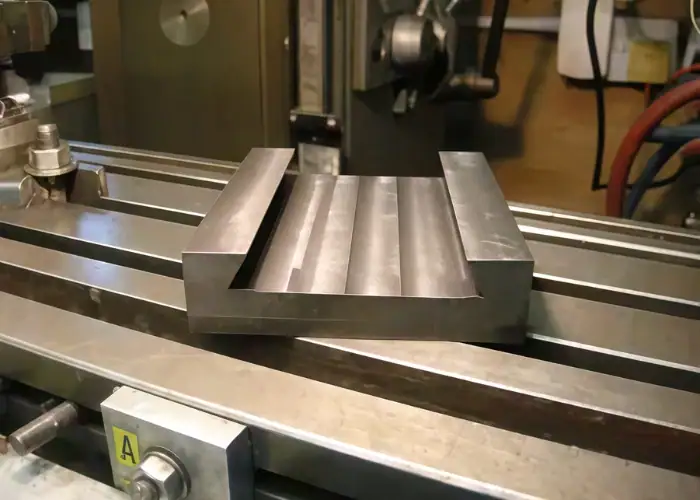
A dovetail groove is commonly used in static O-ring sealing, industrial assemblies, serviceable covers, and sealing components where the O-ring must stay in place before full assembly.
Static O-Ring Sealing
Static sealing is the main application because the groove is intended to retain the O-ring in a face-type gland. This is the clearest and most consistent use case across the reference sources.
Industrial Equipment
Industrial equipment uses dovetail grooves in covers, housings, tools, and sealing interfaces that may be assembled and disassembled during service.
Fluid and Vacuum Systems
Fluid and vacuum systems may use dovetail grooves where reliable static retention is important. Parker’s vacuum-related guidance is one reason dovetail groove design appears in more demanding sealing discussions, although the groove should still be matched to the actual application conditions.
Custom Sealing Components
Custom components often use dovetail grooves when a standard gland cannot meet retention or packaging needs. This is especially common in specialized sealing hardware and engineered assemblies.
| Application Area | Why Dovetail Groove Is Used |
| Face-seal covers | Keeps O-ring positioned before closure |
| Bolted flanges | Helps avoid seal displacement |
| Vertical installations | Improves retention against gravity |
| Serviceable equipment | Supports repeated assembly and maintenance |
| Custom sealing parts | Adapts to nonstandard layouts |
Where Is a Dovetail Groove Commonly Used?
A dovetail groove is commonly used in static O-ring sealing, industrial equipment, fluid and vacuum systems, and custom sealing components where the O-ring must stay in place during assembly or maintenance.
Static O-Ring Sealing
Static O-ring sealing is the most common application of a dovetail groove because the groove is designed to retain the O-ring in a face-type gland. This makes it especially useful when the seal could otherwise shift or fall out before the parts are fully assembled.
Industrial Equipment
Industrial equipment often uses dovetail grooves in covers, housings, sealing faces, and serviceable assemblies. These parts may be opened and closed during maintenance, so keeping the O-ring in position is an important practical advantage.
Fluid and Vacuum Systems
Fluid and vacuum systems may use dovetail grooves where reliable static seal retention is needed. In these applications, the groove helps improve seal stability during installation and service, especially when sealing reliability is a key requirement.
Custom Sealing Components
Custom sealing components often use dovetail grooves when a standard straight gland cannot provide enough retention or when the part layout creates packaging limits. This is common in specialized sealing hardware and engineered assemblies.
In What Industries Is a Dovetail Groove Commonly Used?
A dovetail groove is commonly used in industries where secure sealing, stable assembly, and reliable part retention are important. It is most often found in sealing-related components, serviceable equipment, and precision-machined assemblies.
Industrial Equipment
Industrial equipment is one of the most common application areas for dovetail grooves. They are often used in housings, covers, sealing interfaces, and custom machined parts that require reliable O-ring retention during assembly and maintenance.
Hydraulic and Pneumatic Systems
Hydraulic and pneumatic industries use dovetail grooves in valve bodies, cylinder covers, sealing plates, and related components. In these systems, the groove helps improve seal stability in static sealing layouts.
Fluid and Vacuum Equipment
Fluid handling and vacuum equipment also commonly use dovetail grooves, especially in parts where the seal must stay positioned during installation or repeated servicing. This makes the groove useful in pumps, chambers, manifolds, and sealing connections.
Aerospace and Precision Industries
Aerospace, medical, and other precision industries may use dovetail grooves in components that require accurate sealing, controlled retention, and dependable assembly performance. In these fields, the groove is usually selected when functional retention justifies the added machining difficulty.
Custom Sealing and Engineered Components
Custom sealing hardware and engineered components are another common area for dovetail groove use. These grooves are often selected when a standard straight groove cannot meet the retention, packaging, or assembly requirements of the part.
FQAs
How To Cut A Dovetail Groove Steel?
A dovetail groove in steel is usually cut in 2 steps: first mill a straight relief slot, then machine the angled undercut with a dovetail cutter. For harder steels, lower cutting speed, stable fixturing, and burr control are important. In production, wall angle, groove depth, and corner condition should all be checked.
Which Joint Is Stronger Dovetail Or Tongue And Groove?
A dovetail joint is usually stronger in pull-out resistance because its angled geometry creates mechanical locking. Tongue and groove is better for alignment and surface joining, but it does not resist separation as effectively. In structural use, dovetail generally provides higher retention, while tongue and groove is simpler to machine.
Why Use A Dovetail O-Ring Groove?
A dovetail O-ring groove is used to keep the O-ring in place during assembly, maintenance, or repeated opening of a component. Compared with a straight groove, it provides better retention and reduces the risk of seal displacement. This is especially useful in static sealing parts, serviceable covers, and custom sealing assemblies.
What Is The Difference Between Dovetail And Tongue And Groove?
A dovetail has angled walls that create retention, while tongue and groove mainly provides alignment and fit. Dovetail is more secure in anti-pullout applications. Tongue and groove is easier to machine and more common in joining parts, panels, or mating surfaces where locking force is less critical.
How To Calculate Dovetail?
A dovetail is usually calculated from groove width, depth, angle, and sometimes radius or mean diameter. These values define the final profile and retention form. In sealing design, the calculation often starts from the O-ring size, then adjusts the groove dimensions to achieve the required fit, retention, and installation clearance.
Conclusion
A dovetail groove matters because it helps improve O-ring retention, support more stable assembly, and reduce the risk of seal movement in static applications. When designed and machined well, it is not just a groove shape. It is a practical sealing feature that helps prevent installation issues, leakage risk, and avoidable rework in custom machined parts.
At TiRapid, we support manufacturers with precision machining for custom sealing and structural parts. Upload your drawing to get a tailored solution for your next project.