304 and 410 are both stainless steels, but they are rarely chosen for the same reasons. Engineers usually turn to 304 when corrosion performance and broad usability matter most, whereas 410 is more closely associated with hardness, wear resistance, and the ability to respond to heat treatment.
This article examines 304 vs 410 stainless steel through the points that most affect real part selection, including chemistry, corrosion behavior, hardness, machinability, applications, and material choice in production.
304 vs 410 Stainless Steel: Basic Overview
Before moving into corrosion, hardness, or machining, it is useful to identify the stainless steel type behind each grade. Although 304 and 410 are both common specifications, they come from different stainless families and were developed around different property priorities. That starting point explains much of what separates them later.
What Is 304 Stainless Steel?
304 stainless steel is an austenitic grade widely chosen for parts that need dependable corrosion resistance, good formability, and balanced all-purpose performance. It remains one of the most common stainless steels because it works well across many service environments and suits both fabricated and machined components.
Its popularity comes largely from the way it combines rust resistance, toughness, and shop flexibility in one material. Manufacturers often use 304 for food equipment, architectural details, kitchen hardware, chemical-contact parts, and general industrial components that may see moisture or mildly corrosive exposure. That is why designers use it when they need durability and fabrication freedom.
In the annealed condition, 304 is generally treated as non-magnetic, although cold working can introduce slight magnetism. In selection work, it is usually favored when corrosion resistance and broad processing versatility are more important than very high hardness or hardening by heat treatment.
What Is 410 Stainless Steel?
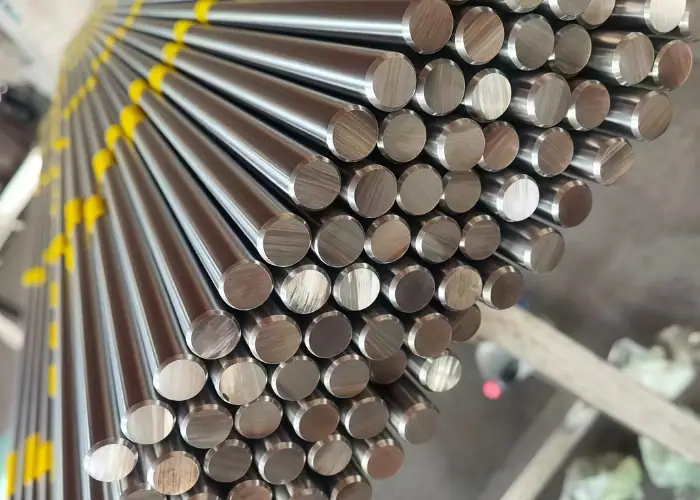
410 stainless steel is a martensitic grade known for greater hardness, solid mechanical strength, and the ability to be hardened by heat treatment. Compared with 304, it is more often selected when wear resistance, surface durability, or strength under load matter more than top-level corrosion performance.
It is commonly used for shafts, valves, pump parts, fasteners, and machine components exposed to friction or wear. Although 410 still qualifies as stainless steel, its corrosion resistance is more limited than 304, so it usually fits better in environments that are less aggressive. It is often chosen when mechanical durability matters more than top corrosion performance.
Another useful distinction is that 410 is magnetic and responds well to heat treatment. Those traits make it attractive when stronger mechanical behavior is needed, but they also place it in a different material role than 304 for many design and manufacturing decisions.
Pros and Cons of 304 vs 410 Stainless Steel
Before making a final material decision, it is useful to compare the two grades side by side in a more direct way. Although 304 and 410 are both stainless steels, their strengths and limitations are quite different in service and production. Looking at their advantages and tradeoffs together makes it easier to judge which grade better fits the real priorities of the part.
| Comparison Area | 304 Stainless Steel | 410 Stainless Steel |
| Main Advantages | Better corrosion resistance, broader versatility, good formability, and better suitability for wet or hygiene-sensitive environments. | Higher hardness, better wear resistance, magnetic response, and the ability to be strengthened through heat treatment. |
| Main Limitations | Lower hardness and weaker wear resistance compared with 410, and not typically selected when heat-treatable strength is required. | Lower corrosion resistance than 304, less suitable for aggressive or constantly wet environments, and less universal in fabrication-focused applications. |
| Best Fit | Parts that need corrosion protection, clean surface performance, and broad manufacturing flexibility. | Parts that need stronger mechanical performance, harder surfaces, and better resistance to friction or wear. |
| Less Suitable For | Wear-focused applications where hardness and surface durability are the top priorities. | Applications where corrosion resistance, sanitation, or long-term exposure to moisture is the main concern. |
304 vs 410 Stainless Steel: The Main Difference
With the two grades outlined, the next step is to compare where their differences matter most in engineering practice. The contrast is not driven by a single property. Their stainless family, alloy balance, and intended performance focus work together to shape how they behave in production and in service. Looking at those three angles together gives a much clearer basis for material selection than judging by one property alone.
Difference in Stainless Steel Family
The clearest starting point is the stainless steel family itself. Grade 304 belongs to the austenitic group, while 410 belongs to the martensitic group. That family difference influences corrosion behavior, hardness, magnetic response, and the way each alloy reacts to heat treatment.
As an austenitic stainless steel, 304 is more strongly linked to corrosion resistance, ductility, and fabrication versatility. As a martensitic stainless steel, 410 is more closely tied to hardness, strength, and hardenable performance. Both are stainless, but they were engineered around different end goals.
Difference in Chemical Composition
304 stainless steel contains chromium plus a notable nickel content, and that alloy combination is a major reason it delivers reliable corrosion resistance and stable all-purpose stainless performance. It is well suited to wet, hygienic, and mildly aggressive settings where rust resistance is important.
410 also contains chromium, but it does not use the same nickel-supported chemistry as 304. Its composition favors hardenability and mechanical strength, which helps explain why it can be heat treated and why it is often chosen for wear-related duties instead of corrosion-driven ones.
Difference in Performance Priorities
From a performance standpoint, the two grades are normally chosen for different priorities. Engineers lean toward 304 when corrosion resistance, cleanliness, ductility, and broad usability are the main targets. It is usually the safer material in service conditions involving moisture, cleaning exposure, or long-term appearance retention.
410 is more often specified when hardness, wear resistance, and heat-treatable strength carry greater importance. It cannot match 304 in corrosion performance, but it brings clear benefits when a part needs a harder surface, improved wear life, or added strength after heat treatment.
Corrosion Resistance: Is 304 Better Than 410?
In most real service environments, 304 stainless steel resists corrosion better than 410. That advantage is a major reason 304 shows up so often in food equipment, damp environments, and industrial applications where stainless reliability needs to hold up over time.
410 does provide some corrosion resistance, but its margin is narrower. Under frequent moisture, cleaning chemicals, or more aggressive exposure, 410 is generally more prone than 304 to discoloration, oxidation, or rusting. That does not make it unsuitable, but it does mean the operating environment must be reviewed more carefully. Salt-rich, constantly wet, or chemically cleaned environments tend to widen that gap even more.
If corrosion resistance leads the requirements list, 304 is typically the safer pick. If the environment is milder and the component needs extra hardness or wear resistance, 410 can still be a sensible choice. In practice, the decision is less about which grade is universally better and more about which property matters most in service.
Strength, Hardness, and Heat Treatment
Corrosion performance is only part of the material decision. Many parts also need the right balance of hardness, wear resistance, and response to heat treatment. At this stage, 304 and 410 begin to separate more clearly in mechanical behavior and in the kind of part performance they can deliver over time.
Which Is Stronger and Harder, 410 or 304 Stainless Steel?
In many applications, 410 is regarded as harder than 304, especially when heat treatment is included in the specification. That makes it better suited to components that need wear resistance, edge holding, or a tougher surface under contact and friction.
304 still offers useful strength, but very high hardness is not its main advantage. Its value is more closely tied to corrosion resistance, toughness, and wider fabrication flexibility. When a part must run with a harder surface or better wear capability, 410 is often the more fitting grade.
Can They Be Heat Treated the Same Way?
304 and 410 are not normally heat treated in the same manner or for the same goal. 304 is generally not chosen for hardening through heat treatment the way 410 is. Its main value comes from corrosion performance and broad stainless versatility rather than through-hardening response.
410, on the other hand, is frequently selected because heat treatment can raise its hardness and strength. That capability is one of its key practical benefits and a major reason it appears in mechanical parts where wear-focused performance matters.
Machinability and Manufacturing Considerations
From a machining standpoint, 304 and 410 create different shop challenges. 304 is widely specified, but it is also known for work hardening, which can make cutting less predictable if speeds, tooling, and chip control are not managed carefully. In CNC work, that means closer attention to tool wear, heat generation, and cutting-edge condition, especially during longer runs.
410 behaves differently. It is often chosen when the finished part needs higher hardness or later heat treatment, but its machinability depends on material condition and process stage. In some cases it cuts more easily before heat treatment and becomes more difficult afterward, so process planning matters. For shops, that often changes the order of operations and influences whether roughing or final machining happens before hardening.
Manufacturing choice is shaped by more than cutting behavior alone. If the project needs better corrosion resistance, easier welding, or wider forming flexibility, 304 is often the more practical route. If surface hardness, wear resistance, or hardenable performance matters more, 410 may fit the job better. In real production, machinability has to be weighed together with downstream requirements.
304 vs 410 Stainless Steel Applications
Once the core properties are compared, the application split becomes much easier to understand. In real projects, the better grade is usually determined by service environment, durability needs, and whether corrosion resistance or hardness plays the larger role in the finished part.
Common Uses of 304 Stainless Steel
304 stainless steel is widely chosen for applications that need corrosion resistance, cleanliness, and dependable general-purpose performance. Common examples include food-processing equipment, kitchen hardware, architectural components, tanks, piping, and parts used in mildly corrosive industrial settings. Its range of use is one reason it remains one of the most specified stainless grades.
It is also a strong option for parts requiring good formability and a clean surface finish. Manufacturers often choose 304 not because it is especially hard, but because it behaves reliably across many service conditions. When the design needs stainless material that can handle moisture, cleaning exposure, or routine corrosion risk, 304 is usually the safer route. That is why it appears so often in equipment that must stay clean, resist staining, and remain easy to fabricate.
Common Uses of 410 Stainless Steel
410 stainless steel appears more often in applications where hardness, wear resistance, and mechanical strength matter more than maximum corrosion resistance. Typical examples include shafts, pump parts, valves, fasteners in moderate environments, wear components, and parts that benefit from heat treatment.
Because 410 can be hardened, it is commonly selected for parts that need stronger surface behavior or improved resistance to friction and contact. It is less universal than 304, but in the right service conditions it can be the more suitable engineering answer. If the environment is not highly corrosive and the part needs more hardness or wear-oriented performance, 410 can offer clear benefits.
How to Choose Between 304 and 410 Stainless Steel
Even after reviewing chemistry and property differences, final material choice still comes back to application priorities. Engineers rarely pick a stainless grade based on one property alone. The decision usually depends on how corrosion risk, hardness needs, manufacturing considerations, and service conditions come together in the actual design. The better grade is the one that matches the real balance of service and production priorities.
When to Choose 304 Stainless Steel
304 is usually the better choice when corrosion resistance is the main priority. If the part will face moisture, cleaning agents, food-related environments, or other mildly aggressive conditions, 304 generally delivers more dependable long-term stainless behavior than 410.
It is also a strong candidate when the design needs broad versatility. For fabricated parts, general industrial components, and applications where weldability, formability, and surface cleanliness matter, 304 is often the more practical grade. In many projects it is chosen because it introduces fewer material tradeoffs in everyday service conditions.
When to Choose 410 Stainless Steel
410 is usually the better choice when hardness, wear resistance, or heat-treatable strength matters more than corrosion resistance. If the part needs a tougher surface, better wear performance, or a harder condition after heat treatment, 410 may suit the job better than 304.
It also makes sense when the service environment is less corrosive and the design places more value on mechanical performance. For shafts, valves, pump parts, and other components that need strength and durability under contact, 410 can be the better engineering fit as long as corrosion demands stay moderate.
FAQs
Can 410 stainless steel be used in place of 304 for a lower-cost part?
Sometimes, but only when the service environment is not strongly corrosive and the design benefits more from hardness than from corrosion resistance. A lower material cost does not automatically make 410 the better substitute, because reduced corrosion performance may shorten part life or increase maintenance risk. In practice, replacement decisions should be based on working conditions, not price alone.
Why does 304 sometimes show slight magnetism if it is usually described as non-magnetic?
304 is generally considered non-magnetic in the annealed condition, but cold working can change that response. Processes such as forming, bending, or heavy deformation may introduce slight magnetism even though the material is still 304 stainless steel. For that reason, magnetic response alone is not always a reliable way to judge whether a part is truly 304 or not.
If a part needs welding and forming, is 304 usually easier to work with than 410?
In many cases, yes. 304 is more commonly selected when fabrication flexibility matters because it offers better formability and is generally a more practical choice for welded and formed components. 410 can still be manufactured successfully, but it is usually chosen for different priorities, especially when hardness or heat-treatable performance is more important than broad fabrication convenience.
What should matter more in selection: corrosion resistance or hardness?
That depends on how the part will actually work in service. If the component will face moisture, cleaning exposure, or a hygiene-sensitive environment, corrosion resistance usually deserves higher priority and 304 is often the safer route. If the part works in a less aggressive environment but needs a harder surface, better wear resistance, or heat-treated strength, then 410 may be the more suitable engineering choice.
Conclusion
304 and 410 are both useful stainless steels, but each is aimed at a different priority. 304 is usually the stronger option for corrosion resistance, cleanliness, and all-purpose use, while 410 is better suited to hardness, wear resistance, and heat-treatable strength. The right pick depends on the service environment and the performance the part must deliver.
At TiRapid, we provide precision CNC machining services for stainless steel, aluminum, brass, plastic, and other custom materials for industries such as automation, electronics, and industrial equipment.