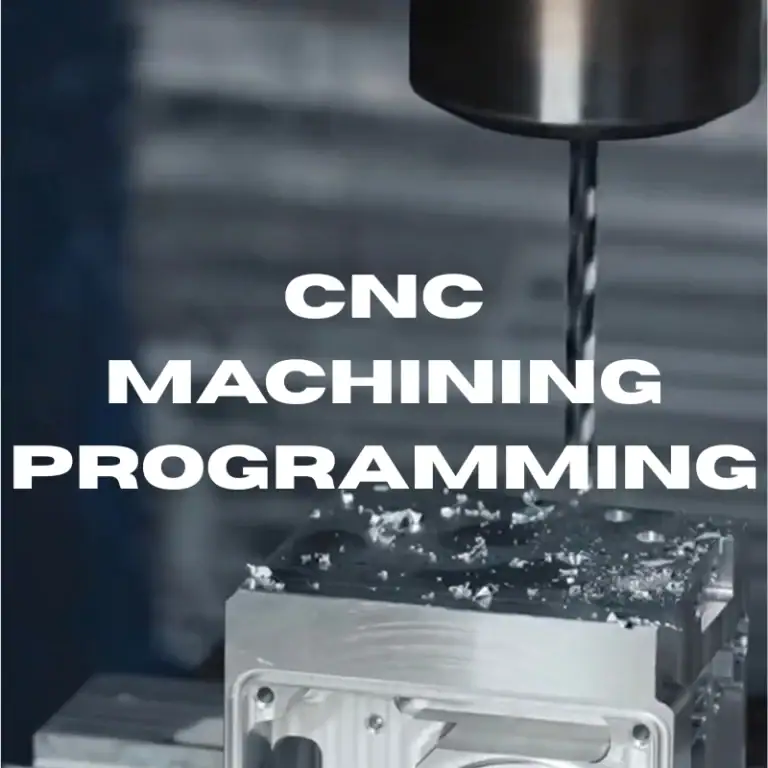
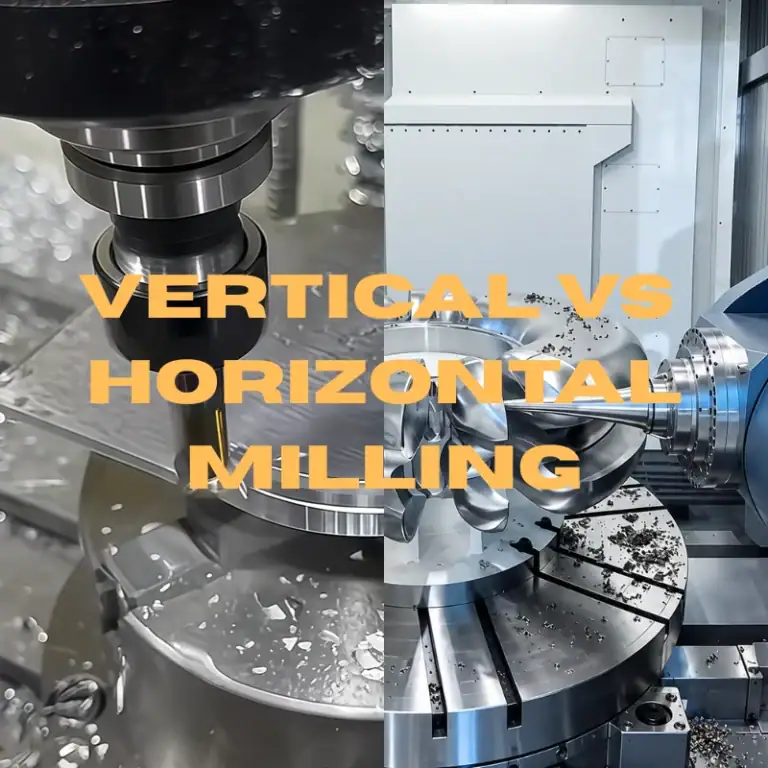
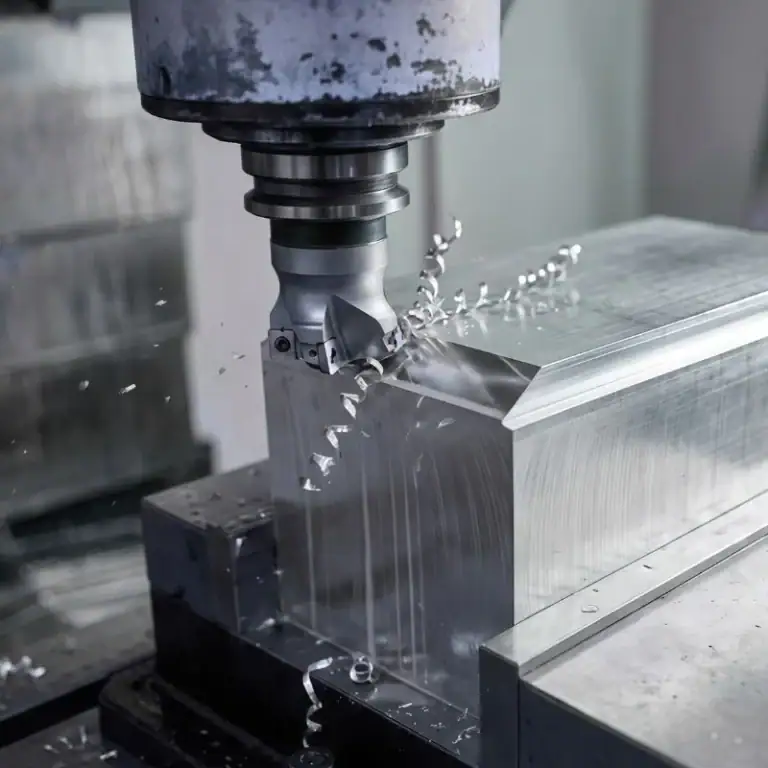
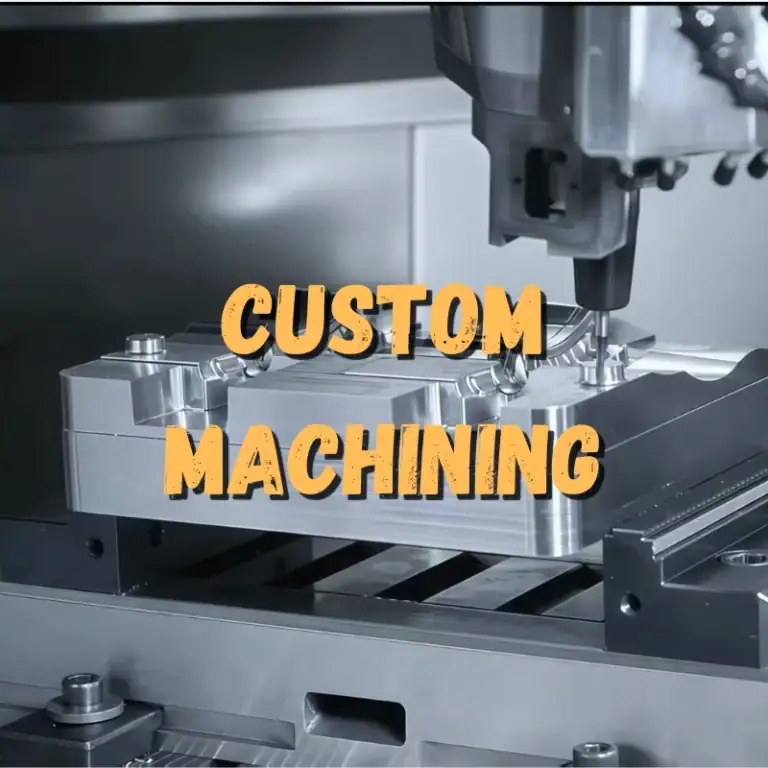
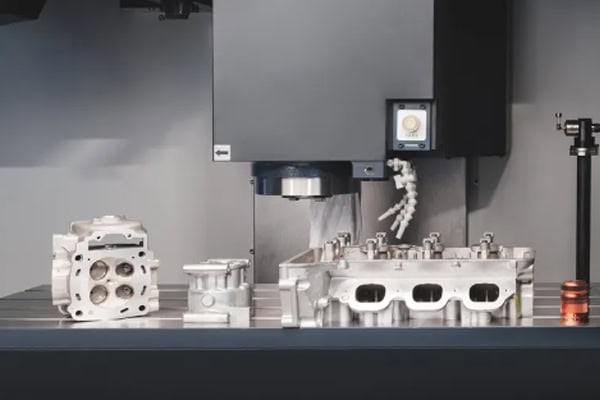
Industrial equipment cylinder blocks may look fairly straightforward, but the real challenges often appear once machining begins. A slight deviation in the cylinder bore can cause excessive or insufficient clearance with internal moving components. An inaccurate mounting hole position can make assembly frustrating, while an improperly machined sealing groove may affect equipment sealing performance. Custom industrial equipment often uses non-standard cylinder blocks, with hole locations, internal cavities, threads, interfaces, and external profiles designed specifically for each application. CNC machining is well suited to these precision custom parts, allowing complex structures to be produced directly from drawings while supporting reliable equipment assembly and operation.
What Are the Main Challenges in CNC Machining Industrial Equipment Cylinder Blocks?
The difficulty of machining a cylinder block is not limited to its external profile. Internal structures and the dimensional relationships between different machining features require careful control. A single hole may measure correctly on its own, yet the finished component can still have assembly problems due to datum errors, hole positioning, concentricity, or machining sequence. These issues need to be considered during CNC machining rather than discovered during final assembly.
Cylinder Bore and Internal Cavity Dimensions Need to Stay Stable
The cylinder bore is commonly used for moving-component fit, guidance, or internal assembly. Excessive variation in bore diameter can directly affect the fit between components. Deep internal bores also introduce challenges such as long tool overhang, chip evacuation, and dimensional changes during machining.
- Bore diameter, depth, and roundness need to be controlled according to drawing requirements rather than judged only by the smoothness of the internal surface.
- Deep-hole machining requires appropriate tool rigidity and chip evacuation to prevent chip accumulation from affecting machining stability.
- The positional relationship between the cylinder bore, end faces, and mounting surfaces also needs to be checked rather than inspecting only individual dimensions.
Keeping these critical dimensions under control can significantly reduce adjustment work when moving components are installed.
Mounting Holes and Connection Interfaces Need Accurate Alignment
Industrial equipment cylinder blocks often contain flange holes, locating holes, threaded interfaces, and other connection features. Drilling several holes may look simple, but assembly can quickly expose positional errors. When multiple holes need to match other components simultaneously, deviations in hole spacing, center location, or datums can make bolts difficult to install or cause interface misalignment. CNC machining can establish these features from consistent datums to reduce positional variation.
Sealing Grooves and Mating Surfaces Need More Than Basic Machining
Sealing structures inside cylinder blocks can directly affect equipment performance. Groove width, depth, bottom condition, and surrounding surface quality all influence how sealing components are installed. If dimensions are inconsistent, the seal may fit too loosely or too tightly and could create leakage risks during operation. For these critical features, CNC machining requires suitable tooling and machining sequences, followed by focused dimensional inspection.
How Do CNC Machining Priorities Differ for Different Industrial Equipment Cylinder Blocks?
Cylinder blocks come in many different designs. Some are dominated by deep bores, some have numerous mounting interfaces, while others use thin-wall or irregular structures. A single machining process cannot simply be applied to every design. Fixturing, machining sequence, and tool selection should be adjusted to the actual component structure. This helps reduce deformation while maintaining dimensional stability.
Deep-Bore Cylinder Blocks: Tool Stability and Chip Evacuation Matter
As tool overhang increases during deep-hole machining, the cutting process becomes more sensitive to vibration. Chips can also be more difficult to remove, potentially affecting both internal surface quality and bore dimensions. CNC machining needs appropriate tool paths and cutting parameters, together with suitable cooling and chip evacuation, to keep deep-bore production stable.
Flanged Cylinder Blocks: Hole Position and Mounting Surfaces Must Work Together
Flanged industrial equipment cylinder blocks often have dense mounting holes and connection interfaces. The flange mounting surface can serve as an important machining datum before hole patterns, locating holes, and threaded interfaces are produced. This helps maintain the positional relationship between different features. For cylinder blocks that need to connect precisely with other components, this approach is more reliable than treating each feature as an isolated operation.
Thin-Wall and Irregular Cylinder Blocks: Fixturing Cannot Be Taken Lightly
Excessive clamping force can deform thin-wall structures during machining, with dimensions potentially changing again after the part is released from the fixture. Irregular cylinder blocks can present similar challenges because there may be limited areas available for support and positioning. CNC machining requires careful planning of support locations and machining sequence so the component remains stable while critical areas are gradually completed.
| Cylinder Block Type | CNC Machining Focus | Main Concern |
| Deep-Bore Cylinder Block | Internal bore, depth, chip evacuation | Bore diameter and internal surface quality |
| Flanged Cylinder Block | Mounting surface, hole pattern, interfaces | Assembly accuracy |
| Thin-Wall Cylinder Block | Fixturing and machining sequence | Deformation control |
| Irregular Cylinder Block | Profile, grooves, interfaces | Structural dimensional stability |
| Precision Cylinder Block | Bore, sealing surfaces, mating dimensions | Operating and sealing performance |
How Can Rework Be Reduced from Prototype to Batch Production?
A cylinder block that performs well during prototype machining does not automatically guarantee stable batch production. Problems often become more noticeable as production volume increases. Tool wear, machine condition, and fixture repeatability can all introduce dimensional differences between early and later parts. Validating critical dimensions early and establishing in-process inspection can prevent issues from accumulating until final inspection.
Critical Assembly Dimensions Should Be Verified During Prototyping
Prototype inspection should not simply mean measuring every dimension once. Greater attention should be given to features that directly determine assembly performance. Cylinder bores, mounting holes, threads, and sealing grooves should be checked against the actual mating components whenever possible.
- Verify bore diameter, depth, roundness, and the positional relationship between the bore and end faces.
- Check mounting holes, locating holes, and threaded interfaces to confirm accurate alignment with mating components.
- Inspect sealing groove width, depth, and edge condition to avoid problems after seal installation.
- Record the critical dimensions and process requirements confirmed during prototype production for later manufacturing.
Critical Dimensions Need Continuous Monitoring During Batch CNC Machining
Batch production should not rely only on inspections of the first few and final parts. As machining continues, tool wear, machine temperature, and fixturing conditions can change. Features such as cylinder bores, sealing grooves, and mounting holes may gradually move away from their target dimensions. Periodic inspection of critical features makes it easier to identify trends and adjust machining parameters or replace tools before the variation becomes significant.
Deburring and Cleaning Can Also Affect Final Assembly
After CNC machining, small burrs, chips, and machining residue may remain around holes, threads, grooves, and internal cavities. If these contaminants are not removed, they can interfere with seals, moving components, or connection structures during assembly. Deburring, cleaning, and final inspection after machining help ensure that cylinder blocks enter the equipment assembly stage in a suitable condition.
| Inspection Item | Key Inspection Content | Main Purpose |
| Cylinder Bore | Diameter, depth, roundness | Ensure proper moving-component fit |
| Hole Position | Diameter, spacing, center location | Ensure accurate installation |
| Sealing Groove | Width, depth, bottom condition | Ensure proper sealing fit |
| Flat Surfaces | Flange and mounting surfaces | Maintain assembly stability |
| Threads | Size, depth, mating condition | Ensure reliable connections |
| Appearance | Burrs, scratches, residue | Control component condition |
What Are the Advantages of CNC Machining Industrial Equipment Cylinder Blocks?
Most industrial equipment cylinder blocks are custom components, with dimensions and structures changing according to equipment design. One of the biggest advantages of CNC machining is flexibility. Programs, tool paths, and machining parameters can be adjusted directly from engineering drawings to produce deep bores, sealing grooves, threaded holes, mounting holes, and irregular profiles. This makes CNC machining practical for new equipment development, prototype production, and repeat manufacturing.
Complex Cylinder Block Structures Can Be Customized
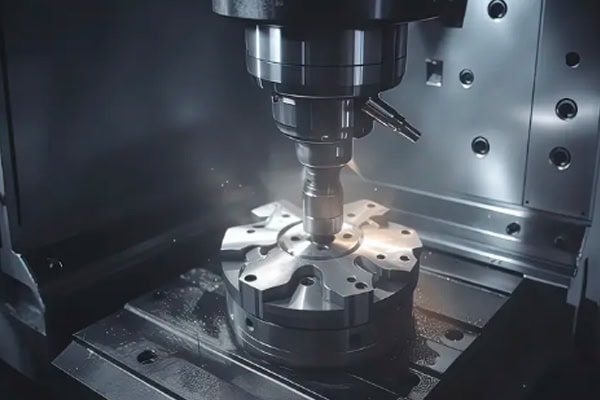
A cylinder block may contain deep bores, stepped holes, threads, sealing grooves, flanges, and irregular mounting structures at the same time. CNC machining allows the manufacturing process to be adapted to the specific design instead of forcing the component into a fixed specification.
- Deep bores, stepped holes, threaded holes, and sealing grooves can be custom machined according to drawing requirements.
- Flange holes, locating holes, and connection interfaces can be machined from consistent datums to reduce positional variation.
- Complex external profiles and special mounting structures can be produced using different programmed tool paths.
- CNC programs and process parameters can be adjusted for different cylinder block sizes and designs.
This flexibility is particularly useful for custom industrial equipment, especially when cylinder block specifications vary between equipment models or designs are frequently updated.
Precision Dimensions Can Be Controlled More Consistently
For a cylinder block, actual assembly performance matters more than simply achieving an attractive external finish. CNC machining uses programmed tool paths together with critical dimensional inspection to control cylinder bores, hole spacing, sealing grooves, and mounting surfaces with greater consistency.
- Bore diameter, depth, and mating dimensions can be machined according to specified drawing tolerances.
- Mounting and locating holes can be machined from consistent datums to support accurate assembly.
- Flange, sealing, and mounting surfaces can be precisely machined to reduce on-site adjustment.
CNC Machining Works Well for Prototypes, Small Batches, and Production Runs
Industrial equipment development rarely starts with a large production quantity. It is common to produce prototypes for testing before moving into small-batch or larger production. CNC machining does not require dedicated molds for every cylinder block design, and machining programs can be updated when drawings change. Once a prototype process has been verified, the same validated approach can be carried into subsequent production.
Different Materials and Cylinder Block Structures Can Be Accommodated
Industrial equipment cylinder blocks can be manufactured from aluminum alloys, stainless steel, carbon steel, and other engineering materials. Since each material has different cutting characteristics, CNC machining parameters, tooling, and machining sequences can be adjusted to suit the material and component structure.
- Suitable for custom cylinder blocks with deep bores, sealing grooves, and multiple interfaces.
- Appropriate cutting tools and machining parameters can be selected for different materials.
- From relatively simple mounting cylinder blocks to precision components with demanding mating requirements, parts can be machined directly from drawings.
Machining, Deburring, and Inspection Can Be Integrated
After CNC machining, hole edges, threads, internal cavities, and machined surfaces may require deburring and cleaning. Integrating machining, deburring, cleaning, and dimensional inspection into a complete workflow can reduce additional processing after delivery and help maintain consistent quality during repeat production.
The core value of CNC machining for industrial equipment cylinder blocks is not simply producing a metal component, but ensuring that the bore, mounting holes, sealing structures, and interfaces work together as required by the equipment design. For custom designs, complex internal cavities, deep bores, and batch production, a well-planned CNC machining process can reduce rework and make the transition from prototype development to production much smoother. TIRAPID provides CNC machining services for industrial equipment cylinder blocks, customized to part structure, material, precision requirements, and production volume.