Stainless steel is widely used in the machining industry and is commonly found in food equipment, medical devices, automotive parts, chemical equipment, and precision machinery. However, compared with ordinary carbon steel, stainless steel is much more difficult to machine during turning operations. In many workshops, machining stainless steel often leads to problems such as rapid tool wear, poor surface finish, vibration, unstable dimensions, and difficult chip removal. If cutting parameters and tool selection are not suitable, work hardening and tool chipping can also occur easily. Understanding the common difficulties in stainless steel turning helps improve machining efficiency and workpiece quality.
Why Is Stainless Steel Difficult to Machine?
The difficulty of machining stainless steel is closely related to the material’s physical characteristics. Compared with ordinary steel, stainless steel generates more heat and cutting resistance during machining, placing higher demands on cutting tools and machine rigidity.
Strong Material Toughness
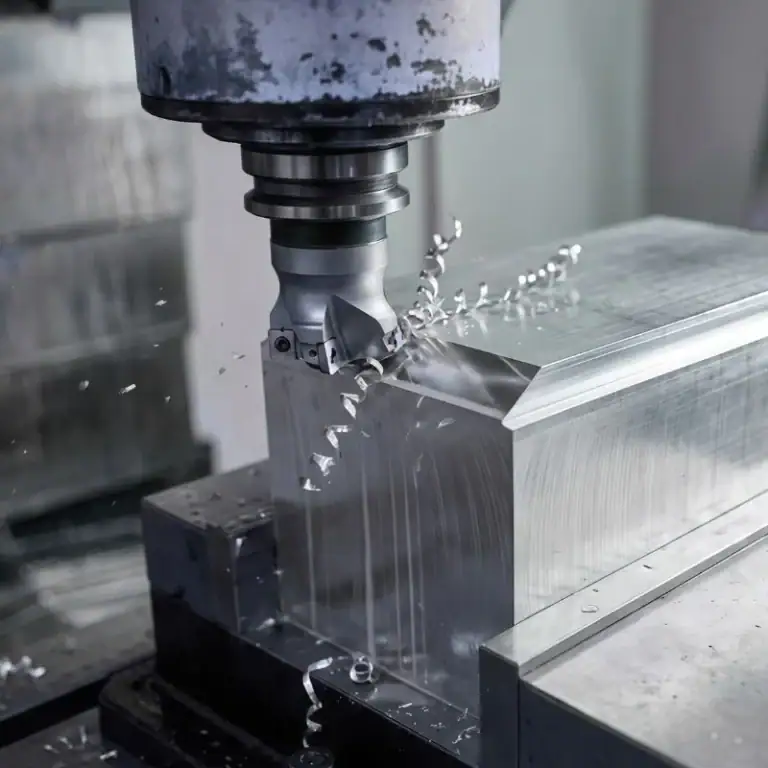
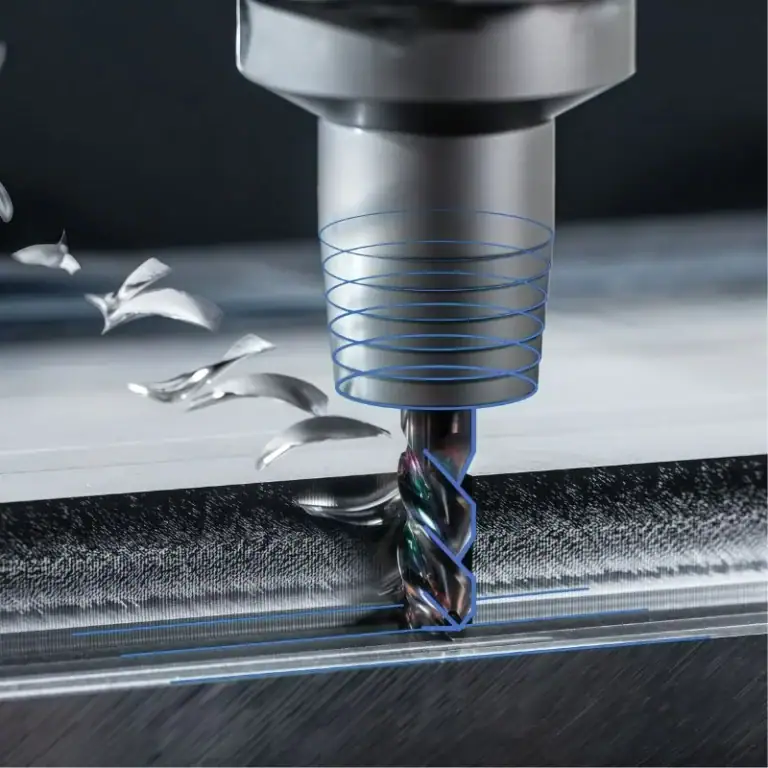
Stainless steel has high toughness, making chip breaking difficult during cutting operations. Chips tend to form long continuous strands that easily wrap around the tool and workpiece.
Common effects include:
- Difficult chip evacuation
- Increased tool temperature
- Scratches on the workpiece surface
- Reduced machining stability
This issue becomes even more noticeable during deep-hole machining and slender shaft turning.
Poor Thermal Conductivity
Stainless steel has lower thermal conductivity than ordinary carbon steel, making it difficult for cutting heat to dissipate quickly.
A large amount of heat concentrates around:
- The cutting edge
- The cutting contact area
- The workpiece surface
This situation accelerates tool wear and increases the risk of edge chipping.
Severe Work Hardening
Stainless steel easily produces work hardening during machining. When the cutting tool repeatedly rubs against the workpiece surface, the material hardness gradually increases.
After work hardening occurs, problems may include:
- Increased cutting resistance
- Faster tool wear
- Poor surface finish
- Dimensional instability
This problem becomes more serious when the cutting depth is too small.
Common Problems in Stainless Steel Turning
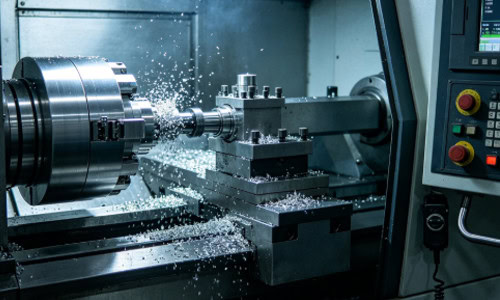
During actual turning operations, stainless steel often causes several typical machining difficulties. If machining conditions are not adjusted in time, production efficiency can decrease significantly.
Rapid Tool Wear
Stainless steel machining generates high cutting temperatures, while the material itself has strong adhesive properties. As a result, tool life is usually shorter than when machining ordinary steel.
Common wear conditions include:
- Rapid flank wear
- Cutting edge chipping
- Crater wear on the rake face
- Coating peeling
Tool wear becomes even more severe during high-speed machining.
Built-Up Edge Formation
During stainless steel machining, material easily adheres to the cutting edge and forms a built-up edge.
This situation can lead to:
- Surface tearing on the workpiece
- Unstable dimensions
- Abnormal cutting noise
- Uneven cutting force on the tool
When the built-up edge breaks away repeatedly, it may also scratch the workpiece surface.
Severe Vibration Problems
Stainless steel generates relatively large cutting forces. If machine rigidity is insufficient or tool overhang is too long, vibration can occur easily.
After vibration appears, common problems include:
- Surface waviness
- Increased machining noise
- Reduced dimensional accuracy
- Shortened tool life
This issue becomes especially obvious when machining slender shafts.
How to Improve Stainless Steel Turning Stability
Although stainless steel machining is difficult, proper machining adjustments can greatly improve stability and machining quality.
Select Suitable Tool Materials
Stainless steel machining usually requires inserts with strong heat resistance.
Commonly used tools include:
- Coated carbide inserts
- Inserts designed specifically for stainless steel
- High-toughness insert grades
The insert rake angle is often designed sharper to reduce cutting resistance.
Optimize Cutting Parameters
Cutting parameters must remain stable during stainless steel machining.
Machining operations usually involve:
- Controlling cutting speed
- Avoiding excessively small cutting depths
- Maintaining continuous cutting
- Reducing unnecessary rubbing during idle passes
Excessively high parameters may cause tool chipping, while parameters that are too low can increase work hardening.
Improve Cooling and Chip Evacuation
Coolant is extremely important in stainless steel machining.
Effective cooling can:
- Lower tool tip temperature
- Reduce built-up edge formation
- Improve tool life
- Enhance surface finish quality
At the same time, chip evacuation must remain smooth to prevent chip entanglement.
Machining Differences Between Stainless Steel Grades
Different stainless steel grades also show significant differences in machining performance. During actual machining, tools and parameters should be adjusted according to material characteristics.
Austenitic Stainless Steel
Austenitic stainless steels such as 304 and 316 are the most widely used.
Machining characteristics include:
- High toughness
- Strong tendency to stick to tools
- Severe work hardening
- Difficult chip evacuation
Sharp cutting tools and stable cooling conditions are especially important.
Martensitic Stainless Steel
Martensitic stainless steel has relatively high hardness.
Common machining problems include:
- Rapid tool wear
- High cutting resistance
- Increased risk of edge chipping
More wear-resistant cutting tools are usually required.
Ferritic Stainless Steel
Ferritic stainless steel generally has better machinability.
Compared with austenitic stainless steel:
- Work hardening is lighter
- Cutting resistance is lower
- Chip evacuation is easier
However, tool temperature control is still important during high-speed machining.
Common Mistakes in Stainless Steel Turning
Many machining workshops use the same parameters for stainless steel as for ordinary steel, which often causes machining problems to worsen.
Common mistakes include:
- Cutting depth set too small
- Continuing to machine with worn tools
- Insufficient coolant supply
- Long periods of continuous high-speed cutting
- Failure to remove chips in time
Some operators intentionally reduce cutting speed to decrease tool wear, but excessively low speeds can also increase built-up edge formation and work hardening. Stainless steel machining requires stable and continuous cutting conditions rather than repeated stopping and excessive rubbing against the workpiece surface.