Strength, stiffness, and hardness are often grouped together in engineering discussions, but they do not describe the same material behavior. In design and manufacturing, confusing these terms can lead to the wrong material choice, unrealistic part expectations, or performance problems that only appear after production or assembly.
In this guide, we explain what strength, stiffness, and hardness really mean, how they differ, and why each one matters in real engineering work. The goal is to help engineers, buyers, and manufacturers connect these material properties to actual part function, machining decisions, and long-term service performance.
Why Are Strength, Stiffness, and Hardness Often Confused?
Strength, stiffness, and hardness are often confused because all three describe how a material responds to force, pressure, or contact. In engineering conversations, they are frequently used close together, especially when people are comparing metals, plastics, or finished parts. Because they all sound like indicators of how “strong” a material is, they are often mixed up even though they refer to different behaviors.
Another reason for the confusion is that these properties can sometimes appear together in the same material, but they do not automatically increase or decrease as a group. A material may be very hard on the surface but still lack the stiffness needed to resist bending. Another material may carry a high load without failure but still deflect more than expected in service. This is where misunderstanding begins in both design and manufacturing.
In practical engineering, using the wrong term can lead to the wrong material decision. A designer may ask for more strength when the real problem is excessive deflection, or ask for a harder material when the real need is better structural load capacity. That is why separating these terms clearly is important before comparing materials or choosing a manufacturing solution.
What Is Strength?
Strength refers to a material’s ability to withstand an applied load without failing, yielding, or permanently deforming. In simple terms, it answers the question of how much force a material can take before it bends permanently, cracks, or breaks. In engineering design, strength is one of the first properties considered when a part must carry weight, resist force, or survive repeated mechanical stress.
There are different ways to describe strength depending on the loading condition. Tensile strength relates to pulling forces, compressive strength relates to squeezing forces, and yield strength describes the point where permanent deformation begins. These terms help engineers evaluate whether a material can survive a specific type of service load without unacceptable damage.
Strength is important in load-bearing parts, structural components, fasteners, and safety-related products. If a bracket, shaft, or frame member does not have enough strength, it may fail under service conditions even if it looks fine during early handling or assembly. That is why strength is usually tied to load survival, not just surface condition or dimensional stability.
What Is Stiffness?
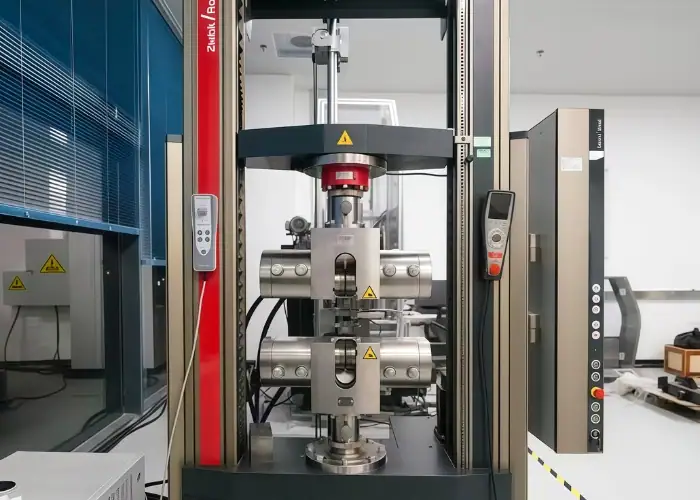
Stiffness describes how strongly a material resists elastic deformation under load. In practical terms, it tells you how much a part bends, stretches, or deflects when force is applied, as long as the material stays within its elastic range. A stiff material changes shape less under the same load, even if it does not necessarily have the highest ultimate strength.
In engineering, stiffness is closely related to elastic modulus, especially Young’s modulus. This is the property that helps predict how much a material will deflect when used in a beam, frame, bracket, or support structure. When dimensional stability matters, stiffness can be more important than strength because a part may remain unbroken but still bend too much to function correctly.
This is why stiffness matters in alignment-sensitive parts, supports, machine structures, and precision assemblies. A part may be strong enough not to fail, but if it flexes too much during use, the design can still fail functionally. In many real applications, excessive deflection is just as serious as fracture because it can affect accuracy, sealing, fit, or motion control.
What Is Hardness?
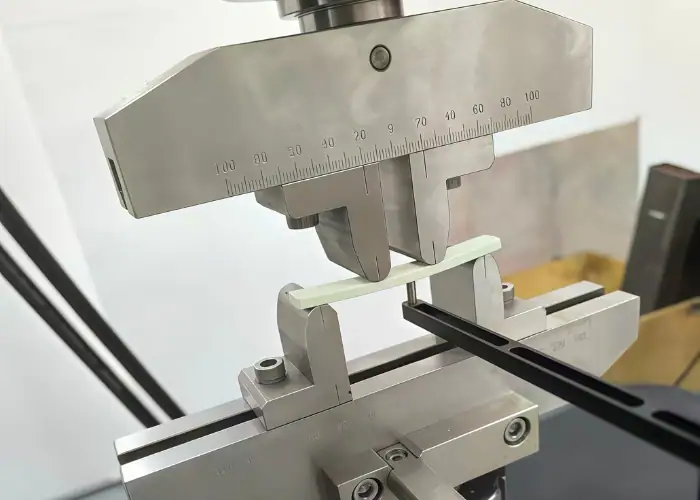
Hardness refers to a material’s resistance to localized surface deformation such as indentation, scratching, or penetration. It does not directly tell you how much total structural load a part can carry. Instead, it describes how well the surface resists damage when another object presses into it, slides across it, or creates concentrated contact stress.
This property is especially important in wear-related situations. If a material has higher hardness, it may perform better in applications involving friction, repeated contact, abrasion, or surface damage. That is why hardness is often considered in cutting tools, wear parts, shafts, bushings, and components that experience repeated mechanical contact during service.
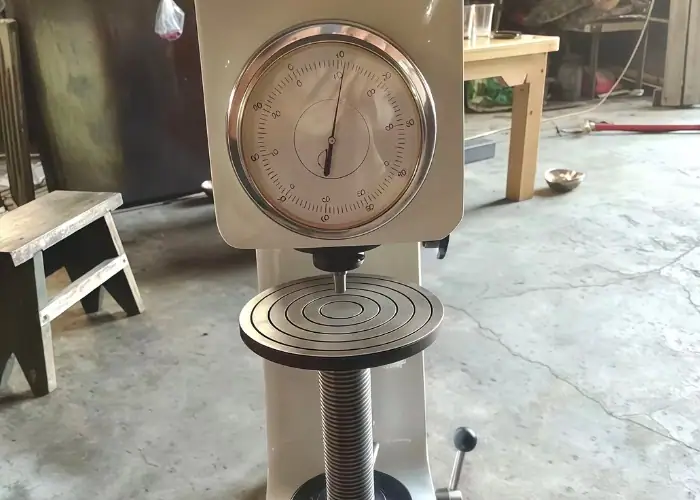
Hardness is commonly measured using test methods such as Rockwell, Brinell, or Vickers. These systems do not all work in the same way, but they all aim to evaluate surface resistance under controlled testing conditions. In material selection, hardness is useful when the design concern is local surface durability rather than overall load-bearing ability or bending resistance.
Strength vs Stiffness vs Hardness: The Main Difference
Although these three terms are often discussed together, the real difference becomes clearer when each one is viewed through a specific engineering lens. They do not measure the same kind of behavior, and they do not answer the same design question. Breaking them down one by one makes it easier to see why confusing them can lead to poor material choices.
Difference in What Each Property Measures
The clearest way to separate these three properties is to look at what each one actually measures. Strength is about how much load a material can take before it yields, fails, or changes shape permanently. Stiffness is about how much a material resists elastic deformation under load. Hardness is about how well the surface resists indentation, scratching, or localized penetration.
Because they measure different responses, they answer different engineering questions. If you want to know whether a bracket will break under force, you are dealing with strength. If you want to know whether a beam will bend too much during use, you are dealing with stiffness. If you want to know whether a surface will dent, scratch, or wear down easily, hardness becomes the more relevant property.
This is why these terms should not be treated as interchangeable. They may all describe material behavior, but they apply to different failure modes and design concerns. Once engineers understand what each property measures, material selection becomes much more precise and much less dependent on vague ideas of whether a material simply feels “strong.”
Difference in Engineering Meaning
In practical engineering, these properties matter for different reasons. Strength is critical when a component must survive force without failing or permanently deforming. Stiffness becomes important when a part must hold its shape and maintain alignment under working load. Hardness matters most when surface damage, contact wear, or indentation resistance is part of the performance requirement.
A material that works well in one of these areas may still be weak in another. For example, a part may carry load without breaking, which suggests useful strength, but still flex too much in service, which points to insufficient stiffness. Another part may resist scratching very well because it is hard, yet still not perform well under high structural loading if its strength or toughness is limited.
That is why engineers do not select materials by looking at a single property in isolation. The real meaning of each property only becomes clear when it is tied to part function. Good design decisions come from asking whether the part must resist failure, resist bending, or resist surface damage, and then choosing the material accordingly.
Why One Property Does Not Guarantee the Others?
One of the most common engineering mistakes is assuming that a material that is high in one property must also be high in the others. In reality, a material can be very hard without being especially strong in structural loading, or very strong without being particularly stiff. These properties are related to different aspects of mechanical behavior, so they do not move together automatically.
For example, hardness mainly reflects surface resistance, not full part load capacity. A hard surface may resist wear, but that does not always mean the material will handle bending or tension well. In the same way, a strong material may support high loads before failure, but it can still show noticeable elastic deflection if its stiffness is lower than the design requires.
This difference is important because real parts do not fail in only one way. Some fail by fracture, some by excessive bending, and others by surface damage during contact or wear. If engineers treat strength, stiffness, and hardness as if they are interchangeable, they may choose a material that performs well in one respect but fails in the condition that actually matters most.
Why These Differences Matter in Engineering Design?
In engineering design, material selection is not just about choosing a material that sounds strong or durable. The real question is which property matters most in the working condition of the part. If designers confuse strength, stiffness, and hardness, they may optimize for the wrong requirement and end up with a part that performs poorly even if the material itself is technically high quality.
For example, a support arm or frame member may have enough strength to avoid fracture, but if its stiffness is too low, it may bend enough to affect alignment or accuracy. In another case, a wear surface may need higher hardness to resist local damage, even if the overall structural load is not very high. These examples show that the correct material decision depends on understanding the actual failure mode or performance limit that matters in service.
This is why good engineering decisions start with function rather than terminology. Designers need to ask whether the part must resist breaking, resist bending, or resist surface damage. Once that is clear, strength, stiffness, or hardness can be prioritized correctly. Without that distinction, it is easy to choose a material that looks acceptable on paper but does not perform as expected in real use.
How Strength, Stiffness, and Hardness Affect Manufacturing?
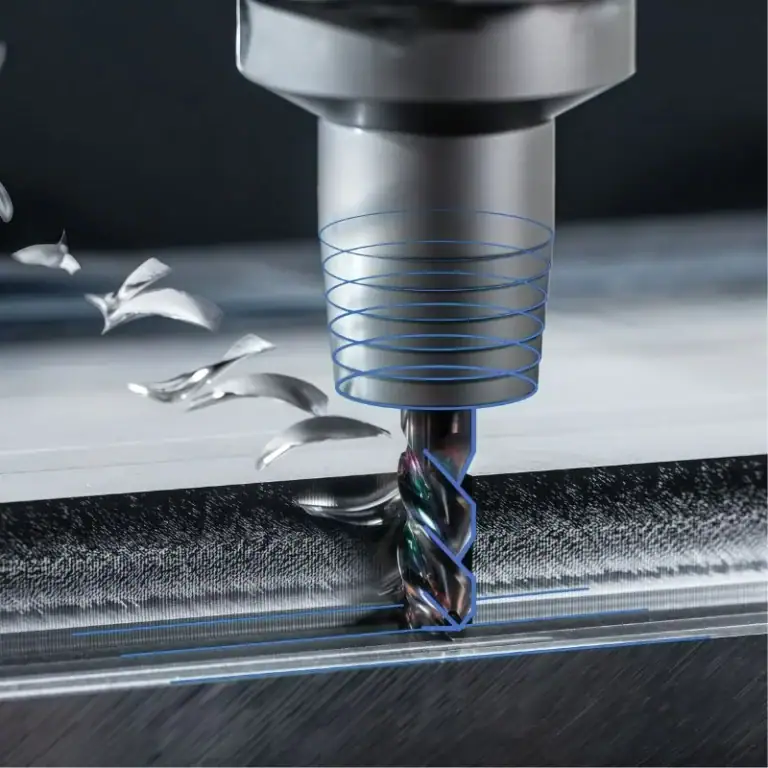
These three properties do not only matter in design. They also affect how a material behaves during manufacturing. Hardness can influence tool wear, cutting performance, and whether additional treatment or finishing steps are needed. A harder material may improve wear resistance in service, but it can also make machining more demanding and increase tooling cost.
Strength also affects production behavior. Materials with higher strength may be more difficult to form, shape, or machine depending on the process. At the same time, strength requirements often influence how much material must be left in the design, which can affect cycle time, part weight, and manufacturing cost. In practice, a strong material may solve one problem in service while creating another in production.
Stiffness has a more indirect but still important role in manufacturing. It can influence how a part holds its shape during machining, clamping, or use under load. It also affects wall thickness decisions, structural stability, and dimensional behavior in finished assemblies. That is why manufacturing decisions are often better when strength, stiffness, and hardness are considered together rather than treated as separate textbook definitions.
Which Applications Are Most Affected by Strength, Stiffness, and Hardness?
In real engineering work, these three properties do not carry the same weight in every application. Some parts are selected mainly for load-bearing strength, some for resistance to deflection, and others for surface durability under contact or wear. Looking at where each property matters most helps connect material behavior to real product requirements rather than abstract definitions alone.
Applications Where Strength Matters Most
Strength has the greatest impact in parts that must carry load without yielding, cracking, or breaking. Common examples include structural brackets, fasteners, support arms, frames, shafts under heavy force, and safety-related components. In these applications, the main concern is whether the material can survive service loads without permanent deformation or failure.
This property is especially important when the part is exposed to repeated stress, shock, or concentrated mechanical force. Even if the material has good stiffness or hardness, the design can still fail if the part does not have enough strength to handle actual working conditions. That is why load-bearing and safety-critical applications often begin with strength as a primary material requirement.
Applications Where Stiffness Matters Most
Stiffness is most critical in parts that must hold shape and position under load. This includes machine frames, supports, guide structures, alignment-sensitive brackets, housings, and precision assemblies where excessive bending can affect accuracy or fit. In these applications, the part may not need extremely high strength, but it must resist elastic deflection well enough to stay functionally stable.
This property becomes especially important in equipment that depends on dimensional control, motion accuracy, sealing, or stable alignment. A component can remain unbroken and still fail in practical use if it flexes too much. That is why stiffness often matters more than strength in precision structures, measuring systems, and other applications where controlled deformation is essential.
Applications Where Hardness Matters Most
Hardness has the greatest influence in parts exposed to friction, contact stress, indentation, or surface wear. Typical examples include wear parts, cutting tools, shafts, bushings, dies, contact surfaces, and components that must resist scratching or repeated local pressure. In these cases, surface durability can matter more than overall structural load capacity.
This property is especially valuable when the part must maintain surface condition over time. A material may be strong enough structurally, but if its surface wears too quickly, dents easily, or loses contact performance, the application can still fail. That is why hardness is often a key consideration in components where abrasion, repeated contact, or local surface damage is one of the main service risks.
How to Prioritize Strength, Stiffness, and Hardness in Material Selection?
When engineers choose a material, the first step is not asking which property is generally better, but which one matters most in the actual service condition. Some parts mainly need to survive load without failure, some must resist bending to protect accuracy, and others depend on surface durability under contact, wear, or repeated friction.
This means material selection should always begin with function. If the part is load-bearing, strength may lead the decision. If dimensional stability or alignment is critical, stiffness may matter more. If the main risk comes from scratching, indentation, or wear, hardness may deserve higher priority than the other two properties.
In real projects, these properties are often considered together rather than separately. A material may perform well in one area but still create problems in another, so engineers need to balance service requirements, part geometry, and manufacturing limits at the same time. Good selection comes from matching the property priority to the real working demands of the part.
FAQs
Can a material be strong but not stiff?
Yes. A material can carry a high load before failure and still deform noticeably while doing so. In that case, it may have useful strength but insufficient stiffness for an application where shape control or alignment matters.
Does higher hardness always mean higher strength?
No. Hardness mainly reflects resistance to local surface damage such as indentation or scratching. A harder material may resist wear well, but that does not automatically mean it has the highest structural strength in every loading condition.
Why can a part pass a strength requirement but still fail in use?
Because failure in service is not always caused by fracture. A part may remain unbroken yet still bend too much, lose alignment, vibrate excessively, or wear at the surface. That is why stiffness and hardness can be just as important as strength depending on the application.
Can a hard material still be a poor choice for a precision part?
Yes. A material may resist scratching or surface wear well, yet still create problems if it deflects too much, is difficult to machine accurately, or does not match the real loading condition. For precision parts, surface hardness alone is not enough. Engineers also need to consider stiffness, dimensional stability, and the way the part performs under service load.
Conclusion
Strength, stiffness, and hardness describe different aspects of material behavior, and each matters for a different reason in engineering. Strength is about resisting failure, stiffness is about resisting deflection, and hardness is about resisting local surface damage. The right property to prioritize depends on what the part must actually do in service.
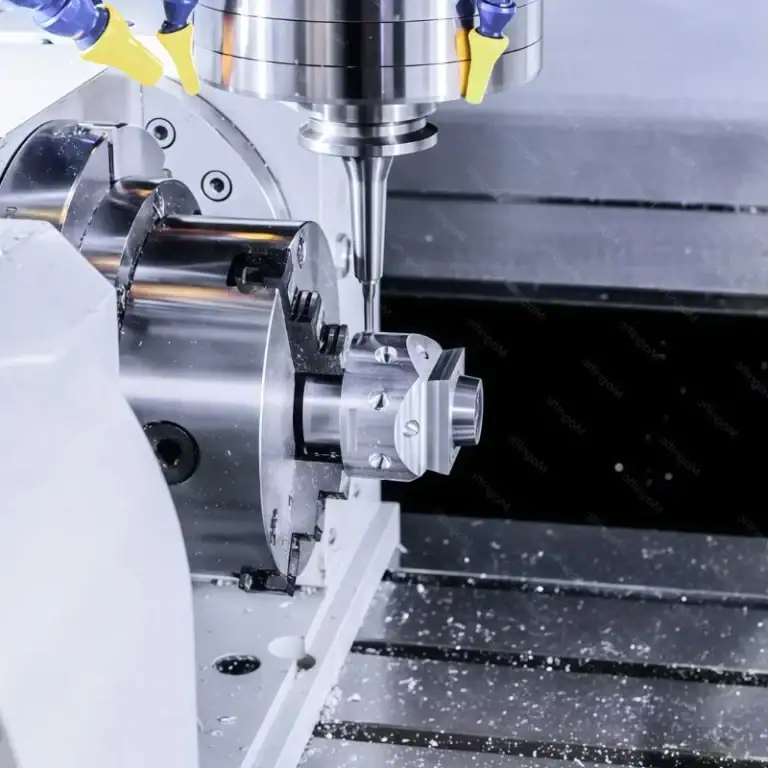
At TiRapid, we provide precision CNC machining services for custom metal and plastic parts used in automation, electronics, industrial equipment, and other engineering applications.