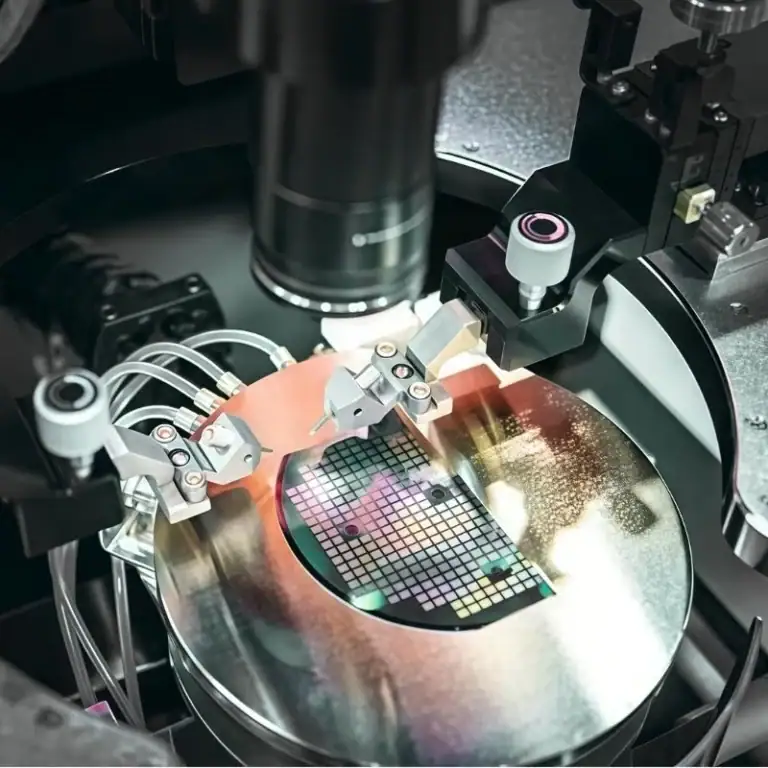
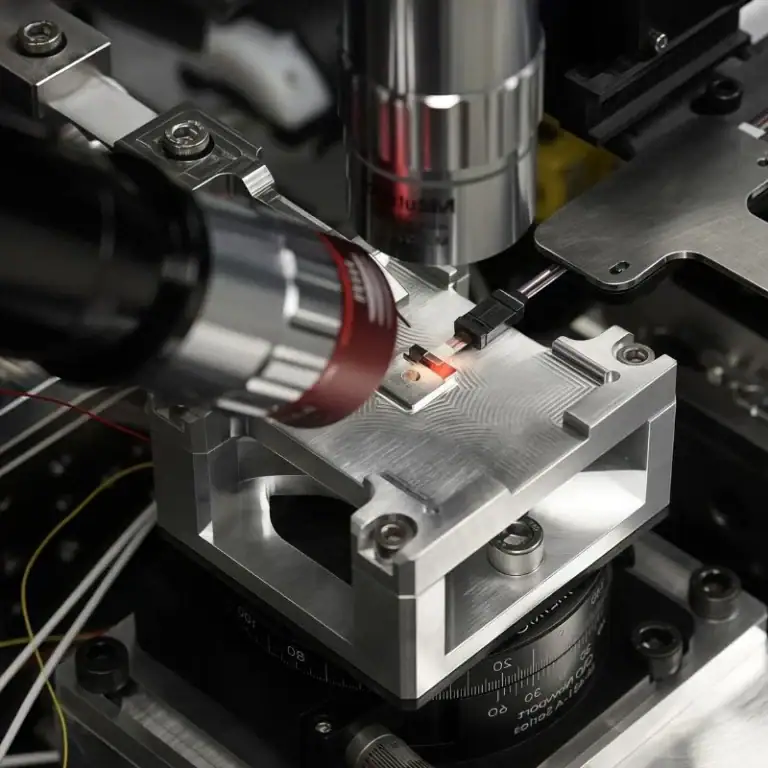
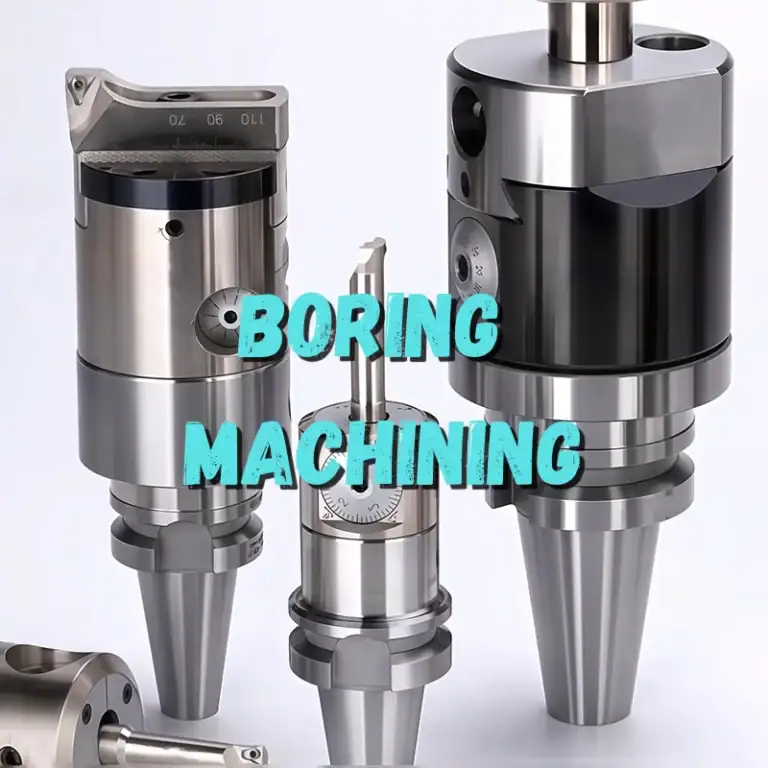
In the plastic parts manufacturing industry, small-batch production is a frequent requirement for many companies. Especially during product development, sample verification, equipment customization, automation components, and functional testing, customers often don’t need to produce tens of thousands of pieces at a time, but rather small batch orders of tens, hundreds, or even single-digit units. In this situation, many people consider the question: should small-batch plastic parts be produced by injection molding or CNC machining? For plastic parts with small quantities, varied structures, and tight delivery deadlines, CNC machining is often more advantageous. It doesn’t require mold making, can be directly processed according to drawings, and allows for flexible adjustment of dimensions and structure, making it very suitable for product development and customized production. However, CNC is not “the most cost-effective in all situations.” Whether it is suitable requires a comprehensive judgment based on the part structure, material type, precision requirements, and budget.
Why is CNC machining the preferred choice for small-batch plastic parts?
What is small-batch plastic parts processing?
Small-batch plastic parts processing generally refers to the production of a small number of plastic products, typically ranging from one to several hundred pieces. These types of products are typically used for product development, functional verification, trial assembly testing, non-standard equipment, or customized projects. Therefore, they prioritize delivery time, flexibility, and modification efficiency over maximum production capacity. Unlike mass production, the biggest characteristic of small-batch production is “frequent changes.” Customers might modify a hole position today and adjust the dimensions tomorrow. If traditional mold-making methods are used, each modification may involve mold adjustments or even re-molding, significantly increasing costs and time.
Core Characteristics of CNC Machining
CNC machining is a machining method that uses a numerical control program to control cutting tools to cut plastic materials. Its biggest advantage is that it does not require molds; machining can begin directly with just drawings. Therefore, for small quantities of plastic parts with high structural requirements, CNC often allows for faster production. Simultaneously, CNC can achieve high dimensional accuracy and surface quality, making it particularly suitable for parts with complex structures, strict dimensional requirements, or those requiring frequent modifications. Compared to the high initial mold investment in injection molding, CNC is generally more flexible and easier to control risks in the small-batch stage.
Why Flexibility is Crucial in Small-Batch Production?
Small-batch parts are often not “final mass-produced parts,” but rather part of a continuous process of adjustment and optimization. Investing heavily in mold costs at this stage can be wasted if the design changes. CNC machining, on the other hand, only requires program modifications to continue processing, giving it a significant advantage in the R&D and prototyping stages. Small-batch plastic parts require “rapid response capabilities” rather than “lowest unit cost.” This is why many R&D-oriented companies and automation industries prefer CNC machining in the early stages.
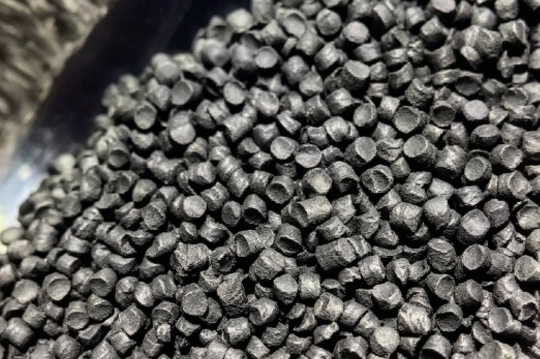
How are small-batch plastic parts manufactured using CNC?
Drawing Analysis and Process Confirmation
The first step in machining small-batch plastic parts is usually analyzing the customer’s drawings. Engineers will confirm the part’s structure, dimensional tolerances, surface requirements, and whether there are difficult-to-machine structures such as thin walls, deep grooves, or complex curved surfaces. Since CNC machining emphasizes machinability, optimization suggestions are often given to customers at this stage, such as adding fillets, adjusting wall thickness, or reducing unnecessary complex features. The purpose of this step is not just “whether it can be done,” but to reduce subsequent machining risks in advance, making the parts easier and more stable to machine.
Material Preparation and Rapid Production Scheduling
Compared to injection molding, which requires mold making, CNC machining can directly use existing sheet metal or rod stock, resulting in a shorter preparation cycle. Engineers select suitable materials based on part requirements, then perform cutting, positioning, and fixture preparation. For small-batch orders, many factories adopt flexible scheduling methods, eliminating the need to establish a dedicated production line, thus typically resulting in faster delivery times. This is why CNC machining has a significant advantage in the sample stage and urgent projects.
Programming and Trial Machining
Before machining, a toolpath program needs to be generated using CAM software, followed by trial cutting verification. Because small-batch parts often prioritize precision and detail, the trial machining stage focuses on checking dimensions, hole positions, assembly relationships, and surface condition. If problems are found, the program can be directly modified for further adjustments, without the need for large-scale rework like with molds. This flexibility is crucial for projects with frequent drawing revisions during the R&D phase.
Batch Machining and Inspection
After confirming that the sample is problem-free, the formal machining stage can begin. Although the quantity is small, many small-batch parts often have high precision requirements, therefore, rigorous dimensional and visual inspections are usually performed. For assemblies, trial assembly verification may be conducted to ensure proper fit between parts.
Why is CNC more suitable for small batches?
No mold required, significantly reducing upfront costs
The most expensive part of traditional injection molding is usually not the material, but the mold. For small batch orders, mold costs are difficult to amortize, resulting in very high unit prices. CNC, however, does not require molds and can process directly, meaning a significant reduction in upfront investment. Especially during product development, designs frequently change. If a mold has already been created, repeated mold modifications or even remaking the mold may be necessary, increasing costs and time. CNC only requires program modifications to continue processing, offering significantly greater flexibility.
Easy modification, suitable for R&D iteration
The biggest characteristic of small batch projects is “modification as you go.” For example, if a structure is found to be unreasonable after testing and requires adjustments to hole positions or dimensions, CNC only requires modifying the drawings and program to continue processing. In contrast, modifying injection molds is usually very cumbersome, and some structures are even impossible to modify. Therefore, CNC is more suitable for rapid iteration during the R&D verification phase.
Easier Control of Precision and Consistency
CNC machining controls the toolpath through a numerical control system, resulting in generally high machining accuracy. For parts with complex structures and high assembly requirements, CNC machining makes it easier to ensure dimensional stability in small batches. Especially during functional testing, each part may be used to verify the structure and assembly, making dimensional consistency crucial. CNC machining is generally more stable in this regard than temporary simplified molds.
Suitable for Complex Structures and Non-Standard Parts
Some plastic parts have complex structures, such as deep cavities, irregular grooves, special curved surfaces, or non-standard interfaces. Mold development for these structures significantly increases mold difficulty and cost. CNC machining is more flexible, allowing for the machining of complex structures using different tools and toolpaths. Therefore, CNC often has advantages in non-standard equipment, automated fixtures, and customized projects.
Which plastics are more suitable for small-batch CNC machining?
POM is suitable for high-precision structural parts
POM has good dimensional stability and machinability, making it widely used in small-batch CNC machining. It is suitable for making precision structural parts such as gears, sliders, and guides, ensuring dimensional stability after machining and reducing the likelihood of severe deformation.
ABS is suitable for shells and verification parts
ABS has good processing performance and a moderate cost, so it is often used for product shells, functional verification parts, and structural test parts. It is easy to process and facilitates subsequent painting and bonding, making it suitable for use in the R&D stage.
PC is suitable for transparency and high strength requirements
PC has good toughness and transparency, making it suitable for parts that require observation of internal structures or impact resistance. However, PC is relatively sensitive to processing heat, so more stable parameter control is needed during processing.
PEEK is suitable for high-performance applications
PEEK is a high-performance engineering plastic suitable for medical, aerospace, or high-temperature environments. Although the cost is higher, it performs excellently in terms of strength, heat resistance, and abrasion resistance, making it suitable for high-end, small-batch projects.
Frequently Asked Questions
Will there be problems switching from small-batch parts to injection molding later?
Many customers worry: If CNC machining is used initially, will there be structural incompatibility when switching to injection molding for mass production? In fact, in most cases, no, provided that injection molding feasibility is considered during the design phase. For example, avoiding completely vertical deep cavity structures, appropriately increasing the draft angle, and controlling wall thickness uniformity. Many companies first use CNC machining for functional verification to confirm the structure is sound before optimizing it for mass production using injection molding. Therefore, CNC machining is not only a processing method but also a crucial verification stage before mass production.
Conclusion
CNC machining is highly suitable for small-batch plastic parts. This is because the most important factor in small-batch production is not “the cheapest per unit,” but rather “the ability to produce quickly, flexibly, and stably.” Compared to injection molding, which requires mold making, is difficult to modify, and has a longer lead time, CNC machining does not require molds; it can be produced directly with just drawings, and later modifications are much easier, making it ideal for R&D, testing, and customized projects. Furthermore, CNC has significant advantages in precision, structural complexity, and non-standard machining, especially suitable for plastic parts with high dimensional requirements and frequent structural changes. While injection molding may have a lower unit cost in mass production, CNC often better balances cost, efficiency, and flexibility in small-batch production.