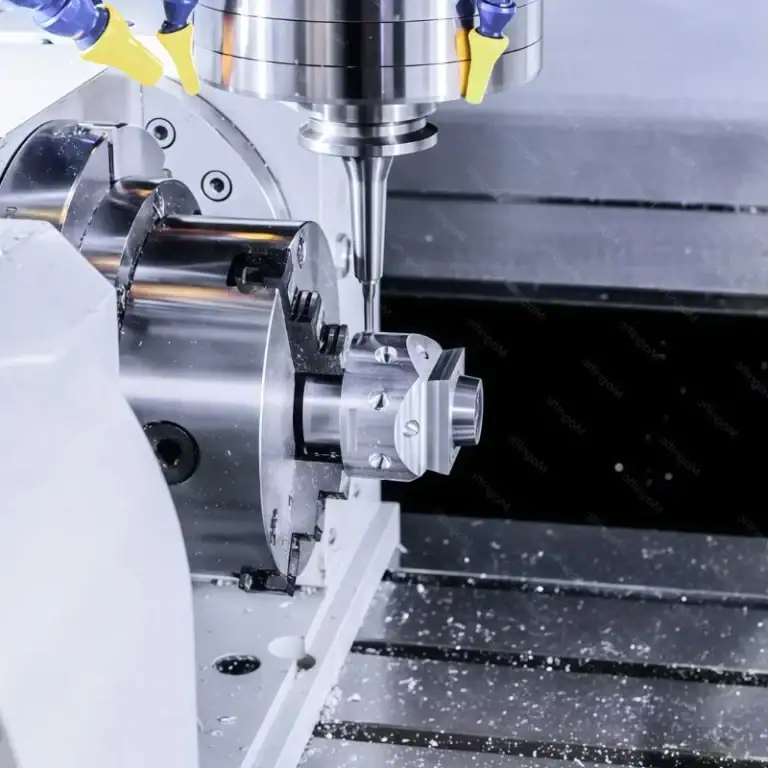
As the manufacturing industry continues to develop towards intelligence and high efficiency, automation has gradually become an important component of CNC machining of plastics. Especially in the field of plastic parts processing, customers have increasingly higher requirements for delivery time, stability, consistency, and production efficiency. Traditional manual operation methods are no longer sufficient to meet modern production needs. Therefore, more and more companies are introducing automation systems into CNC plastic machining to improve processing efficiency, reduce human error, and achieve more stable batch production. However, automation in plastic CNC machining is not simply about “machines replacing manual labor.” It actually involves multiple aspects such as equipment linkage, program control, automatic loading and unloading, online inspection, processing parameter management, and material matching. Only when the entire process operates in a coordinated manner can automation truly play its role.
What exactly is CNC machining automation in plastics?
What is CNC machining automation in plastics?
Simply put, CNC machining automation in plastics is about using automated equipment, program systems, and intelligent control methods to minimize human intervention in the plastic parts processing process, achieving continuous, stable, and high-efficiency production. In traditional plastic CNC machining, many steps rely on manual labor, such as loading and unloading, program switching, dimensional inspection, and workpiece handling. Automation systems connect these steps, allowing equipment to operate automatically according to a pre-set process. For example, robotic arms automatically grasp workpieces, change fixtures, call programs, and check dimensions. Its core purpose is not complete “unmanned operation,” but rather reducing human error, improving production stability, and standardizing the processing.
Why is Automation Increasingly Necessary in Plastic Processing?
While plastic parts processing doesn’t involve the high cutting loads of metal processing, it demands extremely high standards for dimensional stability, surface quality, and batch consistency. Especially in the electronics, medical, automation equipment, and precision structural parts sectors, customers often expect consistent quality across batches. Relying entirely on manual operation easily leads to inconsistencies in clamping, program errors, and dimensional fluctuations. Automation reduces these errors through standardized processes, resulting in more stable processing outcomes.Furthermore, automation improves production efficiency, particularly in continuous nighttime processing, small-batch, multi-variety switching, and repetitive order production.
Automation is More Than Just Equipment Upgrades
Many people believe automation is simply adding robotic arms, but this is not the case. True automation is often a holistic upgrade of “equipment + software + process + data.” For example, a complete automated plastic CNC system requires not only automatic loading and unloading equipment, but also a program management system, tool life monitoring, online inspection, and production scheduling system working together. Only when these components operate in tandem can automation truly improve production capacity, rather than simply increasing equipment costs.
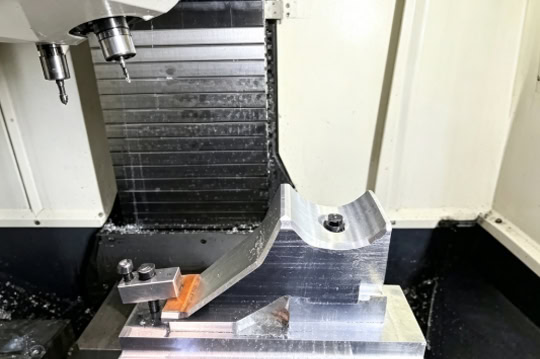
How does automated plastic CNC machining work?
Automated Loading and Unloading System
In plastic CNC machining, the most common part of automation is automatic loading and unloading. Traditional methods require manual placement of materials into fixtures and removal of finished products, while automated systems use robotic arms, vacuum suction cups, or conveying devices to perform these actions. For batches of plastic parts, automatic loading and unloading significantly reduces repetitive manual labor while improving equipment utilization. For example, during unattended processing at night, robotic arms can continuously change workpieces, allowing the equipment to operate stably for extended periods. This automation method is particularly suitable for plastic parts with relatively uniform dimensions and regular structures.
Automatic Program Calling and Switching
Modern automated CNC systems are typically used in conjunction with MES or machining management systems. Different products correspond to different machining programs, and the system can automatically call the corresponding toolpaths and machining parameters based on the order. The benefits of this approach include reducing errors during manual program switching and improving the efficiency of multi-variety production. Especially in the processing of small batches of multi-model plastic parts, automatic program switching significantly shortens preparation time.
Online Inspection and Automatic Correction
In some high-precision plastic parts processing, automated systems are also equipped with online inspection functions. For example, during processing, a probe automatically detects key dimensions. If a dimensional deviation is detected, the system automatically corrects the tool compensation parameters. This method reduces batch errors and improves product consistency, making it particularly suitable for precision plastic structural parts and high-requirement assemblies.
Automated Data Management
Automated machining is not just about “machines moving,” but more importantly, about unified data management. For example, equipment uptime, tool life, processing yield, and production progress can all be recorded in real time through the system. This allows companies to quickly identify problems, such as abnormal tool life or a decline in the yield of a certain process, thereby adjusting the process in a timely manner and improving overall production stability.
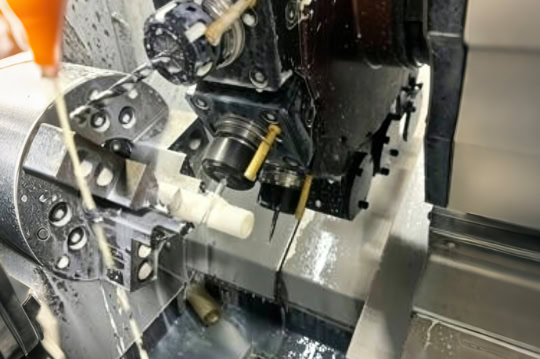
Key Technologies for Automated Plastic CNC Machining
Stable Fixtures are the Foundation of Automation
The biggest fear in automated machining is unstable clamping. Although robotic arms can perform repetitive movements, if the fixture positioning is inaccurate, the part dimensions will still fluctuate. 1. Plastic materials are inherently low in rigidity and easily deformable, therefore, automated fixture design must balance positioning accuracy and clamping force. Flexible clamping, vacuum adsorption, or multi-point support are commonly used to reduce uneven material stress. Higher fixture stability ensures greater consistency in automated machining.
Tool life monitoring is crucial
Although tool wear rates are slower in plastic machining than in metal machining, tool condition still affects surface quality and dimensional accuracy after prolonged automated operation. Therefore, automated systems typically incorporate tool life management, such as automatic alarms or tool changes after a certain number of cycles. This prevents burrs, weld lines, or dimensional deviations caused by dull tools.
More stable automated parameter control is essential
A key characteristic of automated machining is long-term continuous operation, requiring highly stable machining parameters. Overly aggressive parameter settings may not show immediate problems, but over time, they can lead to temperature buildup, dimensional drift, or material deformation. Therefore, automated plastic machining typically employs more stable and conservative parameter strategies to ensure reliability in long-term continuous production.
Temperature and Environmental Control Cannot Be Ignored
Plastic materials are sensitive to temperature changes, therefore automated workshops typically require controlled ambient temperature. Because equipment generates heat during prolonged operation, significant environmental fluctuations can cause slight changes in part dimensions. For high-precision automated production lines, a constant temperature environment and a stable cooling system are crucial for ensuring long-term stable production.
Which Plastics Are More Suitable for Automated CNC Machining?
POM is Suitable for High-Precision Automated Machining
POM has good dimensional stability and machinability, performing very consistently in automated machining. It is less prone to severe burrs and has good dimensional repeatability, making it commonly used for structural components, sliders, and precision parts in automated equipment. For continuous batch production, POM is one of the most suitable materials for automated CNC machining.
ABS is Suitable for General-Purpose Automated Production
ABS has good machinability and a relatively moderate material cost, making it widely used in automated machining. It is suitable for housings, functional verification parts, and general structural parts. However, ABS is prone to slight burrs at high temperatures, so careful control of cutting heat is necessary during long-term continuous machining.
PC is suitable for high-strength transparent parts
PC material has high strength and a certain degree of transparency, making it suitable for transparent protective and structural parts in automated production. However, PC is relatively sensitive to cutting heat, so more stable parameters and chip removal control are required during automated processing.
PEEK is suitable for high-end automated applications
PEEK is a high-performance engineering plastic suitable for medical, aerospace, and high-temperature environment parts. Although the material cost is higher, its stability in automated continuous processing is excellent. However, due to the higher processing difficulty of PEEK, the requirements for equipment rigidity and cutting tools are also higher, so it is usually used for high value-added products.
Conclusion
Automation is gradually changing the production methods of CNC machining of plastics. Processes that previously relied on manual operation can now achieve more stable and efficient production through robotic arms, intelligent programs, online inspection, and data management systems. For enterprises, automation not only reduces labor costs, but more importantly, improves product consistency and processing stability. However, automation is not simply adding equipment, but a complete engineering process. It requires the coordinated operation of equipment, processes, fixtures, programs, and materials to truly achieve its effects. Simply introducing robotic arms without optimizing processes and procedures may actually increase production problems.