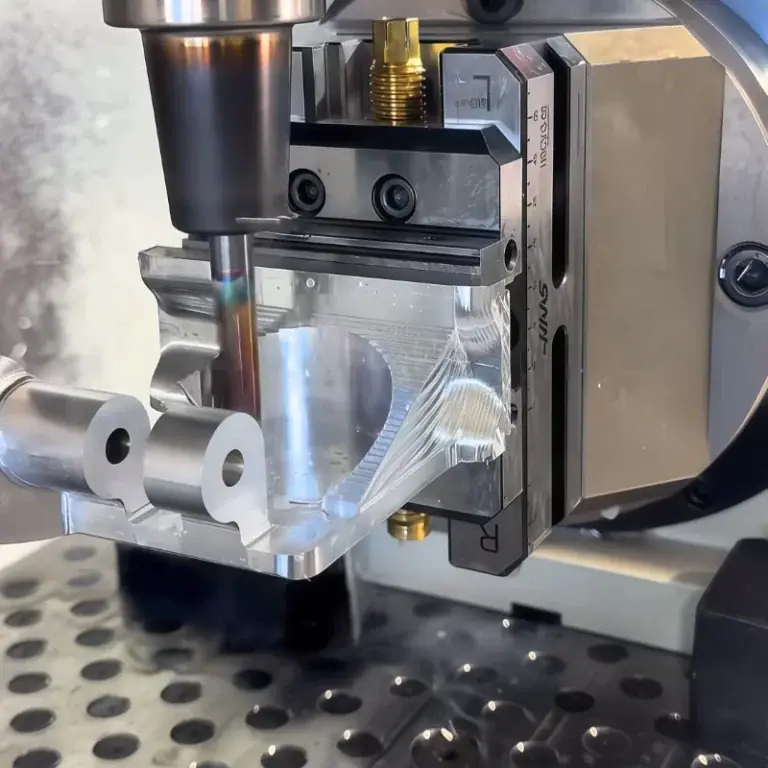
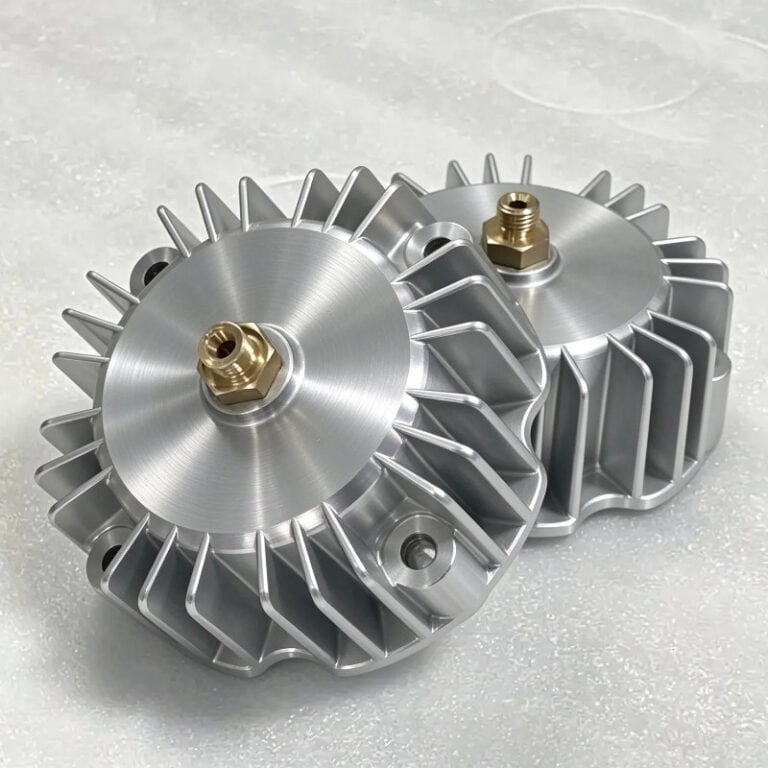
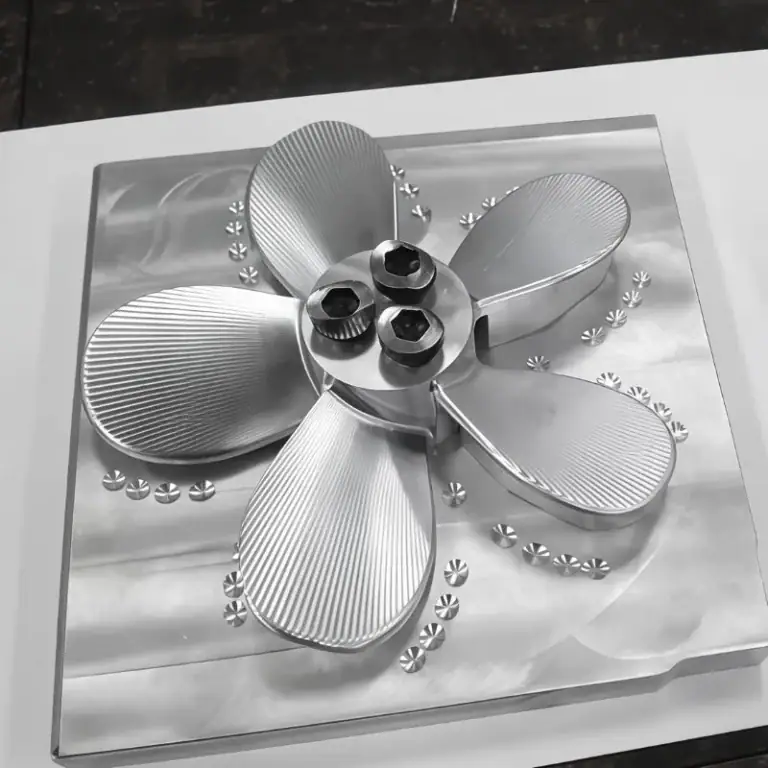
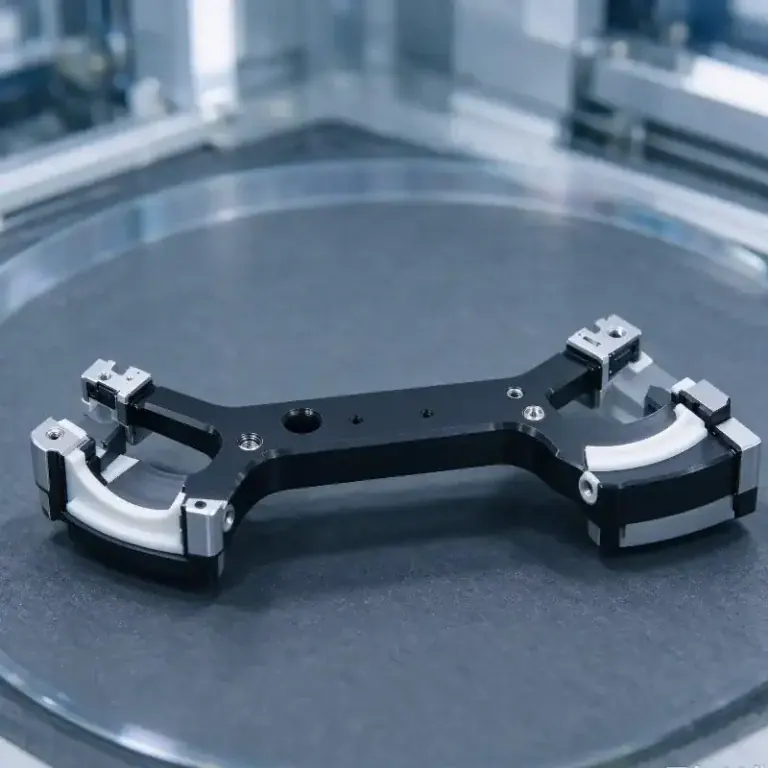
CNC machined housings are essential components in electronic devices, industrial equipment, automotive systems, and precision instruments. Beyond protecting internal components, these housings provide accurate mounting positions, structural support, thermal management, and reliable sealing. Compared with conventional cast or sheet metal housings, CNC machining offers greater flexibility for producing complex structures, customized interfaces, and tight-tolerance features.
However, manufacturing a reliable housing requires more than achieving the specified external dimensions. Material selection, wall thickness, cavity geometry, machining sequences, and surface treatments all influence dimensional stability and assembly performance. This guide explains how CNC machined housings are designed, manufactured, and inspected, helping engineers and buyers balance functional requirements, machining quality, and production costs.
What Are CNC Machined Housings?
CNC machined housings are precision components manufactured using computer-controlled cutting processes to protect, support, and accurately position internal assemblies. They can integrate complex cavities, mounting features, sealing surfaces, and precision interfaces into a single structure.
Definition And Functions Of CNC Machined Housings
A CNC machined housing is typically manufactured from metal or engineering plastic using milling, turning, drilling, and other machining operations. Its primary function is to provide a protective and functional structure for internal components.
Depending on the application, a housing may resist mechanical loads, prevent contamination, dissipate heat, or maintain the alignment of sensitive assemblies. Mechanical housings often support bearings and shafts, while electronic housings protect circuit boards and connectors.
Unlike a simple protective shell, a precision machined housing frequently forms part of the product’s functional structure. Its dimensional accuracy directly affects assembly efficiency, operating stability, and long-term reliability.
Key Structural Features Of A Machined Housing
A typical machined housing contains external walls, internal cavities, mounting surfaces, threaded holes, and component locating features. More complex designs may include bearing seats, reinforcing ribs, connector openings, and sealing grooves.
These features must work together to maintain the required relationship between internal components. For example, mounting surfaces establish component positions, while locating holes and precision bores help control alignment.
The manufacturing process must preserve these geometric relationships throughout machining and finishing. Individual dimensions may meet their tolerances while the complete assembly still experiences alignment problems if the datum structure is poorly defined.
CNC Machined Housings Vs. Cast And Sheet Metal Housings
CNC machining removes material from solid stock or a preformed blank, allowing functional features to be produced directly according to engineering drawings. This approach is particularly useful for customized geometries and precision interfaces.
Casting can reduce material waste and unit costs at suitable production volumes, although precision bores and mating surfaces often require secondary machining. Sheet metal fabrication is more economical for many lightweight enclosures with relatively simple wall structures.
The appropriate manufacturing method depends on part geometry, structural requirements, production quantity, and tooling investment. CNC machining is especially attractive when design flexibility and dimensional accuracy are priorities.
What Are The Different Types Of CNC Machined Housings?
CNC machined housings can be classified according to their structural functions and operating requirements. Different housing types place different demands on machining accuracy, material performance, environmental protection, and internal component alignment.
Electronic Housings And Enclosures
Electronic housings protect printed circuit boards, power modules, sensors, and communication components. Their internal structures typically include mounting bosses, connector openings, threaded holes, and recessed areas.
Aluminum enclosures can also contribute to heat dissipation and electromagnetic interference shielding. Effective performance depends on the complete enclosure design, including its joints, openings, grounding connections, and contact surfaces.
Machining accuracy is particularly important for connector alignment and circuit board mounting. Incorrect feature positions may create assembly interference or place unnecessary mechanical stress on electronic components.
Mechanical And Gearbox Housings
Mechanical housings provide structural support for bearings, gears, shafts, motors, and transmission components. They must maintain stable component positions while resisting operational loads and vibration.
Precision bearing bores and mounting surfaces are especially important because geometric errors can affect shaft alignment, gear engagement, and bearing service life.
These housings often require coordinated machining of multiple surfaces and bores. Appropriate datum selection and inspection methods help maintain the dimensional relationships necessary for reliable mechanical operation.
Optical And Sensor Housings
Optical housings support lenses, mirrors, detectors, and other sensitive components. Their performance depends on accurate alignment, dimensional stability, and control of unwanted light or contamination.
CNC machining optical housings often requires precision bores, locating shoulders, fine threads, and controlled internal surfaces. Surface treatments may also be selected to reduce unwanted reflections.
Material stability and thermal expansion deserve particular attention. Even small dimensional changes caused by temperature variations can influence optical alignment and measurement accuracy.
Sealed Housings, Covers, And Precision Cases
Sealed housings protect internal components from moisture, dust, fluids, or other environmental contaminants. Their structures commonly incorporate removable covers, gasket surfaces, and O-ring grooves.
Reliable sealing depends on the relationship between mating surface geometry, seal compression, fastening distribution, and housing stiffness. A dimensionally accurate sealing groove alone cannot compensate for excessive cover deformation.
Precision covers and equipment cases may also require repeatable alignment during maintenance. Machined locating features and controlled mating surfaces help maintain consistent assembly conditions after repeated opening and closing.
Common Materials For CNC Machined Housings
The material selected for a CNC machined housing influences its weight, structural strength, corrosion resistance, thermal performance, and machining cost. Engineers should evaluate material properties together with the housing geometry, operating environment, and expected service conditions.
Aluminum Alloys
Aluminum alloys are widely used for CNC machined housings because they offer a practical combination of low weight, good machinability, and useful thermal conductivity.
6061 aluminum is commonly selected for electronic enclosures and industrial housings that require reliable machining performance. Higher-strength alloys such as 7075 may be considered when structural loading is more demanding.
However, higher material strength does not automatically make an alloy more suitable. Corrosion resistance, material temper, finishing compatibility, and dimensional stability must also be considered when selecting the final grade.
Stainless Steel And Carbon Steel
Stainless steel housings are suitable for applications requiring corrosion resistance, mechanical strength, and durability. Grades such as 304 and 316 are commonly evaluated for medical, industrial, and environmentally demanding equipment.
Carbon steel provides useful structural strength at relatively economical material costs, making it suitable for heavy-duty mechanical housings and equipment components.
Compared with aluminum, steel generally requires greater cutting forces and may increase machining time. Its higher density also makes it less suitable where weight reduction is a major design objective.
Copper And Brass
Copper and brass are used in specialized housings requiring electrical conductivity, thermal conductivity, or particular electromagnetic shielding characteristics.
Copper is especially useful near heat-generating components, while brass can provide practical machinability for connector bodies, instrumentation housings, and threaded interfaces.
Their relatively high density and material costs limit their use in larger housing structures. In many assemblies, copper or brass inserts can provide the required local functionality without manufacturing the entire housing from these materials.
Engineering Plastics
Engineering plastics such as POM, PEEK, and polycarbonate can be machined into lightweight housings for applications requiring electrical insulation, chemical resistance, or specialized functional properties.
Plastic housings are particularly useful when electrical isolation or reduced component weight is more important than metallic structural strength and thermal conductivity.
However, plastics generally exhibit greater thermal expansion and lower stiffness than metals. Cutting temperatures, clamping pressure, moisture absorption, and long-term dimensional changes must be considered according to the selected material.
How To Choose The Right Housing Material
Material selection should begin with the housing’s primary function. A lightweight electronic enclosure, a load-bearing gearbox housing, and a corrosion-resistant medical equipment housing may require substantially different material properties.
The following table compares common materials used for precision machined housings.
| Material | Key Advantages | Main Limitations | Typical Applications |
| Aluminum 6061 | Lightweight, good machinability, corrosion resistance | Lower strength than some high-strength alloys | Electronic enclosures, automation housings |
| Aluminum 7075 | High strength-to-weight ratio | Higher cost, corrosion resistance requires consideration | High-load mechanical and aerospace components |
| Stainless Steel 304 | Good corrosion resistance and durability | Higher machining forces and weight | Industrial and medical housings |
| Stainless Steel 316 | Improved resistance to many corrosive environments | Higher material and machining costs | Chemical and demanding environmental applications |
| Carbon Steel | Good strength and economical material cost | Requires suitable corrosion protection | Gearbox and heavy-duty equipment housings |
| Copper And Brass | Electrical conductivity and specialized thermal properties | Higher density and material cost | RF housings, connectors, instrumentation |
| POM And PEEK | Electrical insulation and specialized material properties | Thermal expansion and lower stiffness than metals | Sensor housings and specialized equipment |
The final selection should balance functional performance with machining feasibility, material availability, surface treatment requirements, and total manufacturing cost.
Key Design Considerations For CNC Machined Housings
Effective housing design must balance structural performance with manufacturing feasibility. Wall thickness, internal cavity geometry, mounting features, sealing interfaces, and functional tolerances should be evaluated together before CNC machining begins.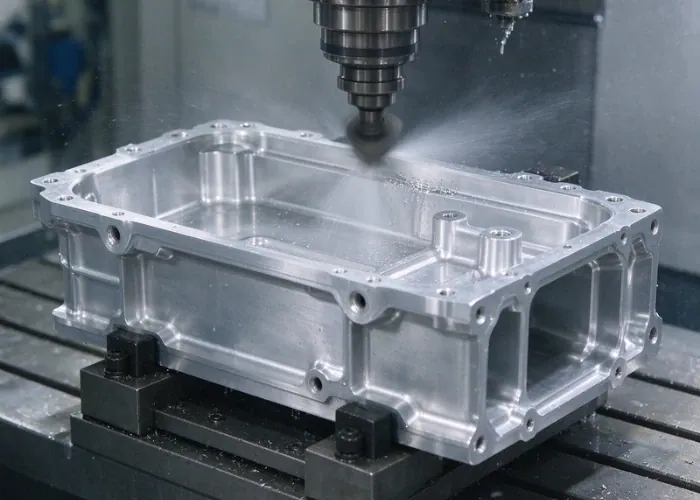
Wall Thickness And Structural Rigidity
Wall thickness directly affects housing strength, component weight, and machining stability. Excessively thin walls may deflect under cutting forces, creating dimensional errors and inconsistent surface finishes.
Increasing wall thickness improves rigidity but also adds weight and material consumption. Reinforcing ribs and localized structural supports can provide additional stiffness without unnecessarily thickening the entire housing.
Minimum wall thickness should be determined according to material properties, unsupported wall height, machining strategy, and operational loading rather than applying a universal dimension to every design.
Pocket Depth, Corner Radii, And Tool Accessibility
Internal pockets accommodate electronic components, mechanical assemblies, and wiring systems. However, deep cavities with narrow openings can restrict cutting tool access and increase machining difficulty.
Small internal corner radii require smaller-diameter cutters, while deep pockets may require longer tools. Both conditions can reduce cutting rigidity and increase machining time.
Where functional requirements permit, larger internal radii and accessible cavity geometry allow the manufacturer to use more stable tooling. This can improve surface quality and reduce unnecessary machining costs.
Mounting Bosses, Ribs, And Threaded Features
Mounting bosses provide attachment points for circuit boards, covers, and internal assemblies. Reinforcing ribs distribute mechanical loads and help improve structural stiffness.
Boss dimensions should provide adequate material around threaded holes while allowing cutting tools to access surrounding pockets. Blind threaded holes also require sufficient depth for tool clearance and chip evacuation.
The positioning of mounting features should follow the assembly datum system. This helps prevent unnecessary tolerance accumulation between the housing, internal components, and removable covers.
Sealing Surfaces And O-Ring Groove Design
Sealing performance depends on controlled mating surfaces and properly designed gasket or O-ring grooves. Groove dimensions influence seal compression, while surface flatness affects contact consistency across the sealing interface.
Fastener positioning and housing rigidity also influence sealing reliability. Excessive spacing between fasteners may allow a cover to deform and reduce sealing pressure locally.
During design, engineers should define seal geometry according to the selected sealing system, operating pressure, temperature, and environmental requirements. Machining tolerances should support these functional conditions.
Thermal Management And EMI Shielding
Electronic housings may serve as both protective structures and heat transfer components. Machined heat sink fins, thermal contact pads, and conductive mounting surfaces can help transfer heat away from sensitive electronics.
Metal housings may also provide electromagnetic interference shielding. However, shielding effectiveness depends on electrical continuity, enclosure openings, grounding, and the design of mating interfaces.
Surface treatment requirements must therefore consider both thermal and electrical functions. An insulating finish applied to a grounding or thermal contact area may interfere with the intended performance.
Functional Tolerances And Assembly Interfaces
Not every housing dimension requires a tight tolerance. Precision requirements should focus on the interfaces that directly influence component positioning, sealing, mechanical alignment, or assembly performance.
When preparing a housing for manufacturing, engineers should prioritize the following design requirements:
- Wall Thickness: Maintain sufficient rigidity during machining and operation.
- Internal Geometry: Provide practical pocket depths, corner radii, and cutting tool access.
- Mounting Features: Allow adequate material around threaded holes, bosses, and locating features.
- Sealing Interfaces: Define groove dimensions, flatness, surface finish, and fastening requirements.
- Functional Datums: Establish reliable references for assembly-critical features.
- Thermal And Electrical Interfaces: Identify contact areas requiring special machining or surface treatment.
Early design-for-manufacturing review helps identify conflicts between functional requirements and practical machining conditions before production begins.
What Is The CNC Machining Process For Housings?
The CNC machining process for housings involves transforming raw material into a finished component through programmed cutting operations. Material preparation, workholding, rough machining, precision finishing, and secondary operations must be coordinated to maintain dimensional accuracy.
Drawing Review And Material Preparation
Manufacturing begins with reviewing the engineering drawing, 3D model, material specification, tolerances, and surface finish requirements.
Suitable billet, plate, bar, or preformed stock is then selected according to the housing dimensions and material requirements. Machining allowances must provide sufficient material for establishing reference surfaces and removing stock irregularities.
For large or thin-walled housings, material condition is especially important. Residual stresses within the raw material may be released during cutting and affect the stability of the finished component.
CNC Programming And Workholding
CNC programming defines cutting tools, toolpaths, machining sequences, and cutting conditions based on the housing geometry.
Workholding must secure the component without introducing excessive deformation. Large clamping forces can distort thin walls, while insufficient support may cause movement or vibration during machining.
The machining strategy should establish reliable datum surfaces and minimize unnecessary repositioning. Multi-axis equipment may provide improved access to complex features while reducing the number of separate setups.
Rough Milling And Internal Cavity Machining
Rough milling removes most of the excess material and establishes the basic housing geometry. Internal pockets and cavities are gradually machined while leaving suitable allowances for finishing.
As material is removed, the housing becomes less rigid. Cutting sequences must account for this changing structural condition, particularly when machining deep cavities and thin walls.
Staged material removal and balanced machining strategies can help reduce distortion. Additional intermediate operations may be necessary when dimensional stability is difficult to maintain.
Precision Milling And Multi-Axis Machining
Precision milling produces critical mating surfaces, mounting features, sealing interfaces, and other areas requiring controlled dimensional accuracy.
Four-axis and 5-axis machining can improve access to features located on different housing surfaces. Reducing separate setups may also help maintain geometric relationships between critical features.
The selected machining configuration should match the component geometry. A straightforward housing may be manufactured efficiently using 3-axis milling, while complex multi-sided structures may benefit from advanced machining equipment.
Drilling, Boring, And Thread Machining
Drilling produces mounting holes, connector openings, and other cylindrical features. Boring or reaming may be required when hole diameter, roundness, or surface quality is particularly important.
Thread machining creates fastening interfaces for internal components and removable covers. Thread depth and surrounding wall thickness must support the required assembly loads.
Critical bores and locating holes should be machined relative to the appropriate functional datums. Their position and alignment can be as important as their individual diameters.
Deburring And Final Cleaning
Machining can leave burrs around holes, internal corners, threads, and cavity edges. These burrs must be removed without damaging functional surfaces or altering critical dimensions.
Cleaning removes cutting fluids, chips, and other machining residues from the housing. Deep pockets and blind holes require particular attention because contaminants may remain trapped inside them.
For precision optical, electronic, and mechanical assemblies, suitable cleanliness requirements help prevent contamination and assembly damage during subsequent operations.
Common Challenges In CNC Housing Machining
Housing machining becomes increasingly challenging as wall thickness decreases, cavity depth increases, and geometric tolerances become tighter. Effective process planning must address deformation, tool stability, workholding, and dimensional consistency throughout production.
Thin-Wall Deformation And Residual Stress
Thin-walled housings can deform due to cutting forces, clamping pressure, and the release of residual stresses during material removal.
A component may appear dimensionally correct while clamped but change shape after being released from its fixture. This makes post-machining inspection particularly important for lightweight and large housings.
Balanced material removal, suitable workholding, and staged finishing operations can help reduce deformation. Stress-relieved stock may also be beneficial where material stability is critical.
Tool Deflection And Vibration In Deep Cavities
Deep internal cavities frequently require long-reach cutting tools. Reduced tool rigidity increases the risk of deflection, vibration, and dimensional errors.
These conditions may produce tapered walls, inconsistent surface finishes, and accelerated tool wear. Chip evacuation becomes more difficult as cavity depth increases.
Selecting suitable tool geometry, controlling cutting engagement, and using stable machining parameters help improve deep-cavity machining performance. Design adjustments can also eliminate unnecessarily restrictive internal features.
Dimensional Errors During Multi-Sided Machining
Complex housings often contain functional features on several surfaces. Repositioning the component between machining operations can introduce alignment errors if reference surfaces are inconsistent.
These errors may accumulate across mounting holes, connector interfaces, bearing seats, and mating surfaces, affecting the final assembly.
Reliable datum systems, fixture repeatability, and multi-axis machining can help maintain geometric consistency. Inspection should verify the relationship between critical features rather than evaluating dimensions independently.
Maintaining Precision Bore Alignment And Surface Flatness
Mechanical housings may require multiple bores to maintain accurate alignment, while sealed housings depend on controlled mating surface flatness.
Even when individual features meet size tolerances, geometric deviations can interfere with shaft rotation, bearing installation, or seal compression.
Precision machining strategies should therefore control both feature dimensions and geometric relationships. Critical surfaces and bores may require dedicated finishing operations and inspection after the housing has been released from its fixture.
Surface Finishes For CNC Machined Housings
Surface treatments improve the corrosion resistance, durability, appearance, and functional properties of CNC machined housings. Finish selection must account for material compatibility, operating conditions, electrical requirements, and dimensional changes.
Anodizing And Hard Anodizing
Anodizing forms a controlled oxide layer on aluminum surfaces, improving corrosion resistance and offering different appearance options.
Hard anodizing provides a thicker, more wear-resistant oxide layer for selected applications. Anodized aluminum avionics housings are one example where material protection and functional surface requirements must be considered together.
Because anodized layers affect surface dimensions and electrical conductivity, precision bores, threaded holes, grounding points, and mating surfaces may require compensation or masking.
Bead Blasting And As-Machined Finishes
Bead blasting creates a relatively uniform matte appearance by treating the surface with abrasive media. It is commonly used on visible aluminum housings before anodizing.
An as-machined finish retains the surface condition generated by cutting operations. It is often suitable for internal structures and non-cosmetic areas where additional treatment provides limited functional benefit.
Sensitive sealing surfaces, optical interfaces, and precision locating features may require protection during blasting. Surface appearance requirements should remain separate from functional surface specifications.
Powder Coating, Conversion Coating, And Other Finishes
Powder coating provides a protective decorative layer for many industrial housings. Chemical conversion coatings may be selected for aluminum components requiring corrosion protection and particular electrical contact properties.
Stainless steel housings may undergo passivation to improve surface corrosion resistance, while electroplating can provide specialized electrical, protective, or wear-related properties.
The selected finish must be compatible with the substrate and application. Coating thickness, masking requirements, and environmental exposure should be evaluated before machining allowances are finalized.
Surface Treatment Effects On Critical Dimensions
Surface treatments can change external dimensions, internal hole sizes, surface roughness, and interface properties.
These changes are especially important for bearing seats, threaded features, precision locating bores, and sealing surfaces. A component that meets dimensional requirements before finishing may no longer meet them afterward.
Engineering drawings should clearly identify whether critical dimensions apply before or after surface treatment. Final inspection must follow the specified condition to confirm assembly compatibility.
Quality Inspection And Tolerance Control For Machined Housings
Quality inspection verifies that a machined housing meets its dimensional, geometric, surface, and functional requirements. An effective inspection plan focuses on the features that directly influence assembly accuracy, structural reliability, and environmental protection.
Dimensional Inspection And CMM Measurement
Dimensional inspection confirms external dimensions, cavity geometry, wall thickness, hole positions, and other drawing requirements.
Coordinate measuring machines can evaluate complex feature relationships using defined datum systems. Conventional measuring instruments, thread gauges, and bore gauges may also be appropriate for individual features.
Inspection methods should be selected according to the required tolerance and feature accessibility. Measurement conditions must account for workpiece stability, temperature, and possible clamping deformation.
Geometric Tolerances And Critical Interface Verification
Geometric dimensioning and tolerancing requirements help control flatness, perpendicularity, position, profile, and other characteristics affecting housing functionality.
For example, a bearing housing may require accurate bore alignment, while an electronic enclosure may require consistent positioning between connector openings and internal mounting features.
Inspection should use the functional datum references defined on the drawing. This ensures that measured geometric characteristics correspond to the housing’s intended assembly conditions.
Surface Roughness And Coating Inspection
Surface roughness influences sealing, friction, thermal contact, and the quality of mating interfaces. Critical surfaces may require measurement using suitable surface roughness instruments.
Finished housings should also be inspected for coating thickness where specified, coverage consistency, discoloration, scratches, and other surface defects.
Visual appearance alone cannot confirm functional surface quality. Specified roughness values, coating requirements, and dimensional acceptance criteria should guide the inspection process.
Sealing, Leak Testing, And Assembly Verification
Sealed housings may require additional testing beyond conventional dimensional inspection. Depending on their intended function, verification can include leak testing, pressure testing, or environmental protection assessments.
The appropriate method depends on the operating medium, pressure conditions, acceptable leakage rate, and applicable product requirements.
Assembly verification can also identify interference, fastener alignment, and component positioning problems. Complete housing performance must be assessed with the relevant covers, seals, connectors, and internal components when required.
Applications Of CNC Machined Housings
CNC machined housings are used across industries requiring customized structures, accurate component positioning, and reliable protection. Their designs vary according to mechanical loads, environmental exposure, thermal conditions, and system-level accuracy requirements.
Automotive And Industrial Equipment
Automotive applications include motor housings, power electronics enclosures, sensor bodies, and transmission-related components. Industrial equipment uses machined housings for pumps, gearboxes, actuators, and control systems.
These components frequently operate under vibration, temperature changes, and mechanical loading. Material strength, mounting accuracy, and dimensional stability influence their service performance.
Medical And Aerospace Equipment
Medical devices may require precision housings for diagnostic instruments, imaging systems, and specialized electronic assemblies. Material compatibility, surface quality, and cleaning requirements depend on the intended application.
Aerospace housings include avionics enclosures, navigation equipment cases, and structural instrument housings. Weight reduction, dimensional accuracy, and environmental resistance are common engineering considerations.
Automation And Semiconductor Equipment
Automation systems use CNC machined housings for motion control devices, positioning assemblies, and precision sensors. Semiconductor equipment may require specialized housings with controlled cleanliness and precise mounting interfaces.
These applications benefit from stable reference surfaces and accurate component alignment, particularly where housings support sensitive mechanisms or measurement systems.
Electronics, Optical Systems, And Robotics
Electronic equipment requires housings that accommodate circuit boards, connectors, thermal management structures, and protective covers. Custom electronic enclosures are often manufactured according to specific OEM product requirements.
Optical and robotic systems place additional emphasis on alignment, structural stiffness, and weight control. CNC machining allows customized housing structures to integrate multiple functional features within compact assemblies.
How To Reduce CNC Housing Machining Costs?
Reducing machining costs requires balancing material consumption, machining time, setup complexity, and functional tolerances. Effective cost optimization focuses on eliminating unnecessary manufacturing difficulty without compromising housing performance.
Optimizing Material Utilization And Blank Selection
Housing cost is strongly influenced by the amount of material removed from the starting blank. Large internal cavities can generate substantial machining time and material waste.
Selecting stock dimensions closer to the finished geometry can improve material utilization. At suitable production volumes, near-net-shape blanks may also reduce rough machining requirements.
The total manufacturing route should be evaluated rather than considering raw material prices alone.
Reducing Machining Setups And Tool Changes
Each additional machining setup introduces handling time, fixture requirements, and potential alignment errors.
Designing accessible features and using consistent tool sizes can simplify machining operations. Multi-axis machining may also reduce repositioning when the housing contains complex multi-sided features.
Manufacturing efficiency improves when the component geometry and machining strategy are developed together rather than independently.
Balancing Functional Tolerances And Production Quantities
Unnecessarily tight tolerances increase machining time, finishing requirements, and inspection costs. Precision should be concentrated on sealing surfaces, locating features, bearing seats, and other functionally important interfaces.Production quantity also influences the most economical manufacturing approach. CNC machining provides flexibility during prototyping and design development, while larger production quantities may justify alternative blank manufacturing methods.A well-optimized housing achieves its functional requirements without introducing unnecessary material consumption or machining complexity.
FAQs
Can CNC Machined Housings Be Made From Multiple Assembled Parts?
Yes. Dividing a housing into several machined components can improve tool accessibility and simplify complex internal structures. However, additional joints introduce fastening requirements, tolerance accumulation, and potential sealing challenges. The advantages should be evaluated against assembly complexity.
Can A Damaged Thread In An Aluminum Housing Be Repaired?
In some cases, damaged threads can be repaired using threaded inserts or an approved oversized thread design. Repair feasibility depends on the remaining wall thickness, loading requirements, and proximity to critical interfaces. Safety-critical components require an approved repair procedure.
How Does Temperature Affect The Accuracy Of Machined Housings?
Temperature changes cause materials to expand or contract. Differences in thermal expansion between a housing and its internal components can influence clearances, bearing fits, and optical alignment. Precision assemblies should account for their expected operating temperature range during design.
Does CNC Machining Automatically Make A Housing Waterproof?
No. Waterproof performance depends on the complete assembled enclosure, including seals, covers, connectors, fasteners, and other potential leakage paths. CNC machining can produce accurate sealing features, but the required protection level must be verified through appropriate testing.
Conclusion
CNC machined housings combine structural protection with precision interfaces, mechanical support, and functional performance. Their manufacturing quality depends on material selection, practical cavity geometry, controlled wall thickness, stable machining processes, and appropriate surface treatments. Engineers must also consider how geometric tolerances, sealing features, and assembly requirements interact throughout production. By integrating functional design with manufacturing feasibility, housing components can achieve reliable performance while maintaining practical production costs.
At TiRapid, we provide precision CNC machining and manufacturing services for custom housings, electronic enclosures, and complex mechanical components. From material selection and DFM review to multi-axis machining, surface finishing, and dimensional inspection, we help customers achieve reliable fit, functional accuracy, and consistent manufacturing quality.