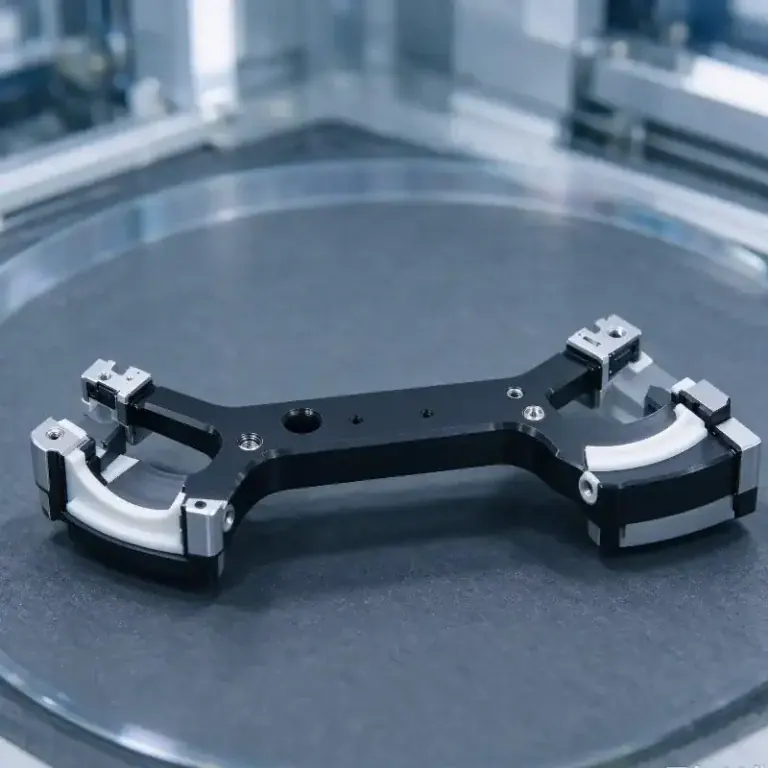
When global equipment builders, robotics engineers, and industrial procurement teams source custom turned components from China—particularly precision shafts, bearing bushings, and threaded sleeves—several recurring quality issues frequently disrupt assembly lines: excessive radial runout on slender shafts, chatter marks on bearing journals that accelerate seal wear, burrs left inside cross-drilled oil holes, and inconsistent surface finishes that fail to meet friction or sealing specifications.
Rooted in the precision manufacturing hub of Zhongshan, Guangdong, China, TiRapid has spent more than 16 years serving European, North American, and international industrial buyers with print-to-part CNC machining solutions. Backed by over 30,000 delivered multi-axis machining projects, a full-scale workshop equipped with precision CNC lathes, turn-mill centers, and Swiss-type screw machines, and an ISO 9001 certified quality system, we manufacture custom shafts, bushings, and micro-turned components down to 2 mm in size—stably holding standard tolerances within ±0.01 mm (±0.0004 in) and achieving turned surface roughness down to Ra 0.6 μm.
Precision CNC Turning & Swiss-Type Machining for Custom Shafts and Bushings
Rotational components sit at the mechanical core of pumps, linear actuators, optical assemblies, medical instruments, and automation drives. Even slight deviations in cylindricity, concentricity, or bore alignment can cause vibration, premature bearing failure, or fluid leakage in service. TiRapid tailors machine selection and workholding methods directly to the geometry and length-to-diameter ratio of each part:
- Swiss-Type Sliding Headstock Turning for Micro & Slender Shafts: Conventional fixed-headstock lathes struggle with long, thin shafts because radial cutting forces cause the bar stock to deflect away from the tool. Our Swiss-type CNC screw machines support the raw bar directly adjacent to the cutting zone through a precision guide bushing, enabling rigid, accurate turning of miniature pins, connector shafts, and slender stepped spindles down to 2 mm in diameter.
- Multi-Axis Turn-Mill Centers with Live Tooling: Modern industrial shafts and bushings rarely consist of purely cylindrical features—they frequently require milled keyways, wrench flats, off-center axial holes, radial cross-drilled fluid ports, and precision slots. By utilizing turn-mill centers equipped with live tooling and sub-spindles, we complete turning, milling, drilling, and tapping in a single continuous setup. Eliminating secondary unclamping and re-fixturing preserves strict coaxiality and angular alignment between turned diameters and milled features.
- Bore Concentricity & Thin-Wall Bushing Control: Thin-walled bronze, stainless steel, and engineering plastic bushings are prone to triangular distortion (lobing) when gripped in standard three-jaw chucks. Our machinists utilize custom full-contact soft jaws, collet chucks, and controlled chucking pressures combined with balanced rough-to-finish boring passes to maintain tight inner-to-outer diameter concentricity and roundness.
Achieving Surface Roughness Down to Ra 0.6 μm Directly Through Precision Turning
For dynamic shaft seals, O-ring grooves, linear guide rods, and sliding bearing interfaces, surface finish directly dictates service life and operating friction. While standard CNC turning typically yields surface finishes around Ra 1.6 μm to Ra 3.2 μm, many precision assemblies require Ra 0.6 μm or finer—often forcing buyers to pay for additional cylindrical grinding operations that extend lead times and add vendor handoffs.
TiRapid’s turning engineering team routinely achieves turned surface roughness down to Ra 0.6 μm directly on precision CNC lathes through coordinated control of four technical variables:
- High-Rigidity Spindles & Vibration Damping: Precision ceramic-bearing spindles with tightly controlled radial runout minimize harmonic micro-vibrations at the cutting edge, preventing subtle chatter patterns from transferring onto bearing journals.
- Wiper-Geometry Inserts & Material-Matched Tooling: We select positive-rake, ground-periphery carbide, cermet, or PCD (polycrystalline diamond) inserts tailored to each alloy. Dedicated wiper geometries smooth out theoretical feed cusps during finishing passes without inducing excessive radial cutting pressure.
- Constant Surface Speed (CSS) & Fine Feed Calibration: Programming optimized constant surface speeds across stepped diameters alongside calibrated feed-per-revolution rates ensures uniform chip load from shoulder to shoulder, maintaining consistent surface texture across varying part diameters.
- Chip Control & High-Pressure Coolant Delivery: Gummy alloys such as 316L stainless steel, pure copper, and 6061 aluminum are prone to built-up edge (BUE) and stringy chips wrapping around the finished shaft and scratching the surface. Directed high-pressure coolant flushes chips cleanly away from the cutting interface while stabilizing localized cutting temperatures.
Integrated Multi-Process Capabilities Beyond CNC Turning
Procurement teams often need turned shafts and bushings delivered alongside mating housings, mounting brackets, or structural frames. Rather than managing separate machine shops and risking tolerance stack-up mismatches across different suppliers, TiRapid operates an integrated manufacturing facility under one roof:
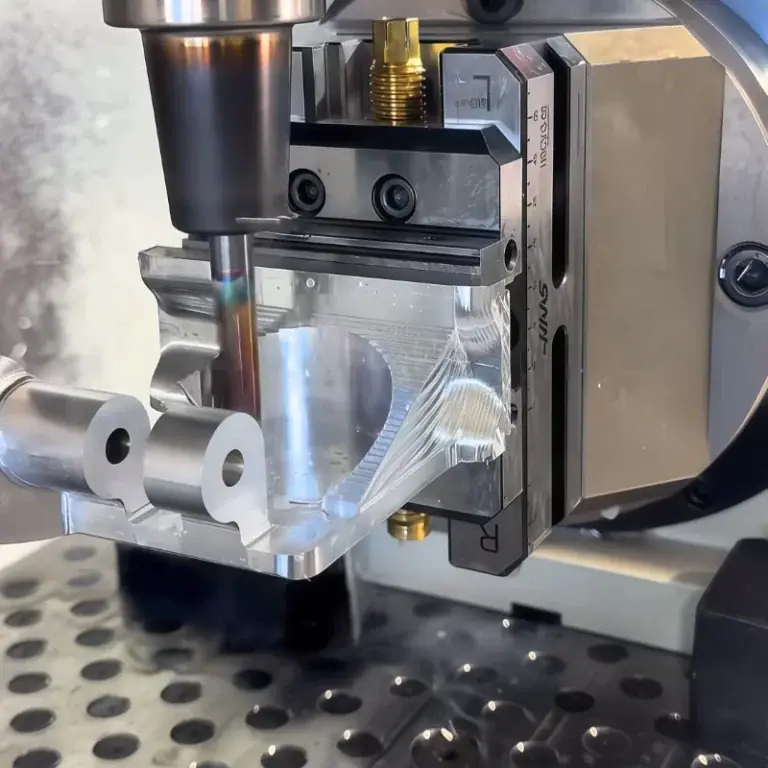
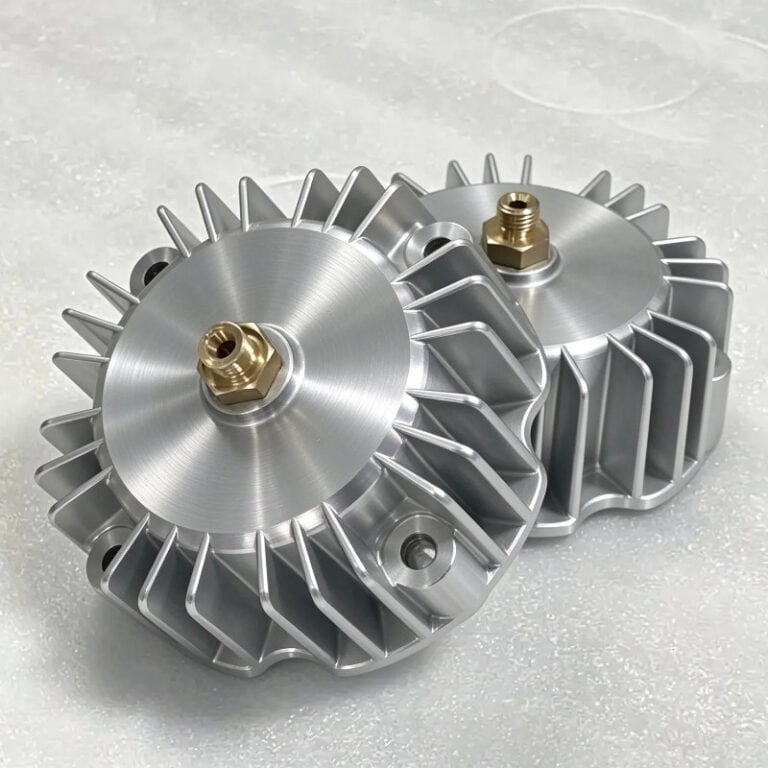
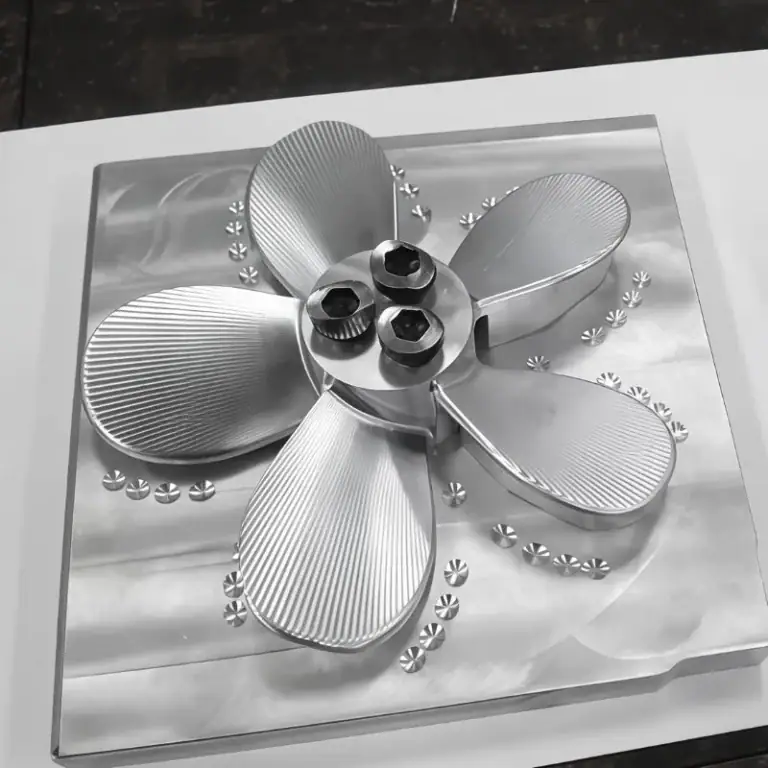
- 5-Axis Simultaneous & Large-Format CNC Milling: Alongside our turning department, we operate 5-axis simultaneous machining centers covering complex housings up to 600 mm, as well as large-format CNC milling equipment supporting monolithic structural plates and frames up to 3,000 mm in length—plus specialized ultra-thin wall milling.
- Precision Wire EDM: For internal blind keyways, precision splines, hexagonal bores, and sharp internal profiles in hardened shafts or bushings that rotary tools cannot form, our micron-level Wire EDM equipment delivers clean, burr-free contours.
- Supporting Forming Processes: When assemblies require stamped or bent enclosures or low-volume polymer components alongside turned metal hardware, we coordinate sheet metal fabrication, vacuum casting, and rapid injection molding through the same engineering team.
Over 80 Metals and Engineering Plastics Stocked for Shafts and Bushings
Selecting the right material balances wear resistance, corrosion protection, machinability, and thermal expansion. TiRapid maintains an established raw material supply chain supporting print-to-part turning across more than 80 industrial-grade metals and engineering plastics:
- Metals for High-Load & Corrosion-Resistant Shafts: Stainless steels including 303 (free-machining), 304, 316, 316L, and precipitation-hardening 17-4PH; alloy and carbon steels including 1018, 1045, and 4140 for high-torque drive shafts; aerospace and structural aluminum alloys (6061-T6, 7075-T651, 2024, 5052); bearing-grade copper alloys including brass (C36000 / H59 / H62), phosphor bronze, and red copper (C11000 / T2); and titanium alloy (TC4 / Grade 5). All metal bar stock is verified against original mill test certificates prior to machining.
- Engineering Plastics for Self-Lubricating & Insulating Bushings: Low-stress turning for PEEK, PTFE (Teflon), POM (Delrin / Acetal), PA6 / PA66 (Nylon), ABS, PC, and PMMA (Acrylic). Using razor-sharp, high-clearance tooling and controlled cutting speeds, we prevent thermal smearing, thread tearing, and post-machining dimensional creep on precision plastic bushings.
To ensure parts arrive ready for immediate assembly, TiRapid provides one-stop surface finishing—including clear and color anodizing, hardcoat anodizing, electroless nickel plating, zinc and chrome plating, stainless steel passivation, black oxide, bead blasting, and laser engraving of part numbers or alignment marks.
Complimentary DFM Engineering Review & 1 to 2 Hour Quote Response
Small design adjustments on turned drawings can significantly improve both mechanical reliability and machining efficiency. Instead of routing inquiries through non-technical trading intermediaries, TiRapid connects buyers directly with senior CNC manufacturing engineers who bring years of hands-on turning and programming experience.
Clients simply upload 3D CAD models (STEP, IGS, SolidWorks, X_T) along with 2D PDF drawings specifying GD&T callouts, thread standards (Metric, UNC/UNF, BSPP, NPT), and surface roughness zones. Within 1 to 2 hours, our engineers deliver a clear quote accompanied by a complimentary Design for Manufacturability (DFM) review. For custom shafts and bushings, our DFM evaluation specifically checks:
- Shoulder Relief Grooves & Undercuts: Recommending proper undercut geometries at shaft shoulders so mating bearings sit flush without requiring fragile sharp-cornered turning tools;
- Thread Runout & Chamfer Lead-Ins: Verifying sufficient thread relief lengths and entry chamfers to ensure smooth gauge engagement and clean deburring;
- Selective Tolerance & Roughness Zoning: Advising where ±0.01 mm tolerances and Ra 0.6 μm finishes are essential for bearing fits or seal surfaces, while applying standard tolerances to non-mating clearance regions to optimize overall unit cost.
ISO 9001 Quality Control, Concentricity & Surface Roughness Verification
Precision shafts and bushings require quantitative metrology verification rather than visual estimation. TiRapid strictly enforces the ISO 9001 quality management system across every production stage:
- Incoming Quality Control (IQC): Bar stock dimensions, straightness, and original mill test certificates are verified upon receipt, supplemented by spectrometer alloy spot-checks to prevent material mix-ups.
- First Article Inspection & In-Process Monitoring (FAI & IPQC): Before any turning run enters full production, the first piece undergoes full dimensional verification and inspector sign-off. During batch machining, operators conduct scheduled in-process checks to apply timely tool wear offset compensations.
- Outgoing Quality Laboratory Verification (OQC): Our inspection lab is equipped with Coordinate Measuring Machines (CMM), 2D optical vision measuring systems, calibrated stylus surface roughness profilometers to verify Ra 0.6 μm specifications, V-block concentricity and runout testers, pin gauges, micrometers, and calibrated GO/NO-GO thread plug and ring gauges. Complete, traceable inspection reports can be supplied with every shipment upon request.
No Minimum Order Quantity & Controllable Factory Production Lead Times
Whether an R&D team needs a single prototype drive shaft for bench testing or a recurring low-volume batch of several hundred precision bushings, TiRapid maintains a No Minimum Order Quantity (No MOQ) policy starting from 1 piece. Every order receives identical engineering review and quality inspection rigor regardless of batch size.
Backed by structured workshop scheduling and multi-shift turning capacity, standard CNC turning prototype orders of moderate structural complexity carry factory production lead times starting from 3 working days. Because precision shafts with Ra 0.6 μm surfaces are vulnerable to cosmetic nicks during international transit, finished parts are cleaned, treated with anti-corrosion protection where applicable, and packed individually in protective plastic sleeves, foam trays, or compartmentalized cartons prior to global dispatch via DHL, FedEx, UPS, or dedicated air freight—complete with transparent production progress updates at every step.