
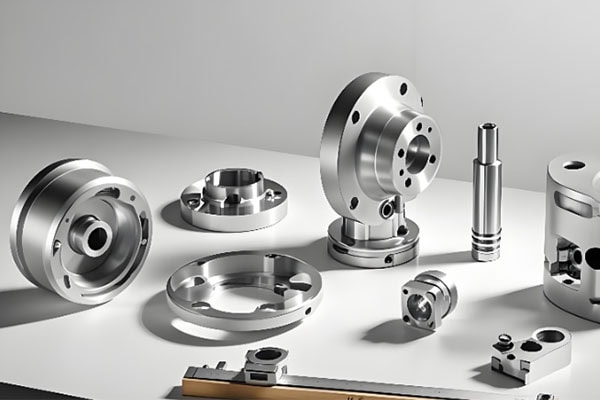
ATVs (All-Terrain Vehicles) are designed to operate reliably in mud, sand, mountains, rocky terrain, and other demanding outdoor environments. As a result, ATV components require a combination of high strength, dimensional accuracy, wear resistance, and long-term reliability. From engine components and transmission parts to suspension, steering, and frame connectors, many ATV parts feature complex geometries and tight tolerances. Precision CNC machining provides ATV manufacturers and component suppliers with an efficient and reliable manufacturing solution through CNC milling, CNC turning, and 5-axis machining.
Why Are ATV Components Suitable for Precision CNC Machining?
ATV components often need to balance lightweight construction with mechanical strength. Traditional machining methods can face limitations when producing complex curves, deep holes, irregular grooves, and multi-angle structures. CNC machining uses computer-controlled tool movements to manufacture complex geometries with high precision while maintaining consistency between production batches.
Complex Structure Machining
ATV suspension brackets, steering components, engine housings, and transmission connectors often have multiple machining surfaces. Depending on the component design, 3-axis, 4-axis, and 5-axis CNC machining can be selected to reduce the number of setups and improve positional accuracy between different reference surfaces.
Tight Dimensional Tolerance Control
Transmission and moving-system components require precise control of hole diameters, shaft diameters, flatness, and concentricity. Combined with precision measurement, CNC machining allows manufacturers to control critical dimensions during production and reduce assembly problems caused by dimensional deviations.
Suitable for Different Production Volumes
The powersports industry frequently involves new product development, prototype testing, and low-volume production. CNC machining does not require complicated molds and can efficiently transform 3D models into finished components, making it suitable for ATV prototypes, functional testing, and small-batch production.
Common CNC Machining Applications for ATV Components
Different ATV components have different structural and functional requirements, so the appropriate machining process and material need to be selected accordingly.
| ATV Component | Common Materials | Recommended Machining Process | Key Requirements |
| Suspension Brackets | Aluminum, Steel | CNC Milling, 5-Axis Machining | Strength, Hole Position Accuracy |
| Steering Components | Aluminum, Steel | CNC Milling | Multi-Surface Machining, Dimensional Stability |
| Wheel Hubs | Aluminum | CNC Turning & Milling | Concentricity, Surface Quality |
| Transmission Shaft Components | Alloy Steel, Stainless Steel | CNC Turning | Concentricity, Shaft Diameter Tolerance |
| Engine Housings | Aluminum | CNC Milling, Drilling | Sealing Surfaces, Hole Position Accuracy |
| Brake System Components | Aluminum, Steel | CNC Milling, Turning | Fit Accuracy, Wear Resistance |
| Frame Connectors | Aluminum, Steel | CNC Milling | Strength, Hole Position Consistency |
How to Choose Materials for ATV CNC Machining?
Aluminum Alloy Components
Aluminum alloys offer low weight, good machinability, and a favorable strength-to-weight ratio, making them suitable for lightweight ATV components. Suspension parts, wheel hubs, housings, and brackets can be manufactured from aluminum alloys according to specific design and performance requirements.
Alloy Steel Components
For transmission components, connectors, and structural parts exposed to high loads and impact, alloy steel can be an appropriate material choice. CNC turning and milling can produce high-precision shafts, connectors, and complex structural components.
Stainless Steel Components
Stainless steel is often selected when corrosion resistance is an important requirement. ATVs may be exposed to water, mud, moisture, and other outdoor conditions for extended periods. Therefore, certain fastening, connection, and functional components may benefit from the corrosion resistance of stainless steel.
How Does Precision CNC Machining Improve ATV Component Quality?
Optimize Machining Processes During the Design Stage
High-quality ATV components depend not only on machining equipment but also on component design. Design for Manufacturing (DFM) analysis can identify potential issues such as excessively deep cavities, small internal radii, and difficult-to-fixture structures. Optimizing the component design while maintaining its functional requirements can reduce machining difficulty and production costs.
Select the Appropriate CNC Equipment
Components with relatively simple geometries can be produced using 3-axis CNC machining, while parts with multiple complex machining surfaces may benefit from 4-axis or 5-axis equipment. Selecting the appropriate machining method can reduce repeated setups and improve the overall accuracy of complex components.
Strengthen Quality Inspection
Critical ATV components require dimensional inspection and visual quality checks. Depending on the component requirements, key hole diameters, shaft diameters, flatness, and positional dimensions can be inspected. A standardized quality control process helps ensure consistency across production batches.
TiRapid’s ATV Component Machining Solution
For ATV manufacturers, powersports brands, and component suppliers, component manufacturing involves more than meeting drawing specifications. Material performance, production efficiency, delivery schedules, and batch consistency are also important considerations. TiRapid can recommend suitable CNC milling, CNC turning, and multi-axis machining processes based on 3D models, engineering drawings, and specific application requirements.
From ATV prototype components to small-batch production, an optimized machining workflow can reduce trial-and-error costs during product development and help manufacturers complete product validation more efficiently. For components with complex surfaces, multiple holes, and multi-angle structures, multi-axis CNC machining can reduce the number of setups while improving machining efficiency and consistency.
As ATV products continue to develop toward higher performance, lighter weight, and greater specialization, the manufacturing requirements for their components are becoming increasingly demanding. Precision CNC machining for ATV components can support a wide range of applications, including suspension components, steering parts, transmission components, brake system parts, engine housings, and frame connectors. Through appropriate material selection, machining processes, equipment configuration, and quality inspection, manufacturers can achieve high-precision, consistent, and reliable powersports components for ATV product development and small-batch production.