
UTVs (Utility Terrain Vehicles) are widely used for off-road recreation, agricultural and forestry operations, engineering transportation, outdoor inspection, and professional motorsports. Compared with conventional vehicles, UTVs need to operate reliably under challenging terrain, heavy loads, and continuous vibration. This places high demands on components used in the chassis, steering, transmission, suspension, and power systems.
Precision CNC machining can provide reliable dimensional control, high-quality surfaces, and flexible production options based on the structural and performance requirements of different UTV components. It is suitable for UTV prototype development, small-batch production, and customized component manufacturing.
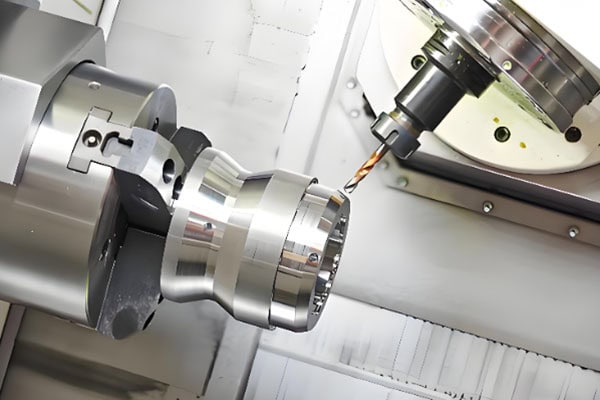
Why Do UTV Core Components Require Precision Machining?
UTV core components perform critical functions such as transmitting power, supporting the vehicle body, controlling steering, and absorbing impacts. Dimensional deviations in holes, shafts, mounting surfaces, or other critical features can affect overall assembly accuracy and vehicle reliability.
High-Precision Machining for Complex Structures
UTV suspension brackets, steering knuckles, transmission connectors, and engine mounts often contain multiple holes, curved surfaces, and different machining references. CNC milling can manufacture these structures according to digital models, while 4-axis and 5-axis machining can handle more complex angles and curved surfaces while reducing errors caused by repeated setups.
Stable Control of Critical Mating Dimensions
Shaft components, bearing housings, gear connectors, and steering system parts often contain multiple precision mating features. CNC turning can accurately machine outer diameters, inner bores, end faces, and grooves. Combined with dimensional inspection, CNC machining can help maintain consistency throughout batch production.
Flexible for Small-Batch Production
When developing new UTV models, manufacturers often need prototypes and small batches for testing and validation. CNC machining does not require complicated molds and can directly manufacture components based on CAD drawings and 3D models. This makes it suitable for product development, functional testing, and customized production.
Common Machining Applications for UTV Core Components
Different UTV components perform different functions, so their materials and machining processes need to be selected according to their operating conditions and performance requirements.
| UTV Core Component | Common Materials | Recommended Machining Process | Key Requirements |
| Suspension Brackets | Aluminum, Steel | CNC Milling, 5-Axis Machining | Strength, Hole Position Accuracy |
| Steering Knuckles | Aluminum, Alloy Steel | CNC Milling, 5-Axis Machining | Dimensional Accuracy, Position Tolerance |
| Wheel Hubs | Aluminum | CNC Turning & Milling | Concentricity, Surface Quality |
| Drive Shaft Connectors | Alloy Steel, Stainless Steel | CNC Turning, Milling | Concentricity, Shaft Diameter Tolerance |
| Engine Mounts | Aluminum, Steel | CNC Milling, Drilling | Hole Position Accuracy, Structural Strength |
| Brake Components | Aluminum, Steel | CNC Turning, Milling | Fit Accuracy, Wear Resistance |
| Frame Connectors | Aluminum, Steel | CNC Milling | Strength, Dimensional Consistency |
How to Choose Materials for UTV Component Machining?
Aluminum Alloys
Aluminum alloys are lightweight and offer good machinability and a favorable strength-to-weight ratio, making them suitable for UTV components where weight reduction is important. Wheel hubs, brackets, mounting components, and certain housings can be manufactured from aluminum using CNC machining.
Alloy Steel
For transmission components, steering system parts, and structural components exposed to impact and heavy loads, alloy steel can provide excellent strength and wear resistance. CNC turning and milling can be used to manufacture shafts, connectors, and high-load structural components.
Stainless Steel
Some UTV components may be exposed to mud, water, moisture, and other outdoor conditions for extended periods. Corrosion resistance is therefore an important consideration when selecting materials. Stainless steel can be used for certain connectors, shaft components, and other parts where corrosion resistance is required.
How Does Precision CNC Machining Improve UTV Component Performance?
Optimize Designs with DFM Analysis
Component design has a direct impact on machining difficulty and production costs. Design for Manufacturing (DFM) analysis can identify potential issues such as deep cavities, small internal radii, complex internal holes, and difficult-to-fixture structures. These designs can then be optimized without compromising component functionality.
Reduce Setup Errors with Multi-Axis Machining
For UTV components with multiple machining surfaces, multi-axis CNC machining can complete more operations in a single setup. This reduces errors caused by datum changes and repeated positioning. For complex curved surfaces and multi-angle structures, 5-axis CNC machining can provide significant advantages.
Maintain Consistency Through Precision Inspection
UTV core components typically need to meet strict dimensional and assembly requirements. During production, critical features such as hole diameters, shaft diameters, positional tolerances, flatness, and surface quality can be inspected. This helps ensure that components meet engineering drawing requirements and maintain consistency across production batches.
TiRapid’s UTV Core Component Machining Solution
For UTV manufacturers, powersports brands, and component suppliers, an effective machining solution needs to consider component accuracy, material performance, machining efficiency, and production volume. TiRapid can analyze component structures based on CAD files, 3D models, or engineering drawings and recommend suitable CNC milling, CNC turning, turn-milling, or multi-axis machining processes.
For complex components such as suspension brackets, steering knuckles, wheel hubs, and transmission connectors, the machining equipment and tool paths can be selected according to the specific geometry and functional requirements. By reducing unnecessary setups and optimizing the machining sequence, manufacturers can improve production efficiency while maintaining dimensional consistency for complex components.
For new UTV model development, CNC machining can also support different stages from prototyping to small-batch production. Manufacturers can produce a limited number of samples for assembly testing and functional validation, then optimize the component design based on test results. This approach can help reduce development risks before full-scale production.
UTVs operate in challenging environments involving rough terrain, heavy loads, and continuous vibration. As a result, the manufacturing accuracy of core components directly affects vehicle assembly quality and operating reliability. Precision machining for UTV core components can support a wide range of applications, including suspension components, steering parts, transmission components, brake components, wheel hubs, engine mounts, and frame connectors.By selecting the right materials, CNC machining processes, multi-axis equipment, and inspection methods, UTV manufacturers can achieve high-precision, stable, and consistent components. This provides reliable manufacturing support for powersports product development, prototype validation, and small-batch production.