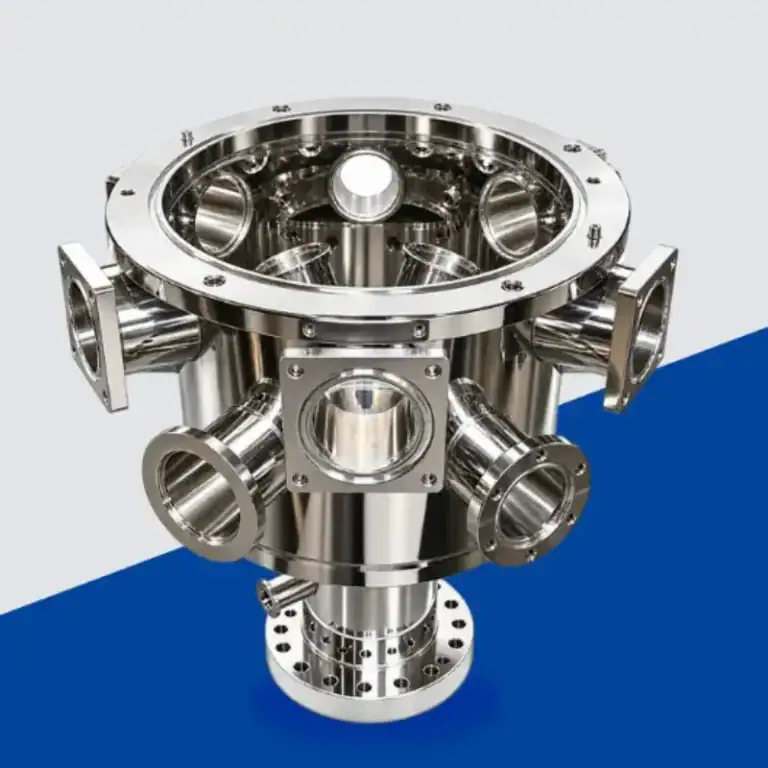
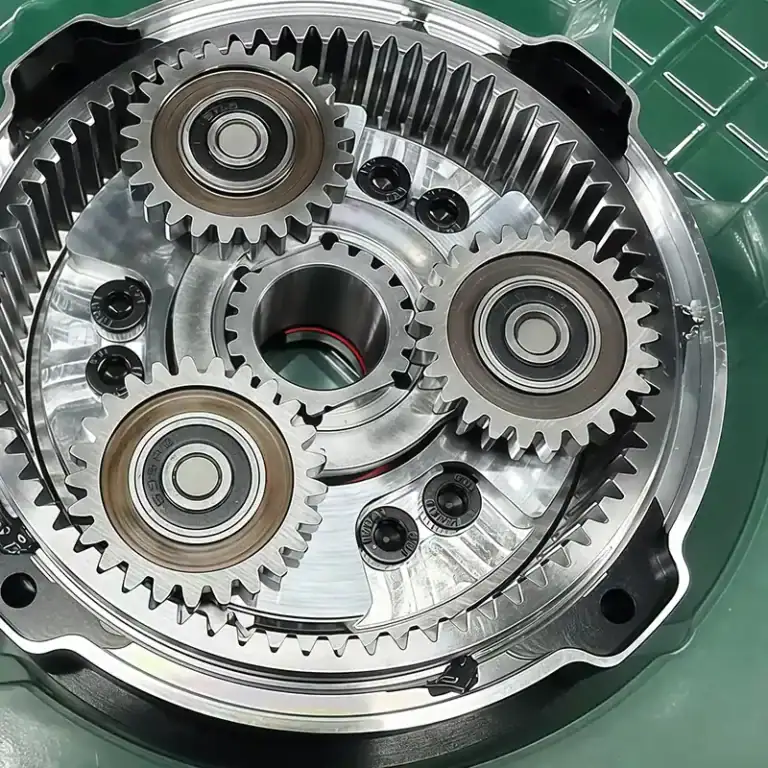
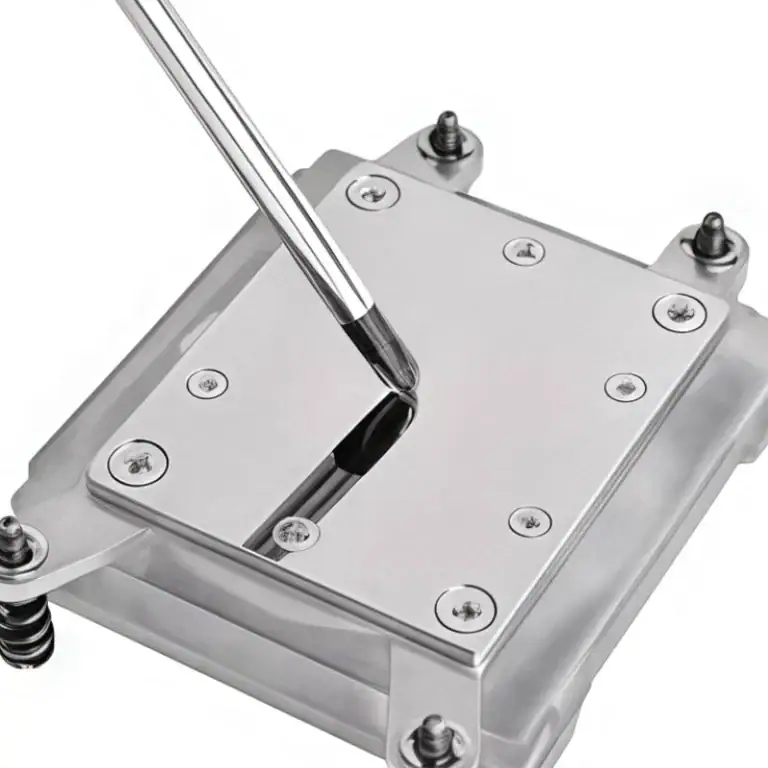
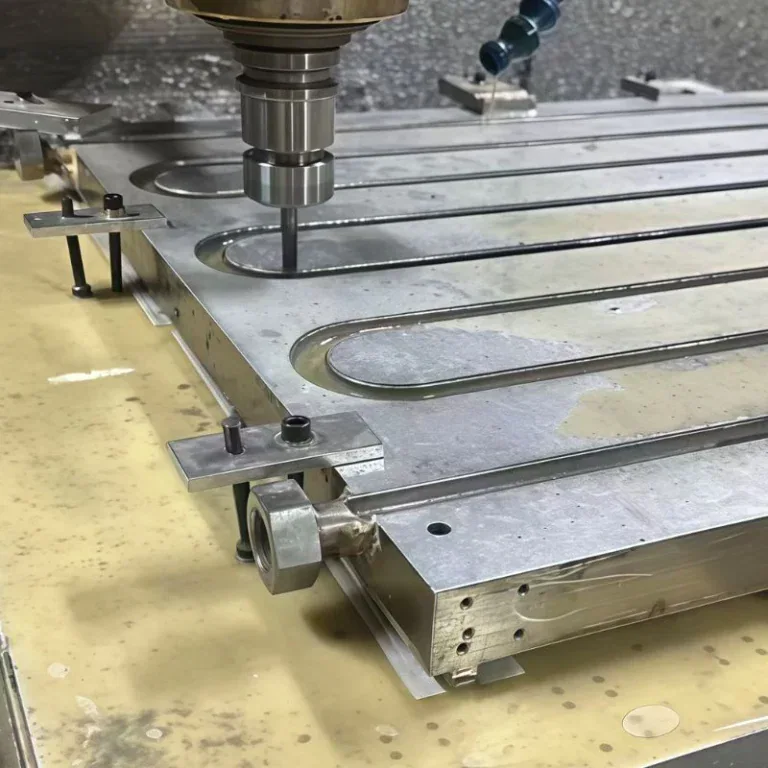
Oil and gas extraction, transportation, and refining equipment rely on a wide range of precision valve and pump components. These parts directly affect fluid transportation, pressure control, and equipment operating stability. Valve stems, valve cores, valve seats, pump impellers, pump shafts, bearing housings, and sealing chambers all require strict dimensional and mating tolerances. When exposed to high-pressure fluids, corrosive media, or liquids containing solid particles, these components must also have material properties and surface finishes suitable for their operating conditions.
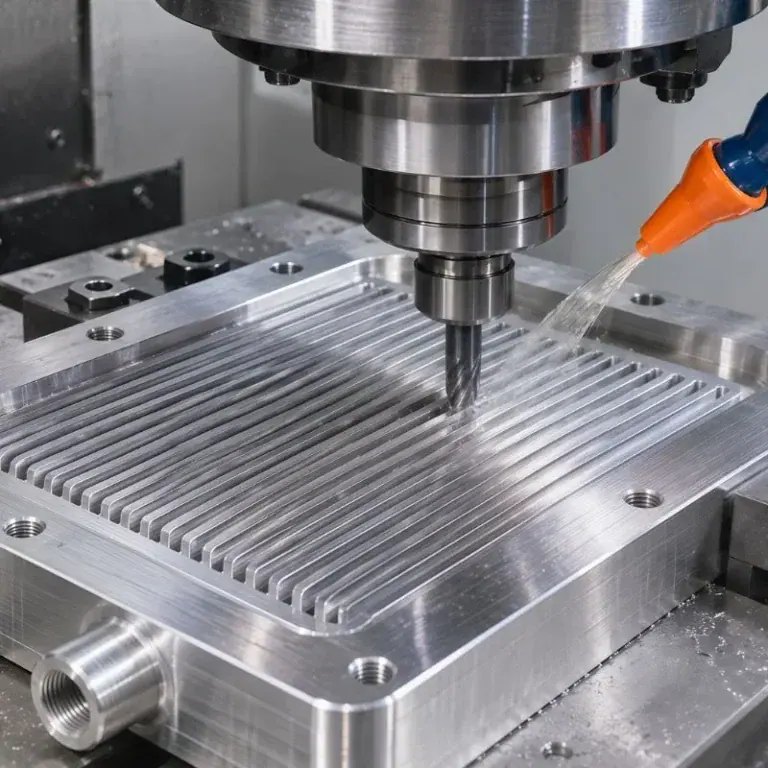
CNC machining can manufacture complex profiles, precision holes, rotational structures, and sealing surfaces according to product drawings and technical specifications. By combining CNC turning, milling, boring, and precision grinding, manufacturers can produce customized components for oilfield valves and pump equipment, supporting different oil and gas projects as well as equipment maintenance requirements.
Key Advantages of CNC Machining for Oilfield Valve and Pump Parts
Oilfield valves and pump housings often have complex internal structures. Different components perform essential functions in fluid control, power transmission, and sealing support. During machining, dimensional deviations can affect flow passage alignment, shaft operation, and sealing component installation. CNC machining uses digital programs to control tool movements, reduce manual operating errors, and support customized production with different materials and complex geometries. This provides oil and gas equipment manufacturers with a consistent and flexible component manufacturing solution.
Precision Dimensional Control Improves Pump and Valve Assembly Accuracy
Mating components in oilfield valves and pump housings usually require accurate control of bore diameters, shaft diameters, concentricity, flatness, and installation positions. Pump shafts must fit accurately with bearings, couplings, and impellers. Valve stems, valve cores, and valve seats must also meet specified design tolerances. CNC turning is suitable for shaft-type and sleeve-type components, while CNC boring can be used for pump bearing bores and sealing chambers. Milling is suitable for mounting surfaces, positioning grooves, and complex external profiles.
For components requiring precision fits, consistent machining references, proper clamping, and staged finishing operations help control dimensional deviations. Stable machining accuracy reduces assembly adjustments and makes replacement parts easier to manufacture. However, final operating performance must still be confirmed through equipment assembly and appropriate performance testing.
Multiple Material Options Meet Oil and Gas Equipment Requirements
Oilfield valves and pumps may come into contact with crude oil, natural gas, sand-containing liquids, saltwater, or corrosive process media. Different operating environments require different levels of strength, corrosion resistance, wear resistance, and temperature performance. CNC machining can process a variety of metal materials to manufacture components with different structural and performance requirements.
Common material options include:
- Stainless steel: Suitable for valve components, pump connections, and sleeves requiring corrosion resistance under specified conditions.
- Alloy steel: Used for pump shafts, valve stems, and load-bearing components with specific strength and mechanical property requirements.
- Carbon steel: Commonly used for pump housing structures, valve body connectors, and support components when permitted by the design specifications.
- Copper alloys: May be used for selected bushings, sleeves, and wear-resistant mating components according to media conditions and design requirements.
Material selection should consider media composition, operating pressure, temperature, and applicable standards. A material name alone cannot confirm whether a component is suitable for a specific oilfield application. Material grades, heat treatment conditions, and quality certificates must also be verified.
Complex Structure Machining Supports Customized Equipment Manufacturing
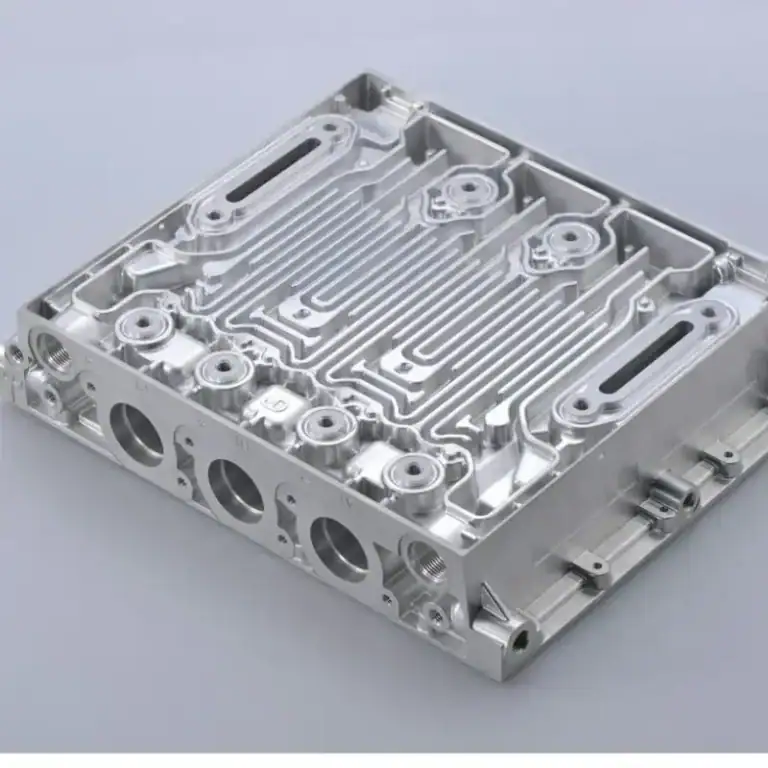
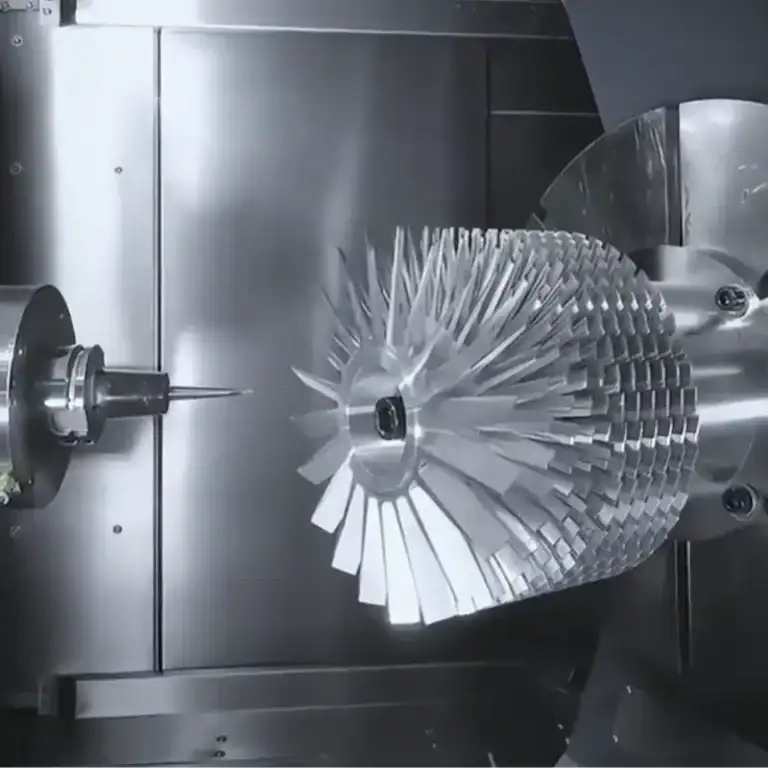
Oilfield valve and pump components often feature non-standard designs. Some parts contain intersecting holes, irregular flow passages, deep cavities, threaded interfaces, and multi-angle mounting holes. Traditional machining methods may require repeated clamping, increasing positioning errors and production time. Multi-axis CNC machining and mill-turn processes can complete multiple features within a coordinated machining plan, reducing workpiece transfers between machines.
For pump components, CNC milling and boring can be used to machine impeller mounting positions, bearing bores, and sealing chambers. For valve components, CNC machining can produce valve stem connection slots, valve core profiles, valve seat mounting surfaces, and actuator interfaces according to drawings. By adjusting CNC programs, manufacturers can support prototype development, small-batch orders, and volume production in different sizes, providing greater flexibility for custom projects.
Machining Methods and Applications of Oilfield Valve and Pump Parts
Although valves and pumps are both used in fluid systems, their component structures and machining priorities are different. Valve components mainly support fluid shutoff, flow regulation, and pressure control, while pump components work with power transmission, fluid intake, and discharge processes. Selecting suitable machining methods according to equipment models, component drawings, and operating conditions helps improve compatibility between individual parts and complete equipment assemblies.

CNC Machining Process for Oilfield Valve and Pump Parts
Custom component production starts with a technical drawing review to confirm critical dimensions, material specifications, mating relationships, and surface treatment requirements. For components with deep bores, complex flow passages, or precision sealing structures, the machining sequence should be planned in advance to avoid clamping deformation and tool interference.
A typical machining process includes:
- Technical drawing review: Check 2D drawings, 3D models, dimensional tolerances, and critical mating positions.
- Material preparation: Select materials according to the design conditions and verify material certificates and batch information.
- Machining process planning: Determine turning, milling, boring, drilling, and grinding operations according to component geometry.
- CNC programming: Set tool paths, machining coordinates, cutting parameters, and clamping methods.
- Precision machining: Complete external profiles, internal bores, flow passages, sealing chambers, and mounting structures.
- Deburring and surface treatment: Remove machining residues and apply grinding, polishing, or other treatments as required by the design.
- Quality inspection: Check critical dimensions, geometric accuracy, and surface conditions, then prepare the relevant quality records.
For pressure-bearing valves and pump components, additional material verification, nondestructive testing, pressure testing, or leakage testing may be required according to product standards and project specifications.
Machining Applications for Oilfield Pump Housings, Impellers, and Bearing Housings
Oilfield pumps are widely used in crude oil transportation, process circulation, water injection, and auxiliary fluid delivery systems. Pump housings typically contain suction ports, discharge ports, impeller chambers, bearing support structures, and mechanical seal chambers. These features must maintain accurate positional relationships to meet equipment assembly requirements.
CNC machining can produce internal cavities, mounting surfaces, bearing bores, and connection holes through milling, boring, and drilling operations. Impeller machining requires accurate manufacturing of the hub, blade profiles, and shaft bore according to the design. Pump shafts need controlled diameters, steps, keyways, and connection threads to ensure proper mating with bearings and impellers. Bearing housings require particular attention to bore diameter, concentricity, and mounting surfaces to maintain accurate shaft positioning.
Under operating conditions involving sand or solid particles, pump housings and impellers may also experience wear. Material selection and surface treatment should be determined according to the media conditions. Improving dimensional accuracy alone cannot solve every wear-related problem.
Machining Applications for Oilfield Valve Bodies, Seats, and Sealing Components
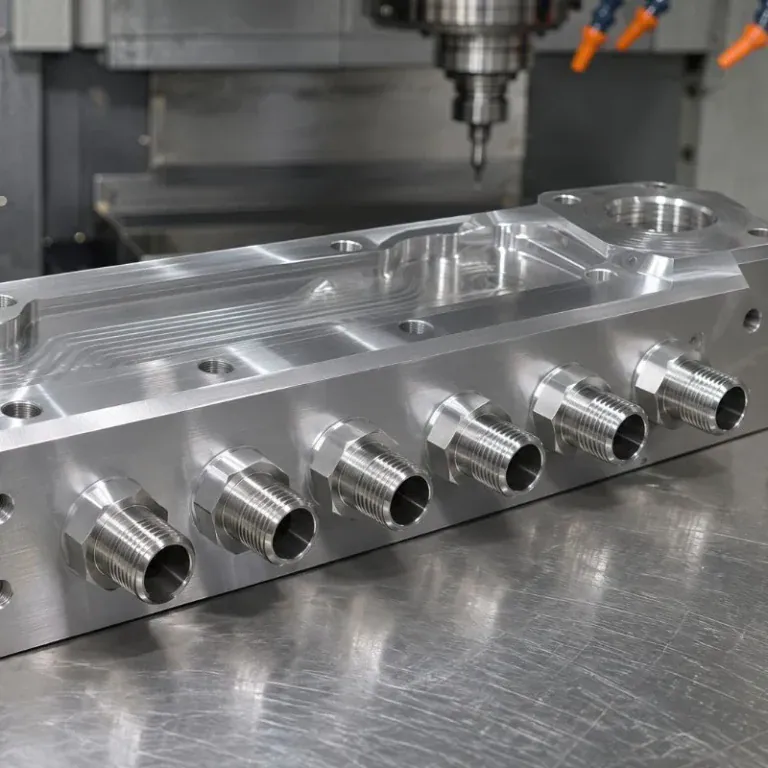
Oilfield valves are commonly installed in wellhead equipment, pipeline systems, pumping stations, and refining facilities. They control fluid flow by opening, closing, or regulating the passage. Common components include valve bodies, stems, cores, seats, bonnets, and sealing assemblies. Valve bodies often contain internal flow passages, connection interfaces, and mounting structures. Milling, boring, and drilling are used to manufacture these complex features.
The mating relationship between valve seats and valve cores affects sealing conditions. Their contact profiles, surface roughness, and positioning dimensions must meet design specifications. Valve stems require accurate shaft diameters, straightness, and thread dimensions to ensure that the operating mechanism can transmit motion correctly. For valves designed for specialized media conditions, materials and surface treatments must also comply with equipment design requirements and applicable standards.
| Component Type | Common Material Options | CNC Machining Processes | Key Quality Requirements | Typical Applications |
| Oil pump housing | Carbon steel, stainless steel, alloy materials | Milling, boring, drilling | Internal cavity dimensions, hole position accuracy, mounting surface flatness | Crude oil transfer pumps, process pumps |
| Pump shaft | Alloy steel, stainless steel | Turning, milling, grinding | Shaft diameter accuracy, concentricity, straightness | Pump power transmission |
| Impeller | Stainless steel, suitable alloy materials | Multi-axis milling, turning, finishing | Profile accuracy, shaft bore dimensions, dynamic balancing requirements | Centrifugal pumps and fluid transfer equipment |
| Bearing housing | Carbon steel, cast steel, stainless steel | Milling, boring, drilling | Bore accuracy, concentricity, mounting dimensions | Pump shaft support structures |
| Valve stem | Stainless steel, alloy steel | Turning, milling, grinding | Shaft diameter, thread accuracy, surface condition | Ball valves, gate valves, and control valves |
| Valve seat and valve core | Stainless steel, suitable alloy materials | Turning, milling, precision grinding | Sealing profile, mating dimensions, surface quality | Oil pipeline valves and control equipment |
Function and Performance Control of Oilfield Valve and Pump Parts
Oilfield valves and pumps must operate continuously under different pressure, temperature, and media conditions. Their components must meet assembly dimensions as well as mechanical performance and application requirements. Pump flow passage structures affect fluid movement, shaft alignment affects equipment stability, and valve sealing structures determine fluid control performance. Proper dimensional inspection, surface quality management, and performance verification help reduce the impact of manufacturing deviations on equipment operation.
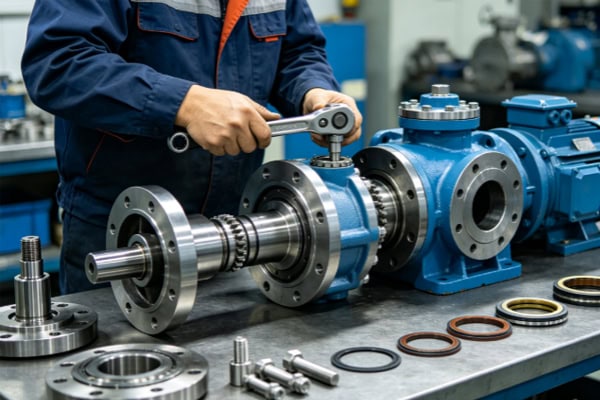
Inspection of Flow Passage Dimensions, Sealing Surfaces, and Critical Mating Accuracy
Flow passages, impeller mounting positions, and mechanical seal chambers inside pump housings must meet design dimensions. Valve cores, valve seats, and valve stems also require accurate mating tolerances. After machining, appropriate measuring tools should be selected according to component drawings to inspect critical structures.
Key inspection items before delivery include:
- Dimensional accuracy: Check internal and external diameters, bore depths, shaft diameters, mounting dimensions, and critical tolerances.
- Geometric accuracy: Inspect concentricity, cylindricity, flatness, and positional accuracy.
- Surface quality: Check sealing surfaces, bearing mating surfaces, and sliding areas for scratches, burrs, or machining defects.
- Flow passage condition: Inspect pump cavities and flow passages for machining residues, burrs, and visible surface defects.
- Assembly compatibility: Check the mating relationships between shafts, bearings, impellers, and sealing components according to design requirements.
Rotating components such as pump shafts and impellers may also require dynamic balancing or other operating verification according to equipment specifications. The pressure-bearing capability and sealing performance of valves must be confirmed through the required pressure and leakage tests. Dimensional inspection alone is not sufficient to establish these properties.
Corrosion Resistance, Wear Resistance, and Long-Term Equipment Reliability
Oilfield equipment may come into contact with crude oil, hydrogen sulfide-containing media, saltwater, and other corrosive fluids. Pump and valve components should be manufactured from suitable materials according to media composition, operating temperature, design pressure, and equipment standards. For components exposed to particle erosion or frequent friction, material hardness, wear resistance, and surface treatment requirements must also be considered.
Critical components such as pump shafts, impellers, valve cores, and valve seats may require heat treatment, precision grinding, polishing, or suitable surface hardening processes. Specific treatments should be determined according to material properties and design documents. Critical dimensions must be rechecked after treatment to prevent dimensional changes or mating deviations.
For high-pressure oil and gas equipment, wellhead assemblies, and corrosive media applications, component manufacturing must also comply with relevant engineering standards and project specifications. Material verification, nondestructive testing, pressure testing, leakage testing, and other required inspections should be performed according to component applications and applicable standards. Complete batch records and quality traceability documents also help equipment manufacturers manage spare parts procurement, repairs, and long-term maintenance.
CNC machining of oilfield valve and pump parts requires a suitable manufacturing process based on equipment structure, material properties, and operating conditions. Through precision turning, milling, boring, grinding, and quality inspection, manufacturers can produce customized components for oil pumps, ball valves, gate valves, and control valves. For projects with special pressure, temperature, or media requirements, confirming drawing tolerances, material standards, and performance testing requirements in advance helps improve component assembly quality and equipment operating stability.