Tirapid

ten-common-types-of-pins-in-mechanical-engineering-functions-and-applications-analysis-1

10 Common Types Of Pins In Mechanical Engineering (Uses And Applications)

Pins are indispensable fasteners in mechanical engineering. They are used to fix, position, connect and rotate components to ensure the stability and reliability of mechanical devices. Pins can be divided into many types according to their structure and purpose to adapt to different application scenarios. I will introduce 10 common types of pins in detail

10 Common Types Of Pins In Mechanical Engineering (Uses And Applications) Read More »

comparison-of-blue-resin-liquid-and-plastic-pellets-1

Resins vs. Plastics: Key Differences And How To Choose The Right Material

Resins and plastics are two common materials used in modern manufacturing and product design, but they are often confused. Resin usually refers to natural or synthetic polymer materials, while plastics are products formed through processing with synthetic resin as the main component. There are significant differences between the two in terms of composition, performance, application

Resins vs. Plastics: Key Differences And How To Choose The Right Material Read More »

buckle-component-automobile-parts-installation-diagram-1

What Are Snap Fit Joints? Types, Applications, And Design Tips

Snap Fit Joints is an efficient and economical mechanical connection method that uses the elastic deformation properties of materials to temporarily deform parts when subjected to force and firmly lock them after rebounding, so that assembly can be completed without additional fasteners or adhesives. I will introduce the main types, application scenarios, design calculations and

What Are Snap Fit Joints? Types, Applications, And Design Tips Read More »

poly-carbonate-tubular-packaging-white-plastic-film-display-of-piles

Polycarbonate vs. PLA: Which Material Is Better For 3D Printing?

With the popularity of 3D printing technology in industrial manufacturing, prototyping and personal creativity, choosing the right printing material has become crucial. Polycarbonate (PC) and polylactic acid (PLA) are the two most widely used 3D printing materials. They each have different characteristics and are suitable for different application environments. In this article, I will introduce

Polycarbonate vs. PLA: Which Material Is Better For 3D Printing? Read More »

grayish-white-bagged-tpr-raw-material-grains-2

In-depth Analysis Of TPR Materials: Characteristics, Comparison And Application

Thermoplastic rubber (TPR) is a material that combines the advantages of rubber elasticity and thermoplastic processing, and has good fatigue resistance, impact resistance, chemical corrosion resistance and high recyclability. I will conduct an in-depth analysis of TPR from the basic definition, chemical composition, manufacturing process, performance analysis and material comparison to help you fully understand

In-depth Analysis Of TPR Materials: Characteristics, Comparison And Application Read More »

aluminum-alloy-five-axis-machining-robot-parts-finished-product

CNC Robotics: How Are Robots Applied In CNC Manufacturing

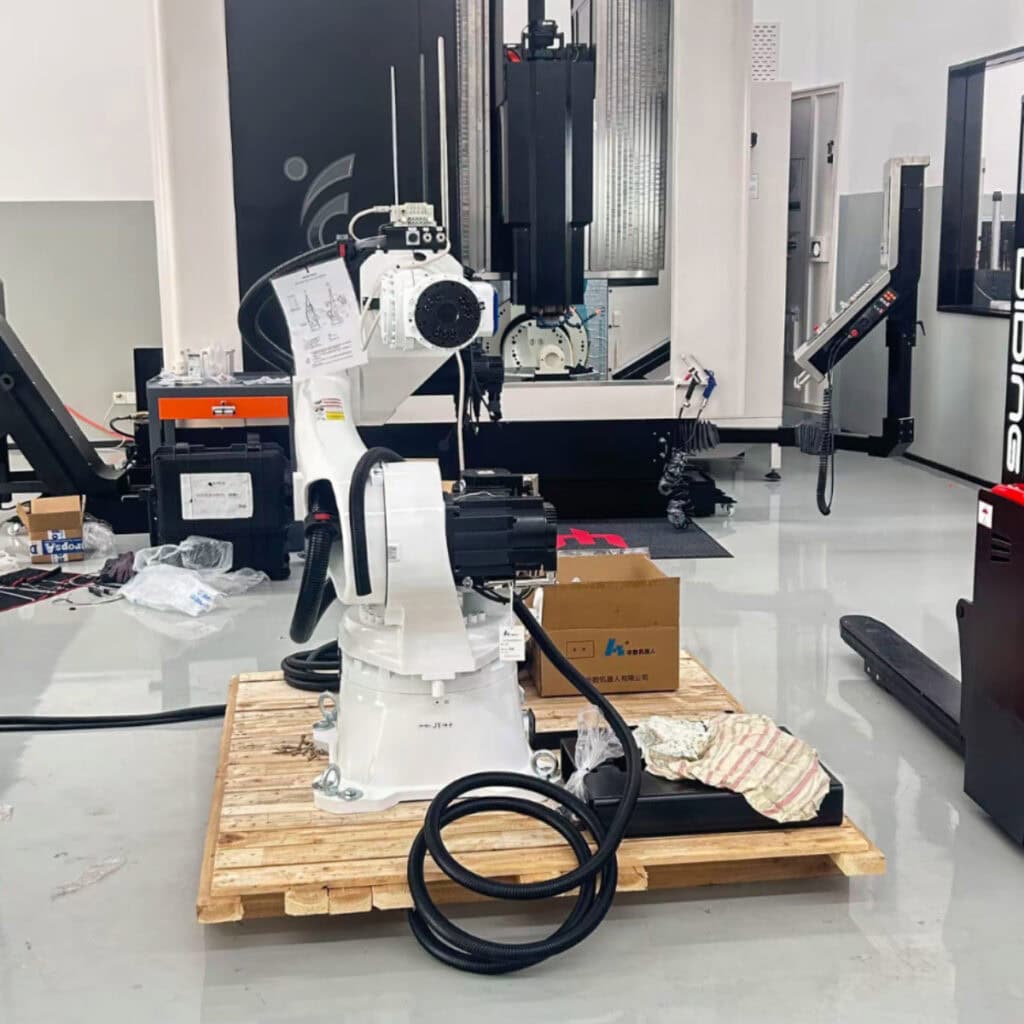
In modern manufacturing, CNC robotics has become the bridge connecting high-precision machining and automated production. By deeply integrating with CNC machines, these robots enable manufacturers to achieve superior accuracy, efficiency, and flexibility. Compared to traditional CNC machining, CNC robots handle more tasks—loading, welding, inspection, and assembly—and are a key pillar in digital transformation. In this

CNC Robotics: How Are Robots Applied In CNC Manufacturing Read More »

cnc-milling-of-6063-aluminum-alloy-for-motorcycle-parts-in-large-quantities

CNC Motorcycle Parts Manufacturing: Complete Guide

CNC motorcycle parts have revolutionized the custom motorcycle industry by offering precision, strength, and design flexibility. These parts are crafted using Computer Numerical Control (CNC) machining, which ensures accuracy and consistency while minimizing human error. Whether you’re upgrading an existing motorcycle or building a custom bike, CNC parts play a crucial role in improving performance,

CNC Motorcycle Parts Manufacturing: Complete Guide Read More »

worker-operated-orange-glow-gravity-casting-process

What Is Casting? Types, Processes, and Applications Explained

Casting is a versatile manufacturing process where molten material is poured into a mold to create complex, high-strength parts. It remains essential across industries such as aerospace, automotive, and heavy machinery due to its ability to form intricate shapes cost-effectively. In this article, I will guide you through what casting is, its processes, methods, materials,

What Is Casting? Types, Processes, and Applications Explained Read More »

black-granular-arranged-tpe-lettering-formation-1

What Is TPE Material

In my daily work, TPE (thermoplastic elastomer) is one of the materials I come into contact with the most. It is as soft as rubber but can be processed like plastic. It is widely used in automobiles, medical treatment, electronics and daily necessities. In this article, I want to take you from scratch to fully

What Is TPE Material Read More »

white-upe-cnc-milling-medical-device-prototype

What Is Heat Deflection Temperature: Everything You Need to Know

Heat deflection temperature (HDT) is a critical indicator when selecting manufacturing materials, especially for products that need to withstand high temperatures or mechanical loads. Simply put, HDT refers to the temperature at which a material begins to deform when subjected to a certain load. For plastic materials, the high or low HDT value directly affects

What Is Heat Deflection Temperature: Everything You Need to Know Read More »

white-polypropylene-cnc-milling-aerospace-prototype

Analyzing The Difficulty In Machining Polypropylene And Solutions

Machining polypropylene (PP) presents several challenges due to its unique material properties. While its chemical resistance, flexibility, and low cost make it a popular choice in various applications, these same characteristics complicate CNC machining processes. Specifically, its low melting point (160-170°C for homopolymer) and tendency to deform under heat make precise machining more difficult. In

Analyzing The Difficulty In Machining Polypropylene And Solutions Read More »

Scroll to Top
Simplified Table

To ensure successful upload, please compress all files into one .zip or .rar file before uploading.
Upload CAD files (.igs | .x_t | .prt | .sldprt | .CATPart | .stp | .step | .pdf).