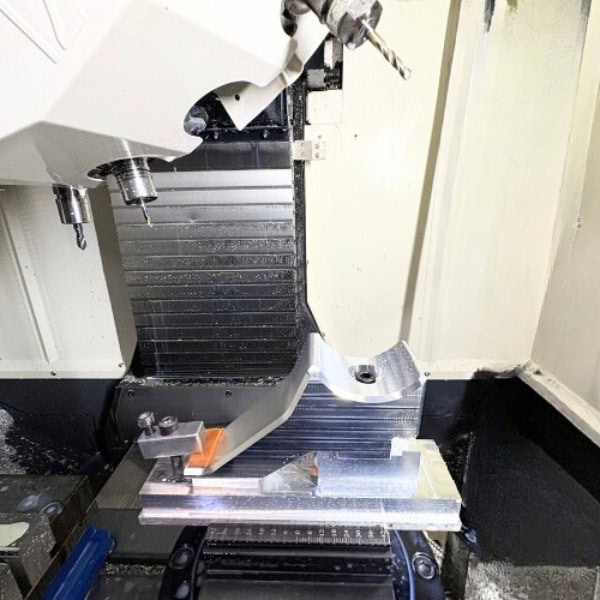
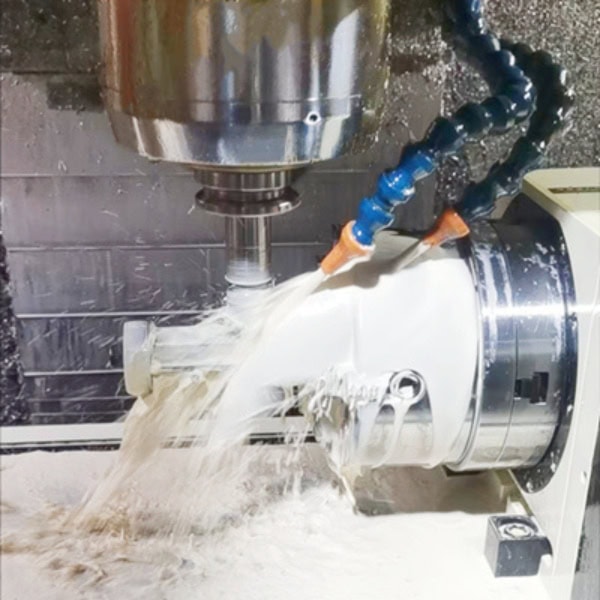
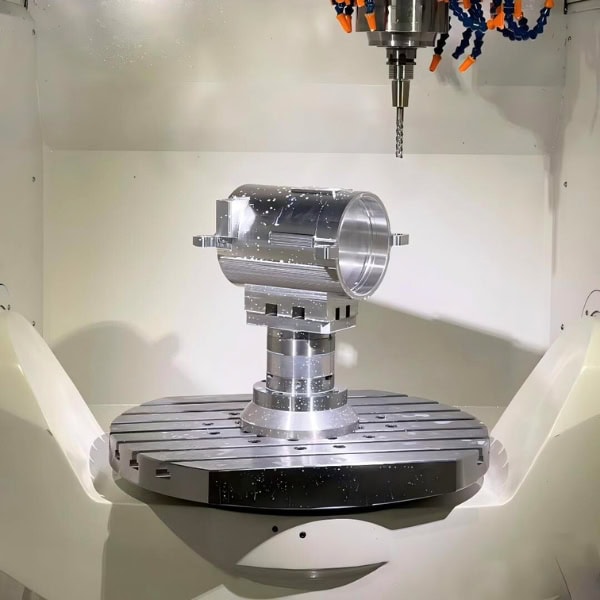
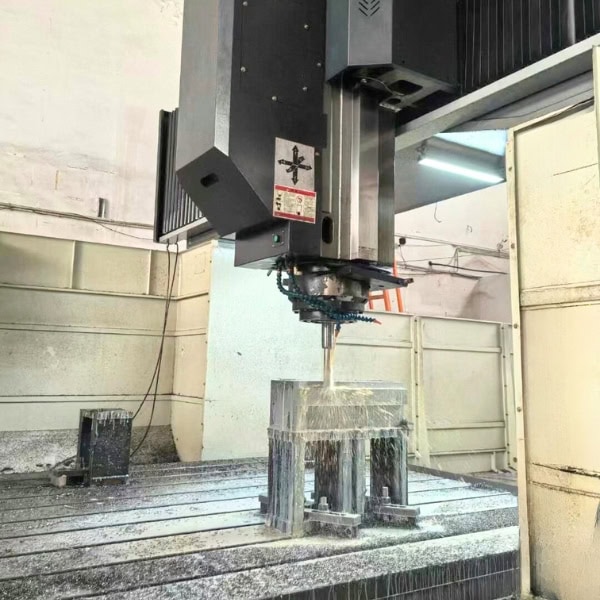


A face milling cutter is a multi-edge rotary cutting tool used to machine flat surfaces, large faces, and shoulder features on a workpiece. It is one of the most common milling tools in CNC machining because it can remove material efficiently while producing good surface finish and stable dimensional results.
In this guide, you will learn what a face milling cutter is, how it works, what types are commonly used, how to choose the right cutter for different materials and machining goals, and what best practices help improve tool life and surface quality.
Get 20% offf
Your First Order
What Is a Face Milling Cutter?
A face milling cutter is a milling tool designed mainly for cutting with the inserts or teeth located on the face and outer edge of the cutter body. It is commonly used to machine flat surfaces on milling machines and machining centers.
Compared with an end mill, a face milling cutter usually has a larger diameter, carries multiple inserts, and is better suited for covering a broad cutting width in one pass. End mills are more often used for slots, pockets, side walls, and detailed contour features, while face milling cutters are preferred for surfacing and large flat-area machining.
Typical applications include flat surface machining, shoulder milling, large-part surfacing, mold base preparation, fixture plate machining, and general roughing or finishing of broad workpiece faces.
Main Types of Face Milling Cutters
Different face milling cutters are designed for different machining tasks. Some are better for general surfacing, while others are more suitable for finishing, shoulder milling, or high-feed roughing. They are commonly classified by cutter design, lead angle, and cutting material, and each type affects machining performance differently.
By Cutter Design
Cutter design affects rigidity, insert replacement, adjustment capability, and overall machining flexibility. This classification is especially important when choosing a face milling cutter for different cutter sizes, cost requirements, and accuracy levels. In practical machining, the structural design of the cutter often determines how easily it can be maintained, how stable it performs under load, and how suitable it is for either general production or higher-precision operations.
Solid Face Milling Cutters
Solid face milling cutters are made as one body, usually from HSS or carbide. Because the cutter body and cutting part are integrated, they offer good rigidity and stable cutting performance. They are often used in smaller-diameter applications, lighter cuts, or precision work where cutter strength and accuracy are important. In addition, their simple structure makes them reliable in applications where insert movement or adjustment is not desired. However, once the cutting edge is worn, the entire tool usually needs regrinding or replacement, which can reduce flexibility in repeated production use.
Indexable Face Mills
Indexable face mills use replaceable inserts mounted on a cutter body. This is the most common type in modern CNC machining because inserts can be changed after wear without replacing the whole cutter. They are suitable for roughing, semi-finishing, and finishing in a wide range of materials. Their flexibility, lower long-term tooling cost, and wide insert availability make them a practical choice for most production environments. They also allow manufacturers to change insert grades and geometries more easily, which helps adapt one cutter body to different materials and machining goals.
Cartridge Face Mills
Cartridge face mills use adjustable insert cartridges that allow fine setting of insert position. They are commonly used when better axial or radial adjustment is needed, especially in high-accuracy face milling, large-diameter cutters, or demanding finishing applications. This design is often preferred when surface flatness and cutter accuracy must be controlled more precisely. Because each cartridge can be adjusted individually, these cutters are useful in operations where even slight insert position differences can affect surface quality, cutter marks, or dimensional consistency.
By Lead Angle
Lead angle affects chip thickness, cutting force direction, tool load, and surface finish. Choosing the right lead angle can improve machining stability, reduce vibration, and better match the cutter to the required operation. It also influences how the cutting force is distributed between radial and axial directions, which is especially important when machine rigidity, overhang, or workholding stability is limited.
45-Degree Face Milling Cutters
45-degree face mills are widely used for general face milling because they reduce chip thickness, spread the cutting load, and improve cutting smoothness. They are often a first choice for productive face milling and good surface finish on many materials. This type is commonly used when balanced cutting performance and efficient material removal are both required. In many cases, 45-degree cutters also help reduce cutting shock, which makes them suitable for a broad range of routine CNC machining applications.
90-Degree Face Milling Cutters
90-degree face mills are used when a true shoulder or near-vertical wall is required. They are suitable for shoulder milling and face milling where geometry control at the edge is important, although cutting forces are usually more direct than with 45-degree cutters. They are especially useful when the machined surface must connect clearly with a vertical face. For this reason, they are often selected when edge sharpness, step definition, and shoulder accuracy are more important than the smoother cutting action provided by lower lead angles.
High-Feed Face Mills
High-feed face mills use a very small entering angle and are designed for low depth of cut with very high feed rates. They are often used for roughing, long-overhang setups, and applications where productivity is more important than final finish. Because they direct much of the cutting force axially, they can perform well in certain unstable setups when used correctly. They are particularly useful when manufacturers want to improve metal removal rates without placing excessive radial stress on the cutter or spindle.
Round Insert Face Mills
Round insert face mills provide strong insert edges and smooth cutting action. They are useful for difficult materials, interrupted cuts, and applications requiring stronger edge support, although the effective cutting geometry changes with depth of cut. They are often selected when edge strength and reliable insert performance are more important than sharp corner definition. In practice, they are also a good option for applications where cutting loads vary or where the workpiece material is difficult to machine consistently.
By Cutting Material
The material of the cutter or insert affects hardness, wear resistance, heat resistance, and cutting speed capability. Different cutter materials are suited to different machining conditions and workpiece materials. In many cases, cutter material selection has a direct impact on tool life, machining efficiency, and the ability to maintain stable performance under different cutting temperatures and loads.
HSS
HSS face milling cutters offer good toughness and lower cost. They are generally used in lighter-duty or lower-speed machining where cutting conditions are not too demanding. Although they are less wear-resistant than carbide, they are still useful in some general machining applications. They are often chosen for simpler jobs, smaller workshops, or situations where tool toughness and economy are more important than maximum cutting speed.
Carbide
Carbide face milling cutters are widely used because they provide high hardness, strong wear resistance, and good cutting performance at higher speeds. They are suitable for general CNC machining and can be applied to many common materials, including steel, cast iron, and non-ferrous metals. Their versatility makes them one of the most practical options in modern production, especially when both productivity and stable tool life are required.
Coated Carbide
Coated carbide cutters provide better heat resistance and longer tool life than uncoated carbide in many production environments. They are commonly used in higher-speed or higher-volume machining where better wear control and more stable cutting performance are needed. The coating helps reduce friction and improve resistance to heat and abrasion, which makes these cutters especially valuable in repeated production operations.
PCD
PCD cutters are especially suitable for aluminum and other non-ferrous materials. They offer excellent wear resistance and can produce very good surface finish in the right conditions. They are often chosen for high-speed machining and applications where surface quality is critical. Because of their strong wear resistance in non-ferrous machining, they are widely used when long tool life and highly consistent finish quality are important.
Ceramic
Ceramic face milling cutters are mainly used in high-speed machining of cast iron and some heat-resistant superalloys. They can operate at very high cutting speeds, but they usually require stable cutting conditions and proper application control. They are more specialized than HSS or carbide tools. For this reason, ceramic cutters are generally used in more demanding environments where their high-speed capability can bring significant productivity advantages under the right setup conditions.
| Classification Method | Type | Main Feature | Typical Use |
| By cutter design
|
Solid face milling cutters | One-piece structure with good rigidity | Small-diameter work, light cuts, precision applications |
| Indexable face mills | Replaceable inserts for flexibility and lower tool cost | General roughing, semi-finishing, and finishing | |
| Cartridge face mills | Adjustable insert position for higher accuracy | Large-diameter cutters and demanding finishing work | |
| By lead angle | 45-degree face milling cutters | Lower cutting load and smoother cutting action | General face milling and better surface finish |
| 90-degree face milling cutters | Better shoulder and edge geometry control | Shoulder milling and defined wall features | |
| High-feed face mills | Very small entering angle for high feed rates | Productive roughing and long-overhang setups | |
| Round insert face mills | Strong edge support and smooth cutting | Difficult materials and interrupted cuts | |
| By cutting material
|
HSS | Good toughness and lower cost | General low-speed machining |
| Carbide | High hardness and wear resistance | General CNC machining | |
| Coated carbide | Better heat and wear resistance | Production machining | |
| PCD | Excellent for non-ferrous materials | Aluminum and composites | |
| Ceramic | Very high-speed capability | Cast iron and some superalloys |
Key Cutter Features That Affect Performance
Several cutter features directly influence machining performance. Cutter diameter affects surface coverage and spindle load. The number of inserts changes productivity and force distribution. Insert pitch affects chip evacuation and load balance, while entering angle influences chip thickness and cutting direction.
Positive insert geometry usually reduces cutting force and is often useful for aluminum, stainless steel, and lower-rigidity setups. Negative geometry provides stronger cutting edges and is often used for more stable machines and heavier cutting.
Face Milling Cutter Speeds and Feeds
Face milling performance depends on using the right parameter combination. The most important values are cutting speed, spindle speed, feed per tooth, table feed, depth of cut, and width of cut.
Cutting speed should be selected according to workpiece material, insert grade, cutter material, and cooling condition. Harder or more heat-resistant materials usually require more conservative speeds. Feed per tooth affects chip thickness and cutting load on each insert. If it is too low, rubbing may occur, if it is too high, insert wear or breakage may increase.
Depth of cut and width of cut also influence cutting force, chip formation, and machine load. Large engagement may improve productivity, but it also increases the risk of vibration and insert overload.
In practice, aluminum often allows higher cutting speed and smoother chip evacuation. Steel usually needs a balanced combination of speed and insert toughness. Stainless steel requires more attention to heat and cutting stability, while cast iron often favors wear-resistant grades and stable engagement.
Common Face Milling Problems and Solutions
Face milling can deliver excellent results, but problems often appear when cutter choice, setup, or cutting conditions are not well matched.
| Problem | Common Cause | Typical Solution |
| Poor surface finish | Worn insert or unstable setup | Replace inserts, improve rigidity |
| Chatter | Long overhang or poor positioning | Reduce overhang, adjust cutter position |
| Excessive wear | Wrong speed or insert grade | Lower speed, change insert grade |
| Built-up edge | Poor lubrication or material adhesion | Use sharper inserts, improve coolant |
| Uneven marks | Insert height variation | Check insert seating and cutter body |
| Insert breakage | Aggressive cutting load | Reduce load, use stronger geometry |
These issues are rarely caused by a single factor alone. In most cases, stable performance comes from matching the cutter, insert, machine condition, and cutting strategy as one system.
Typical Applications of Face Milling Cutters
Face milling cutters are widely used in many machining scenarios because flat surfaces, broad reference faces, and large contact areas are common in manufactured parts. Compared with smaller milling tools, face milling cutters can cover a wider cutting area in a single pass, which makes them highly effective for both roughing and finishing operations on large or medium-sized workpieces.
Face Milling
Face milling is the most common application of a face milling cutter. It is used to machine broad flat surfaces, improve flatness, and create accurate reference planes for later operations. This process is widely used in both roughing and finishing stages.
Shoulder Milling
In shoulder milling, certain face milling cutters, especially 90-degree designs, can machine flat surfaces together with vertical walls or step features. This process is useful when the part requires a defined edge, shoulder, or transition between two surfaces.
Rough Milling
Face milling cutters are often used in rough milling to remove excess material quickly from large workpiece surfaces. In this process, productivity and material removal rate are usually more important than final surface finish.
Semi-Finishing
In semi-finishing operations, face milling cutters help refine the machined surface after roughing and prepare the workpiece for final finishing. The goal is to improve dimensional consistency while leaving a controlled amount of material for the last pass.
Finish Milling
In finish milling, face milling cutters are used to achieve better flatness, smoother surface quality, and more consistent cutter marks. Cutter geometry, insert condition, and parameter control are especially important in this stage.
Large-Area Surfacing
Large-area surfacing is a common process for base plates, fixture plates, machine tables, and structural panels. Face milling cutters are especially suitable for this type of work because they can cover broad areas efficiently while maintaining stable machining performance.
High-Feed Milling
High-feed milling is a specialized process that uses face mills with a very small entering angle and shallow depth of cut. It is often applied when high productivity is needed, especially in roughing operations and long-overhang setups.
Precision Surface Preparation
Face milling cutters are also used for precision surface preparation before grinding, assembly, sealing, or secondary machining. In this process, stable flatness, reliable dimensional control, and consistent surface finish are the main requirements.
They are especially valuable in machining processes that require efficient material removal, good flatness, and reliable surface quality on large part faces. When the cutter type, insert geometry, and cutting conditions are properly matched, face milling cutters can support both high productivity and stable machining accuracy.
How to Choose the Right Face Milling Cutter?
Choosing the right face milling cutter depends on the workpiece material, machining purpose, and machine conditions. Different cutters are designed for different cutting loads, surface finish requirements, and productivity targets, so selection should not be based on diameter alone.
By Workpiece Material
Workpiece material is one of the most important factors in cutter selection because it affects cutting force, heat generation, insert wear, and chip formation. For aluminum and other non-ferrous materials, cutters with sharp edges and positive geometry are often preferred because they reduce cutting resistance and improve chip evacuation. For steel, stainless steel, and cast iron, insert strength, wear resistance, and thermal stability become more important.
By Machining Goal
The machining goal also affects cutter choice. A standard 45-degree face mill is often suitable for general surfacing because it provides smooth cutting action and balanced cutting forces. A 90-degree face mill is usually more suitable when shoulder features or defined edges are required. High-feed face mills are commonly used for productive roughing, while cutters with wiper inserts are often preferred for finishing and better surface quality.
By Machine Conditions
Machine conditions should also be considered when selecting a face milling cutter. Spindle power, machine rigidity, tool overhang, and workholding stability all influence cutting performance. In lower-rigidity setups, cutters with lighter cutting action are often a safer choice. In more stable and powerful machines, larger cutters and more aggressive cutting parameters can usually be applied more effectively.
Selection in Practice
In practical machining, the best face milling cutter is the one that matches the material, the machining task, and the actual cutting conditions at the same time. A suitable cutter not only improves efficiency, but also helps achieve better surface finish, longer tool life, and more stable machining results.
FAQs
Face Milling vs End Milling: What Is the Difference?
A face mill cutter is mainly used for large flat surfaces and usually carries multiple inserts. An end mill is smaller and more flexible for slots, pockets, and profiles. Face mills are more efficient for surfacing, while end mills are better for detailed geometry.
Face Mill vs Fly Cutter: What Is the Difference?
A face mill usually uses multiple cutting edges or inserts, which makes it more efficient and stable for machining large flat surfaces. A fly cutter normally uses a single cutting edge, so it is simpler and can produce a good finish, but it is generally slower and less productive.
What Cutter Is Best for Aluminum Face Milling?
For aluminum, a cutter with sharp cutting edges, positive geometry, and good chip evacuation is usually the best choice. PCD and polished carbide inserts are commonly used when finish quality and productivity are important.
When Should I Use an Indexable Face Milling Cutter?
An indexable face milling cutter is useful when you want lower tooling cost, easier insert replacement, and greater flexibility across roughing, semi-finishing, and finishing operations. It is commonly used in CNC machining because worn inserts can be changed without replacing the whole cutter body.
How Do Face Milling Cutter Sizes Affect Machining Performance?
Face milling cutter sizes affect surface coverage, cutting stability, machine load, and productivity. A larger cutter can cover a wider area in one pass, but it also requires more spindle power and a stable setup to perform effectively.
What Are the Main Face Milling Cutter Types?
The main face milling cutter types are commonly classified by cutter design, lead angle, and cutting material. Common examples include solid face milling cutters, indexable face mills, 45-degree face mills, 90-degree face mills, and high-feed face mills.
Conclusion
A face milling cutter matters because it gives manufacturers a practical way to machine flat surfaces efficiently, accurately, and consistently across a wide range of materials and industries. When cutter type, insert geometry, machine condition, cutting parameters, and toolpath strategy are matched correctly, face milling can improve surface quality, productivity, and tool life at the same time.
At TiRapid, we support manufacturers with precision CNC machining solutions for custom metal and plastic parts across prototyping and production programs. Upload your drawing to discuss your machining requirements and get a tailored solution for your next project.