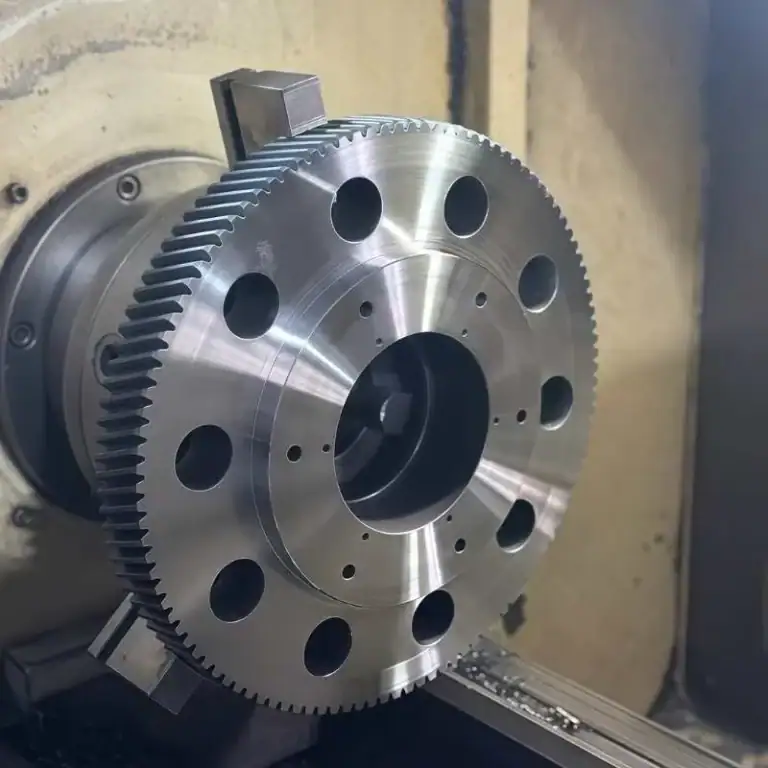
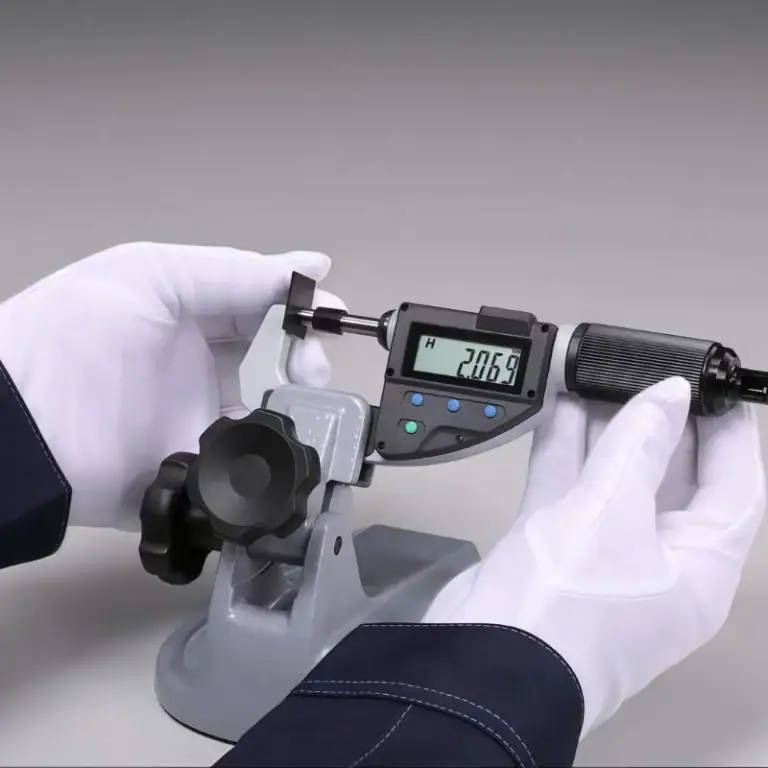
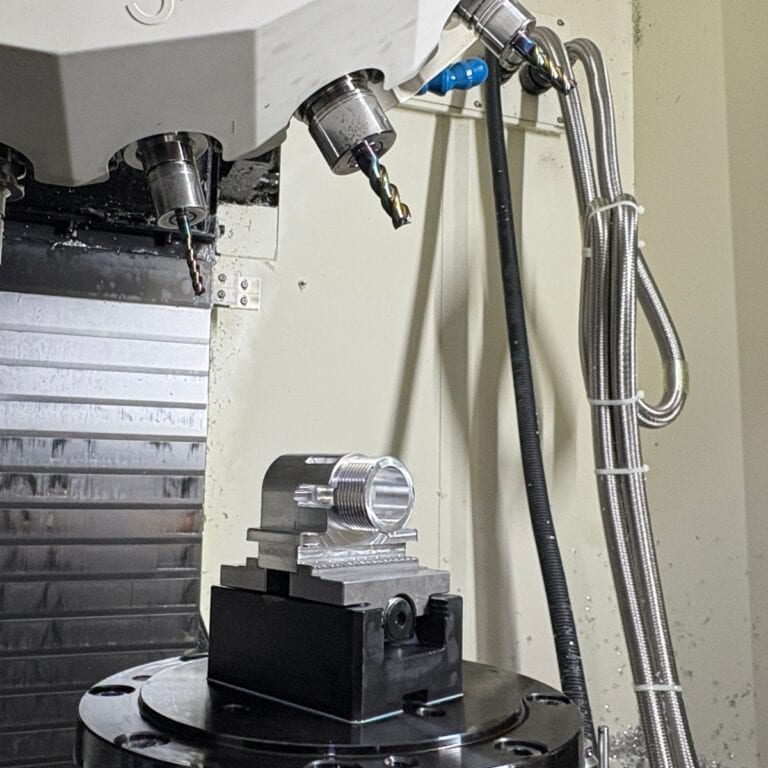
Precision manufacturing is the foundation of modern high-accuracy production. This guide explains what precision manufacturing is, how it works, and why industries rely on it to achieve tight tolerances, consistent quality, and cost-effective results.
What Is Precision Manufacturing?
Precision manufacturing refers to producing parts with extremely tight tolerances and consistent accuracy. As components become smaller and more complex, this manufacturing approach ensures designs are translated into reliable, high-performance physical parts.
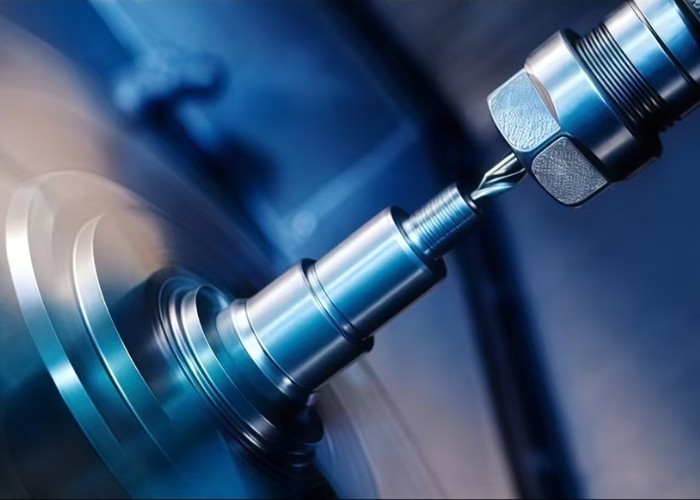
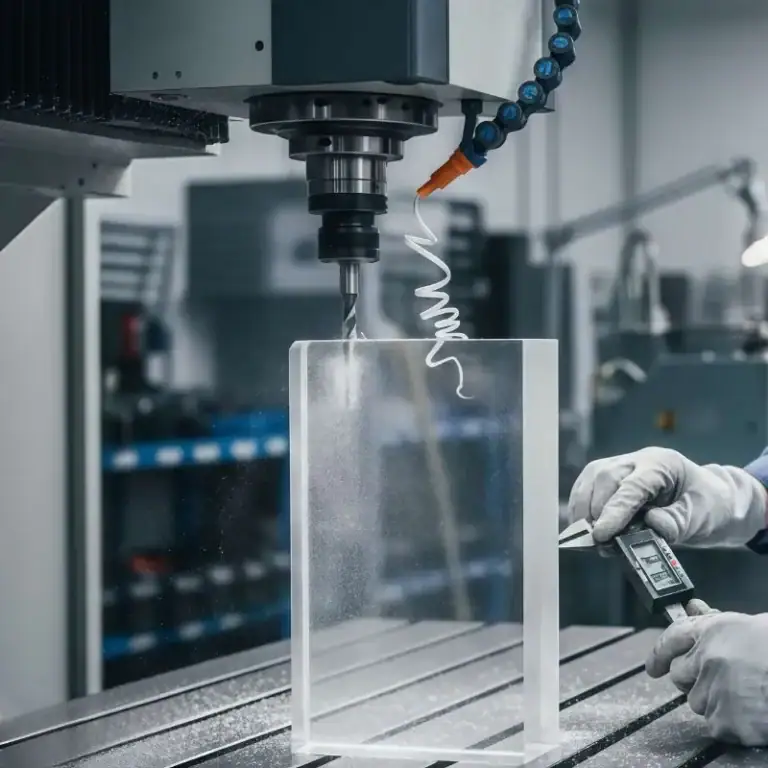
Precision manufacturing focuses on dimensional accuracy, repeatability, and process control. In practice, tolerances are often held within ±0.01mm, and in critical cases, down to microns. This is achieved using CNC machining, CAD/CAM programming, and automated inspection systems.
Unlike traditional machining that relies heavily on manual adjustments, precision manufacturing minimizes human error through digital control. I’ve seen this clearly when producing aerospace brackets and medical housings, where even a 0.02mm deviation can cause assembly failure. By combining advanced equipment with standardized processes, precision manufacturing delivers reliable quality at scale.
Why Precision Manufacturing Is Important
Precision manufacturing matters because modern products demand extreme accuracy, repeatability, and reliability. As tolerances tighten and designs grow more complex, traditional manufacturing methods can no longer meet performance or quality expectations.
The importance of precision manufacturing starts with quality. By controlling tolerances at micron or sub-millimeter levels, defect rates can be reduced to near-zero. In aerospace manufacturing, for example, defect levels below 50 DPM are now achievable—something impossible with manual processes.
Efficiency is another key factor. CNC-driven precision manufacturing can shorten lead times by 30–50% while maintaining consistent output. In my experience, projects that switched from conventional machining to precision workflows significantly reduced rework and scrap.
Over the long term, precision manufacturing lowers total cost. Although advanced equipment requires upfront investment, reduced waste, fewer errors, and repeatable production deliver measurable savings—especially for batch and scaled production.
How Precision Manufacturing Works
Precision manufacturing works through a tightly controlled digital workflow. From CAD design to CNC machining and inspection, every step is connected to ensure accuracy, repeatability, and consistent part quality.
The process begins with a detailed CAD model, where engineers define exact dimensions, tolerances, and material properties. This data is transferred into CAM software, which converts the design into machine-readable toolpaths that control cutting speed, feed rate, and tool motion.
Next, raw material—such as aluminum, stainless steel, titanium, or engineering plastics—is securely fixtured to prevent movement. CNC machines then execute subtractive or additive operations with tolerances commonly held within ±0.01mm, and tighter for critical features.
Throughout machining, probes and sensors monitor tool wear, temperature, and part alignment. In my experience, this real-time feedback can reduce scrap by over 20%. Final inspection using CMMs or laser scanners verifies dimensional accuracy before parts move to finishing or delivery.
Key Precision Manufacturing Processes
Precision manufacturing relies on a set of highly controlled processes to achieve tight tolerances, repeatability, and complex geometries. Each process serves a specific role based on material, volume, and accuracy requirements.
CNC Machining
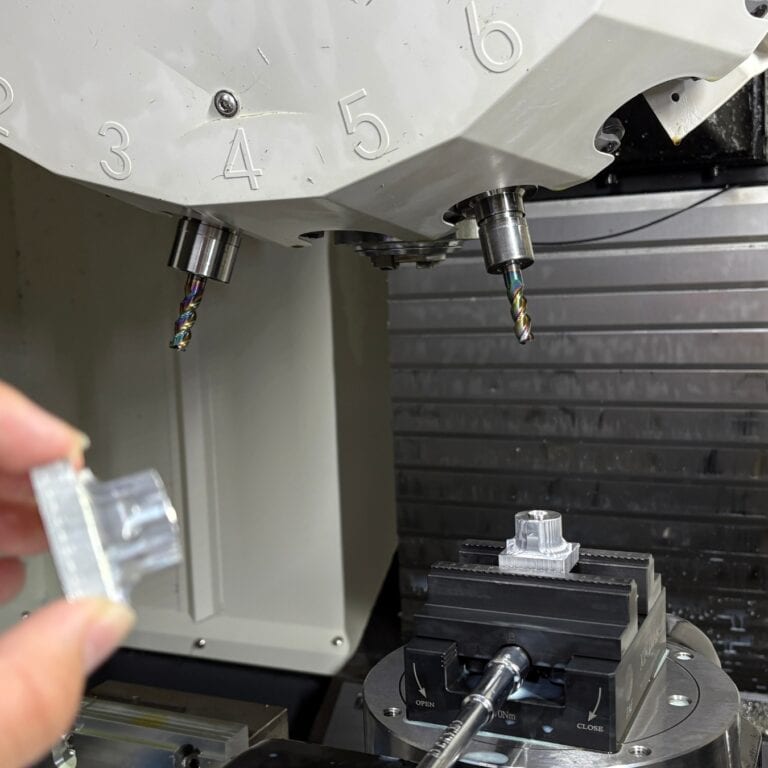
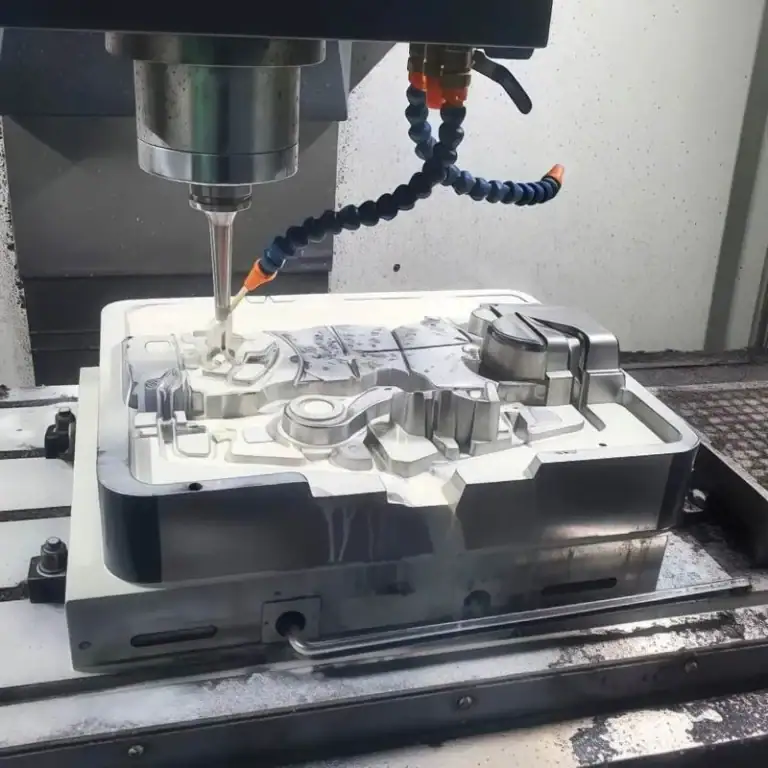
CNC machining is the backbone of precision manufacturing. It is a subtractive process that removes material using computer-controlled milling, turning, drilling, and multi-axis operations. In practice, CNC machining routinely achieves tolerances of ±0.01mm, with high-end turning reaching ±0.0025mm. I frequently rely on 5-axis CNC systems to machine complex aerospace and medical parts in a single setup, reducing error and lead time.
Precision Grinding
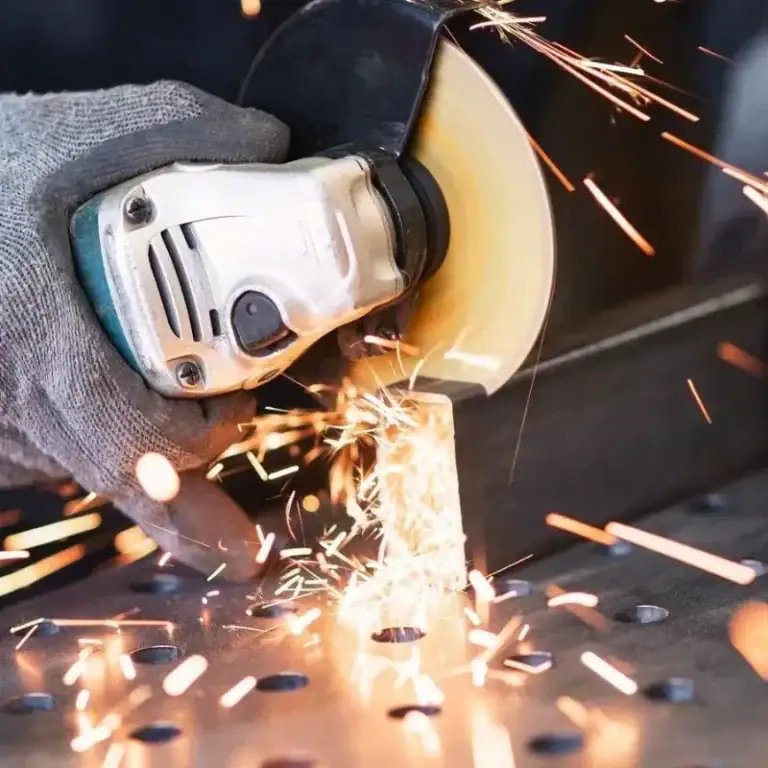
Grinding is often used as a final step to achieve ultra-tight tolerances and superior surface finishes. It removes minimal material but can reach tolerances as tight as ±0.002mm, making it essential for hardened steel components and precision shafts.
Electrical Discharge Machining
EDM shapes conductive materials using controlled electrical sparks rather than cutting force. This process is ideal for hard alloys, sharp internal corners, and tooling components where traditional machining struggles.
Laser Cutting
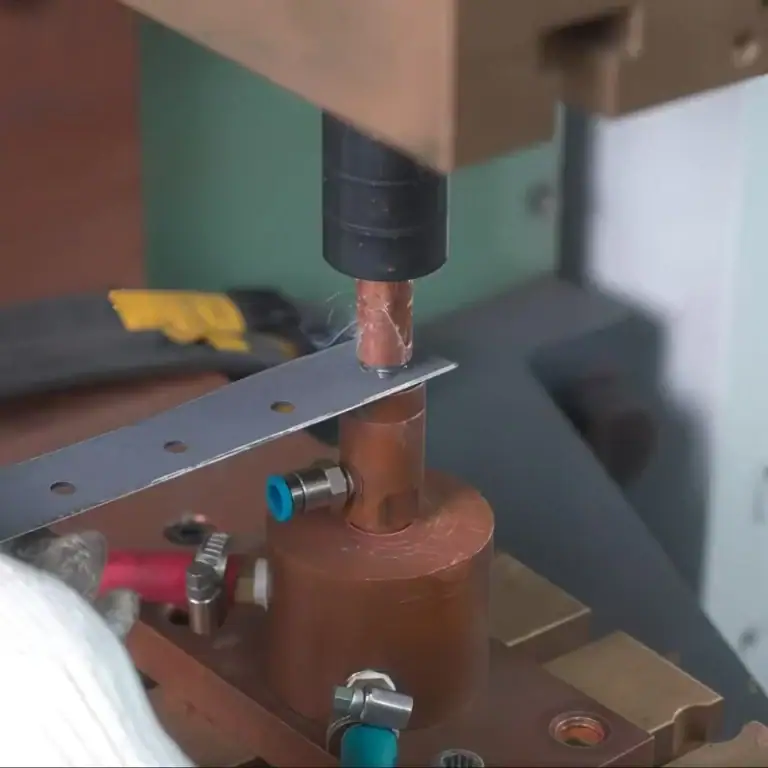
Laser cutting uses focused light energy to cut metals and polymers with kerf widths under 0.1mm. It is widely applied in electronics, aerospace sheet metal, and medical components where clean edges and minimal distortion matter.
Injection Molding
Injection molding enables high-precision plastic part production at scale. Once tooling is complete, it can produce millions of identical parts with tolerances around ±0.05mm and excellent surface finishes below Ra 1µm.
Additive Manufacturing (3D Printing)
Additive manufacturing builds parts layer by layer and excels at complex internal structures and rapid prototyping. In precision workflows, it is often combined with CNC machining to finish critical surfaces.
Materials Used in Precision Manufacturing
Precision manufacturing goes far beyond metal parts. From high-strength alloys to advanced engineering plastics, material selection directly determines accuracy, durability, cost, and real-world performance.
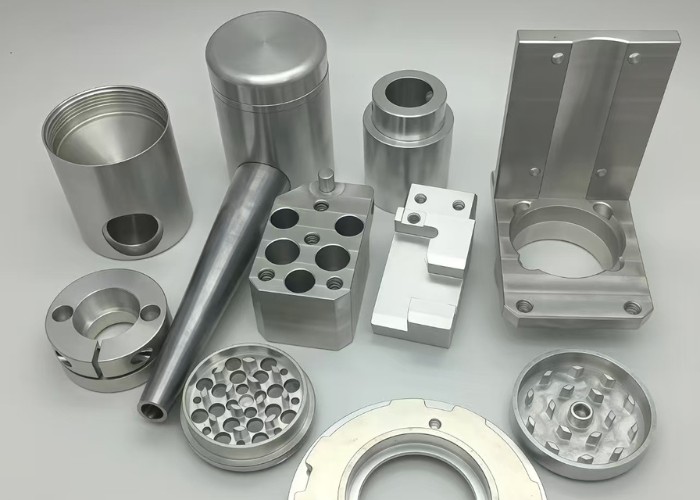
Metals in Precision Manufacturing
Metals remain the foundation of precision manufacturing due to their strength, machinability, and dimensional stability.
- Aluminum is lightweight, corrosion-resistant, and easy to machine. In my projects, aluminum alloys like 6061 and 7075 are widely used for aerospace structures, automotive components, and electronic enclosures, often achieving tolerances of ±0.01mm at low cost.
- Steel is valued for its strength and durability. Carbon steel and alloy steel are common in engine parts, tooling, and structural components, while stainless steel adds corrosion resistance for medical and food-grade applications.
- Titanium offers an exceptional strength-to-weight ratio and biocompatibility. It is essential for aerospace components and medical implants, though machining costs are typically 2–3× higher than aluminum.
- Alloys, such as stainless steel or tool steel, combine metals to tailor properties like corrosion resistance, hardness, and wear resistance for demanding environments.
Plastics in Precision Manufacturing
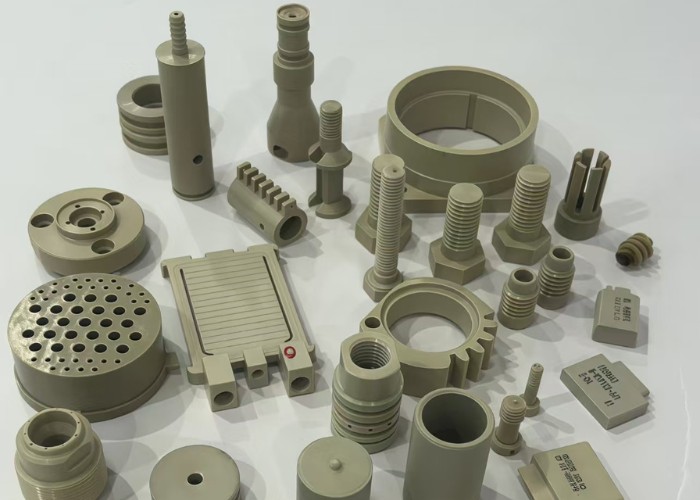
Plastics play a critical role when weight reduction, electrical insulation, or chemical resistance is required.
- ABS provides a balance of strength, toughness, and dimensional stability, making it common in automotive parts, electronic housings, and consumer products.
- Polycarbonate (PC) is known for high impact strength, transparency, and heat resistance, widely used in medical devices, safety equipment, and electronics.
- Nylon offers low friction and excellent wear resistance, making it ideal for gears, bearings, and moving industrial components.
- PEEK is a high-performance engineering plastic with outstanding thermal and chemical resistance. In aerospace and medical projects I’ve handled, PEEK often replaces metal to reduce weight while maintaining mechanical strength.
Benefits of Precision Manufacturing
Precision manufacturing delivers far more than tight tolerances. It improves product reliability, accelerates production, reduces waste, and enables scalable, high-quality output across industries where failure is not an option.
Unmatched Accuracy and Reliability
Precision manufacturing consistently achieves micron-level accuracy through CNC systems, automation, and closed-loop feedback. In practice, tolerances of ±0.005mm—or even tighter—ensure components assemble correctly and perform predictably. In aerospace and medical applications I’ve worked on, this level of accuracy directly reduces failure risk and extends product lifespan.
Faster Lead Times Without Compromising Quality
Digital workflows connect CAD, CAM, and CNC machines into a continuous process. Once a design is finalized, production can begin immediately. Compared with manual methods, precision manufacturing commonly shortens lead times by 30–50%, allowing companies to move from design to market faster.
Lower Cost Through Reduced Waste and Rework
Although precision manufacturing requires higher initial investment, it significantly lowers long-term costs. High repeatability reduces scrap, rework, and inspection overhead. In real production programs, optimizing toolpaths and automation has reduced total manufacturing cost by 20–30%.
Consistent Quality at Any Production Scale
One major advantage is repeatability. Once a process is validated, hundreds or thousands of identical parts can be produced with minimal variation. Statistical process control (SPC) data often shows Cpk values above 1.67, ensuring stable quality in mass production.
Design Freedom and Material Flexibility
Precision manufacturing supports complex geometries and a wide range of materials—from aluminum and titanium to engineered plastics like PEEK. This flexibility allows engineers to optimize designs for strength, weight, heat resistance, or cost without sacrificing accuracy.
Improved Safety and Reduced Human Error
Automation removes variability caused by manual operations. CNC-driven systems reduce operator exposure to hazards and cut human error rates dramatically. In lights-out machining environments, accident risk can drop by over 80%.
Scalability for Long-Term Growth
Precision manufacturing scales efficiently. Once a part is programmed and proven, output can increase without redesign or quality loss. Modern machining cells regularly achieve OEE levels above 85%, supporting stable, high-volume production.
Industries That Use Precision Manufacturing
Precision manufacturing is the foundation of industries where accuracy, reliability, and repeatability are non-negotiable. From aerospace to medical devices, it enables complex parts to perform safely, consistently, and at scale.
Aerospace & Defense
Aerospace is one of the most demanding sectors for precision manufacturing. Components such as turbine blades, fuel nozzles, actuator housings, and structural brackets often require tolerances tighter than ±0.01mm. In projects I’ve seen, even micron-level deviations can affect fuel efficiency, fatigue life, or flight safety. Materials like titanium alloys and Inconel are commonly machined using multi-axis CNC systems to meet extreme strength and temperature requirements.
Automotive Manufacturing
Precision manufacturing supports both prototyping and mass production in the automotive industry. Engine components, transmission housings, and gear systems rely on tight dimensional control to ensure efficiency, low emissions, and durability. Modern CNC machining allows thousands of identical parts to be produced with minimal variation, directly improving assembly accuracy and long-term vehicle reliability.
Medical Devices & Healthcare
Medical manufacturing demands micro-level accuracy and full traceability. Surgical instruments, orthopedic implants, and diagnostic device housings often require tolerances within ±5–10 microns. From my experience, precision CNC machining enables consistent quality while meeting strict regulatory and biocompatibility standards using materials like titanium, stainless steel, and engineered plastics.
Electronics & Semiconductor Equipment
Miniaturization drives the electronics industry. Precision manufacturing enables the production of micro-sized components, heat sinks, sensor housings, and optical mounts where alignment errors of just a few microns can cause failure. CNC machining and precision molding support high-density designs while maintaining tight fits and thermal stability.
Consumer Goods
In consumer products, precision manufacturing ensures consistent quality, smooth assembly, and premium surface finishes. Smartphone housings, wearable devices, and smart home components rely on tight tolerances to support snap-fit designs and multi-part assemblies. High repeatability also helps brands scale production without sacrificing quality.
Robotics & Automation
Robotics systems depend on precise motion and repeatable positioning. Precision manufacturing is used to produce gears, joints, housings, and actuators with tolerances often below ±10 µm. Accurate components reduce backlash, improve motion control, and extend system lifespan in industrial automation and service robots.
Prototyping & R&D
Across all industries, precision manufacturing plays a critical role in prototyping. Functional prototypes made with production-grade materials allow engineers to validate performance, tolerances, and assembly before mass production—reducing risk and accelerating product development cycles.
Precision Manufacturing vs Traditional Manufacturing
Understanding the difference between precision manufacturing and traditional manufacturing helps you choose the right process for accuracy, cost, and scalability. The table below compares both methods across tolerances, efficiency, materials, and real-world performance.
| Comparison Factor | Precision Manufacturing | Traditional Manufacturing |
| Dimensional Tolerance | Typically ±0.005–0.01mm, some processes reach ±2–5 microns | Usually ±0.1–0.5mm, higher variation |
| Accuracy & Repeatability | Extremely high repeatability, Cpk often >2.0 in stable processes | Relies heavily on operator skill, variation increases with volume |
| Production Method | CNC machining, automation, CAD/CAM-driven workflows | Manual machining, basic tooling, operator-dependent |
| Human Error | Minimal human involvement reduces error rates by 60–80% | High reliance on manual operation increases risk of error |
| Surface Finish Quality | Consistent Ra ≤1.6–3.2 µm achievable without secondary work | Often requires extra finishing or rework |
| Complex Geometry Capability | Easily handles multi-axis, thin-wall, micro features | Limited by tooling and manual accessibility |
| Material Utilization | Optimized toolpaths reduce material waste by up to 15% | Higher scrap rates due to trial-and-error processes |
| Production Speed | Automated workflows reduce lead time by 30–50% | Slower setup and adjustment cycles |
| Scalability | Ideal for prototypes and mass production with consistent quality | Difficult to scale without quality loss |
| Cost Structure | Higher initial setup, lower long-term unit cost | Lower initial cost, higher long-term rework and scrap cost |
| Typical Applications | Aerospace, medical, electronics, robotics | Basic mechanical parts, low-precision structures |
| My Practical Experience | One CNC setup can replace multiple manual operations with better accuracy | Manual processes often require repeated adjustments to meet specs |
Challenges and Limitations of Precision Manufacturing
While precision manufacturing delivers unmatched accuracy and consistency, it also introduces technical, financial, and operational challenges. Understanding these limitations helps you plan investments, manage risks, and choose the right manufacturing strategy from the start.
High Initial Investment
Precision manufacturing requires significant upfront capital. A single 5-axis CNC machining center can cost over $500,000, excluding tooling, CAD/CAM software, and automation integration. In my experience, companies without stable demand often struggle to justify this investment early on. Long-term ROI is achievable, but only with proper capacity planning and order continuity.
Skilled Labor Shortage
Even the most advanced machines depend on skilled operators and programmers. By 2030, the global manufacturing sector is expected to face a shortage of over 2 million skilled workers. Precision machining requires expertise in CAD/CAM, SPC analysis, and toolpath optimization. Without proper training, machine accuracy and productivity drop sharply.
Machine Downtime and Maintenance
High-precision equipment demands strict maintenance. Thermal drift, spindle wear, and servo misalignment can quickly affect tolerances at the micron level. From real projects I’ve handled, unplanned downtime can increase scrap rates by 10–20% if predictive maintenance systems are not in place.
Tight Tolerances and Narrow Error Margins
Working within tolerances such as ±2–5 microns leaves almost no room for error. Tool wear, fixture misalignment, or minor programming mistakes can push parts out of spec. Precision manufacturing requires closed-loop inspection, in-process probing, and continuous monitoring to maintain dimensional stability.
Quality Defects Under Tight Tolerance Conditions
Common defects include burrs, tool chatter, thermal distortion, dimensional drift, and surface tearing. For example, thermal variation of just 1 °C can cause measurable dimensional shifts in long or thin-wall parts. These risks make process control and environment stability critical.
Regulatory and Compliance Pressure
Industries like aerospace and medical manufacturing demand strict compliance with standards such as ISO9001, AS9100, and ISO13485. Beyond machining accuracy, manufacturers must maintain full traceability, inspection records, and audit readiness. This adds operational complexity and administrative cost.
How to Choose the Right Precision Manufacturing Partner
Choosing the right precision manufacturing partner directly affects part quality, lead time, and long-term cost. I always recommend evaluating suppliers beyond price—focusing on capability, quality systems, equipment, and real production experience.
Manufacturing Capabilities and Process Coverage
I first check whether a supplier can support both milling and turning, including multi-axis machining, EDM, or wire EDM. Broad in-house capabilities reduce outsourcing risk and shorten lead time, especially for complex or tight-tolerance parts.
Equipment Level and Technical Readiness
Modern precision manufacturing depends on machine rigidity and control. I look for 5-axis CNC machines, high-speed spindles, and stable fixturing systems. Suppliers with advanced equipment typically maintain tolerances down to ±0.01mm or better with higher repeatability.
Quality Control and Inspection Systems
A reliable partner must have in-house inspection. I always ask about CMMs, optical measuring systems, and material verification tools like XRF. Process data such as Cp/Cpk >1.33 and OEE above 80% indicate stable, controlled production.
Certifications and Compliance
Certifications show commitment to consistency. ISO9001 is essential, while ISO13485 or AS9100 is critical for medical and aerospace projects. These systems ensure traceability, documented processes, and risk control throughout production.
Engineering Support and Experience
From my experience, strong suppliers don’t just machine parts—they review designs. Partners who offer DFM feedback often reduce cost by 10–20% and prevent downstream issues. Industry experience also matters when handling complex geometries or special materials.
Quoting Speed and Communication
Fast, accurate quoting reflects internal efficiency. I prefer partners who accept STEP, IGES, or DXF files and respond within 24 hours. Clear communication and technical clarity often matter more than the lowest unit price.
FAQs
What Is The Meaning Of Precision Production?
Precision production means manufacturing parts with extremely tight tolerances, consistent dimensions, and controlled variation. From my experience, it focuses on repeatability and process stability rather than just making a part functional. In real production, precision production commonly targets tolerances within ±0.01mm, and in critical industries, even ±0.005mm. It relies on CNC machining, digital control, standardized workflows, and in-process inspection to ensure every part meets the same specification.
What Is High Precision Manufacturing?
High precision manufacturing refers to producing components that require micron-level accuracy and minimal deviation across batches. I see this most often in aerospace, medical, and semiconductor projects, where tolerances typically range from ±2–10 microns. This level of precision is achieved through advanced CNC machines, CAD/CAM programming, temperature control, and CMM inspection. The goal is not only accuracy, but also long-term consistency, reliability, and zero-defect performance in demanding applications.
What Is Precision Processing?
Precision processing is the controlled execution of machining or forming steps to achieve exact dimensions, surface quality, and functional performance. In my work, it includes CNC milling, turning, grinding, EDM, and finishing operations carried out under strict parameters. Precision processing often improves dimensional accuracy by 30–60% compared to conventional methods. It emphasizes toolpath optimization, fixture stability, and real-time monitoring to reduce variation and ensure predictable, repeatable results.
What Is A Good Example Of Precision?
A good example of precision is machining a medical implant or aerospace component where a deviation of 0.01mm can cause failure. I’ve worked on parts where hole position tolerance was held within ±5 microns to ensure proper assembly. Another clear example is a CNC-machined engine shaft that must maintain perfect concentricity for smooth rotation. These cases show how precision directly impacts safety, performance, and product lifespan.
What Is The Simple Meaning Of Precision?
The simple meaning of precision is how closely a result matches the intended value every time. From a manufacturing perspective, I define precision as repeatability rather than just accuracy. For example, producing 1,000 parts that all measure within ±0.01mm of each other demonstrates high precision. Even if the nominal size shifts slightly, consistent results indicate strong process control and reliable manufacturing performance.
Conclusion
Precision manufacturing enables high-accuracy, repeatable part production through CNC machining, automation, and strict process control. It achieves tight tolerances, consistent quality, and lower defect rates compared to traditional manufacturing, making it essential for aerospace, medical, automotive, and electronics industries. Despite higher upfront costs, its efficiency, reliability, and scalability deliver long-term cost and performance advantages.
At TiRapid, precision manufacturing means micron-level CNC machining, strict QC, and proven processes. We support aerospace, medical, and automotive parts—ready for your next RFQ.