CNC machining has transformed modern manufacturing by combining automation with high-precision machining. Using computer-controlled tools, CNC machining enables the efficient production of complex metal and plastic parts with tight tolerances and consistent quality. In this guide, I explain how CNC machining works, its key benefits, and where it is most effectively applied.
What Is CNC Machining?
CNC machining is one of the most reliable manufacturing methods for producing high-precision parts. By using computer-controlled machines, it delivers accuracy, repeatability, and flexibility across metals and plastics—making it essential for modern engineering and production.
CNC machining, short for Computer Numerical Control machining, is a subtractive manufacturing process where material is removed from a solid workpiece using computer-generated instructions. These instructions—commonly known as G-code and M-code—are created from CAD designs through CAM software and precisely control tool motion, spindle speed, feed rate, and coolant flow.
Unlike manual machining, CNC machining eliminates operator-dependent variability. Machines execute programmed movements with repeatable accuracy, commonly achieving tolerances of ±0.01mm, and even tighter for precision components. Typical CNC operations include milling, turning, drilling, and multi-axis machining, allowing both simple and highly complex geometries to be produced in one setup.
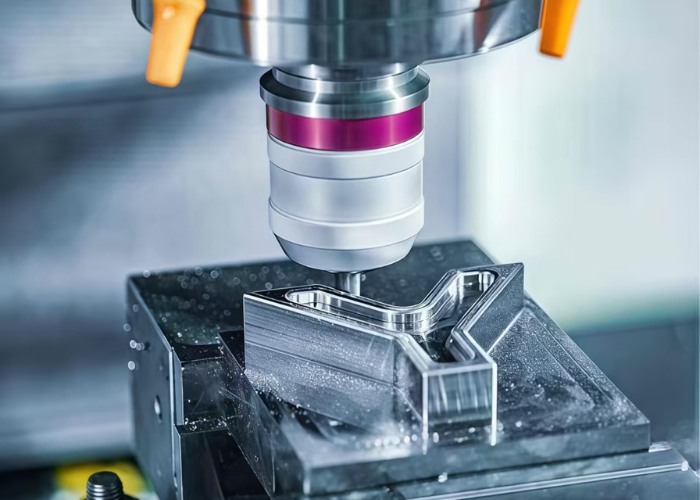
How CNC Machining Works: Step-by-Step Process
Understanding how CNC machining works helps engineers and buyers control cost, accuracy, and lead time. From digital design to final inspection, each step plays a critical role in delivering consistent, high-precision parts.
Step 1: CAD Design & DFM Review
The CNC machining process begins with creating a 2D or 3D CAD model using software such as SolidWorks or Fusion 360. At this stage, Design for Manufacturing (DFM) is critical. Tolerances, wall thickness, fillets, threads, and tool access must be evaluated early to avoid costly revisions later. In my experience, over 70% of machining issues originate from designs that ignore DFM principles.
Step 2: CAM Programming & Code Generation
Once the design is finalized, CAM software converts the CAD model into CNC-readable instructions—primarily G-code and M-code. These codes define toolpaths, spindle speed, feed rate, cutting depth, and tool changes. Well-optimized toolpaths reduce cycle time, improve surface finish, and extend tool life.
Step 3: Machine Setup & Workholding
The machinist selects the appropriate CNC machine (3-axis, 4-axis, or 5-axis), installs cutting tools, and securely fixtures the raw material. Proper setup directly affects accuracy and repeatability. Even with automation, poor workholding can introduce dimensional errors exceeding ±0.05mm.
Step 4: Machining Execution
The CNC machine executes the programmed instructions, removing material layer by layer. Modern CNC systems minimize human intervention, ensuring consistent results across single prototypes or large batches. Typical machining tolerances range from ±0.01mm to ±0.005mm depending on material and process.
Step 5: Inspection & Finishing
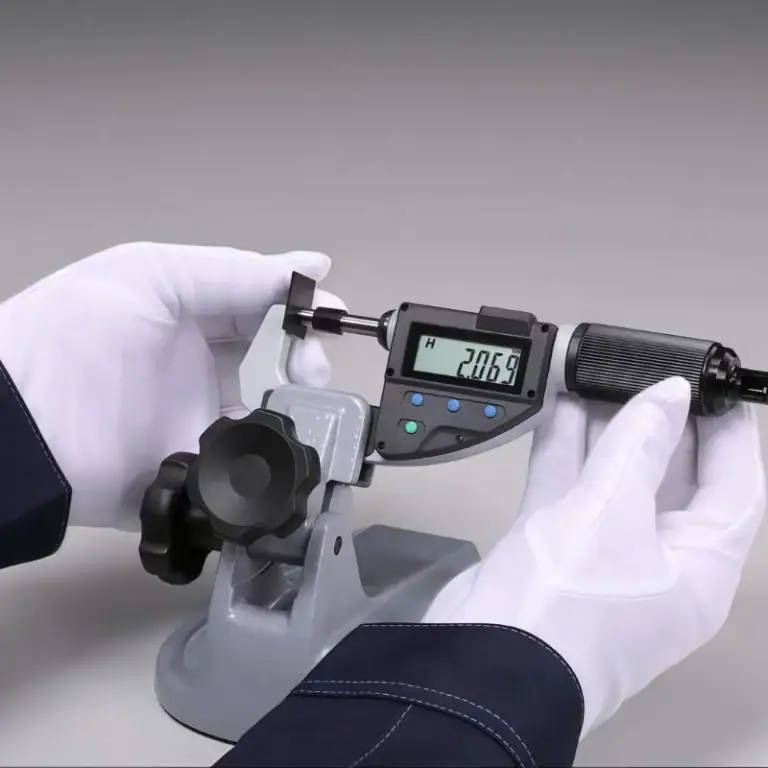
After machining, parts undergo dimensional inspection using calipers, CMMs, or optical measurement systems. Additional finishing steps—such as deburring, polishing, or surface treatment—may be applied to meet functional or aesthetic requirements.
Types of CNC Machining Operations
CNC machining includes multiple operations, each designed for specific geometries, tolerances, and materials. Understanding these core CNC machining operations helps engineers and buyers select the most efficient process for accuracy, cost control, and production speed.
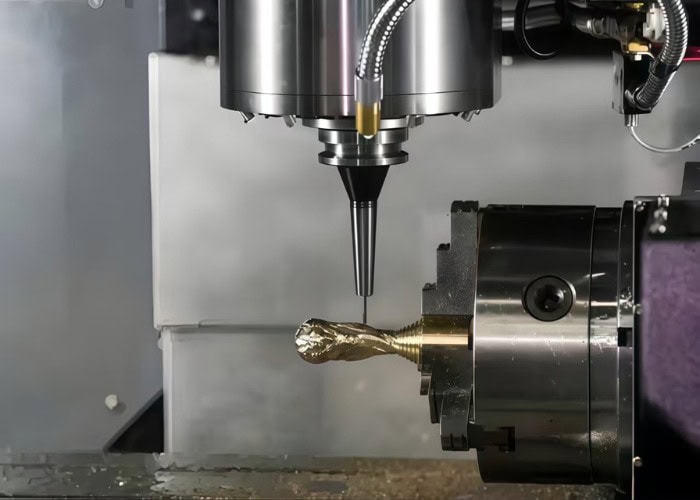
CNC Milling
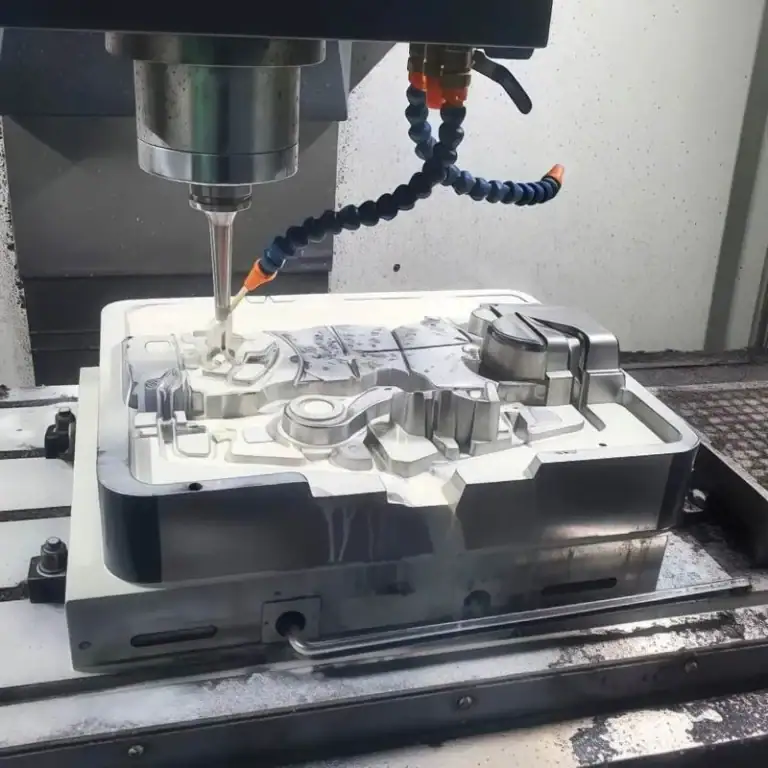
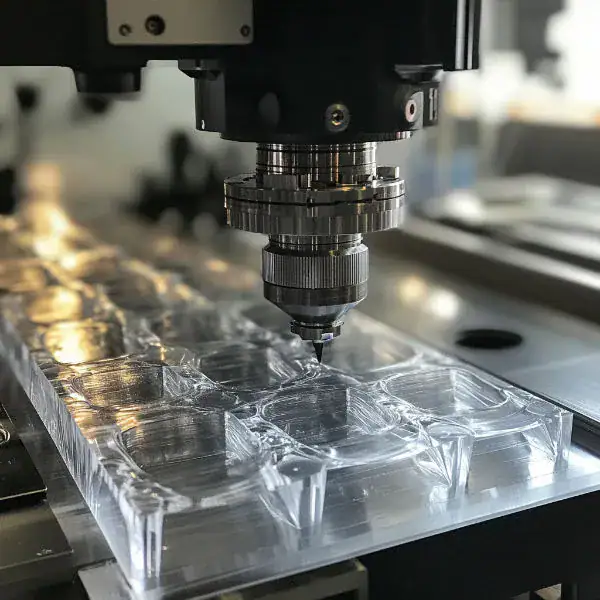
CNC milling is the most versatile machining operation. A rotating multi-point cutting tool removes material along the X, Y, and Z axes—and up to 5 axes in advanced systems. Milling excels at producing flat surfaces, slots, pockets, contours, and complex 3D geometries. In my experience, 5-axis milling can reduce setups by over 50% for complex parts while achieving tolerances of ±0.005–0.01mm.
CNC Turning
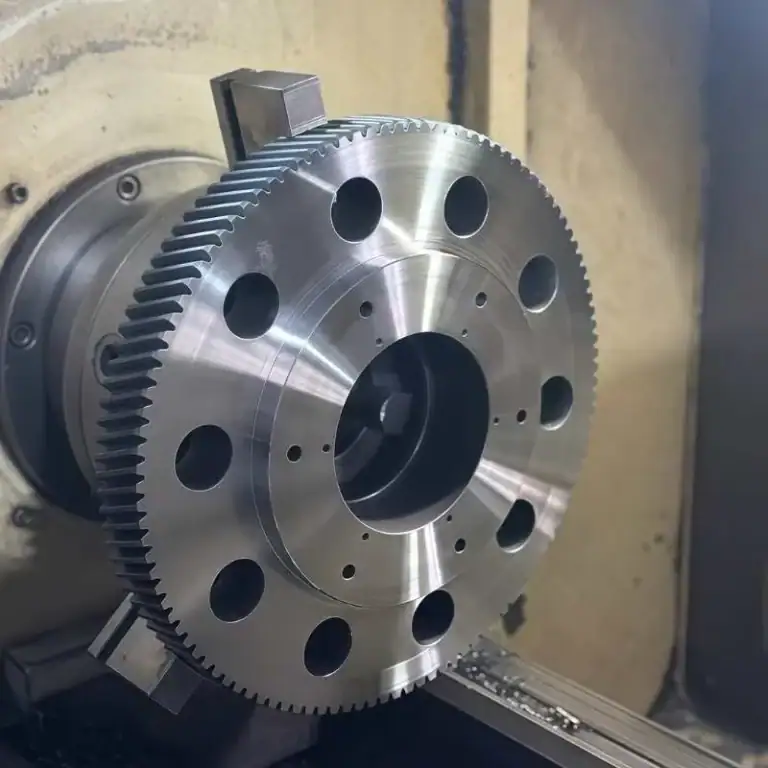
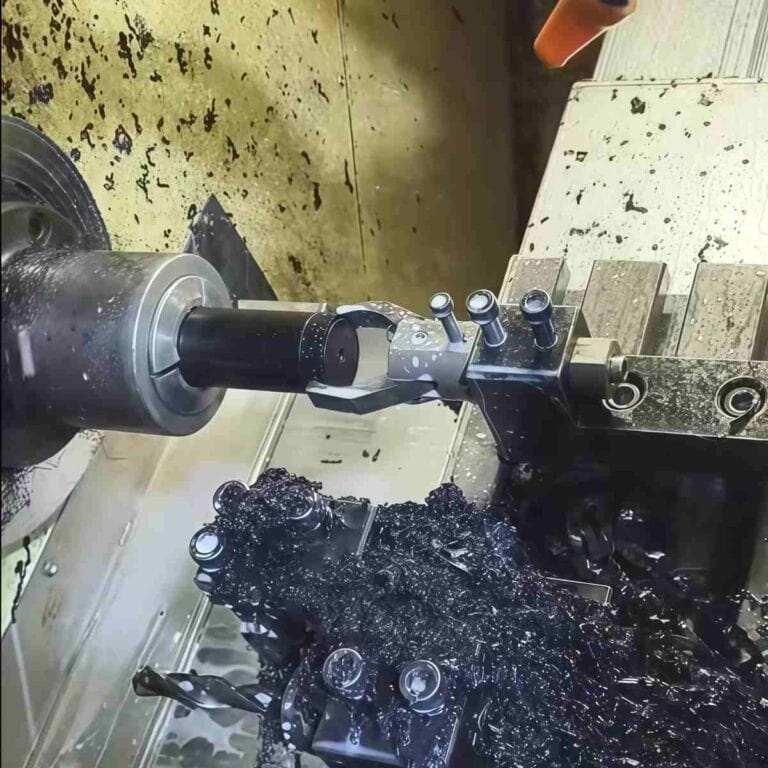
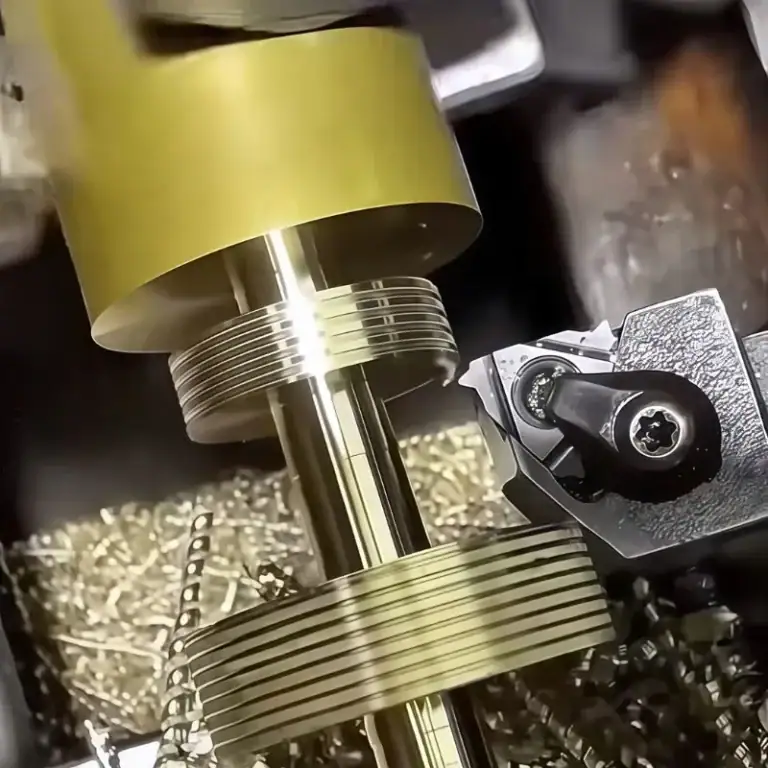
CNC turning shapes parts by rotating the workpiece against a stationary cutting tool. This operation is ideal for cylindrical or rotationally symmetric components such as shafts, pins, bushings, and threaded parts. Turning offers high material removal efficiency and excellent concentricity, making it cost-effective for medium to high-volume production using bar-fed lathes.
CNC Drilling
CNC drilling creates precise cylindrical holes using a rotating drill bit moving along the Z-axis. It is one of the fastest and lowest-cost CNC operations, commonly used for fastener holes and assembly features. Drilling is often combined with milling or reaming when tighter positional accuracy or surface finish is required.
CNC Grinding
CNC grinding uses abrasive wheels to achieve extremely tight tolerances and superior surface finishes. It is commonly applied to hardened steel components where tolerances can reach ±0.002mm. Grinding is typically used as a finishing operation rather than for bulk material removal.
CNC Routing
CNC routing is similar to milling but optimized for softer materials such as wood, plastics, foams, and composites. Routers operate at higher spindle speeds and are widely used in signage, enclosures, and lightweight structural components.
EDM (Electrical Discharge Machining)
EDM removes material using controlled electrical sparks rather than cutting force. It is ideal for hard materials, intricate internal features, and sharp corners that are difficult to machine conventionally. Wire EDM is commonly used for precision tooling and dies.
CNC Laser & Plasma Cutting
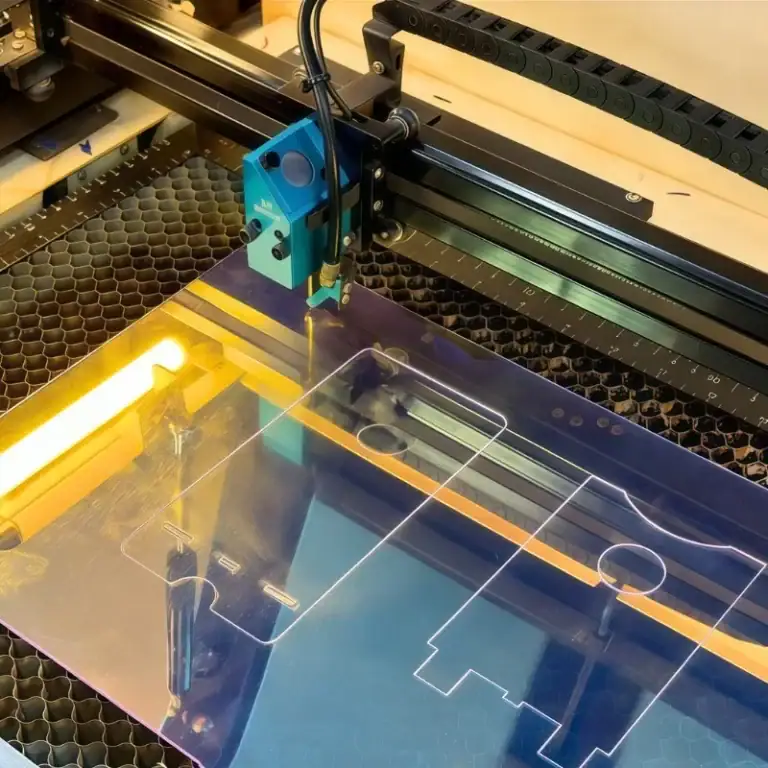
Laser cutting delivers high-precision, narrow-kerf cuts for thin to medium sheet materials, while plasma cutting is optimized for fast cutting of thicker conductive metals. These processes are widely used in sheet metal fabrication rather than solid-part machining.
In real-world projects, complex parts often require a combination of multiple CNC operations to balance accuracy, cost, and lead time.
Types of CNC Machines
CNC machines come in many forms, each designed for specific motions, part geometries, and production needs. Understanding the main types of CNC machines helps engineers and buyers choose the right equipment for precision, efficiency, and cost control.
CNC Machines by Number of Axes
3-Axis CNC Machines
3-axis CNC machines move along the X, Y, and Z axes and are the most widely used in CNC machining. They are ideal for general milling, drilling, and simple prismatic parts. In my experience, over 70% of standard CNC parts can be completed on 3-axis machines when geometry is not highly complex.
4-Axis CNC Machines
4-axis machines add a rotational axis (typically the A-axis), allowing the workpiece to rotate without re-clamping. This significantly improves efficiency for parts requiring machining on multiple sides, such as brackets or housings.
5-Axis CNC Machines
5-axis CNC machines allow simultaneous movement along three linear axes and two rotational axes. This enables full access to complex geometries, deep cavities, and angled features in a single setup. For aerospace, medical, and precision components, 5-axis machining can reduce setups by 60% and improve positional accuracy.
CNC Milling Machines
Vertical Machining Centers (VMC)
VMCs feature a vertically oriented spindle and are commonly used for flat surfaces, slots, and pockets. They offer good rigidity, easy setup, and are cost-effective for low to medium production volumes.
Horizontal Machining Centers (HMC)
HMCs use a horizontal spindle orientation, improving chip evacuation and enabling continuous production. They are ideal for high-volume manufacturing and complex parts requiring multiple faces to be machined efficiently.
CNC Turning Machines
CNC Lathes
CNC lathes are designed for turning operations and typically operate on two axes. They excel at producing cylindrical and rotational parts with high concentricity and surface consistency.
CNC Turning Centers
Turning centers integrate additional capabilities such as live tooling, milling, drilling, and sub-spindles. In real production, turn-mill centers are often used to complete complex parts in one setup, reducing lead time and improving accuracy.
Specialized CNC Machines
CNC Routers
Optimized for wood, plastics, and composites, CNC routers operate at high spindle speeds and are widely used for panels, enclosures, and lightweight structures.
CNC Grinding Machines
Grinding machines use abrasive wheels to achieve extremely tight tolerances and superior surface finishes, often reaching ±0.002mm. They are typically used as finishing machines.
EDM Machines (Wire & Sinker EDM)
EDM machines remove material using controlled electrical discharges, making them ideal for hard materials and intricate internal features that cannot be cut mechanically.
CNC Laser & Plasma Cutters
Laser cutters provide high-precision cutting for thin sheet materials, while plasma cutters are optimized for fast cutting of thicker conductive metals. Both are widely used in sheet metal fabrication.
CNC Software and Digital Workflow
Modern CNC machining is driven by a fully digital workflow. From design to simulation and machine execution, CNC software connects every step, ensuring accuracy, repeatability, and faster production while reducing errors and cost.
CAD Software: Digital Design Foundation
CAD (Computer-Aided Design) software is the starting point of any CNC machining project. It is used to create precise 2D drawings and 3D models that define part geometry, dimensions, tolerances, threads, and critical features.
From my experience, a well-prepared CAD model directly affects machining success. Clear design intent reduces interpretation errors and minimizes rework. Common CAD tools such as AutoCAD, SolidWorks, and Inventor are widely used across automotive, aerospace, and industrial manufacturing to ensure design accuracy before production begins.
CAM Software: From Design to Toolpath
CAM (Computer-Aided Manufacturing) software converts CAD models into machine-readable instructions, typically G-code and M-code. These codes control toolpaths, spindle speeds, feed rates, tool changes, and cutting sequences on CNC machines.
CAM software plays a critical role in optimizing efficiency. Advanced CAM systems can simulate machining operations, detect collisions, and optimize toolpaths before any material is cut. In real projects, this often reduces machining time by 20–30% and significantly lowers scrap risk. Popular CAM platforms include Fusion 360, SolidWorks CAM, and Mastercam.
CAE Software: Simulation and Engineering Validation
CAE (Computer-Aided Engineering) software is used to analyze and validate part performance before machining. It allows engineers to simulate stress, deformation, heat transfer, and fluid behavior using tools such as Finite Element Analysis (FEA) and Computational Fluid Dynamics (CFD).
By identifying weak points early, CAE helps avoid costly design changes after machining begins. In high-precision industries like aerospace and medical devices, CAE-driven design optimization is essential for achieving functional reliability and reducing development cycles.
Integrated Digital Workflow in CNC Machining
The real strength of CNC machining lies in the integration of CAD, CAM, and CAE into a single digital workflow. Design data flows seamlessly from modeling to simulation and finally to machine execution.
From a manufacturing perspective, this digital continuity improves dimensional accuracy, shortens lead time, and ensures consistent quality across production batches. In my experience, projects using a fully integrated digital workflow achieve faster approval cycles and more predictable costs.
Materials Compatible with CNC Machining
One of CNC machining’s greatest strengths is its ability to process a wide range of materials. From metals to plastics and composites, choosing the right material directly impacts part performance, cost, tolerance, and lead time.
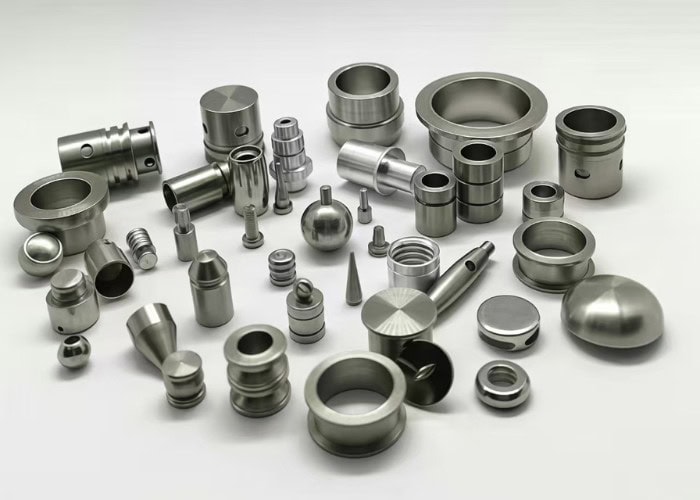
Metals: Strength, Precision, and Reliability
Metals are the most commonly used CNC machining materials due to their mechanical strength and dimensional stability.
- Aluminum alloys (e.g., 6061, 7075) are lightweight, corrosion-resistant, and easy to machine. In my experience, aluminum often achieves tolerances of ±0.01mm at low cost, making it ideal for automotive, electronics, and aerospace housings.
- Stainless steel offers excellent corrosion resistance and durability but is harder to machine. Tool wear and heat generation increase cost, yet it remains essential for medical, food, and industrial applications.
- Steel and alloy steel are valued for strength and weldability, widely used in structural and load-bearing components.
- Brass and copper machine smoothly and hold fine details. Brass is popular for threaded parts, while copper excels in electrical and thermal applications.
- Titanium delivers the highest strength-to-weight ratio and biocompatibility. However, it requires slower cutting speeds and specialized tooling, increasing machining cost by 2–3× compared to aluminum.
Plastics: Lightweight and Cost-Effective Alternatives
Plastics are widely used when electrical insulation, low weight, or chemical resistance is required.
- Engineering plastics such as PEEK, acetal (POM), and nylon provide excellent mechanical and thermal stability. In semiconductor and medical projects I’ve worked on, these materials often replace metals to reduce weight and contamination risks.
- Commodity plastics like acrylic, polycarbonate, PVC, and polypropylene are easy to machine and cost-effective, but they require careful temperature control to avoid deformation or cracking.
Plastic CNC parts typically allow tolerances of ±0.05mm, sufficient for enclosures, fixtures, and functional prototypes.
Composites and Specialty Materials
- Carbon fiber and fiberglass offer high strength with low weight, making them ideal for aerospace and performance automotive parts. Machining requires specialized cutters to prevent delamination.
- Phenolics and epoxy composites are commonly used for electrical insulation and high-temperature applications.
- Wood and rigid foam are less common but useful for prototypes, fixtures, and molds where speed and cost matter more than durability.
Key Factors When Choosing CNC Materials
From a manufacturing perspective, material selection should always consider:
- Hardness and machinability
- Mechanical and thermal properties
- Part function and load requirements
- Required tolerances and surface finish
- Operating temperature and environment
- Material and machining cost
In real projects, choosing the right material often reduces total cost more than optimizing machining time alone.
Advantages and Limitations of CNC Machining
CNC machining is widely chosen for its precision, repeatability, and material versatility. However, like any manufacturing method, it has clear strengths and limitations. Understanding both helps engineers and buyers choose CNC machining at the right stage and scale.
Advantages of CNC Machining
From my experience, the biggest advantage of CNC machining is precision and consistency. Modern CNC systems routinely achieve tolerances of ±0.01mm or tighter, which is critical in aerospace, medical, and precision industrial parts. Once programmed, the same part can be reproduced thousands of times with near-identical accuracy.
CNC machining also offers high efficiency and scalability. Automated toolpaths, stable spindle speeds, and continuous operation significantly reduce cycle time and human error. In automotive and electronics projects I’ve handled, CNC machining lowered per-unit cost dramatically once production volumes increased.
Another key benefit is design and material flexibility. CNC machines can process aluminum, steel, titanium, plastics, and composites while producing complex geometries, tight features, and excellent surface finishes. This makes CNC machining ideal for both functional prototypes and production parts.
Limitations of CNC Machining
The primary limitation is higher upfront cost. CNC machines, tooling, and fixturing require significant capital investment, which may not be economical for very low-volume or simple parts. In addition, skilled operators and CAM programmers are required, increasing labor cost.
CNC machining is also a subtractive process, which means material waste is unavoidable. Compared with additive manufacturing, more raw material may be removed—especially for complex parts machined from solid billets.
Finally, design constraints still exist. Extremely deep cavities, ultra-thin walls, or inaccessible internal features may increase cost or require alternative processes. In practice, good DFM (Design for Manufacturing) decisions are essential to fully leverage CNC machining advantages.
CNC Machining vs Other Manufacturing Processes
CNC machining is not always the “best” option—it’s the right option under the right conditions. Comparing CNC machining with 3D printing, injection molding, and die casting helps engineers and buyers choose the most cost-effective and technically suitable process.
| Process | Manufacturing Type | Best For | Typical Tolerance | Cost Structure | Production Volume | My Practical Insight |
| CNC Machining | Subtractive | High-precision metal & plastic parts | ±0.01mm or tighter | Medium setup, linear unit cost | Low to medium batches | I use CNC when accuracy, material strength, and real-world performance matter |
| 3D Printing | Additive | Rapid prototypes & complex internal shapes | ±0.1–0.3mm | Low setup, higher unit cost | Prototypes & very low volume | Great for early design validation, not ideal for tight tolerances |
| Injection Molding | Formative | Plastic mass production | ±0.05mm (after tuning) | High tooling, very low unit cost | High volume (10k+) | Best when design is frozen and volumes justify mold cost |
| Die Casting | Formative | Aluminum/zinc mass production | ±0.05mm | High tooling, low unit cost | Medium to high volume | Ideal for thin-wall metal parts with stable geometry |
Applications of CNC Machining Across Industries
CNC machining plays a critical role across modern industries where precision, repeatability, and material flexibility are essential. From aerospace to medical devices, CNC enables manufacturers to meet strict tolerances, reduce risk, and scale production efficiently.
Aerospace & Defense
In aerospace projects I’ve worked on, CNC machining is indispensable due to extreme tolerance and material requirements. Structural brackets, engine components, and housings are often machined from aluminum, titanium, or high-strength alloys, commonly holding tolerances of ±0.01mm or tighter. Multi-axis CNC machining minimizes setups and improves dimensional consistency for flight-critical parts.
Automotive Manufacturing
CNC machining supports both prototyping and mass production in automotive manufacturing. Engine blocks, transmission housings, axles, and suspension components rely on CNC processes to maintain consistency across thousands of parts. In practice, CNC allows OEMs to balance cost efficiency with tight geometric control, especially for aluminum and steel components.
Electronics & Consumer Products
For electronics, CNC machining is widely used to produce enclosures, heat sinks, connectors, and precision internal components. In my experience, CNC-machined aluminum housings provide superior thermal performance and dimensional stability compared to molded alternatives—especially for low-to-medium production volumes.
Medical Devices
Medical CNC machining demands accuracy, repeatability, and biocompatibility. Surgical instruments, implants, and diagnostic components are commonly machined from stainless steel, titanium, or engineered plastics. CNC machining supports tight tolerances, smooth surface finishes, and full traceability—key requirements in regulated medical environments.
Industrial Machinery & Equipment
CNC machining is essential for pumps, valves, gears, and mechanical assemblies used in industrial systems. These parts often require durability, wear resistance, and precise mating surfaces. From my experience, CNC-machined components significantly reduce assembly errors and extend equipment service life.
Prototyping, R&D, and Tooling
CNC machining remains a preferred method for functional prototypes, molds, and dies. Unlike additive processes, CNC delivers production-grade materials and real-world performance, allowing engineers to validate designs before scaling to mass production.
How to Choose the Right CNC Machining Service
Choosing the right CNC machining service directly affects part quality, cost, and delivery risk. A capable supplier does more than cut metal—they help you avoid design issues, control tolerances, and scale production smoothly.
Proven Industry Experience
From my experience, suppliers with hands-on experience in your industry (aerospace, automotive, medical, electronics) anticipate design risks better. A strong project portfolio often matters more than machine count.
Machine Capability and Technology
Advanced 3-axis, 4-axis, and 5-axis CNC machines improve accuracy and reduce setups. I always check whether the supplier uses modern CAM software and supports multi-process integration (milling + turning + finishing).
Quality Control and Certifications
Reliable CNC shops follow standardized inspection procedures. ISO 9001 certification, CMM inspection, and material traceability significantly reduce rework and compliance risks—especially for export projects.
Engineering Support and DFM Capability
A good CNC partner doesn’t just quote—they review your design. In my projects, suppliers offering DFM feedback often save 10–30% in cost by optimizing tolerances, features, or machining strategy.
Lead Time and Production Flexibility
Fast response time matters as much as fast machining. I prioritize suppliers who communicate lead time clearly, support prototypes, and can scale from samples to batch production without process changes.
Transparent Pricing Structure
Lowest price doesn’t equal lowest cost. I look for detailed quotes covering machining, tooling, surface treatment, inspection, and shipping—this prevents hidden costs later.
Communication and Customer Support
Clear communication avoids delays. A professional CNC service responds quickly, explains technical trade-offs, and proactively flags risks instead of waiting for problems to occur.
FAQs
Is CNC Machining Easy?
From my experience, CNC machining is not inherently “easy,” but it becomes manageable with the right knowledge and systems. Modern CNC machines automate motion and tool control, which reduces manual skill dependency, yet success still depends on design accuracy, CAM programming, tooling selection, and process planning. For simple parts, setup can be straightforward. For complex, tight-tolerance components (±0.01mm or tighter), CNC machining requires engineering expertise, DFM understanding, and experience to consistently achieve quality and efficiency.
Which Code Is Used In CNC?
CNC machines primarily use G-code and M-code. From my experience, G-code controls motion-related commands such as tool paths, feed rates, and spindle speed, while M-code manages machine functions like tool changes, coolant control, and program stops. These codes are usually generated automatically by CAM software based on the CAD model. Properly generated and optimized G- and M-code directly affects machining accuracy, cycle time, and overall production reliability.
What Coding Language Does CNC Use?
CNC machines use a standardized programming language commonly referred to as G-code, supplemented by M-code. In practice, machinists rarely write full programs manually anymore. Instead, CAM software converts CAD models into G-code instructions. While the core syntax is standardized (ISO/RS-274), machine builders may use slightly different dialects. Understanding how G-code works helps diagnose issues, optimize cycle times, and ensure compatibility across different CNC machines.
What Is Better Than CNC?
From my perspective, no process is universally “better” than CNC machining—it depends on application, volume, and design goals. For example, injection molding is more cost-effective for high-volume plastic parts, while 3D printing excels at rapid prototyping and complex internal geometries. However, CNC machining outperforms alternatives when tight tolerances, production-grade materials, and dimensional accuracy are required. The best solution is choosing the right process, not replacing CNC blindly.
Conclusion
CNC machining is a precision manufacturing process that uses computer-controlled machines to produce accurate, repeatable parts from metals and plastics. With a fully digital workflow and multiple machining operations, it supports complex designs, tight tolerances, and consistent quality across industries like aerospace, automotive, medical, and electronics.
At TiRapid, we combine advanced CNC equipment, in-house engineering support, and strict ISO quality control to deliver fast, reliable machining solutions—from prototypes to production—helping you reduce risk, shorten lead times, and bring high-precision parts to market with confidence.