Metal stamping is one of the most efficient ways to produce precision metal parts at scale. However, different types of stamping processes are designed for specific materials, part geometries, and production volumes. This guide explains the main types of stamping, how they work, and where they are used in modern manufacturing.
What Is Metal Stamping?
Metal stamping is a manufacturing technique used to convert flat metal sheets into functional parts by applying force through dies and stamping presses. This process is widely used in industries such as automotive, electronics, household appliances, and aerospace because it supports high production efficiency, stable dimensional accuracy, and low cost per part in large-scale manufacturing.
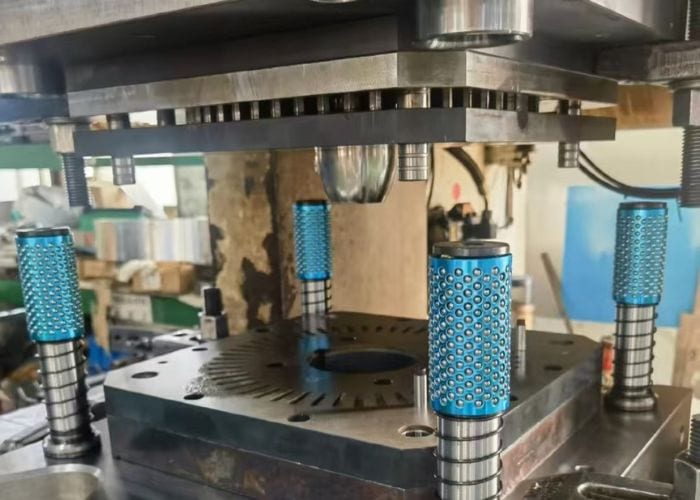
During a typical stamping operation, a metal sheet is positioned between a punch and a die. When the press delivers force, the material undergoes plastic deformation and takes the shape defined by the tooling. Depending on the die design, the process may involve operations such as blanking, bending, embossing, coining, or deep drawing.
Modern stamping presses can run at speeds of 60 to 1000 strokes per minute, allowing manufacturers to produce large quantities of identical components. Once the tooling is completed, thousands or even millions of parts can be manufactured with very consistent quality.
For example, many electronic connectors and automotive brackets are produced using progressive die stamping, where multiple forming operations occur sequentially in one die set. This allows manufacturers to achieve both high productivity and stable dimensional control.
Types Of Stamping Processes
Metal stamping includes several manufacturing methods designed to shape sheet metal into functional components. Different types of stamping processes are used depending on part geometry, production volume, and material thickness. Understanding these processes helps engineers choose the most efficient and cost-effective solution for manufacturing metal parts.
Common stamping processes include blanking, piercing, bending, embossing, and deep drawing. Each method uses a die and punch system to apply controlled pressure that plastically deforms the metal sheet into a desired shape.
For example, blanking separates a flat piece from sheet metal, while piercing creates holes or internal features. Bending changes the angle of a metal sheet without breaking it, and deep drawing forms deep or hollow components such as cups or enclosures.
Modern stamping presses can reach hundreds of strokes per minute, enabling manufacturers to produce large quantities of identical parts with consistent quality. In industries like automotive and electronics, these processes are often integrated into progressive die systems, allowing multiple operations to occur in a single production cycle.
Types Of Stamping Chart
Before selecting a stamping method, engineers and manufacturers must understand the different types of stamping processes used in modern metal fabrication. Each stamping type is designed for specific production needs, such as high-volume manufacturing, deep forming, or complex component geometry. The following chart compares the most common types of stamping used in industry, highlighting how each process works and where it is typically applied.
| Type Of Stamping | Process Description | Key Advantages | Typical Applications |
| Progressive Die Stamping | A continuous strip of metal passes through multiple stations, where different forming operations occur in sequence. | High production speed, excellent repeatability, ideal for large-volume manufacturing. | Automotive brackets, electronic connectors, hardware components. |
| Transfer Die Stamping | Individual parts are transferred from one die station to another during each press cycle. | Suitable for larger and more complex parts that cannot remain attached to a strip. | Structural components, automotive parts, appliance housings. |
| Deep Draw Stamping | A punch pulls sheet metal into a die cavity to form deep or hollow shapes. | Produces seamless cylindrical or box-shaped parts with high strength. | Metal containers, automotive fuel tanks, kitchen sinks. |
| Compound Die Stamping | Multiple cutting or shaping operations are completed in a single press stroke using a compound die. | High precision and efficient production for flat parts. | Washers, flat brackets, precision sheet metal components. |
| Fine Blanking | A specialized stamping process that produces smooth edges and tight tolerances with minimal secondary machining. | Excellent edge quality, high dimensional accuracy. | Gear components, automotive parts, precision mechanical components. |
Types Of Stamping Presses
Metal stamping presses are essential machines used to apply controlled force that shapes sheet metal into precise components. Different types of stamping presses are designed to meet various production requirements such as speed, forming force, and part complexity. Selecting the right press is critical for achieving efficient production, consistent quality, and lower manufacturing costs.
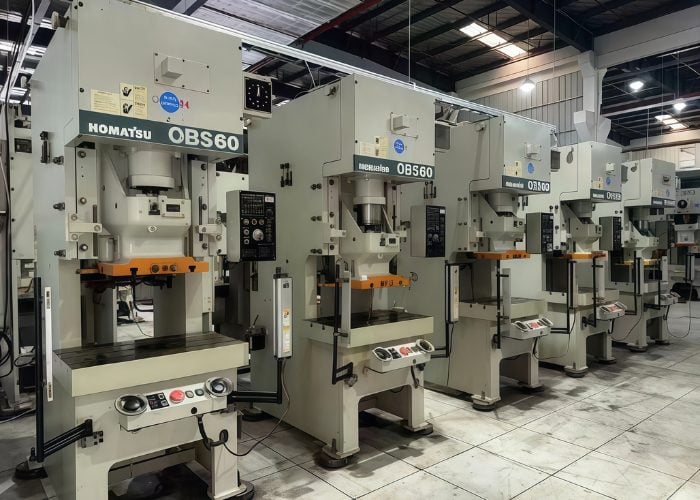
Mechanical Stamping Press
Mechanical presses are the most commonly used stamping machines in high-volume manufacturing. They use an electric motor connected to a crankshaft mechanism that converts rotational motion into vertical pressing force.
Because of their mechanical drive system, these presses can achieve extremely high operating speeds, typically ranging from 200 to over 1000 strokes per minute. This makes them ideal for mass production of small or medium sheet-metal components such as automotive brackets, electrical connectors, and appliance parts.
In progressive die stamping lines, mechanical presses are often integrated with automatic feeding systems to produce thousands of parts per hour while maintaining consistent dimensional accuracy.
Hydraulic Stamping Press
Hydraulic presses generate force through hydraulic cylinders and pressurized fluid. Unlike mechanical presses, the force can be precisely controlled throughout the entire stroke.
Although hydraulic presses usually operate at slower speeds, they provide higher forming flexibility and greater force capacity. This makes them suitable for deep drawing operations, thicker materials, and complex forming applications.
For example, manufacturers often use hydraulic presses when producing large structural components or deep metal housings where consistent pressure control is critical.
Servo Stamping Press
Servo presses are a newer type of stamping equipment that uses servo motors to control slide motion. Compared with traditional presses, they offer programmable motion profiles, improved energy efficiency, and better forming control.
Servo presses allow engineers to adjust speed, stroke position, and forming force during different stages of the stamping cycle. This capability is especially valuable when producing complex components or when working with advanced materials that require precise forming conditions.
Common Stamping Operations
Metal stamping involves several forming and cutting operations used to transform flat sheet metal into functional parts. These common stamping operations are essential in modern manufacturing because they allow engineers to create complex geometries with high precision and production efficiency.
Blanking
Blanking is one of the most fundamental stamping operations. In this process, a punch cuts the desired part shape from a larger sheet of metal. The removed piece becomes the finished blank.
Blanking is widely used in mass production because it provides high dimensional accuracy and fast cycle times. In industries such as automotive and electronics, blanking is often used to produce washers, brackets, and flat structural components.
Piercing
Piercing is used to create holes or internal cutouts in sheet metal. During the process, a punch forces through the metal sheet and removes a slug, forming precise holes for assembly or weight reduction.
Piercing operations are commonly combined with other stamping processes in progressive dies, allowing manufacturers to create multiple features in a single production cycle.
Bending
Bending changes the angle or shape of sheet metal without removing material. This operation is used to create flanges, channels, or structural reinforcement features.
In many manufacturing applications, bending helps improve the structural strength of metal parts while maintaining lightweight design.
Deep Drawing
Deep drawing is a forming operation used to produce hollow or cup-shaped components. A punch pushes sheet metal into a die cavity, causing the material to stretch and form deeper shapes.
This process is commonly used for metal housings, containers, and automotive parts, especially when seamless structures are required.
Materials Used In Metal Stamping
Selecting the right materials is critical in metal stamping because material properties directly affect formability, strength, and production efficiency. Different materials used in metal stamping are chosen based on factors such as mechanical performance, corrosion resistance, cost, and forming behavior during the stamping process.
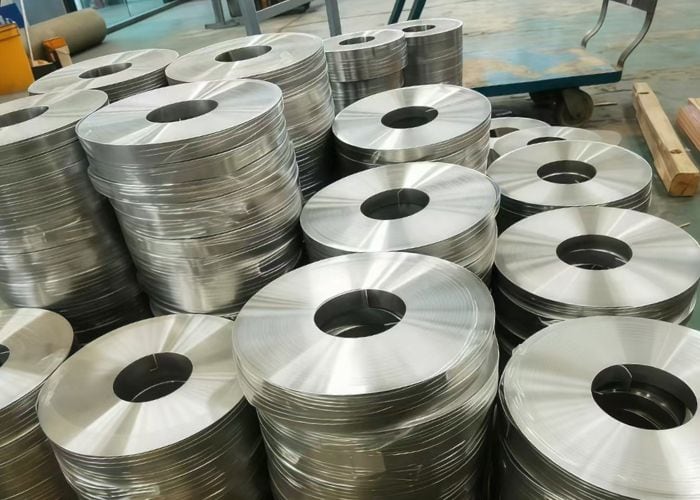
Steel
Steel is one of the most commonly used materials in metal stamping due to its strength, durability, and cost efficiency. Low-carbon steel is particularly suitable for stamping because it offers good ductility and formability.
In many automotive and industrial applications, stamped steel components provide structural strength while maintaining relatively low production costs.
Stainless Steel
Stainless steel is widely used when corrosion resistance and durability are required. It contains chromium (typically 10.5–18%) which forms a protective oxide layer on the surface.
Stamped stainless steel parts are commonly found in medical equipment, kitchen appliances, and food processing machinery, where hygiene and corrosion resistance are important.
Aluminum
Aluminum is valued for its low density (about 2.7 g/cm³) and excellent strength-to-weight ratio. These properties make it ideal for lightweight structures.
Stamped aluminum parts are widely used in industries such as automotive, aerospace, and electronics, where reducing weight can improve energy efficiency and product performance.
Copper And Brass
Copper and brass are often used in metal stamping when high electrical conductivity or corrosion resistance is required.
Copper has excellent electrical performance, while brass offers improved machinability and strength. These materials are commonly used for electrical connectors, terminals, and electronic components.
Applications Of Metal Stamping
Metal stamping plays an important role in modern manufacturing because it allows manufacturers to produce precise metal components quickly while maintaining consistent quality. Due to its high efficiency and scalability, stamping is widely applied in industries that demand large production volumes and reliable component performance.
Automotive Industry
The automotive industry is one of the largest users of metal stamping. Many vehicle components such as brackets, structural panels, clips, and connectors are produced through stamping.
Automotive manufacturers rely on stamping because it allows high-speed production while maintaining consistent tolerances. Large stamping presses can produce thousands of identical parts per hour, making the process highly suitable for vehicle mass production.
Electronics Industry
In the electronics industry, metal stamping is widely used to manufacture connectors, terminals, shielding components, and small precision brackets.
Because stamped parts can achieve excellent dimensional consistency, they are ideal for high-volume electronic devices such as smartphones, computers, and communication equipment.
Appliance Manufacturing
Household appliances such as washing machines, refrigerators, and air conditioners also rely heavily on stamped components.
Metal stamping is used to manufacture panels, structural supports, and mounting brackets, helping manufacturers maintain consistent quality while reducing production costs.
Aerospace And Industrial Equipment
In aerospace and industrial equipment, metal stamping is used for components that require both structural strength and lightweight design.
For example, thin aluminum or stainless steel parts can be stamped into precise shapes used in aircraft assemblies or industrial machines.
Advantages And Limitations Of Metal Stamping
Metal stamping is one of the most widely used manufacturing processes for producing sheet metal components at high speed and consistent quality. However, like any manufacturing method, metal stamping offers both advantages and limitations depending on the design complexity, production volume, and tooling requirements.
Advantages Of Metal Stamping
One of the biggest advantages of metal stamping is high production efficiency. Modern stamping presses can run at hundreds of strokes per minute, allowing manufacturers to produce thousands of identical parts within a short time.
Another key advantage is excellent dimensional consistency. Once the die tooling is developed, each stamped part can maintain stable tolerances, which is essential for industries such as automotive and electronics.
Metal stamping also provides low unit cost in mass production. Although tooling costs can be relatively high, the cost per part decreases significantly when large production volumes are required.
For example, many automotive brackets and electronic connectors are produced using progressive die stamping because it enables continuous high-speed production.
Limitations Of Metal Stamping
Despite its advantages, metal stamping also has certain limitations. One major limitation is the high initial tooling cost required to design and manufacture stamping dies.
Another limitation is that stamping is generally more suitable for high-volume production rather than small-batch manufacturing.
In addition, extremely complex three-dimensional geometries may require additional forming operations or secondary processes such as machining or welding.
How To Choose The Right Type Of Stamping Process?
Choosing the right stamping process is essential for achieving efficient production and stable product quality. Different types of stamping processes are suitable for different part geometries, materials, and production volumes. Engineers typically evaluate several factors before selecting the most appropriate stamping solution.
Production Volume
Production quantity strongly influences process selection. Progressive die stamping is ideal for high-volume production, allowing hundreds of parts to be produced per minute. For smaller production runs, simpler stamping setups may be more practical.
Part Geometry
Component geometry also determines the stamping method. Simple flat parts can be produced through blanking or piercing, while deeper or more complex shapes may require forming or deep drawing operations.
Material Properties
Material characteristics such as ductility, thickness, and strength affect forming performance. For example, low-carbon steel is easy to stamp, while aluminum is often selected for lightweight applications.
Stamping Vs CNC Machining
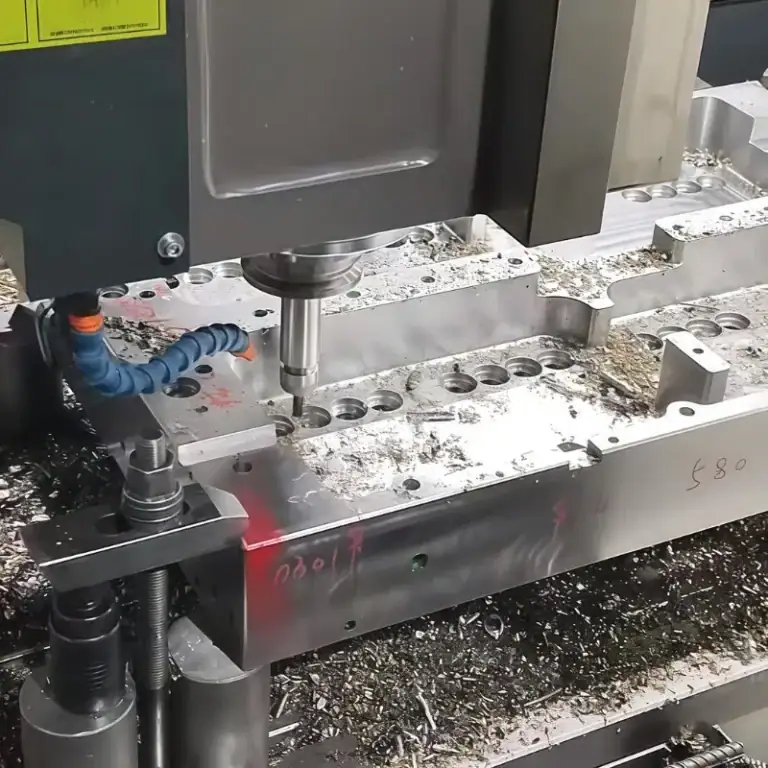
Metal stamping and CNC machining are two widely used manufacturing methods for producing metal components. While stamping excels in high-volume production with lower per-unit costs, CNC machining offers superior flexibility and precision for complex or low-volume parts. Understanding the differences between these processes helps engineers choose the most efficient method based on production scale, geometry complexity, and material requirements.
In stamping, sheet metal is shaped by applying high pressure through dies. Once the tooling is created, production speeds can exceed 300–1000 parts per hour, making it ideal for automotive brackets, electrical connectors, and appliance components.
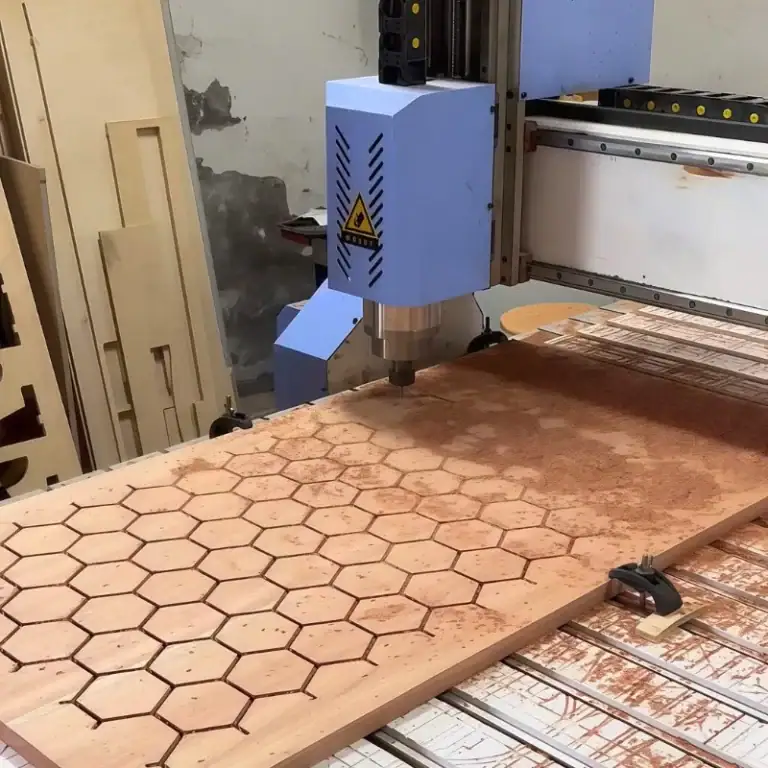
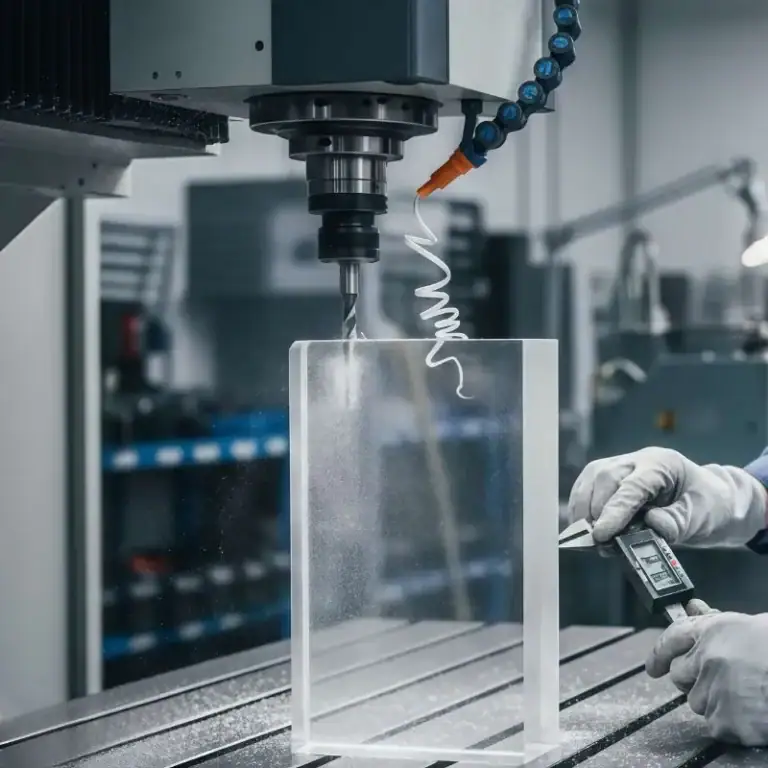
CNC machining, on the other hand, removes material from a solid block using rotating cutting tools. It can achieve tolerances as tight as ±0.005 mm and produce highly complex geometries that stamping cannot easily form.
For example, in one of our projects, thin aluminum brackets used in consumer electronics were produced through progressive die stamping, reducing unit costs by more than 60% compared with CNC machining. However, complex aerospace prototypes were manufactured using CNC machining due to tighter tolerance and design complexity.
| Factor | Metal Stamping | CNC Machining |
| Manufacturing Type | Forming process | Subtractive machining |
| Best For | High-volume production | Low-volume or complex parts |
| Tooling Cost | High initial tooling | Low setup cost |
| Unit Cost | Very low at scale | Higher per part |
| Production Speed | Extremely fast | Slower |
| Geometry Complexity | Limited | Very high |
| Typical Industries | Automotive, electronics | Aerospace, robotics, medical |
FAQs
What Type Of Metal Is Used For Automotive Stamping?
In automotive stamping projects I typically select steels, aluminum alloys, and occasionally stainless steel depending on structural requirements. Low-carbon steel (such as DC04 or SPCC) is used in about70%of stamped automotive panels due to its excellent formability. For lightweight components, I often use aluminum alloys like5052or6061, which reduce vehicle weight by up to30%while maintaining adequate stiffness and corrosion resistance.
Is Stamping A Type Of Metal Forming?
Yes, in my engineering experience stamping is one of the most widely used metal forming processes. It belongs to the sheet metal forming category, where material is shaped through dies and presses without removing material. In large-scale manufacturing, stamping can achieve production speeds of30–120strokes per minute, making it ideal for producing high-volume parts such as brackets, panels, and housings with consistent dimensional accuracy.
What Type Of Stamping Tooling Is Used?
In production environments I usually rely on several types of stamping tooling, including blanking dies, progressive dies, transfer dies, and forming dies. Progressive dies are particularly efficient for high-volume manufacturing because multiple operations can occur in a single press cycle. In many automotive stamping lines, progressive tooling improves production efficiency by up to40–60%while maintaining tolerances within±0.05mm.
What Type Of Parts Can Be Produced By Metal Stamping?
From my experience, metal stamping can produce a wide range of parts including automotive body panels, electronic housings, brackets, connectors, heat shields, and structural reinforcements. The process is especially effective for thin sheet components ranging from0.5mmto6mmthickness. In high-volume industries such as automotive and electronics, stamping can manufacture thousands of identical parts per hour with excellent repeatability and low unit cost.
Conclusion
Metal stamping is a high-efficiency manufacturing process used to produce precise metal parts at scale. By selecting the right stamping process, press type, and material, manufacturers can achieve consistent quality, fast production, and cost-effective mass manufacturing.
At TiRapid, we deliver precision metal stamping solutions including progressive dies and deep drawing. Ideal for automotive and electronics manufacturers. Upload your drawings today for fast quotes and expert engineering support.