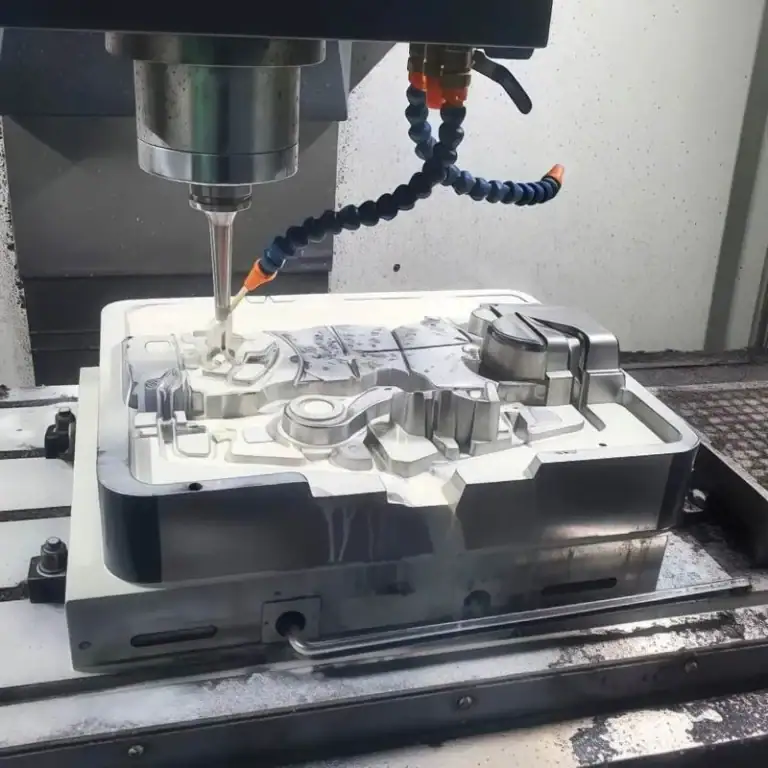
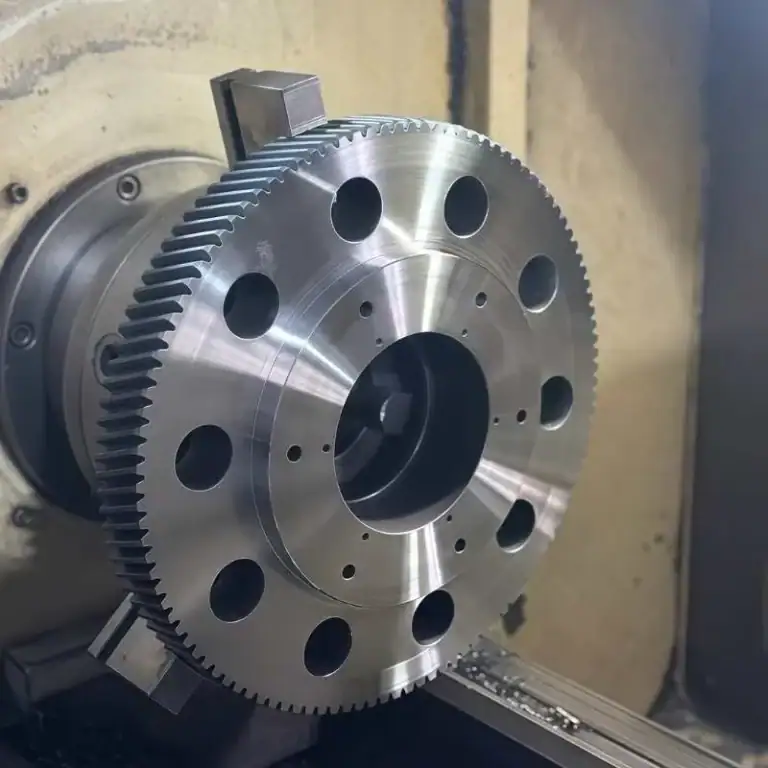
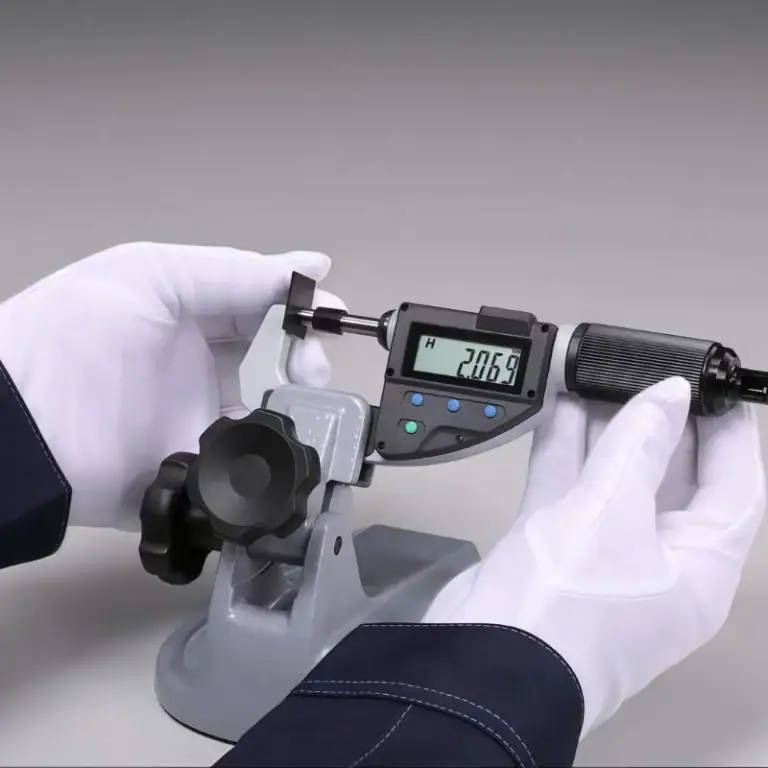
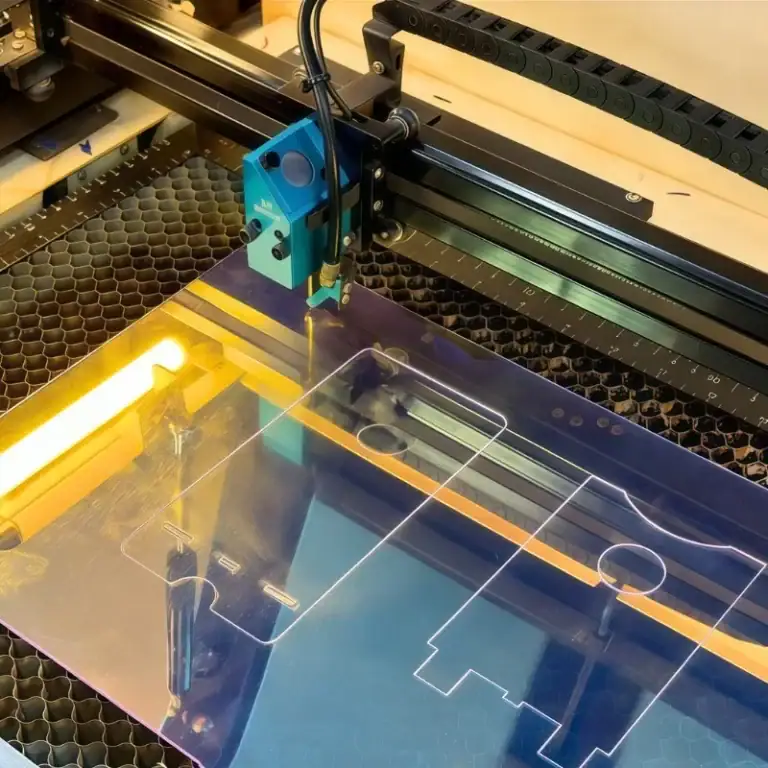
Different types of milling machine may appear similar at first glance, but their structure, rigidity, and axis capability lead to very different industrial outcomes. From conventional mills to advanced 5-axis systems, each plays a specific role in modern CNC machining manufacturing.
This article explains 15 types of milling machines and how to select the right one to improve precision, efficiency, and overall cost control in CNC machining manufacturing.
What Are the Different Types of Milling Machines?
Different types of milling machine can be classified into conventional, production-oriented, and CNC milling machines. These include vertical, horizontal, universal, bed-type, simplex, duplex, and 3-axis or 5-axis CNC mills, each designed to meet specific requirements in geometry, volume, and precision.
1. 3-Axis CNC Milling Machine
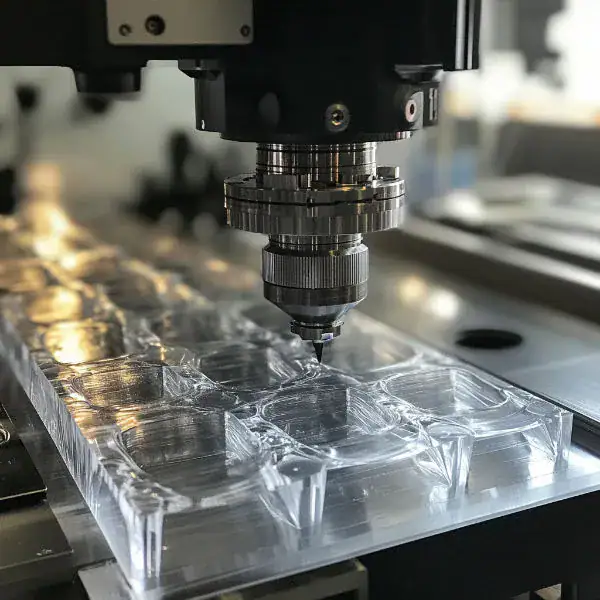
A 3-axis CNC milling machine moves along the X, Y, and Z axes to machine parts from a single primary direction. It is the most widely used CNC configuration in modern manufacturing due to its balance of precision, efficiency, and cost. The machine follows programmed toolpaths, ensuring consistent accuracy and repeatability.
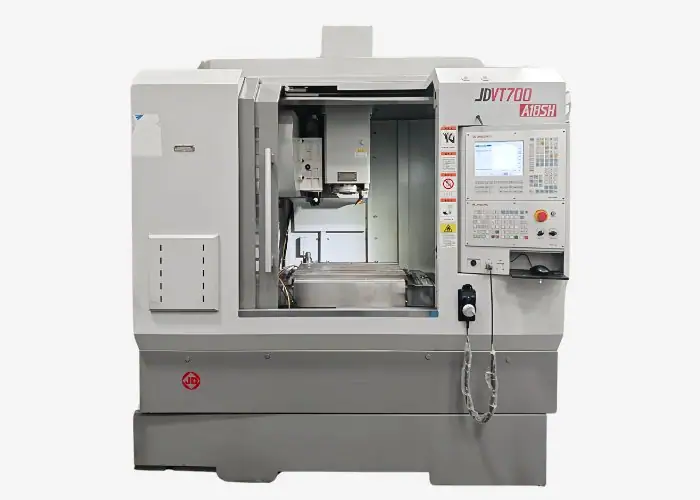
Precision 3-Axis CNC Milling Machine
Key advantages and applications:
- Suitable for facing, slotting, drilling, tapping, and contouring
- High repeatability and dimensional stability
- Efficient for prismatic and 2.5D geometry
- Widely used for housings, brackets, and fixtures
- Cost-effective for medium-volume production
2. 5-Axis CNC Milling Machine
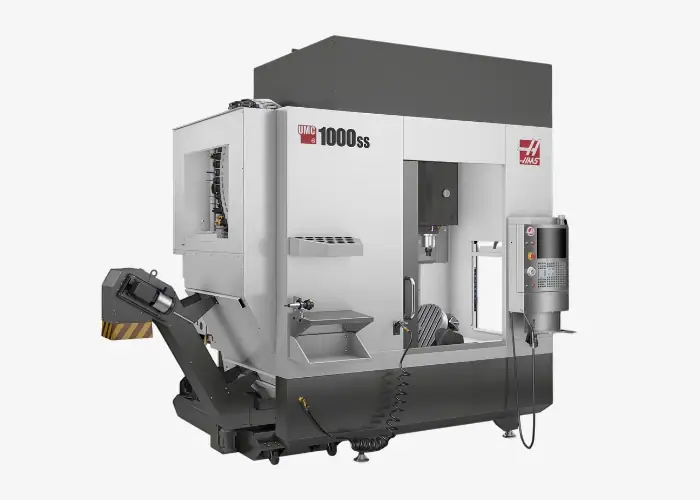
A 5-axis CNC milling machine adds two rotational axes to the standard linear movement, allowing the tool to approach the part from multiple directions. This reduces the need for re-clamping and improves positional accuracy between features. It is especially valuable for complex surfaces, deep cavities, and angled geometries.
Key advantages and applications:
- Ideal for complex surfaces and multi-angle features
- Fewer setups reduce tolerance stacking
- Improved surface finish on contoured parts
- Common in aerospace, medical, and mold industries
- Suitable for high-value precision components
3. Vertical Milling Machine
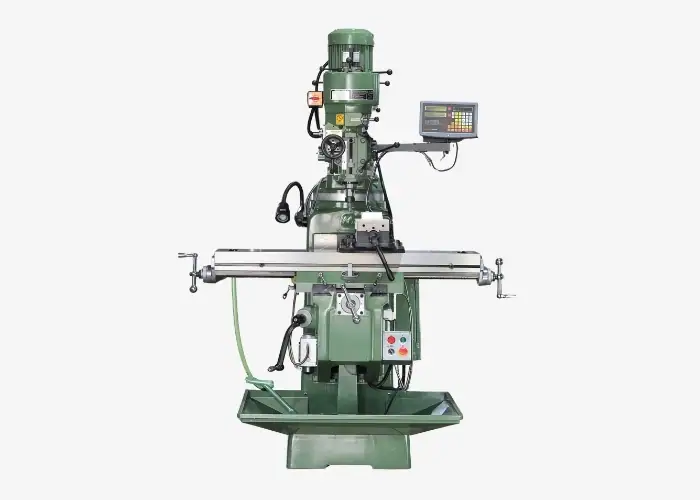
A vertical milling machine uses a vertically oriented spindle positioned above the worktable. This layout offers clear visibility of the cutting area and simplifies setup. It is one of the most common types of milling machine in general machining environments. Vertical mills are valued for their flexibility and ease of operation.
Key advantages and applications:
- Ideal for face milling, slotting, drilling, and pocketing
- Excellent visibility and easier tool alignment
- Suitable for prototype and small-batch production
- Commonly used for aluminum parts and fixtures
- Flexible for general machining tasks
4. Horizontal Milling Machine
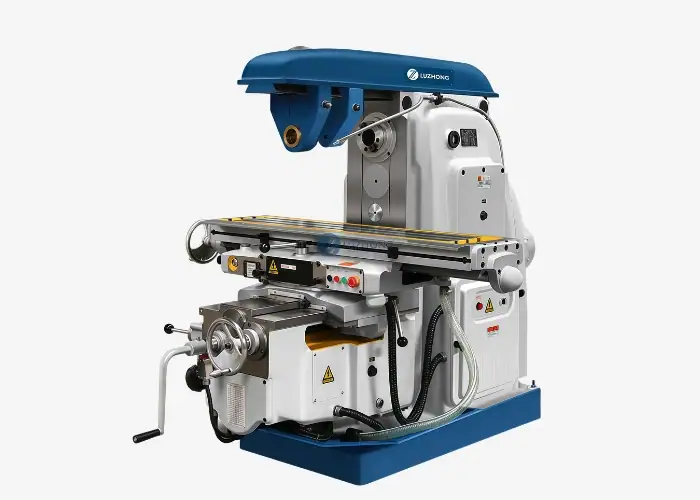
A horizontal milling machine features a horizontally oriented spindle, typically supported by an arbor system. This configuration increases rigidity and supports heavier material removal. It also improves chip evacuation during deep cutting operations. Horizontal mills are often selected for production environments requiring stability and efficiency.
Key advantages and applications:
- Higher rigidity for heavy cutting loads
- Better chip evacuation in deep cuts
- Suitable for slab and side milling
- Efficient for repetitive batch production
- Used for steel and structural components
5. Universal Milling Machine
A universal milling machine supports both vertical and horizontal machining through adjustable attachments. Its swivel table allows angled and complex setups without major reconfiguration. This makes it suitable for workshops handling varied part types. It is often chosen when flexibility is more important than specialization.
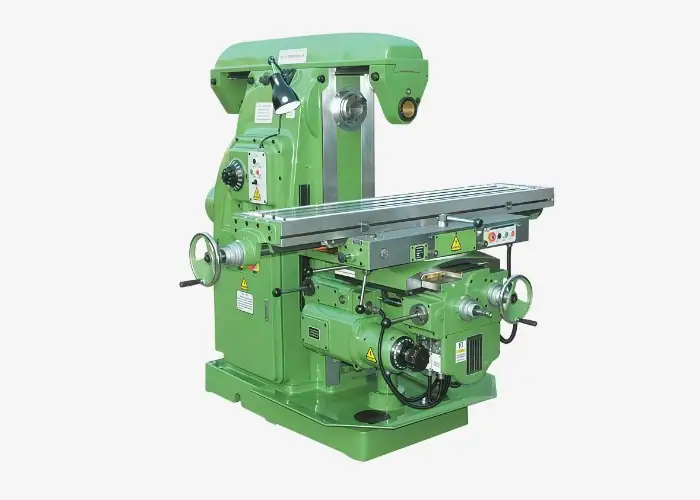
Key advantages and applications:
- Combines multiple machining orientations
- Suitable for angular operations
- Ideal for toolrooms and job shops
- Works with indexing and rotary devices
- Practical for mixed production environments
6. Column and Knee Type Milling Machine
A column and knee type milling machine uses a vertically adjustable knee to position the table relative to the spindle. This traditional structure is common in conventional milling machines. It provides stable support while allowing manual adjustment. It remains widely used for light to medium-duty operations.
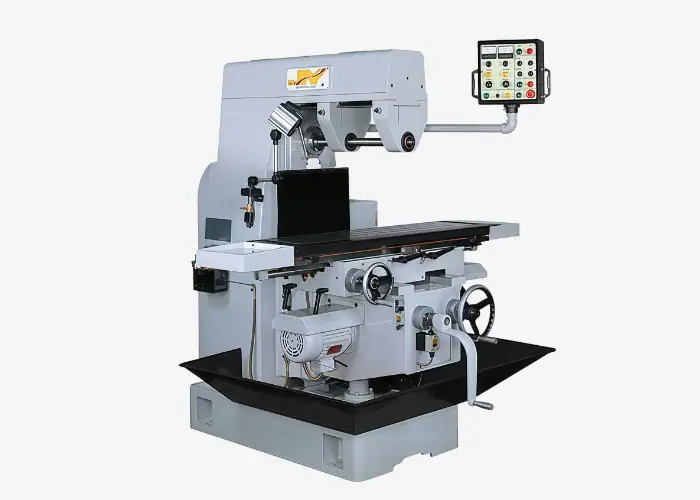
Key advantages and applications:
- Simple and reliable mechanical design
- Easy manual height adjustment
- Suitable for general-purpose machining
- Common in training and maintenance work
- Cost-effective for small workshops
7. Bed Type Milling Machine
A bed type milling machine uses a fixed bed structure that increases rigidity compared to knee-type designs. The table typically moves longitudinally while the spindle head adjusts vertically, reducing vibration and making it suitable for continuous production and medium-to-heavy cutting operations.
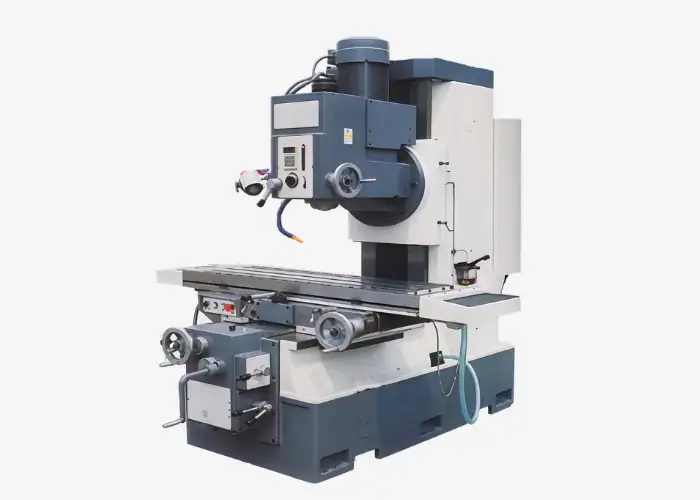
Key advantages and applications:
- Greater structural rigidity and reduced vibration
- Suitable for medium to heavy cutting loads
- Improved dimensional consistency in batch production
- Commonly used for steel, cast iron, and thicker plates
- Preferred for larger or heavier workpieces
8. Ram-Type / Turret Milling Machine
A ram-type or turret milling machine features a movable ram that allows flexible spindle positioning. The spindle head can shift or rotate without repositioning the workpiece, improving setup efficiency. This design is widely used in toolrooms and workshops where frequent part changes and varied machining tasks are required.
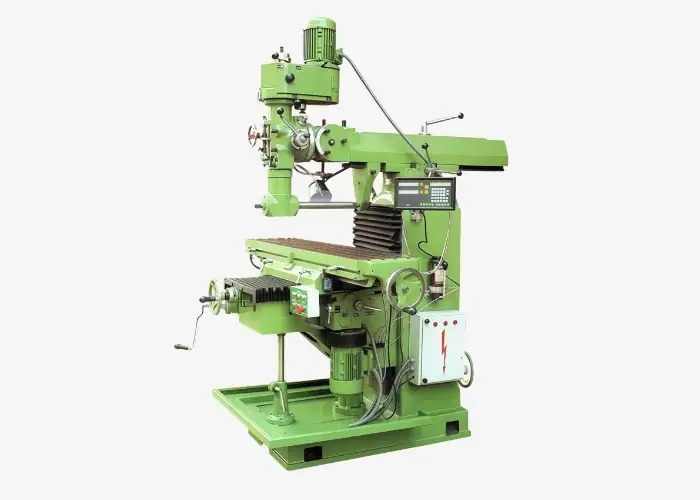
Key advantages and applications:
- Flexible spindle positioning for varied setups
- Suitable for angled and multi-step machining
- Ideal for repair, maintenance, and custom parts
- Common in toolrooms and general workshops
- Efficient for prototype and short-run production
9. Planer Type Milling Machine
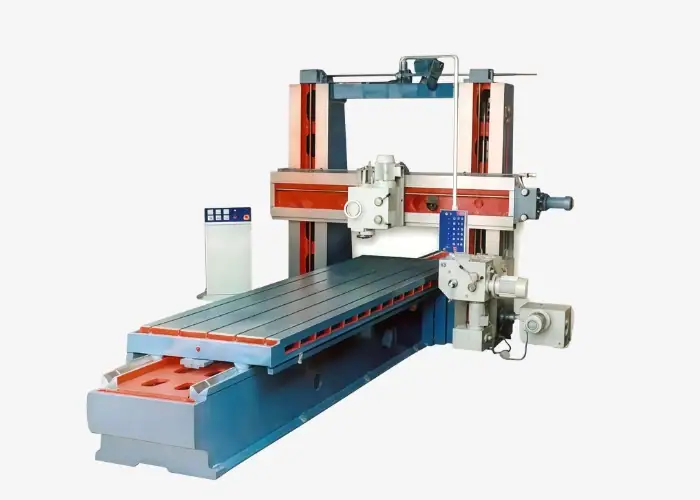
A planer-type milling machine is designed for machining large and heavy components beyond the capacity of conventional mills. It features a rigid frame and extended travel to support oversized workpieces while maintaining stability under high cutting forces. It is commonly used in heavy industries where large structural parts require accurate machining.
Key advantages and applications:
- Capable of handling large and heavy components
- High structural strength and load capacity
- Suitable for heavy-duty machining operations
- Used in heavy equipment and energy industries
- Ideal for machining large frames, bases, and structural plates
10. Bench Top Milling Machine
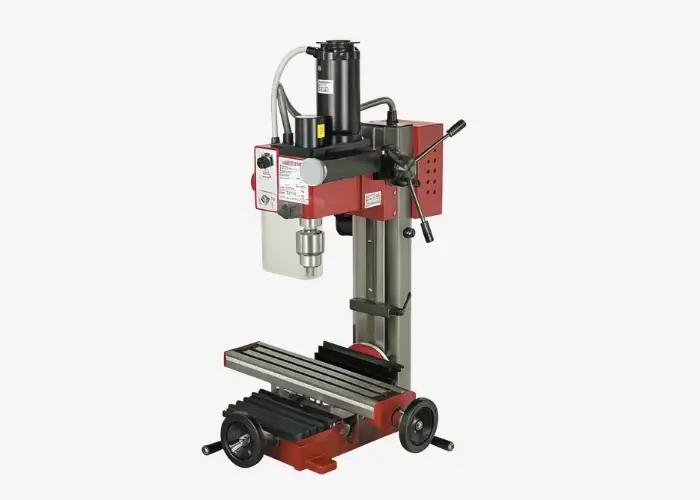
A bench top milling machine is a compact milling solution designed for small-scale operations. Its smaller footprint makes it suitable for limited workshop space, laboratories, and educational settings. Although not intended for heavy material removal, it can provide reliable precision for small parts. It is often chosen when flexibility and low investment cost are priorities.
Key advantages and applications:
- Compact and space-saving structure
- Suitable for small precision components
- Ideal for R&D, labs, and education
- Lower initial investment cost
- Easy installation and maintenance
11. Simplex Milling Machine
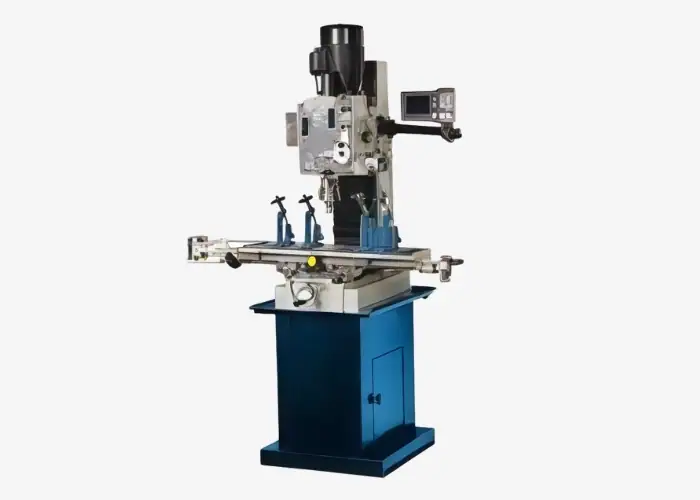
A simplex milling machine is designed to machine one surface at a time in a controlled production workflow. It focuses on stability and consistency for a single reference face. By standardizing one operation, it improves process control in repetitive tasks. This type is typically used when production efficiency depends on uniform single-face machining.
Key advantages and applications:
- Optimized for single-surface production
- Stable and repeatable machining results
- Suitable for repetitive batch operations
- Used for base surface and reference face preparation
- Helps maintain cycle time consistency
12. Duplex Milling Machine
A duplex milling machine is engineered to machine two faces in one coordinated setup. This configuration improves productivity by reducing repositioning and re-clamping. It also enhances dimensional control between parallel surfaces. Duplex systems are widely used in structured batch production environments.

Key advantages and applications:
- Simultaneous or sequential dual-face machining
- Improved parallelism and thickness control
- Higher throughput in batch manufacturing
- Reduced setup and handling time
- Suitable for structural and plate components
13. Triplex Milling Machine
A triplex milling machine extends the duplex concept by enabling three-face machining in a coordinated cycle. This reduces total machining time for multi-surface parts. It enhances production efficiency while maintaining dimensional consistency across faces. Triplex machines are typically used in high-volume manufacturing lines.

Key advantages and applications:
- Three-face machining within one cycle
- Reduced repositioning and handling
- Increased production efficiency
- Suitable for high-volume operations
- Improved consistency across multiple surfaces
14. Rotary Table Milling Machine
A rotary table milling machine incorporates a rotating worktable to enable indexed or continuous circular machining. This allows precise angular positioning of the workpiece during cutting. It is especially useful for evenly spaced hole patterns and radial features. Rotary tables can be integrated into both manual and CNC milling systems.

Key advantages and applications:
- Ideal for bolt circles and circular features
- Suitable for indexed hole and slot patterns
- Accurate angular positioning
- Improved repeatability and precision
- Commonly used for flanges and round components
15. Tracer / Pantograph Milling Machine
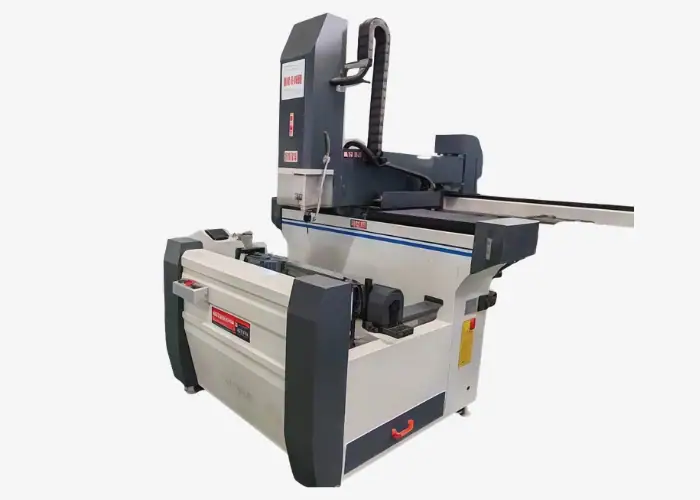
A tracer or pantograph milling machine replicates shapes by mechanically following a template or master pattern. Instead of relying on digital programming, it transfers contour geometry through a tracing mechanism. This approach was widely used before CNC systems became dominant. It remains applicable in certain legacy or template-based production processes.
Key advantages and applications:
- Accurate contour duplication from templates
- Suitable for mold and pattern manufacturing
- Reduces manual shaping effort
- Useful in non-programmed or legacy workflows
- Effective for repeated profile copying
Industrial Applications by Machine Type
Different types of milling machines are selected based on part complexity, precision requirements, and production volume. High-precision industries prefer multi-axis CNC systems, while heavy sectors prioritize rigidity and load capacity. The right machine choice directly affects cost, efficiency, and quality stability.
Below is a practical comparison of common industrial applications:
| Industry | Recommended Machine Type | Typical Parts | Key Requirement |
| Aerospace | 5-Axis CNC Milling Machine | Turbine blades, structural brackets, housings | Complex geometry, tight tolerance |
| Medical | 5-Axis CNC / 3-Axis CNC | Implants, surgical tools | High precision, smooth surface finish |
| Automotive | 3-Axis CNC / Horizontal Milling | Engine blocks, transmission parts | Batch production, efficiency |
| Mold & Die | 3-Axis CNC / 5-Axis CNC | Mold cavities, core inserts | Contour accuracy, surface finish |
| Heavy Equipment | Planer Type / Bed Type | Machine bases, frames | Rigidity, heavy cutting |
| Steel Fabrication | Horizontal / Bed Type | Structural plates, support blocks | Stability, high material removal |
| General Engineering | Vertical Milling Machine | Brackets, fixtures, tooling | Flexibility, cost control |
| Education & R&D | Bench Top Milling Machine | Small components, prototypes | Space efficiency, low investment |
| Mass Production Plates | Duplex / Triplex Milling | Parallel plates, structural parts | Multi-face consistency |
| Circular Components | Rotary Table Milling | Flanges, bolt circle parts | Accurate indexing |
How to Choose the Right Milling Machine?
The right type of milling machine should be selected based on part geometry, material properties, tolerance requirements, and production volume. Different machine structures offer varying levels of rigidity, flexibility, and efficiency, which directly affect machining performance and cost.
Key factors to consider:
Part Geometry:
Complex multi-angle features may require 5-axis CNC, while simple prismatic parts can be machined efficiently on 3-axis or vertical mills.
Material Type:
Harder materials such as steel or cast iron benefit from rigid machines like bed-type or horizontal mills.
Tolerance Requirements:
Tight dimensional and positional tolerances favor CNC systems with higher stability and precision control.
Production Volume:
High-volume production may justify duplex, triplex, or horizontal CNC setups to reduce cycle time.
Machining Operations:
Face milling, slotting, contouring, and multi-face machining require different machine capabilities.
Workholding & Setup:
Complex fixturing or frequent repositioning may require flexible spindle positioning or multi-axis support.
FAQs
What Does A Milling Machine Make?
In my work, a milling machine produces precision parts such as brackets, housings, and mold components. Different types of milling machines allow me to machine flat surfaces, slots, and complex contours using various types of cutters used in milling machine operations. With advanced types of CNC milling machines, I can achieve tolerances as tight as ±0.01 mm.
What Makes A Milling Machine Versatile?
A milling machine is versatile because different types of machining mills support multiple operations in one setup. When I use various types of CNC milling machine systems, especially multi-axis models, I can machine parts from different angles. This reduces setups and improves efficiency.
What Is The Difference Between Vertical And Horizontal Milling Machines?
The difference lies in spindle orientation and rigidity. Among the types of vertical milling machine, the spindle is perpendicular to the table for easier setup. Horizontal machines, another category within types of milling machines, provide greater rigidity and better chip evacuation for heavy cutting.
When Should I Use A 5-Axis CNC Milling Machine?
I use a 5-axis model when parts require complex geometry or multi-angle machining. Among the types of CNC milling machines, it offers the highest flexibility and accuracy. For aerospace and mold applications, it significantly reduces setup time and tolerance stacking.
Conclusion
Understanding aerospace CNC machining helps engineers balance precision, material performance, and manufacturing reliability. The right machining strategy depends on component design, material selection, tolerance requirements, and production scale.
At TiRapid, we support aerospace projects with advanced CNC machining and strict quality control. Whether for rapid prototypes or production parts, upload your design and get a tailored machining solution today.