Bolts are essential fasteners used across mechanical, structural, and industrial applications. This guide explains the most common types of bolts, focusing on bolt heads, thread types, and real-world applications. Learn how to identify, compare, and select the right bolt for strength, safety, and long-term reliability.
What Is a Bolt?
A bolt is a mechanical fastener designed to join two or more components together by applying clamping force. In most applications, a bolt works together with a nut and sometimes a washer to create a secure, load-bearing connection. Bolts are widely used in structural, mechanical, and industrial assemblies where strength, reliability, and serviceability are required.
Unlike screws, which are typically driven directly into a material, bolts usually pass through pre-drilled holes and rely on a nut to achieve proper preload. This makes bolts more suitable for applications where precise control of clamping force, repeated assembly, or high structural integrity is needed.
In engineering practice, bolts are commonly used to:
- Secure structural components and frames
- Assemble machinery and equipment
- Enable disassembly for maintenance or replacement
- Transfer tensile and shear loads safely between parts
Because bolts play a critical role in load transfer and joint integrity, selecting the correct bolt type is essential for both performance and safety.
Main Components of a Bolt
A standard bolt assembly consists of several key components, each serving a specific mechanical function. Understanding these components helps engineers evaluate load capacity, installation method, and long-term reliability.
Bolt Head
The bolt head provides the surface for applying torque during installation. It also distributes the clamping load across the contact surface. Different head styles are selected based on tool access, space constraints, and load requirements.
Bolt Shank (Shaft)
The shank is the unthreaded or partially threaded portion of the bolt body. Its diameter directly affects the bolt’s shear strength. In many structural applications, the shank is designed to carry shear loads rather than the threads.
Threads
Threads convert applied torque into clamping force. Thread type, pitch, and engagement length influence preload control, vibration resistance, and overall joint strength. Coarse threads are often preferred for general-purpose use, while fine threads offer better load control in precision applications.
Nut
The nut works together with the bolt threads to generate and maintain clamping force. Proper nut selection is critical to prevent loosening, stripping, or uneven load distribution.
Washer
Washers are used to distribute load, protect the mating surface, and improve preload consistency. In some cases, they also help prevent loosening caused by vibration or thermal cycling.
Types of Bolts by Head Style
Bolt head style determines how torque is applied, how load is distributed, and whether the bolt sits flush with or protrudes from the surface. Selecting the correct bolt head is critical for assembly efficiency, structural integrity, and maintenance access. In engineering applications, head style is often chosen based on tool clearance, space limitations, and required clamping force.
Hex Head Bolts
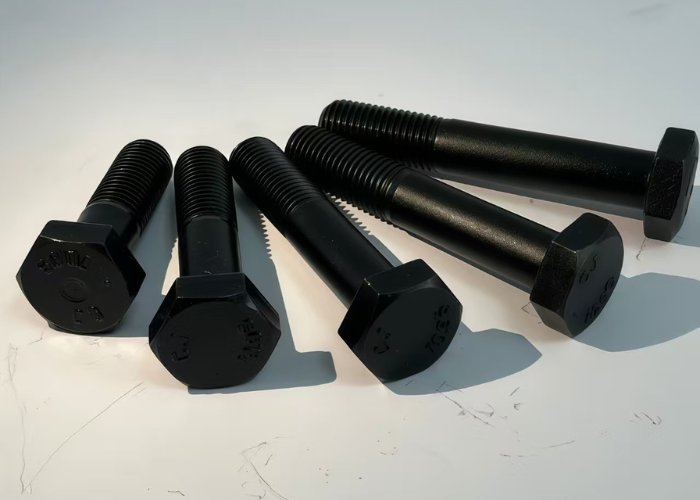
Hex head bolts are the most commonly used bolt type in mechanical and structural assemblies. Their six-sided head allows easy tightening and loosening using standard wrenches or sockets, making them ideal for applications where high torque is required. Hex head bolts are widely used in construction, machinery, automotive components, and industrial equipment, especially where strength, reliability, and easy maintenance are critical.
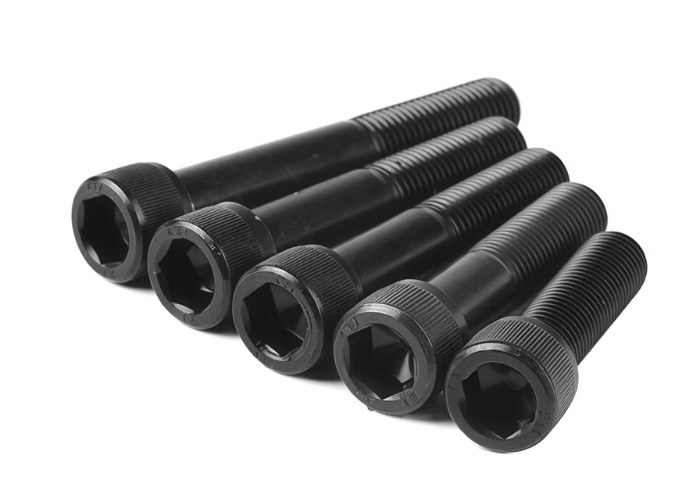
Socket Head Cap Bolts
Socket head cap bolts are designed for applications with limited space and restricted tool access. Featuring a cylindrical head with an internal hex drive, these bolts can deliver high clamping force while requiring minimal head clearance. They are commonly used in precision machinery, tooling fixtures, and automated equipment where compact design and strong fastening are essential.
Flat Head Bolts
Flat head bolts feature a countersunk head that allows the bolt to sit flush with or below the surface after installation. This design is ideal for applications where a smooth surface is required for safety, functionality, or aesthetics. Flat head bolts are frequently used in precision assemblies, moving components, and applications where protruding fasteners could interfere with operation.
Button Head Bolts
Button head bolts have a low-profile, rounded head that provides a clean appearance while maintaining adequate strength for moderate-load applications. Their smooth, dome-shaped head reduces snagging and improves visual appeal, making them suitable for visible assemblies, enclosures, and consumer-facing products where both function and appearance matter.
Carriage Bolts
Carriage bolts are identified by their rounded head and square neck beneath the head, which prevents the bolt from rotating during installation. This self-locking feature makes them particularly effective in wood and soft materials, where access to the bolt head may be limited. Carriage bolts are commonly used in wood structures, furniture, fencing, and light structural connections.
Types of Bolts by Thread Type
Bolt threads play a critical role in load distribution, clamping force, and resistance to loosening. Selecting the correct thread type improves joint reliability, especially under vibration or dynamic loads.
The most common bolt thread types include:
Coarse Thread Bolts
Coarse threads are easier to assemble, more tolerant of dirt or minor damage, and perform well in softer materials such as aluminum or wood. They are widely used in general-purpose and structural applications.
Fine Thread Bolts
Fine threads provide higher tensile strength and better resistance to loosening under vibration. They are commonly used in precision machinery, automotive, and aerospace applications where accurate preload control is required.
Metric vs Imperial Threads
Metric threads (ISO) are widely used globally, while imperial threads (UNC/UNF) are still common in North America. For international manufacturing and CNC machining, confirming thread standards is essential to avoid assembly issues.
Types of Bolts by Function and Application
Bolts are frequently classified by their functional role rather than geometry alone. This approach reflects how the fastener interacts with the joined materials and the type of load it is designed to handle. For engineers and buyers, application-based classification is often the most practical starting point.
Typical functional bolt types include:
Anchor Bolts
Anchor bolts are used to secure equipment, frames, and structural members to concrete foundations. Their primary role is to transfer tensile and shear loads into the concrete, making them essential for machinery bases, structural columns, racks, and support brackets. Anchor bolts are commonly selected based on load direction, edge distance, installation method (cast-in, expansion, or chemical), and whether the concrete may crack or experience vibration.
Lag Bolts (Lag Screws)
Lag bolts are heavy-duty fasteners designed mainly for wood-to-wood or wood-to-metal connections. They typically have coarse threads to grip wood fibers effectively and are installed directly into a pilot hole without a nut. Lag bolts are widely used in timber structures, mounting brackets, ledger boards, and heavy-duty fixtures where high holding power is needed. Key selection factors include shank diameter, thread engagement depth, and corrosion resistance for outdoor use.
Eye Bolts
Eye bolts are designed for lifting, rigging, and load handling applications, providing a secure attachment point for hooks, cables, or chains. They are commonly used in machinery moving, hoisting systems, and maintenance lifting points. Eye bolts must be selected based on rated load capacity, loading direction (in-line vs angled), and safety requirements. In critical lifting applications, using properly rated hardware and correct installation practices is essential.
U-Bolts
U-bolts are U-shaped fasteners with threaded ends, primarily used to clamp pipes, tubes, and other round components to a frame, bracket, or support. They are common in piping systems, automotive exhaust mounting, structural supports, and industrial equipment installations. Selection typically depends on pipe diameter, clamping force requirement, base material, and environment (indoor vs outdoor, corrosive exposure).
Blind Bolts
Blind bolts are designed for one-side installation when the rear side of the joint is not accessible, such as hollow sections, tubing frames, or enclosed assemblies. They are widely used in sheet metal assemblies, aerospace structures, and applications involving closed profiles. Blind bolts are selected based on grip range (material stack thickness), required load capacity, and the base material type, ensuring reliable fastening without needing back-side tooling.
Types of Anchor Bolts for Concrete
Anchor bolts are critical fasteners used to transfer loads from structural or mechanical components into concrete. Proper selection depends on load direction, installation method, and whether the anchor is installed before or after the concrete has cured.
Common types of anchor bolts for concrete include:
Cast-In Anchor Bolts
Cast-in anchor bolts are installed before the concrete is poured and become permanently embedded once the concrete cures. Because the anchor is fully integrated into the concrete structure, this type offers excellent load capacity and long-term stability. Cast-in anchor bolts are commonly used in structural foundations, heavy machinery bases, and columns where high tensile and shear strength are required and future removal is not expected.
Wedge Anchor Bolts
Wedge anchor bolts are expansion-type anchors designed specifically for solid concrete applications. When the bolt is tightened, the wedge expands against the concrete, creating a strong mechanical hold. These anchors are well-suited for heavy static loads and are widely used for securing equipment, supports, and structural components where high holding strength is critical.
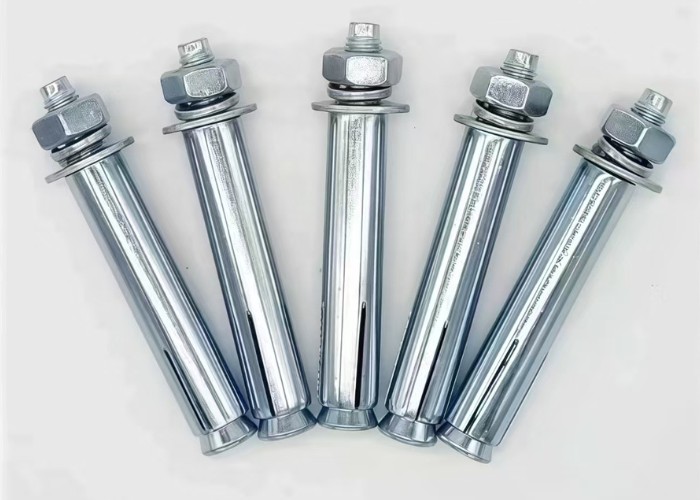
Sleeve Anchor Bolts
Sleeve anchor bolts feature an expansion sleeve that allows them to be used in a wider range of base materials, including concrete, brick, and masonry. Their versatile design makes them suitable for medium-duty fastening applications where consistent holding performance across different substrates is needed. Sleeve anchors are commonly used for mounting fixtures, frames, and light structural elements.
Chemical Anchor Bolts
Chemical anchor bolts use adhesive bonding rather than mechanical expansion to secure the threaded rod or bolt inside the concrete. This method provides high load capacity without inducing expansion stress in the base material, making chemical anchors ideal for cracked concrete, close edge distances, or vibration-prone environments. They are frequently used in high-load structural applications and seismic-resistant installations.
Types of Lag Bolts and Their Uses
Lag bolts, often referred to as lag screws, are heavy-duty fasteners primarily used for wood-to-wood or wood-to-metal connections. Unlike standard bolts, lag bolts are typically driven directly into the material and do not require a nut.
Standard Lag Bolts
Standard lag bolts (often called lag screws) are heavy-duty fasteners mainly used for wood-to-wood or wood-to-metal joints. They typically feature a coarse thread for strong bite in wood fibers and are installed by driving directly into a pilot hole without a nut. Standard lag bolts are widely used in general construction, framing, brackets, and mounting hardware where moderate to high holding power is needed.
Structural Lag Bolts
Structural lag bolts are designed for higher load capacity and more demanding structural connections. Compared with standard lag bolts, they are engineered for improved strength performance and are often used where design codes or verified load ratings matter. Typical applications include structural timber connections, ledger boards, and critical load-bearing joints where consistent clamp force and long-term joint reliability are required.
Stainless Steel Lag Bolts
Stainless steel lag bolts provide better corrosion resistance than carbon steel options, making them a strong choice for outdoor structures, coastal environments, and humid or chemically exposed areas. They are commonly used in decks, fences, marine-adjacent installations, and exterior mounting projects where rust prevention and long service life are critical. When selecting stainless
Types of Bolts Chart
Selecting the right bolt often requires comparing head style, thread type, and intended application side by side. This types of bolts chart provides a clear, engineering-focused overview of common bolt types, helping designers and buyers quickly narrow down suitable options during design, sourcing, and specification review.
| Bolt Type | Head Style | Thread Type | Typical Applications |
| Hex Head Bolt | Hex head | Coarse / Fine | Structural assemblies, machinery, automotive |
| Socket Head Cap Bolt | Socket head | Fine | High-strength connections, limited space assemblies |
| Flat Head Bolt | Countersunk head | Fine | Flush mounting, precision equipment |
| Button Head Bolt | Rounded low-profile | Fine | Light to medium load, aesthetic assemblies |
| Carriage Bolt | Rounded head with square neck | Coarse | Wood structures, furniture |
| Anchor Bolt | Hex or threaded rod | Coarse | Concrete foundations, structural anchoring |
| Wedge Anchor Bolt | Hex nut end | Coarse | Heavy-duty concrete fastening |
| Sleeve Anchor Bolt | Hex nut end | Coarse | Concrete, brick, masonry |
| Chemical Anchor Bolt | Threaded rod | Coarse | High-load, vibration-resistant anchoring |
| Lag Bolt (Lag Screw) | Hex head | Coarse | Wood-to-wood, wood-to-metal structures |
| Eye Bolt | Eye head | Coarse | Lifting, rigging, load handling |
| U-Bolt | U-shaped threaded ends | Coarse | Pipe and tube clamping |
| Blind Bolt | Various | Fine | One-side installation, hollow structures |
Bolt Materials and Surface Treatments
Bolt material and surface finish directly affect strength, corrosion resistance, and service life. Proper selection ensures reliable performance under mechanical and environmental stress.
Common Bolt Materials
Carbon Steel
Carbon steel is the most cost-effective and widely used bolt material for general industrial applications. It offers good strength, easy machinability, and broad availability across standard sizes. Carbon steel bolts are commonly used in machinery assemblies, fixtures, and structural joints where corrosion exposure is limited or where protective coatings are applied. For projects balancing performance and budget, carbon steel is often the default choice.
Alloy Steel
Alloy steel bolts are engineered for higher strength, better fatigue performance, and improved load reliability compared with standard carbon steel. They are frequently used in high-load connections, critical structural joints, and dynamic assemblies where repeated stress cycles or vibration are present. If your joint requires higher clamp force, better resistance to loosening, or consistent performance under heavy mechanical loads, alloy steel fasteners are often the preferred option.
Stainless Steel
Stainless steel bolts are selected primarily for corrosion resistance and long-term durability. They are commonly used in outdoor environments, marine conditions, food processing equipment, and medical or clean-room assemblies where rust prevention is essential. Stainless steel is also valued for appearance and surface cleanliness. In corrosion-prone environments, matching the stainless grade to the exposure conditions is critical for reliable service life.
Aluminum and Specialty Alloys
Aluminum bolts and specialty alloy fasteners are used when weight reduction, non-magnetic behavior, or specific environmental performance matters. They are common in aerospace, robotics, electronics, and weight-sensitive assemblies. Specialty alloys may also be selected for extreme temperatures or chemical exposure. In practice, these materials are typically chosen when standard steels are too heavy, too reactive, or not compatible with the operating environment.
Common Surface Treatments
Zinc Plating
Zinc plating provides basic corrosion protection and is one of the most common finishes for general-purpose bolts. It is suitable for indoor use or mild environments, and it helps reduce rusting during storage and normal service. Zinc-plated bolts are widely used in industrial equipment, enclosures, and general assembly work where exposure to moisture is occasional rather than continuous.
Black Oxide
Black oxide is often applied to improve appearance, reduce glare, and provide a mild level of corrosion resistance. Because it is a thin conversion finish, it does not significantly change dimensions and is sometimes preferred where fit and tolerance are important. However, black oxide alone offers limited corrosion protection and typically performs best when combined with oiling or when used in controlled indoor environments.
Phosphate Coating
Phosphate coating improves surface lubricity, enhances wear resistance to some extent, and provides excellent paint or powder-coating adhesion. It is often used as a base layer in automotive and industrial applications where bolts may be painted, coated, or assembled under friction-sensitive conditions. Phosphate coatings are also helpful for reducing galling risk and improving assembly consistency, especially for steel fasteners.
Hot-Dip Galvanizing
Hot-dip galvanizing is a heavy-duty zinc coating designed for strong outdoor corrosion protection. It is commonly used in construction, infrastructure, and outdoor structural assemblies exposed to weather, moisture, or harsher environments. Because the coating is thicker than standard zinc plating, it can affect thread fit and dimensional tolerances, so galvanizing is typically selected when durability and corrosion resistance outweigh tight-fit requirements.
How to Choose the Right Type of Bolt
Selecting the right bolt requires more than matching size and thread. Engineers should evaluate the full application context to avoid premature failure or overdesign.
Key selection factors include:
Load Type – Tension, shear, or combined loading
The first step is understanding how the joint is loaded.
- Tension (pull-out): The bolt resists a force trying to separate the parts along the bolt axis. Here, clamp force and proper preload are critical to prevent joint separation and fatigue.
- Shear: The bolt resists lateral forces trying to slide the parts relative to each other. In many designs, the shank (unthreaded portion) is preferred to carry shear because threads can reduce shear capacity and concentrate stress.
- Combined loading: Common in real assemblies (e.g., brackets, frames). You typically need a bolt/joint design that manages both preload and side loading without loosening.
A common mistake is selecting a bolt based only on “strength grade” without checking whether the joint is tension-dominated, shear-dominated, or both.
Environment – Corrosion, temperature, moisture, vibration
Environmental conditions often determine material and coating more than load does.
- Corrosion & moisture: Outdoor exposure, humidity, salt spray, or chemicals can quickly degrade unprotected steel fasteners. Stainless steel, galvanizing, or appropriate plating becomes necessary.
- Temperature: Elevated temperature can reduce strength and affect preload retention, thermal cycling can also promote loosening.
- Vibration: Repeated vibration can back off nuts and reduce clamp force over time. In vibration-prone assemblies, choose proper thread engagement, locking methods, and consider how the joint is preloaded and maintained.
A common failure mode is not corrosion “rusting,” but corrosion reducing thread engagementor causing seizure/galling, making maintenance impossible.
Material Compatibility – Prevent galvanic corrosion
When dissimilar metals are in contact (especially with moisture present), galvanic corrosion can occur, accelerating material loss in the more “active” metal.
- Example risk scenarios include aluminum structures fastened with certain steel or stainless bolts in wet environments.
- To reduce risk, consider compatible material pairings, surface coatings, insulating washers, or barrier layers.
Ignoring galvanic effects can lead to premature joint weakening, seized fasteners, or cosmetic corrosion that becomes a customer complaint.
Installation Method – Tool access, one-side vs two-side assembly
The best bolt on paper can be the wrong choice if it cannot be installed correctly.
- Tool access: If the assembly has limited clearance, you may need socket head bolts instead of hex head bolts, or you may need a lower-profile head style.
- One-side vs two-side assembly: If the backside cannot be reached for a nut, consider blind bolts, threaded inserts, or alternative fastening strategies.
- Repeatability: In production, a bolt that is hard to access often causes inconsistent torque and inconsistent clamp force, increasing quality variation.
Installation constraints should be considered early, not after the design is finalized.
Maintenance Requirements – Ease of inspection and replacement
Maintenance expectations affect both bolt type and joint design.
- If frequent inspection or replacement is expected, choose standard, easy-to-source bolt types and head styles that are easy to access with common tools.
- In harsh environments or critical safety joints, design for clear visual inspection (head markings, accessibility) and avoid finishes that hide corrosion damage.
- Consider whether the fastener may seize (corrosion/galling) over time—this strongly influences material, coating, and lubrication choices.
A practical rule: if a bolt is difficult to reach, it’s rarely torqued or inspected correctly in the field.
Common Bolt Standards and Specifications
Bolt standards ensure dimensional consistency, mechanical performance, and global compatibility. Understanding common standards helps engineers source and manufacture bolts correctly.
Common international bolt standards include:
ISO – Global metric fastener standards
ISO standards are widely used worldwide for metric fasteners and provide unified requirements for dimensions, thread profiles, mechanical properties, and tolerances. In engineering drawings, ISO references help ensure a bolt is interchangeable across global supply chains. ISO standards are commonly used in international manufacturing, automotive, industrial equipment, and electronics where metric threads and globally recognized specifications are preferred.
DIN – German industrial standards widely used in Europe
DIN standards originate from Germany and are heavily used across Europe. Many DIN fastener specifications overlap with ISO, but DIN designations are still frequently referenced in European drawings and procurement lists. In practice, you will often see DIN numbers used to specify a bolt form, head style, and dimensional requirements. For global sourcing, it’s important to confirm the exact DIN designation to avoid confusion between similar-looking fasteners with different tolerances or features.
ASTM – Material and mechanical property standards common in North America
ASTM standards are commonly used in North America to define the material requirements, mechanical properties, and testing methods for bolts and fasteners. Rather than focusing only on geometry, ASTM specifications often emphasize strength, hardness, chemical composition, and performance under load. ASTM references are especially common in structural, construction, energy, and infrastructure projects where compliance and verified mechanical performance are critical.
ANSI – Dimensional and performance standards for imperial fasteners
ANSI standards are widely used for imperial (inch-based) fasteners and define thread series, dimensional requirements, and performance expectations. You will often encounter ANSI-related specifications in U.S.-based equipment, machinery, and legacy systems that use UNC/UNF threads. When working with imperial fasteners, ANSI standards help ensure compatibility with standard tooling, nuts, and tapped holes, reducing assembly risk in mixed-supply environments.
For custom CNC-machined bolts, clearly specifying the standard is critical to ensure fit, strength, and compliance.
FAQs
What Are The Types Of Bolts
From an engineering perspective, bolts can be classified into several major types based on head style, thread design, and functional application. In practice, I usually group bolts into structural bolts, machine bolts, anchor bolts, lag bolts, carriage bolts, eye bolts, and U-bolts. These categories cover over 90% of industrial and construction use cases. Each type is designed to handle specific load conditions, installation constraints, and environmental requirements.
What Bolt Type Is Strongest?
From my engineering experience, high-strength alloy steel bolts are the strongest in standard industrial use. ISO12.9 or SAE Grade8 bolts typically offer tensile strengths above1200MPa and yield strengths exceeding1100MPa. These bolts are heat-treated and designed for high-load, high-stress applications such as heavy machinery, automotive assemblies, and structural joints. While specialty fasteners exist, Grade12.9 alloy steel bolts represent the strongest widely used commercial bolt category.
What’s Stronger, Screws Or Bolts?
I generally consider bolts stronger than screws in load-bearing applications. Bolts are designed to work with nuts and clamp parts together, allowing them to handle higher tensile and shear loads. Screws rely on threads cut directly into the material, which limits load capacity. For example, a Grade8 bolt can handle over30% higher tensile load than a comparable screw of the same diameter. In structural and mechanical joints, bolts are the preferred choice.
How To Read Bolt Type?
I read bolt types by checking head markings, dimensions, and standards. Head markings indicate strength grade, such as8.8,10.9,12.9 or radial lines for SAE grades. Diameter and thread pitch define size, while material is identified through specifications or certifications. Surface finishes like zinc plating or QPQ also provide functional clues. By combining markings, standards, and material data, I can accurately determine a bolt’s strength, application range, and compliance level.
Conclusion
Understanding the different types of bolts is essential for building safe, reliable, and serviceable assemblies. By considering bolt head design, thread type, application, material, environment, and standards together, engineers and buyers can avoid common fastening mistakes and improve long-term performance.
At TiRapid, we support engineers with custom bolt machining, material selection guidance, and tight-tolerance manufacturing. Whether you need prototypes or production volumes, our CNC capabilities help you get the right fasteners—built for your exact application. Contact TiRapid to discuss your bolt requirements with an experienced manufacturing team.