From small electric motors to massive wind turbines, bearings are essential components that allow machines to move smoothly while reducing friction and wear. However, different mechanical systems require different types of bearings depending on load capacity, rotational speed, and motion direction. Choosing the correct bearing type is critical for improving performance, reliability, and service life in mechanical systems.
This article explores the most common bearing designs, including ball bearings, roller bearings, and linear bearings. It explains how each bearing works, the loads it supports, and the industries where it is commonly used. Understanding the different types of bearings helps engineers, designers, and manufacturers select the right solution for efficient and reliable machine operation.
What Are Bearings?
Bearings are essential mechanical elements that enable smooth motion while minimizing friction and wear between moving parts. They are widely applied in equipment such as electric motors, industrial machinery, and mechanical systems to support loads and control rotational or linear movement.
In mechanical systems, bearings allow components such as shafts or wheels to rotate smoothly. They reduce friction by separating surfaces and supporting loads during operation.
Most bearings can support two types of loads:
- Radial load – force perpendicular to the shaft
- Axial load – force parallel to the shaft
Rolling bearings typically reduce friction by up to 90% compared with sliding contact, which is why they are widely used in high-speed machinery.
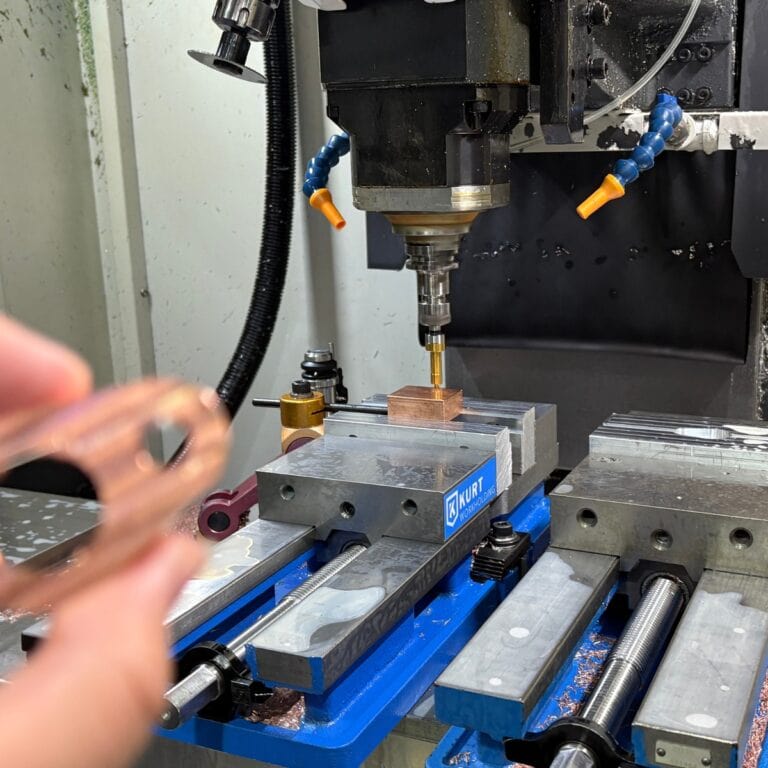
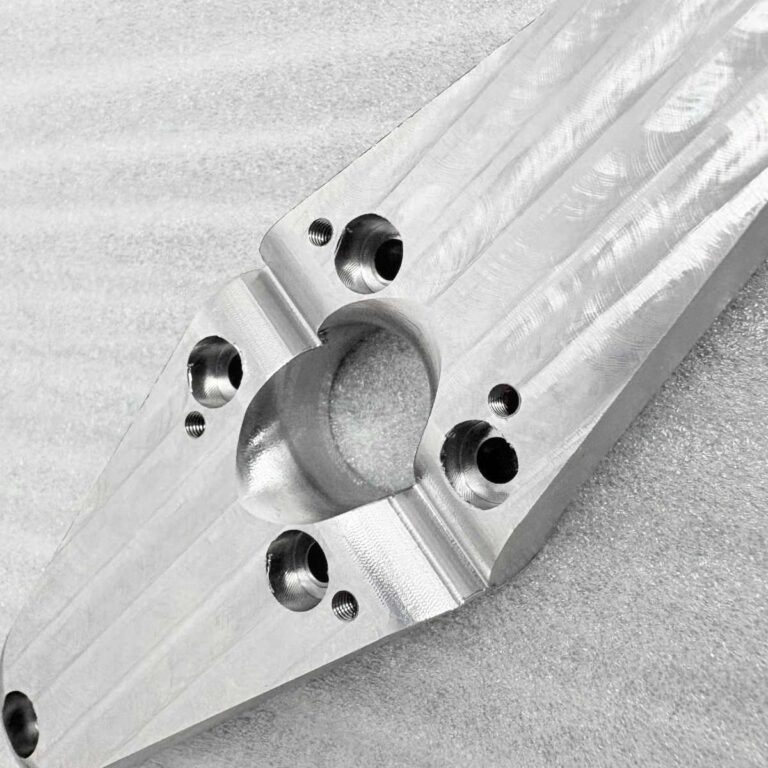
In practical applications, bearings are used in equipment such as automotive transmissions, industrial gearboxes, wind turbines, and CNC machines where reliable motion control is essential. These systems are commonly produced by a CNC machining manufacturer, which relies on precision bearings to ensure stable performance and long service life.
Types Of Bearings Chart
Different machines require different bearing designs to handle specific loads, speeds, and motion directions. For example, ball bearings are ideal for high-speed applications with light loads, while roller bearings are better suited for heavier loads. The comparison chart below summarizes the most common types of bearings and their typical uses in engineering and manufacturing.
| Bearing Type | Load Type | Key Features | Common Applications |
| Ball Bearings | Radial & light axial | Low friction, high speed capability | Electric motors, fans, household appliances |
| Roller Bearings | Heavy radial load | Large contact area, high load capacity | Gearboxes, conveyors, industrial machinery |
| Thrust Bearings | Axial load | Designed to support axial forces | Automotive transmissions, rotating shafts |
| Plain Bearings | Radial load | Simple design, low cost | Heavy machinery, construction equipment |
| Needle Bearings | Radial load | Compact design with high load capacity | Automotive components, gear systems |
| Tapered Roller Bearings | Combined loads | Handles radial and axial loads | Wheel hubs, automotive systems |
Ball Bearings
Ball bearings are among the most commonly used bearing types in mechanical systems. They consist of small spherical balls positioned between the inner and outer raceways, which reduce friction and allow smooth motion.
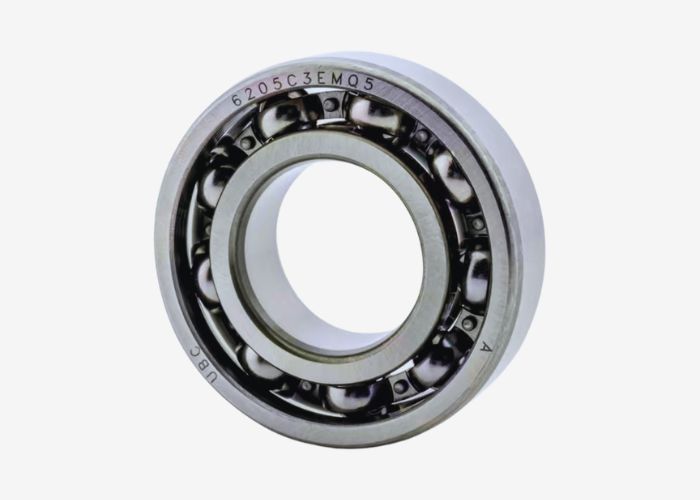
In most ball bearing designs, a cage is incorporated to maintain equal spacing between the balls and prevent them from touching each other. This structure helps ensure smooth rotation, minimize wear, and enhance the overall stability of the bearing.
Ball bearings are capable of supporting both radial loads (forces acting perpendicular to the shaft) and light axial loads (forces acting parallel to the shaft). Thanks to their versatility and efficiency, they are widely used in equipment such as electric motors, fans, pumps, conveyors, and household appliances.
Typical advantages of ball bearings include:
- Low friction and smooth operation
- High speed capability
- Simple design and easy maintenance
- Widely available and cost-effective
However, compared with roller bearings, ball bearings usually have a lower load capacity because the contact area between the balls and raceways is relatively small.
Roller Bearings
Roller bearings are built to carry heavier loads than ball bearings because they use cylindrical rolling elements rather than spherical balls. The larger contact area between the rollers and raceways allows them to support greater radial loads, making them widely used in industrial machinery.
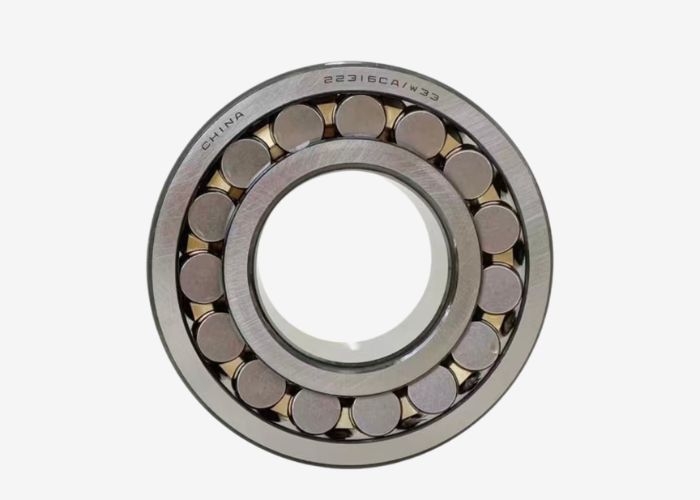
The main advantage of roller bearings comes from their line contact with the raceway rather than point contact. This allows the load to be distributed over a larger surface, significantly increasing load capacity.
Common roller bearing types include:
- Cylindrical roller bearings
- Tapered roller bearings
- Needle roller bearings
- Spherical roller bearings
In heavy machinery such as gearboxes, conveyors, and mining equipment, roller bearings can support loads several times higher than ball bearings of similar size. For example, spherical roller bearings are often used in wind turbines and steel processing equipment, where shafts operate under high radial loads and vibration.
Thrust Bearings
Thrust bearings are designed to support axial loads, which are forces acting parallel to a rotating shaft. They are commonly used in machinery where components must withstand pushing forces while maintaining stable and smooth rotation.
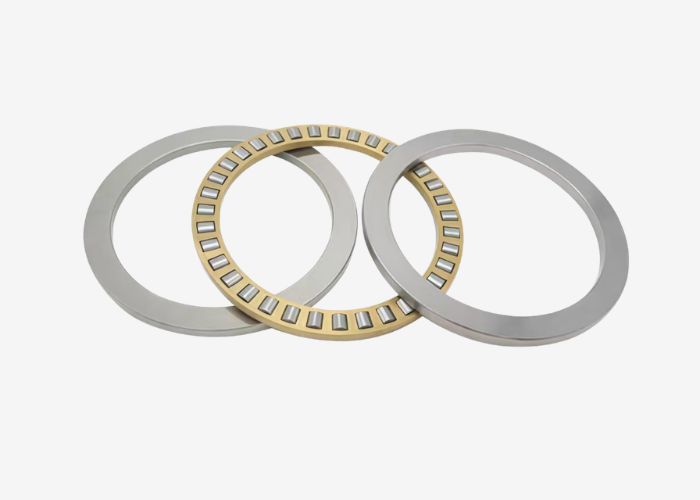
Unlike radial bearings that carry loads perpendicular to the shaft, thrust bearings handle loads along the shaft axis. Their structure usually consists of washers, rolling elements (balls or rollers), and a cage that keeps the rolling elements evenly spaced.
In many engineering systems, axial forces are generated during operation. For example, automotive transmissions, turbine shafts, and marine propeller systems all produce axial loads that must be absorbed to prevent misalignment and excessive wear.
Common types of thrust bearings include:
- Ball thrust bearings
- Roller thrust bearings
- Tapered thrust bearings
Ball thrust bearings are suitable for high-speed but relatively light loads, while roller thrust bearings provide higher load capacity due to their larger contact area.
In heavy equipment such as turbines and industrial compressors, thrust bearings help maintain shaft alignment and reduce friction, ensuring reliable operation even under continuous axial loads.
Plain Bearings
Plain bearings, also known as sleeve bearings or bushings, are one of the simplest and most widely used bearing types in mechanical systems. Instead of using rolling elements like balls or rollers, plain bearings support motion through sliding contact between surfaces.
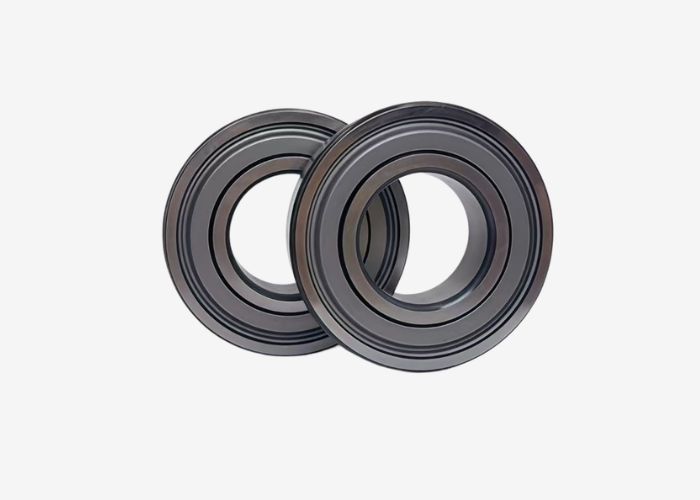
A plain bearing typically consists of a cylindrical sleeve installed inside a housing. The rotating shaft moves directly against the bearing surface, usually with lubrication to reduce friction and wear. Because of their simple design, plain bearings are compact, durable, and cost-effective.
Compared with rolling bearings, plain bearings can handle very high loads and shock loads, although they generally operate at lower speeds. Many plain bearings use materials such as bronze, brass, polymer composites, or PTFE-lined metal to improve wear resistance and reduce friction.
In industrial equipment, plain bearings are often used in hydraulic cylinders, heavy machinery, turbines, and automotive suspension systems. For example, in large industrial presses, plain bearings are commonly chosen because they can tolerate heavy loads and harsh operating conditions.
Bearing Materials
The performance and lifespan of a bearing largely depend on the materials used in its construction. Different materials are selected according to factors such as load capacity, operating speed, temperature conditions, corrosion resistance, and lubrication requirements. Selecting the appropriate material helps extend bearing life, reduce friction, and ensure reliable performance in various environments.
1.Bearing Steel
Bearing steel is the most widely used material for rolling bearings such as ball bearings and roller bearings. High-carbon chromium steel offers excellent hardness, wear resistance, and fatigue strength. Because of these properties, bearing steel is commonly used in automotive components, electric motors, and industrial machinery.
2.Stainless Steel
Stainless steel bearings are designed for environments that require corrosion resistance and cleanliness. They are commonly used in food processing equipment, medical devices, and marine applications where exposure to moisture or chemicals is common.
3.Ceramic Materials
Ceramic bearings use materials such as silicon nitride for rolling elements. These materials are lighter, harder, and more heat resistant than steel. Ceramic bearings are commonly used in high-speed equipment, aerospace applications, and precision machinery where low friction and high performance are essential.
4.Bronze And Copper Alloys
Bronze and copper alloys are frequently used in plain bearings. These materials provide good wear resistance and excellent compatibility with lubricants. They are commonly found in heavy machinery, hydraulic systems, and construction equipment.
5.Polymer And Composite Materials
Polymer bearings are made from materials such as PTFE, nylon, or reinforced composites. They offer advantages such as low friction, corrosion resistance, and self-lubricating properties, making them suitable for light-duty machinery and environments where lubrication is difficult.
Applications Of Bearings
Bearings are critical components in modern machinery because they allow smooth motion while minimizing friction and wear. Almost every mechanical system that involves rotation or movement relies on bearings to improve efficiency, stability, and service life.
Automotive Industry
The automotive industry relies heavily on bearings for reliable performance. Bearings are used in wheel hubs, transmissions, engines, steering systems, and electric motors. For example, tapered roller bearings in wheel hubs allow vehicles to support heavy loads while maintaining smooth rotation at high speeds.
Industrial Machinery
Industrial machines such as gearboxes, conveyors, compressors, and pumps require bearings to handle continuous operation and heavy loads. Roller bearings and spherical bearings are commonly used to improve durability and reduce maintenance in manufacturing environments.
Electric Motors
Electric motors depend on bearings to maintain accurate shaft rotation and minimize friction. Ball bearings are widely used in fans, pumps, HVAC systems, and household appliances because they can operate efficiently at high speeds with low noise.
Aerospace Industry
In aerospace applications, bearings must meet strict requirements for precision, reliability, and weight reduction.Aircraft engines, landing gear assemblies, and flight control systems all depend on high-performance bearings to maintain safe and reliable operation.
Energy And Power Systems
Bearings are also critical in energy equipment such as wind turbines, generators, and turbines. Large spherical roller bearings are often used in wind turbines to support heavy loads and accommodate shaft misalignment under varying wind conditions.
Bearing Vs Bushing
Bearings and bushings are both used to reduce friction and support moving parts in mechanical systems, but their working principles and applications are different. Bearings typically use rolling elements to enable smooth rotation, while bushings rely on sliding contact. Understanding the differences helps engineers choose the most suitable solution for speed, load, and durability requirements.
| Feature | Bearing | Bushing |
| Structure | Uses rolling elements (balls or rollers) | Simple sleeve with sliding surface |
| Friction Type | Rolling friction | Sliding friction |
| Speed Capability | Suitable for high-speed applications | Typically used in low-speed systems |
| Load Capacity | Moderate to high depending on type | Often good for heavy loads |
| Maintenance | May require lubrication and maintenance | Often self-lubricating or low maintenance |
| Typical Applications | Motors, gearboxes, automotive systems | Heavy machinery, construction equipment |
How To Choose The Right Bearing?
Selecting the right bearing is essential for ensuring reliable machine performance and long service life. Engineers typically evaluate several key factors, including load type, operating speed, working environment, and installation space. Choosing an appropriate bearing design helps reduce friction, improve efficiency, and minimize maintenance costs.
1.Load Type And Capacity
One of the first factors to consider is the type of load the bearing must support. Radial bearings handle forces perpendicular to the shaft, while thrust bearings support axial loads. In many applications, bearings must handle combined loads, requiring designs such as tapered roller bearings.
2.Operating Speed
Different bearing types perform differently at various speeds. Ball bearings are generally suitable for high-speed applications, while roller bearings are better for heavy-load, moderate-speed systems. Proper lubrication is also important to maintain stable performance at higher speeds.
3.Working Environment
Environmental conditions can significantly affect bearing performance. When choosing bearing materials and seals, factors such as temperature, moisture, dust, and chemical exposure must be carefully considered.For example, stainless steel bearings are often used in corrosive or hygienic environments.
4.Space And Installation Requirements
Machine design may limit the available installation space. Compact bearings such as needle bearings or thin-section bearings are often used when space is restricted. Proper mounting and alignment are also critical for ensuring stable operation and preventing premature failure.
FAQs
What Are The Different Types Of Linear Bearings?
In my engineering experience, linear bearings are mainly classified into several functional types based on load capacity and motion accuracy. Common options include ball linear bearings, roller linear bearings, plain linear bearings, and recirculating linear guide systems. Ball linear bearings are widely used because they reduce friction by up to90% compared with sliding contact. In precision automation systems, linear guide rails can achieve positioning accuracy within±0.01mm.
What Are The Two Major Categories Of Bearings?
I generally divide bearings into two primary categories: rolling bearings and plain bearings. Rolling bearings use balls or rollers to reduce friction and can lower rotational resistance by approximately70–95% compared with direct surface contact. Plain bearings, also called sleeve bearings, rely on sliding motion and are often used in high-load or low-speed applications. In industrial machinery, rolling bearings account for nearly80% of all bearing installations due to their efficiency and durability.
What Is A Type C Bearing?
In my experience, a Type C bearing usually refers to a bearing with internal radial clearance classified as C3 or similar standards. This type of clearance is slightly larger than normal clearance and helps compensate for thermal expansion and high-speed operation. Type C bearings are commonly used in electric motors, gearboxes, and industrial machinery where operating temperatures may exceed80°C.
How To Find Bearing Type?
When identifying a bearing type, I typically start by checking the bearing number engraved on the outer ring. This code reveals information such as bearing series, internal design, and dimensions. For example, a bearing labeled6205indicates a deep groove ball bearing with a25mm bore diameter. Measuring bore size, outer diameter, and width can also help confirm the bearing type accurately.
Conclusion
Bearings enable smooth motion, reduce friction, and support loads in mechanical systems. Different types of bearings are designed for specific speeds, loads, and applications. Choosing the right bearing improves machine efficiency and durability.
At TiRapid, we provide precision CNC machining services to manufacture custom bearing housings, shafts, and mechanical components for industries such as automotive, robotics, and industrial equipment.