Automotive plastics have become essential materials in modern vehicle manufacturing. From lightweight structural components to interior and exterior parts, these high-performance plastics improve durability, reduce weight, and enhance design flexibility. Compared with traditional metal components, plastics help manufacturers produce vehicles that are lighter, more fuel-efficient, and easier to manufacture at scale.
Understanding the different types of automotive plastics and their properties helps engineers choose the right materials for safety, performance, and cost efficiency in modern vehicle design.
What Are Automotive Plastics?
Automotive plastics are specialized polymer materials used to manufacture vehicle components. These materials are engineered to provide a balance of lightweight properties, strength, durability, and design flexibility, making them essential in modern vehicle manufacturing.
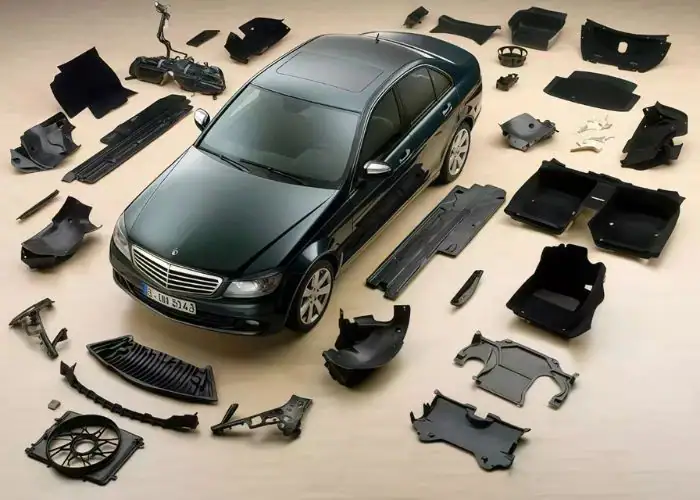
In the automotive industry, plastic materials are increasingly used to replace traditional metal parts in many vehicle components. Because plastics are significantly lighter than metals, they help reduce overall vehicle weight, which can improve fuel efficiency and decrease emissions. Research indicates that substituting metal parts with plastics can lower vehicle weight by approximately 10–30%, depending on the design.
Automotive plastics are typically divided into thermoplastics and engineering plastics. Common materials include polypropylene (PP), acrylonitrile butadiene styrene (ABS), polycarbonate (PC), and polyamide (PA). These materials offer properties such as impact resistance, heat resistance, corrosion resistance, and excellent moldability.
In practical applications, automotive plastics appear in dashboards, bumpers, lighting housings, connectors, and engine covers. For example, polypropylene is widely used for bumpers due to its lightweight structure and impact resistance, while polycarbonate is commonly used for headlamp lenses because of its transparency and heat stability.
Common Types of Automotive Plastics
Modern vehicles depend on various plastic materials to achieve lightweight designs, enhanced durability, and greater flexibility in component design. Each type of plastic offers distinct mechanical and thermal characteristics, making it suitable for specific automotive parts. Understanding the common automotive plastic types allows engineers to select materials that meet performance, safety, and production requirements.
Polypropylene (PP)
Polypropylene is among the most widely used plastics in the automotive industry because of its low weight, strong chemical resistance, and cost-effectiveness. It is commonly applied in parts such as bumpers, battery housings, interior trim panels, and underbody protection components. PP also provides good fatigue resistance, which makes it suitable for components that experience repeated mechanical stress.
Acrylonitrile Butadiene Styrene (ABS)
ABS is widely recognized for its strong impact resistance and excellent surface finish. These characteristics make it suitable for interior automotive components such as dashboards, center consoles, instrument panels, and decorative trims. In addition, ABS is easy to mold and can produce detailed surface textures required for interior styling.
Polycarbonate (PC)
Polycarbonate is valued for its high transparency, toughness, and heat resistance. In automotive applications, PC is commonly used for headlamp lenses, lighting housings, and transparent covers. Its optical clarity and strength make it an excellent alternative to glass in many lighting components.
Polyamide (Nylon / PA)
Polyamide, commonly known as nylon, is a high-performance engineering plastic with excellent strength, wear resistance, and thermal stability. It is widely used in engine compartments, including intake manifolds, gears, connectors, and structural brackets where high mechanical performance is required.
Polyvinyl Chloride (PVC)
PVC is a versatile plastic known for its durability, flexibility, and electrical insulation properties. In vehicles, PVC is commonly used in wire insulation, interior coatings, seals, and cable protection systems.
These materials represent the core plastics used in automotive design and manufacturing. By selecting the appropriate plastic material, manufacturers can optimize vehicle performance, reduce weight, and improve long-term reliability.
Types of Automotive Plastics Chart
Automotive manufacturers rely on a wide range of plastic materials to produce lightweight, durable, and cost-efficient vehicle components. Different plastics offer unique properties such as impact resistance, heat resistance, chemical stability, and design flexibility. The following chart highlights the most common types of automotive plastics, their key characteristics, and typical applications in modern vehicles.
| Plastic Type | Key Properties | Typical Automotive Applications |
| Polypropylene (PP) | Lightweight, chemical resistant, low cost | Bumpers, battery housings, interior trim |
| ABS (Acrylonitrile Butadiene Styrene) | High impact strength, good surface finish | Dashboards, interior panels, trim components |
| Polycarbonate (PC) | High transparency, heat resistance | Headlamp lenses, lighting housings |
| Polyamide (Nylon / PA) | High strength, excellent wear resistance | Engine covers, gears, under-hood components |
| PVC (Polyvinyl Chloride) | Flexible, durable, good insulation | Wire insulation, interior coatings |
| PBT (Polybutylene Terephthalate) | Heat resistance, electrical stability | Electrical connectors, sensor housings |
| PMMA (Acrylic) | High optical clarity, weather resistance | Tail lights, display covers |
| HDPE (High-Density Polyethylene) | Chemical resistance, toughness | Fuel tanks, fluid reservoirs |
Thermoplastics Used in Automotive Industry
Thermoplastics are the most widely used category of plastics in the automotive industry because they can be melted, molded, and reshaped multiple times without significant degradation. Their lightweight nature, design flexibility, and recyclability make them ideal materials for modern vehicle manufacturing.
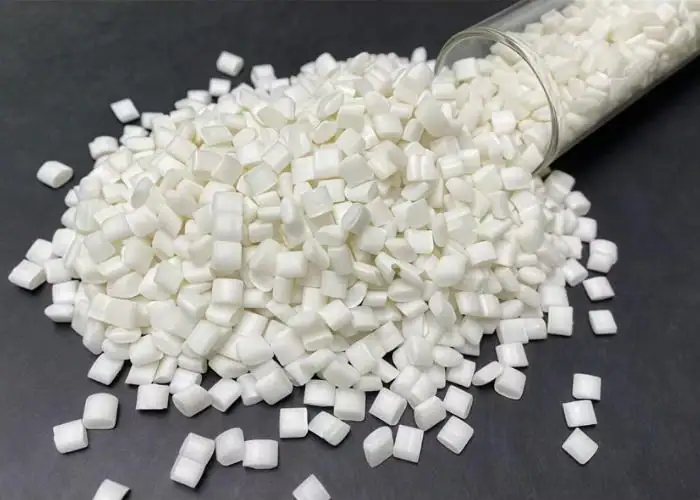
Thermoplastics soften when heated and solidify when cooled, allowing manufacturers to produce complex parts using processes such as injection molding and thermoforming. This property enables efficient mass production while maintaining consistent part quality. Compared with thermosetting plastics, thermoplastics are easier to recycle and modify during manufacturing.
In the automotive industry, thermoplastics are widely used in both interior and exterior vehicle components. Their excellent impact resistance, chemical stability, and cost efficiency make them suitable for large-volume production.
Polypropylene (PP)
Polypropylene is one of the most common thermoplastics used in automotive manufacturing. It offers low density, good chemical resistance, and high fatigue strength. Typical applications include bumpers, battery cases, interior panels, and underbody shields.
Acrylonitrile Butadiene Styrene (ABS)
ABS is widely used for automotive interior components because of its strong impact resistance and smooth surface finish. It is commonly found in dashboards, instrument panels, center consoles, and interior trim pieces.
Polycarbonate (PC)
Polycarbonate provides excellent transparency, high impact strength, and heat resistance. In vehicles, it is commonly used for lighting components such as headlamp lenses and protective covers.
Polyvinyl Chloride (PVC)
PVC is valued for its flexibility, durability, and electrical insulation properties. It is often used in automotive wiring insulation, interior coatings, and protective coverings.
These thermoplastic materials enable manufacturers to design lightweight and durable automotive components while maintaining efficient and scalable production processes.
Engineering Plastics Used in Cars
Engineering plastics are high-performance polymer materials designed to deliver superior strength, heat resistance, and dimensional stability. In automotive engineering, these materials are widely used in demanding environments where standard plastics cannot meet mechanical or thermal requirements.
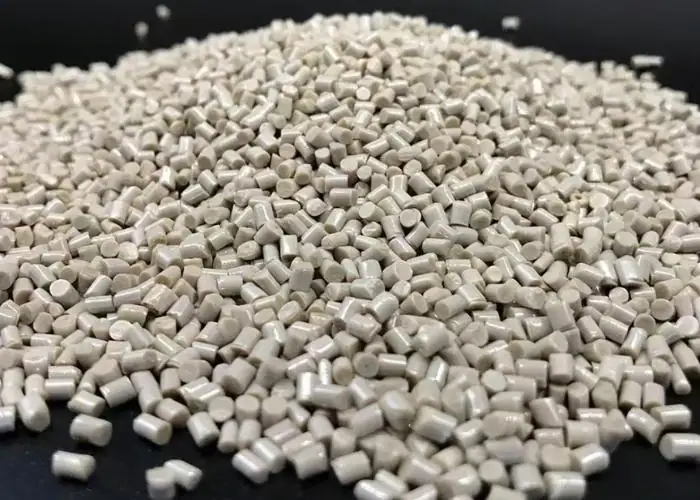
Compared with general-purpose plastics, engineering plastics provide improved mechanical properties, including higher tensile strength, better wear resistance, and greater temperature tolerance. Many automotive engineering plastics can operate continuously at temperatures above 120–200°C, making them suitable for components located near engines or electrical systems.
These materials are commonly used in structural automotive parts, electrical components, and under-the-hood applications where reliability and durability are critical.
Polyamide (PA / Nylon)
Polyamide, commonly known as nylon, is one of the most widely used engineering plastics in the automotive industry. It offers excellent mechanical strength, abrasion resistance, and thermal stability. PA materials are often used for engine covers, intake manifolds, gears, and structural brackets.
Polybutylene Terephthalate (PBT)
PBT is a strong engineering thermoplastic known for its electrical insulation properties and chemical resistance. It is widely used in automotive electrical connectors, sensors, and electronic housings, particularly in high-temperature environments.
Polyphenylene Sulfide (PPS)
PPS is a high-performance engineering plastic with outstanding heat resistance and chemical stability. It can withstand temperatures exceeding 200°C, making it ideal for fuel system components, pump parts, and high-temperature engine components.
Polyether Ether Ketone (PEEK)
PEEK is considered one of the most advanced engineering plastics used in automotive and aerospace applications. It provides exceptional strength, wear resistance, and thermal stability. Although it is more expensive, PEEK is often used in high-performance automotive components such as bearings, seals, and precision mechanical parts.
Engineering plastics enable manufacturers to replace metal components with lightweight polymer materials while maintaining mechanical performance. This contributes to improved fuel efficiency, reduced emissions, and more flexible automotive design.
Types of Plastics Used in Automotive Parts
Different automotive components require specific plastic materials depending on their mechanical, thermal, and environmental requirements. From interior panels to engine components, plastics are carefully selected to balance strength, durability, weight reduction, and manufacturing efficiency.
Automotive parts operate under various conditions such as vibration, heat, chemical exposure, and mechanical stress. As a result, manufacturers choose different plastic materials based on the functional requirements of each component. Lightweight plastics also help reduce vehicle weight, which can improve fuel efficiency and overall performance.
Plastics Used in Interior Parts
Interior automotive components often prioritize aesthetics, impact resistance, and comfort. Materials such as ABS, polypropylene (PP), and polycarbonate blends are commonly used in dashboards, door panels, center consoles, and interior trim pieces. These plastics provide good surface quality and design flexibility.
Plastics Used in Exterior Components
Exterior automotive parts must withstand weather exposure, temperature changes, and mechanical impacts. Plastics like polypropylene (PP), ABS, and polycarbonate (PC) are widely used in bumpers, grilles, mirror housings, and exterior trim. These materials provide durability, impact resistance, and corrosion resistance.
Plastics Used in Engine and Under-Hood Components
Engine compartments expose materials to high temperatures, vibration, and chemical contact. High-performance plastics such as polyamide (PA), PBT, and PPS are commonly used in intake manifolds, connectors, engine covers, and fluid system components because they maintain strength and stability under demanding conditions.
Plastics Used in Electrical and Electronic Systems
Modern vehicles contain many electrical systems that require reliable insulation and dimensional stability. Materials like PBT, PA, and PVC are often used in connectors, sensor housings, wiring insulation, and control modules to ensure electrical safety and long-term reliability.
By selecting appropriate plastics for each automotive component, manufacturers can improve durability, reduce weight, and enhance the overall efficiency of vehicle design.
Advantages and Disadvantages of Automotive Plastics
Automotive plastics have become essential materials in modern vehicle manufacturing because they offer lightweight performance, corrosion resistance, and design flexibility. However, like any engineering material, plastics also have certain limitations that engineers must consider when designing automotive components.
Advantages of Automotive Plastics
One of the most significant advantages of automotive plastics is lightweight performance. Most plastics have densities between 0.9–1.5 g/cm³, while steel has a density of about 7.8 g/cm³. By replacing metal components with plastic materials, vehicle weight can be reduced significantly, which helps improve fuel efficiency and lower emissions.
Another key advantage is design flexibility. Plastics can be easily molded into complex shapes using processes such as injection molding. This allows manufacturers to integrate multiple functions into a single component, reducing assembly steps and production costs.
Automotive plastics also provide excellent corrosion resistance. Unlike metal parts that may rust or corrode over time, plastics maintain their structural integrity even when exposed to moisture, chemicals, and road salt. This improves the durability and lifespan of many automotive components.
In addition, plastics offer good impact resistance and energy absorption. Materials such as polypropylene and ABS are commonly used in bumpers and interior components because they can absorb impact energy and improve vehicle safety.
Finally, automotive plastics support cost-effective mass production. Once molds are created, processes like injection molding can produce thousands of identical parts with consistent quality, making plastics ideal for high-volume automotive manufacturing.
Limitations of Automotive Plastics
One limitation is lower mechanical strength compared with metals. Although engineering plastics such as nylon and PEEK offer high strength, most plastics still cannot match the structural strength of steel or aluminum in heavy load applications.
Another challenge is heat resistance. Many common plastics begin to soften at temperatures above 100–200°C, which restricts their use in extremely high-temperature environments such as certain engine components.
Automotive plastics may also experience aging and UV degradation over time. Continuous exposure to sunlight and environmental conditions can cause discoloration, brittleness, or reduced mechanical performance.
In addition, plastics can have higher thermal expansion coefficients than metals. This means they may expand or contract more under temperature changes, which must be considered when designing precision automotive components.
Finally, recycling and environmental concerns remain an important issue. While many thermoplastics are recyclable, separating and processing mixed automotive plastics can still be technically challenging.
How to Choose the Right Automotive Plastics?
Selecting the right plastic material is a critical step in automotive component design. Different automotive plastics offer varying levels of strength, heat resistance, durability, and cost efficiency. Engineers must evaluate several factors to ensure the selected material meets both performance requirements and manufacturing constraints.
Mechanical Strength and Load Requirements
One of the most important factors is the mechanical strength required for the component. Parts that experience mechanical stress or vibration, such as brackets or engine covers, often require stronger engineering plastics like nylon (PA) or PBT.
Temperature Resistance
Components located near the engine or electrical systems must withstand higher temperatures. Materials such as PPS, PA66, and PBT are commonly selected for high-temperature environments because they maintain structural stability and mechanical strength.
Chemical and Environmental Resistance
Automotive parts may be exposed to chemicals, fuels, moisture, and road salt. Plastics with strong chemical resistance, such as polypropylene (PP) and PVC, are often used in components exposed to harsh environments.
Weight and Cost Considerations
Lightweight materials are preferred in automotive design because reducing vehicle weight improves fuel efficiency and overall performance. Engineers often balance performance requirements with cost efficiency when selecting plastics for mass production.
Manufacturing Process Compatibility
The manufacturing process also influences material selection. Plastics that are suitable for injection molding, extrusion, or thermoforming can significantly improve production efficiency and reduce manufacturing costs.
By carefully evaluating these factors, engineers can select the most appropriate automotive plastic materials to optimize durability, safety, and production efficiency.
FAQs
How Do You Identify Automotive Plastic?
When I identify automotive plastic, I usually check the material identification codes molded on the part surface. Many automotive plastics follow ISO markings such as PP, ABS, PA6, or PC+ABS. I also evaluate density, rigidity, and heat resistance. In manufacturing inspections, material testing methods like FTIR analysis or burn tests can confirm polymer type with accuracy levels above 95%.
What Type Of Plastic Are Automotive Fuel Tanks?
In most modern vehicles, I use High-Density Polyethylene (HDPE) for automotive fuel tanks because of its excellent chemical resistance and low permeability. Multilayer HDPE tanks can reduce fuel vapor emissions by up to 90% compared with older steel tanks. The material also offers lightweight performance, typically reducing tank weight by 30–40%.
What Plastic Is Used In Car Engines?
For automotive engine components, I commonly see Nylon (Polyamide, PA6 or PA66) reinforced with 30–50% glass fiber. This material can withstand temperatures up to 150–200°C while maintaining high mechanical strength. It is widely used for intake manifolds, engine covers, and cooling system components because it combines durability with lightweight properties.
What Type Of Plastic Are Automotive Trim Parts Made Of?
Automotive trim parts are usually manufactured from ABS, PP, or PC+ABS blends. In my experience, ABS provides excellent surface finish and impact resistance, making it ideal for dashboards and interior panels. PC+ABS improves heat resistance and dimensional stability, while PP is often used for exterior trims because it reduces weight and production cost by 15–25%.
Conclusion
Automotive plastics have become essential materials in modern vehicle manufacturing. From interior components to engine systems, different types of automotive plastics such as PP, ABS, PC, and nylon provide advantages including lightweight performance, corrosion resistance, and design flexibility. By selecting the right plastic materials, manufacturers can improve vehicle efficiency, reduce production costs, and create more durable automotive parts.
At TiRapid, we specialize in precision manufacturing of automotive components using advanced CNC machining, rapid prototyping, and engineering plastic processing. Our team works with a wide range of automotive plastic materials to help engineers develop reliable prototypes and high-quality production parts. If you are looking for custom automotive plastic parts or rapid prototyping solutions, our experts are ready to support your next project.