Shot blasting vs sandblasting differ greatly in mechanism, abrasive action, and surface results. Choosing between them depends on material response, required roughness, coating performance, and efficiency. This guide highlights the core differences—from blasting mechanics to media, equipment, and applications—to help you select the right surface-preparation method.
What Is Sandblasting
Sandblasting uses high-speed compressed air to propel non-metallic abrasives, removing rust, coatings, and stains while creating a controlled anchor profile for better coating adhesion. With strong precision and broad material compatibility, it is widely used in machining, architectural restoration, and decorative finishing as a versatile light-duty surface prep method.
How Sandblasting Works
Compressed-Air Propulsion
Sandblasting accelerates abrasive media using compressed air (typically 0.4–0.8 MPa) to form a high-speed jet that impacts the target surface.
Key principles include:
Kinetic Energy Transfer: Higher air pressure results in faster abrasive velocity and stronger cleaning power.
Cutting & Abrasive Mechanism: Non-metallic abrasives such as garnet or aluminum oxide remove contaminants through a combination of cutting and micro-grinding.
Controllable Roughness: Adjusting air pressure and abrasive size allows roughness control within Ra 1.2–3.5 μm.
One of the main advantages of sandblasting is controllable impact energy. Unlike shot blasting, it does not subject thin-wall parts to heavy mechanical impact, reducing the risk of deformation.
Common Sandblasting Methods
Open Blasting
The most common outdoor blasting method, suitable for ship hulls, steel structures, and concrete surfaces.
Pros: Large coverage and high efficiency
Cons: Generates significant dust and requires strict protective measures
Example:
When cleaning a large steel platform for a client, I used open blasting to quickly remove thick rust layers. Compared with shot blasting, the process allowed more flexibility in handling irregular surfaces.
Enclosed Blast Room
Used in factories for medium-sized parts and batch processing.
Equipped with dust-collection systems
Abrasives can be recycled, reducing material costs by 30–50%
More environmentally friendly
Blast Cabinet
Ideal for precision components, small batches, and applications requiring high cleanliness.
Highly controlled operation
No external contamination
Suitable for aerospace parts, machined aluminum housings, and medical components
Example:
When finishing aluminum alloy housings, I use a blast cabinet to ensure a consistent surface texture and prevent airborne dust contamination.
What Is Shot Blasting
Shot blasting uses a high-speed wheel to propel metallic abrasives, rapidly removing rust and scale while forming a roughened surface that improves coating adhesion. It also provides shot-peening-like strengthening. As a highly efficient, continuous process, it is widely used on industrial production lines for large-scale surface preparation.
How Shot Blasting Works
The core of shot blasting lies in mechanical kinetic energy rather than compressed air. Abrasives are accelerated by a turbine wheel and thrown against the surface, achieving cleaning and strengthening through a combination of impact, stripping, and peening.
Key mechanisms include:
High-energy impact (60–80 m/s):
Metallic media travel much faster than in sandblasting, allowing rapid breakdown of scale and rust layers.
Peening reinforcement:
When processing steel components, I often observe a 20–30% increase in surface compressive stress after shot blasting, significantly improving fatigue life.
Uniform coverage:
The turbine projects media in a controlled direction, producing highly consistent surface roughness.
For steel flanges and cast-steel brackets, I routinely choose shot blasting. Before coating, it can achieve Sa 2.5–Sa 3 cleanliness within minutes, outperforming sandblasting in speed and uniformity.
High-Speed Turbine Projection
The turbine wheel is the power core of the entire system:
Rotational speed: 2500–3500 rpm
Media acceleration via centrifugal force
Stable abrasive velocity ensures uniform surface roughness (typically Ra 3–12 μm)
Core components include:
Impeller Wheel: Accelerates metallic abrasives.
Control Cage: Determines projection direction and surface profile.
Blades: Provide acceleration and projection angle.
Common Shot Blasting Systems
Tumble Blast Machines
Ideal for small-to-medium batch parts such as gears, bolts, and castings.
Characteristics:
Workpieces tumble in a rubber belt drum, ensuring uniform cleaning coverage.
Automated abrasive recycling
Large batch capacity (tens to hundreds of kilograms per cycle)
Hanger-Type Shot Blasting Machines
Designed for larger or irregular structural components, such as welded frames and suspension brackets.
Advantages:
Workpieces rotate while suspended, preventing collision and ensuring safe, uniform cleaning.
High surface coverage
Capable of handling large components weighing hundreds of kilograms
This method is excellent for protecting complex geometries during steel structure preparation.
Roller / Pass-Through Shot Blasting Machines
Used for continuous processing of steel plates, profiles, beams, and automotive chassis components.
Features:
Continuous conveyor (roller or chain system)
Integrates easily into automated production lines
Workpieces receive blasting from multiple turbine wheels simultaneously, enabling high-efficiency surface treatment
These machines are widely applied in pre-coating steel preparation lines, such as anti-corrosion treatment for automotive chassis steel sheets.
How Do Their Impact Mechanisms Differ
Although both are surface treatment methods, sandblasting and shot blasting differ greatly in energy source, impact behavior, and surface modification. Sandblasting is a cutting-based abrasive process with light impact, while shot blasting delivers high-energy impacts that create a plastic deformation layer, enhancing fatigue life and surface strength.
Sandblasting
From the perspective of surface interaction, sandblasting combines cutting and light impact, characterized by:
Energy Source: Compressed Air
Abrasive velocity typically ranges from 30–60 m/s, suitable for uniform abrasion and light cleaning.
Angular Abrasives
Sharp-edged abrasives provide strong cutting ability, efficiently removing rust, scale, and old coatings.
Lower Impact Energy per Area
Does not create significant plastic deformation on metal surfaces, making it suitable for thin plates, soft materials, and non-metals such as wood, stone, glass, and plastics.
Controlled Surface Roughness
Typical roughness ranges Ra 1.2–3.5 μm, ideal for general pretreatment before painting, bonding, or powder coating.
Shot Blasting
Shot blasting is a high-energy process combining strong impact and surface strengthening, with features including:
Metal Abrasives Propelled by a High-Speed Turbine Wheel
Throwing velocity typically reaches 60–80 m/s, and can exceed 100 m/s in high-performance systems.
High-Density Metallic Media
Steel shot density (~7.8 g/cm³) provides much greater kinetic energy and higher impact frequency than sandblasting abrasives.
Formation of a Plastic Deformation Layer
Impact induces a work-hardened layer 10–300 μm deep, significantly improving fatigue resistance.
Very High Efficiency
Rapid removal of scale and cleaning of castings. Large-area processing can be 2–5 times faster than sandblasting.
Data Comparison: Sandblasting vs Shot Blasting
| Item | Sandblasting | Shot Blasting |
| Impact Speed | 30–60 m/s | 60–80 m/s (up to 100 m/s) |
| Energy Density | Medium (air-pressure driven) | High (turbine kinetic energy + metal media density) |
| Surface Deformation | Minimal, no strengthening | Significant plastic deformation, strengthening layer |
| Typical Roughness | Ra 1.2–3.5 μm | Ra 3.5–12 μm |
| Material Compatibility | Metals + non-metals | Metals (steel, cast iron, stainless steel, aluminum) |
| Removal Efficiency | Medium | High (200–500% faster for large areas) |
| Functional Attributes | Cleaning, roughening | Cleaning + strengthening (fatigue life +30–100%) |
What Are The Differences Between The Abrasives Used In Sandblasting And Shot Blasting
Abrasive type and material compatibility directly shape roughness, cleanliness, and coating adhesion. Because sandblasting and shot blasting use abrasives with different densities and hardness, their applications differ. Sandblasting suits diverse metal and non-metal surfaces, while shot blasting excels in metal strengthening and heavy-duty cleaning.
Sandblasting Abrasive Types
Sandblasting abrasives are typically non-metallic or mineral-based, providing either strong cutting action or gentle surface cleaning. They can be applied to a wide range of metallic and non-metallic surfaces.
Common Sandblasting Abrasives
Garnet
Density: 3.8–4.3 g/cm³
Hardness: Mohs 7.5–8
Strong cutting ability, ideal for removing rust, scale, and old coatings.
Breaks into sharp edges, producing a uniform matte-etched surface.
Commonly used in shipbuilding and steel structure coating preparation.
Glass Beads
Density: 2.5 g/cm³
Spherical shape, non-cutting.
Suitable for “cleaning without dimensional change,” such as stress relief on aluminum parts.
Produces a consistent matte finish around Ra 0.8–1.6 μm.
Aluminum Oxide
Density: 3.9 g/cm³
Hardness: Mohs 9
Extremely aggressive, ideal for rapid rust removal and surface roughening.
Example: For a medical device project (6061 aluminum), using 120# aluminum oxide raised surface roughness to Ra 3.4 μm, ideal for coating adhesion.
Walnut Shell / Corn Cob
Soft organic abrasives.
Ideal for wood, plastics, cultural relic restoration, and surfaces requiring minimal damage.
Sandblasting abrasives offer wide adaptability for metals, ceramics, wood, stone, and more.
Shot Blasting Abrasive Types
Compared with sandblasting abrasives, shot blasting media are denser, harder, and designed for high-energy impact—ideal for metal strengthening and heavy industrial cleaning.
Steel Shot
Density: 7.8 g/cm³, spherical.
Produces plastic deformation that increases metal fatigue life by 30–100%.
Widely used for steel structures and cast steel surface strengthening.
Steel Grit
Angular particles with stronger cutting force than steel shot.
Efficient at removing mill scale from hot-rolled steel plates.
Stainless Steel Shot
Used when iron contamination must be avoided, such as for food-grade or medical components.
Achieves high cleanliness levels up to Sa 2.5–3.0.
Ceramic Beads
Ideal for high-end strengthening of stainless steel and titanium.
Produces a low roughness of Ra 1.5–3 μm with excellent hardening effects.
Used for aerospace fatigue-strengthening applications.
Material Compatibility For Sandblasting vs. Shot Blasting
Metals
Carbon Steel / Alloy Steel
Sandblasting removes rust, shot blasting strengthens the surface and improves coating adhesion.
Stainless Steel
Avoid iron contamination, prefer glass bead blasting or stainless shot blasting.
Aluminum (soft, low density)
Sandblasting is safer, shot blasting requires low-energy ceramic beads.
Cast Iron / Cast Steel
Shot blasting is extremely efficient for removing scale and casting residues.
Non-Metals
Stone / Concrete
Sandblasting creates surface texture and controlled roughness.
Glass
Only glass beads should be used to avoid cracking.
Wood
Sandblasting preserves natural grain, ideal for restoration or carving.
Shot blasting is too aggressive for non-metallic materials and therefore unsuitable.
How Do Sandblasting And Shot Blasting Differ In Surface Effects
Sandblasting and shot blasting both treat surfaces but produce very different results. Sandblasting creates fine, uniform abrasion, while shot blasting produces deeper roughness and surface strengthening through high-energy impact. Understanding these differences ensures proper selection for coating, plating, welding, or performance enhancement.
Sandblasted Surface Effects
Uniform Abrasion & Anchor Profile Formation
Sandblasting uses angular abrasives to achieve a “cutting-type” erosion effect. Because its impact energy is lower than shot blasting, it produces a more delicate and uniform texture:
Suitable for aluminum, stainless steel, glass, resin, and other sensitive materials
Creates matte or satin-like finishes
Highly controllable surface texture (adjustable by pressure and grit size)
For customer projects requiring cosmetic-grade parts, I often select glass bead blasting because it provides a consistent matte finish without altering part dimensions.
Typical Roughness Values (Ra / Rz)
Sandblasted surfaces have relatively lower roughness and excellent uniformity:
Glass Beads: Ra 0.8–2.0 μm
Garnet 80–120 mesh: Ra 2.5–4.5 μm
Aluminum Oxide 36–60 mesh: Ra 4–6 μm
Sandblasting is ideal when you need light anchor profiles, fine textures, or high surface consistency.
Shot Blasted Surface Effects
Scale Removal, Rust Removal & Surface Strengthening
Shot blasting uses the high kinetic energy of metallic abrasives, producing a much stronger cleaning effect compared to sandblasting:
Instantly removes mill scale
Quickly removes heavy rust and weld slag
Forms a plastic deformation layer that improves fatigue life by 30–100%
Roughness & Hardening Layer
Shot blasting generates deeper and more aggressive roughness:
Steel Shot S230–S330: Ra 6–12 μm
Steel Grit G25–G40: Ra 10–20 μm
These roughness levels are widely used for:
Powder coating pretreatment
Industrial heavy-duty coatings (e.g., epoxy anticorrosion)
Castings and forgings cleaning
At the same time, shot blasting forms a compressive stress hardening layer, improving fatigue resistance and crack-growth resistance.
Effect On Coating Adhesion & Pretreatment Standards
The roughness differences between sandblasting and shot blasting directly influence coating adhesion, corrosion resistance, and compliance with international surface preparation standards.
Sandblasting and Its Influence on Coating Adhesion
Sandblasting is best for:
Thin-film coatings (≤30 μm)
Cosmetic parts requiring matte or fine texture
Materials that deform easily
Common standards achieved:
ISO 8501-1: Sa 2.0–2.5
SSPC-SP7 / SP10
Roughness requirement: Rz 25–60 μm
For aluminum parts, sandblasting before anodizing increases coating uniformity and surface activation.
Shot Blasting and Its Influence on Coating Adhesion
Shot blasting is more suitable for:
Thick-film coatings (powder coating, heavy-duty epoxy)
Large steel structures
Applications that require deeper anchor profiles
Typical surface requirements achieved:
ISO 8501-1: Sa 2.5–3.0
Roughness Rz 50–100 μm
In which Fields Are Sandblasting And Shot Blasting Commonly Used
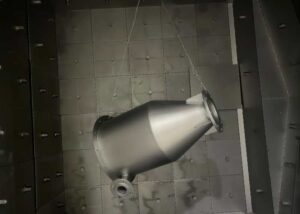
Sandblasting and shot blasting serve different surface-treatment needs and cannot replace each other. Sandblasting suits fine finishing, non-metal materials, and light to medium cleaning, while shot blasting targets heavy rust removal, metal strengthening, and high-volume industrial work. Selecting the right method greatly improves processing efficiency and coating adhesion.
Sandblasting Applications
| Application Field | Typical Uses | Common Abrasives | Technical Features / Effects |
| Metal Surface Treatment | Rust removal, old paint removal, weld cleaning, improving coating adhesion | Aluminum oxide, glass beads, garnet | Achieves Ra 1.5–6 μm roughness, meeting coating and powder-coating prep standards |
| Glass / Stone Etching | Architectural signage, frosted finishing, pattern engraving | Garnet 80–120# | Uniform etching, clear patterns, no substrate damage |
| Wood Processing / Furniture Restoration | Removing old paint, cleaning stains, maintaining wood grain | Low-pressure glass beads, fine sand | At 0.3–0.5 MPa, removes contaminants without damaging wood grain, ideal for high-end natural-wood finishing |
| Architectural Exterior Restoration | Removing pollution stains, soot, aged layers | Glass beads, quartz-sand alternatives | Low-damage cleaning, avoids flaking issues common with high-pressure water jets |
| Concrete Surface Preparation | Floor-coating roughening, adhesion enhancement | Aluminum oxide 24–60# | Enhances coating adhesion by 20–40%, widely used in industrial floors and garage coatings |
| Automotive & Mechanical Repair | Engine-part cleaning, oil removal, refurbishing | Glass beads, aluminum oxide | Does not alter part dimensions, suitable for precision mechanical components |
| Mold & Casting Cleaning | Removing scale, homogenizing surface, sand removal | Aluminum oxide, ceramic sand | Provides uniform surface texture, improving downstream machining or inspection |
Shot Blasting Applications
| Application Field | Typical Uses | Common Abrasives | Technical Features / Effects |
| Steel Structure Pretreatment | Scale removal, rust removal, improving coating adhesion | Steel shot, steel grit (S230–S390) | Achieves Sa 2.5–Sa 3 cleanliness with 40–80 μm uniform roughness |
| Casting Surface Cleaning | Removing molding sand, scale, riser marks | Cast-steel shot, cut wire shot | High cleaning efficiency, enhances appearance and machining consistency |
| Forged & Heat-Treated Components | Scale removal, surface strengthening | High-carbon steel shot, stainless-steel shot | Produces a 50–200 μm compressive stress layer, increasing fatigue strength |
| Weld Cleaning & Slag Removal | Removing slag, spatter, oxidation | Steel grit, steel shot | Helps reveal weld defects and improves coating quality in weld zones |
| Coating / Powder Coating Pretreatment | Creating deep anchor profiles for heavy coatings | Steel grit, cast-steel shot | Roughness Ra 6–12 μm, ideal for heavy anti-corrosion coating systems |
| Pipeline Exterior Cleaning | Removing scale, improving anti-corrosion coating adhesion | Steel shot, steel grit | Through-type blasting achieves 360° uniform cleaning |
| Automotive Component Strengthening | Gears, springs, connecting rods | Stainless steel shot, ceramic beads | Improves fatigue life by 30–100%, widely used in automotive and aerospace parts |
| Shipbuilding & Heavy Equipment Refurbishment | Large-area rust removal, pretreatment | High-strength steel grit | High efficiency for large steel plates and structural refurbishment |
| Stainless Steel Surface Homogenization | Removing scale, reducing color variation | Stainless-steel shot (SUS series) | No iron contamination, suitable for food-processing and medical-equipment components |
What Equipment Is Used For Sandblasting And Shot Blasting
Sandblasting and shot blasting rely on very different equipment. Sandblasting uses compressed air and offers flexible material compatibility, while shot blasting uses high-speed turbine wheels for powerful, continuous industrial cleaning. Understanding these differences helps you choose the right process for your production needs.
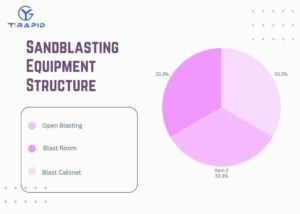
Sandblasting Equipment Structure
Sandblasting equipment uses compressed air as the primary power source. Its structure is relatively simple and flexible, making it suitable for a wide range of materials and part sizes.
Open Sandblasting Machines (Open Blasting)
Composed of a blast pot, abrasive valve, blast gun, and air compressor.
Ideal for large, immovable workpieces such as building restoration or ship hull cleaning.
Typical cleaning efficiency: 6–12 m²/h, heavily dependent on operator skill.
Enclosed Blast Room (Blast Room)
Equipped with abrasive recovery, dust-collection systems, and a fully enclosed blasting chamber.
Suitable for large components and applications using recyclable abrasives.
Excellent dust control, meeting strict environmental standards.
Typical efficiency: 10–25 m²/h.
Blast Cabinet
Used for small to medium parts requiring precise and clean operation.
Ensures stable surface roughness, such as Ra 1.5–4.0 μm (using glass beads or garnet).
Ideal for precision components, small batches, and laboratory environments.
Shot-Blasting Equipment Structure
Shot-blasting machines use high-speed rotating turbine wheels to throw metallic abrasives. They feature high automation and much greater efficiency than sandblasting.
Tumble Blast Machine
Workpieces tumble inside a rubber conveyor while abrasives hit from multiple wheel directions.
Suitable for small to medium batch parts such as castings and forgings.
High batch-processing efficiency, handling 200–1000 kg per cycle.
Hanger Type Shot-Blasting Machine
Workpieces are hung and rotated to achieve uniform coverage without collision.
Ideal for welded assemblies and complex-shaped parts.
Fast cleaning time: 10–20 minutes per batch.
Pass-Through / Roller Conveyor Shot-Blasting Machine
Workpieces move continuously through the blasting chamber while multiple wheels run simultaneously.
Designed for high-volume production lines.
Commonly used for steel plates, beams, and pipes.
Extremely high efficiency: 50–150 m²/h, making it the primary equipment in steel-structure industries.
Efficiency Differences By Production Volume
| Project Category | Sandblasting | Shot Blasting |
| Power Source | Compressed Air | Turbine Wheel Centrifugal Force |
| Suitable Materials | Metals + Non-Metals | Mostly Metals |
| Processing Efficiency | 6–25 m²/h | 50–150 m²/h (Pass-through type) |
| Production Scale | Small batches, diverse parts | Medium to large batches, continuous production |
| Automation Level | Medium | High Automation |
| Surface Consistency | Operator-dependent | Highly consistent and repeatable |
Advantages And Limitations Of Sandblasting And Shot Blasting
Although sandblasting and shot blasting are both surface-treatment methods, they differ significantly in material compatibility, cleaning strength, efficiency, and cost structure. Sandblasting is flexible and gentle, suitable for multi-material processing, while shot blasting is powerful and highly efficient, ideal for industrial-scale metal treatment.
Advantages And Limitations Of Sandblasting
Advantages of Sandblasting
Wide material compatibility (metals and non-metals)
Sandblasting can be applied to steel, stainless steel, aluminum, wood, glass, stone, and concrete.
For example, in a glass-etching project, I used 100-mesh glass beads to achieve a uniform Ra 1.5–3.5 μm matte texture.
Soft, controllable surface finish
As a “cutting plus light-impact” process, sandblasting provides fine and uniform surface textures.
By adjusting air pressure (0.3–0.7 MPa) and abrasive type, the surface roughness can be precisely controlled.
Flexible for small batches and varied components
Because sandblasting equipment is simple and easy to operate, it is ideal for:
Repair components
Complex geometries
Multiple batches with small quantities
Lower overall cost
Sandblasting equipment typically costs only 20%–40% of shot-blasting equipment, and abrasive consumption is also lower.
Limitations of Sandblasting
Lower efficiency (depends on operator skill)
Typical cleaning efficiency ranges from 6–25 m²/h, significantly slower than automated shot blasting.
High dust generation
Abrasives such as garnet and aluminum oxide produce substantial dust, requiring high-performance dust-collection systems.
Minimal surface-strengthening capability
Sandblasting produces almost no plastic deformation, making it unsuitable for applications requiring improved fatigue strength.
Advantages And Limitations Of Shot Blasting
Advantages of Shot Blasting
Extremely high cleaning efficiency
Typical performance values:
Pass-through shot-blasting line: 50–150 m²/h
Tumble blast machine: 200–1000 kg per batch
This makes it ideal for steel fabrication, castings, and forged components.
Significant surface strengthening and fatigue-life improvement
Metal abrasives impacting at 60–80 m/s generate a compressive stress layer, increasing fatigue life by 20–50%.
Highly consistent surface finish
Multiple turbine wheels blasting simultaneously deliver uniform and repeatable results.
Suitable for:
Pre-coating surface preparation
Powder-coating roughening
Batch processing requiring standardized quality
Recyclable abrasives reduce operating costs
Steel shot and steel grit can be reused 2000–3000 times, greatly reducing abrasive consumption.
Limitations of Shot Blasting
High equipment investment and maintenance complexity
Shot-blasting systems typically cost 3–10 times more than sandblasting equipment.
Turbine wheels, liners, and wear components require frequent replacement.
Limited to metal materials
Shot blasting is not suitable for glass, wood, plastic, or thin-walled components due to deformation risks.
Lower flexibility for small or mixed-type batches
Changing abrasive type or adjusting for different components is time-consuming, making shot blasting unsuitable for high-mix, low-volume production.
What Key Factors Should You Consider When Choosing Between Sandblasting And Shot Blasting
Selecting between sandblasting and shot blasting depends on material type, target roughness, production scale, automation needs, and budget. Because their impact energy and surface results differ greatly, the right choice directly affects coating durability, efficiency, and cost. This section provides a clear decision framework based on practical data.
Base Material Type
The first and most critical factor is the material of the workpiece.
Metal Materials (Steel, Stainless Steel, Aluminum, Castings)
Steel and cast iron are better suited for shot blasting.
Metallic abrasives striking at 60–80 m/s can effectively remove rust, mill scale, and simultaneously strengthen the surface.
Aluminum and stainless steel, being softer, are more suitable for low-pressure sandblasting.
For example, 100–180 mesh glass beads prevent surface denting and help maintain dimensional stability.
Non-Metal Materials (Glass, Wood, Stone, Concrete)
These materials cannot withstand the high-impact energy of shot blasting, making sandblasting the only viable option.
Glass etching commonly uses 120-mesh garnet
Concrete roughening often uses 36-mesh aluminum oxide
Wood cleaning should use low pressure (0.2–0.4 MPa) to avoid fiber damage
Thin-Walled and Heat-Sensitive Components
Thin sections, welded structures, and components like aluminum heat sinks are prone to deformation or stress cracking under shot blasting.
Sandblasting is the safer choice for these cases.
Target Surface Roughness
Different coating systems require different roughness levels.
Sandblasting Roughness Range: Ra 1–6 μm
Glass beads: Ra 1.5–3 μm
Garnet: Ra 2.5–4.5 μm
Suitable for powder coating, light coating systems, and glass etching.
Shot Blasting Roughness Range: Ra 6–12 μm with a Strengthened Layer
Steel grit S330/S390 can reach Ra 8–12 μm
Ideal for heavy-duty corrosion-resistant coatings, epoxy systems, and marine structural steel.
Production Volume & Automation Level
Sandblasting is ideal for:
Mixed specifications and varied part types
Small-batch orders
High-flexibility processing
Manual sandblasting efficiency is typically 6–25 m²/h.
Shot blasting is ideal for:
Large-volume, stable production
Uniform workpiece sizes
Automated production lines
Pass-through machines achieve 50–150 m²/h,
while tumble blast systems can handle 200–1000 kg per batch.
Budget And Maintenance Considerations
Sandblasting: Lower Cost
Equipment costs only 20–40% of shot-blasting equipment
Abrasives are cheaper
No complex wear-resistant components required
Suitable for small to medium-sized enterprises or limited budgets.
Shot Blasting: Higher Initial Cost, Lower Long-Term Cost
Equipment investment is high
But steel shot can be reused 2000–3000 times, reducing long-term abrasive consumption
Requires skilled maintenance personnel
My Recommendation
Low production volume + high part variety: Choose Sandblasting
High production volume + single part type: Choose Shot Blasting
This remains the most effective and economical rule for selecting the right process.
FAQs
Shot Blasting Vs Sandblasting, Which Method Is More Cost-Effective?
From a cost perspective, I find sandblasting more economical for small-scale or varied jobs because its equipment investment is 40–60% lower and media cost is cheaper. Shot blasting becomes cost-effective only in high-volume production, where reusable steel shot can reduce media consumption by up to 70%. For batch automation, shot blasting offers better long-term ROI.
Shot Blasting Vs Sandblasting, Which Method Is Safer For Delicate Surfaces?
For delicate materials, I always choose sandblasting because it allows finer pressure control and softer media. Glass beads or walnut shells keep impact energy low, reducing surface damage by over 60% compared to steel shot. Shot blasting, with impact speeds of 60–80 m/s, is too aggressive for thin aluminum, soft wood, composites, or glass-based materials.
How Can I Determine Which Surface Treatment I Need?
I typically evaluate four factors: base material hardness, target surface roughness (Ra 1.5–6 μm), productivity needs, and coating requirements. For deep cleaning and high adhesion, shot blasting performs better. For controlled etching or fine finishing, sandblasting is the safer option. Matching roughness specs such as Sa 2.5 or SSPC-SP10 also guides the selection.
Does Sandblasting Create A Lot Of Dust?
Yes. Sandblasting generates significantly more airborne dust because non-metallic abrasives fracture upon impact. In open blasting, dust concentration can exceed 10 mg/m³ without proper extraction. This is why silica sand is restricted in many countries. I typically use enclosed cabinets or wet blasting to reduce dust by 80–90% and improve operator safety.
What Is The Main Difference Between Sandblasting And Shot Blasting?
The key difference lies in the propulsion and abrasive media. Sandblasting uses compressed air with non-metallic abrasives, ideal for fine cleaning and delicate surfaces. Shot blasting uses a high-speed wheel with metallic media, delivering 2–3× higher impact energy for heavy rust removal and surface strengthening. Their surface profiles and applications differ accordingly.
Conclusion
Shot blasting and sandblasting are both highly efficient surface treatment technologies, but they differ significantly in impact energy, applicable materials, surface roughness, and cost structure. Sandblasting is better suited for fine cleaning and fragile workpieces, while shot blasting is used for powerful rust removal, structural component treatment, and surface strengthening. Choosing the right process based on material, roughness, and production volume requirements can significantly improve processing quality and coating adhesion. If you have any needs for either of these surface treatment processes, please feel free to contact us!