Clear anodized aluminum creates a hard, transparent oxide layer that transforms raw aluminum into a durable, corrosion-resistant, and visually refined material. This guide explains how the process works, why it outperforms basic finishes, and how it delivers long-lasting performance across industries.
What Is Clear Anodized Aluminum Finish?
Clear anodized aluminum is aluminum transformed through an electrochemical Clear anodized aluminum refers to aluminum that has been electrochemically treated to form a durable, transparent oxide layer tightly bonded to its surface. This upgraded layer significantly enhances strength, corrosion resistance, and surface stability, making it a preferred choice for high-performance engineering and design applications.
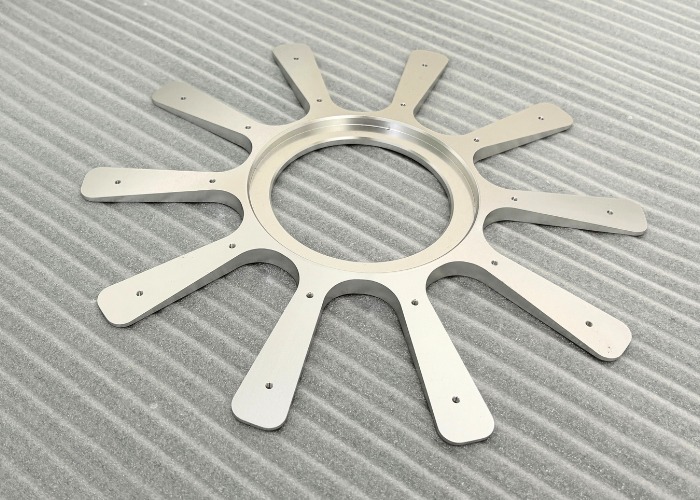
Through the clear anodizing process, the aluminum surface is converted—rather than coated—into a thick, colorless aluminum oxide (Al₂O₃) layer. Unlike paints or surface films that sit externally, this oxide layer becomes an integral part of the metal, giving it a ceramic-like hardness and exceptional durability.
During processing, the aluminum component is immersed in a sulfuric acid electrolyte and connected as the anode in an electrical circuit. As direct current flows, oxygen ions bond with aluminum at the surface, forming a controlled oxide structure. Roughly half of the layer extends outward while the remainder grows inward into the base material, creating excellent adhesion and long-term stability.
The resulting anodized surface offers key performance advantages:
- Fully transparent, preserving the aluminum’s natural metallic tone
• High hardness(typically above 300 HV), delivering strong abrasion resistance
• Superior corrosion protection, far exceeding untreated aluminum
• Permanent stability, resisting peeling, chalking, or flaking unlike conventional coatings
How the Clear Anodizing Process Works?
Clear anodizing enhances aluminum by converting its surface into a tougher, corrosion-resistant oxide layer through a precise electrochemical reaction. To understand why clear anodized aluminum delivers such durability and a clean metallic finish, here is a clear step-by-step look at how the process works.
Clear anodizing works through three essential stages that convert the aluminum surface into a functional oxide layer rather than simply coating it.
Pre-Treatment: Cleaning, Etching & Activation
A flawless anodized finish begins with surface preparation.
- Degreasing: Aluminum parts are cleaned in an alkaline bath (~63°C / 145°F) to remove oil and machining residues.
- Rinsing: Deionized water rinses prevent chemical contamination.
- Etching: A sodium-hydroxide solution removes the natural oxide film and smooths minor imperfections.
- Desmutting: Alloy residues (smut) are dissolved in a nitric-acid bath, leaving a chemically active surface.
In my anodizing experience, the quality of this step directly determines the uniformity of the final finish.
Anodic Layer Formation: Electrolytic Bath & Current Control
This is where aluminum becomes clear anodized aluminum.
- Electrolyte: Parts are immersed in ~15% sulfuric acid.
- Electric Current: The part becomes the anode (+). DC current drives oxygen ions into the surface.
- Oxide Growth: A porous, crystalline layer of Al₂O₃ forms both into and out of the surface—much harder than the base metal.
Proper voltage, current density, temperature, and time determine oxide thickness (typically 5–25 µm for clear anodizing).
Sealing: Closing the Pores for Durability
Fresh anodic layers are highly porous. Sealing prevents corrosion and staining.
- Hydrothermal sealing: Immersion in boiling deionized water converts Al₂O₃ to its hydrated form, swelling and closing pores.
- Nickel acetate sealing: Used for higher corrosion resistance and better color stability.
A well-sealed part can withstand salt spray testing many times longer than mill finish aluminum.
What Are the Key Performance Benefits?
Clear anodized aluminum isn’t just a surface treatment—it transforms ordinary aluminum into a harder, more corrosion-resistant, and visually refined material. Understanding these key performance benefits helps you choose the right finish for durability, appearance, and long-term reliability.
Clear anodizing creates a ceramic-like aluminum oxide layer that dramatically enhances material performance. The sealed AAO layer provides exceptional corrosion resistance—MIL-A-8625 Type II coatings endure 336+ hours of salt-spray testing, while architectural Class I anodizing can exceed 3,000 hours.
The oxide layer reaches hardness levels significantly higher than base aluminum, making components resistant to scratches, abrasion, and frequent handling. In my own machining experience, clear anodized housings maintain surface integrity even after repeated assembly cycles.
Aesthetically, the finish preserves the natural metallic look, creating a uniform silver or gray tone with matte or glossy textures depending on pre-treatment. This consistent appearance is a major advantage for consumer electronics, aerospace interiors, and architectural components.
Environmental compliance is another benefit—clear anodizing emits no VOCs, uses no heavy metals, and produces a non-toxic, fully recyclable surface. Standard clear finishes meet RoHS and REACH requirements, making them suitable for global manufacturing.
While the added processing increases cost, the long-term durability and reduced maintenance often deliver better lifecycle value than mill finish.
Clear Anodized vs. Mill Finish Aluminum
Choosing between clear anodized aluminum and mill finish aluminum often comes down to durability, appearance, and environmental exposure. To help you decide, here’s a clear comparison of how each finish performs in real-world applications.
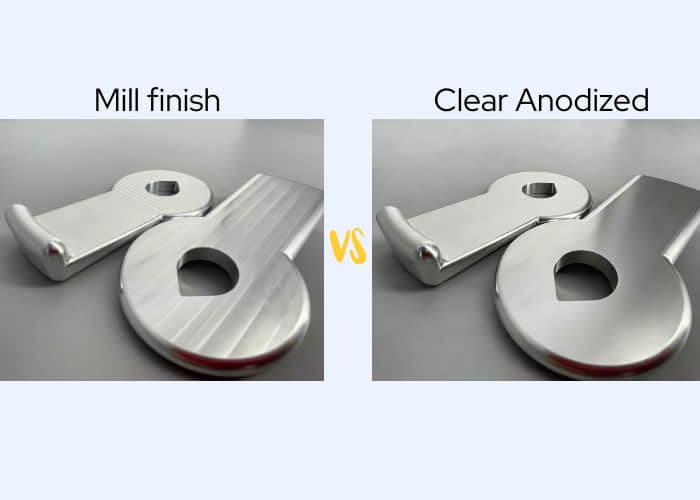
| Category | Clear Anodized Aluminum | Mill Finish Aluminum |
| Durability | High hardness, scratch-resistant | Low, scratches easily |
| Corrosion Resistance | Excellent, long-term outdoor use | Basic, suitable for dry indoor areas |
| Appearance | Clean, uniform, premium metallic finish | Visible marks, natural dull surface |
| Best Use Case | Electronics, architecture, consumer products | Structural parts, low-cost projects |
| Cost | Higher | Lowest |
Typical Applications
Clear anodized aluminum delivers exceptional durability, corrosion protection, light weight, and a clean metallic finish. From premium electronics to large architectural structures, its reliable performance makes it a top choice for demanding applications.
Clear anodized aluminum is widely used because its oxide layer enhances strength, wear resistance, and long-term appearance. Below are the most common industrial applications:
Electronics & Consumer Devices
Used for smartphone housings, laptop bodies, camera frames, audio equipment, and heat-dissipating components. In my experience, the finish remains scratch-resistant even after frequent handling.
Automotive & Transportation
Ideal for interior trims, exterior decorative parts, roof rails, emblems, wheel covers, and EV structural components. The corrosion resistance helps parts maintain clean aesthetics even in harsh weather.
Aerospace & Precision Equipment
Applied in aircraft panels, brackets, instrument housings, and heat sinks. Its strength-to-weight ratio and oxide durability are essential for high-reliability environments.
Architecture & Building Materials
A top choice for curtain walls, window frames, door frames, façade panels, handrails, and signage. Clear anodizing prevents UV fading and ensures a uniform metallic appearance over decades.
Industrial Machinery & Tools
Used for machine guards, control panels, fixtures, and components requiring wear resistance and dimensional stability.
Design & Manufacturing Considerations
Designing parts for clear anodizing requires more than choosing the right alloy—it demands understanding how geometry, tolerances, and manufacturing steps influence coating quality. By planning early, engineers ensure consistent color, uniform thickness, and long-term durability.
Clear anodizing is a conversion coating, meaning the oxide layer both builds outward and penetrates the aluminum surface. This affects dimensional accuracy, especially for tight-tolerance parts where 5–25 μm of added thickness must be considered.
From my machining experience, deep grooves, sharp corners, and blind cavities often receive thinner coatings because current flow becomes uneven. To solve this, parts are redesigned with smoother transitions or vent holes.
Fixturing also matters. During anodizing, parts hang on conductive racks, but rack contact points cannot be anodized—so engineers must place these marks on non-critical surfaces.
Post-process compatibility also plays a role:
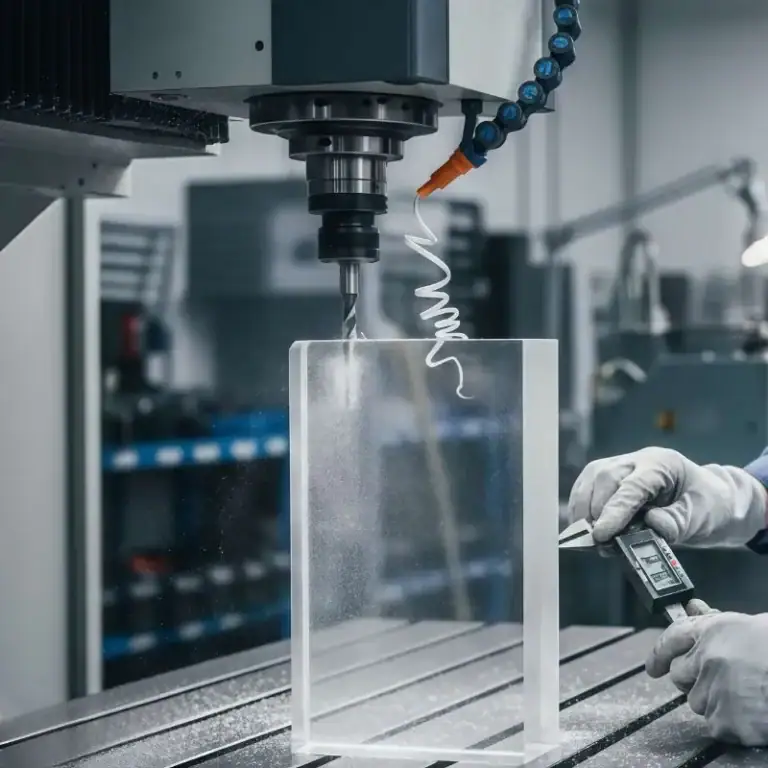
- CNC machining should be completed before anodizing
- Laser engraving produces clean, high-contrast marks
- Silk screening can be embedded into pores before sealing for higher durability
Proper planning ensures an anodized finish that performs well in aesthetics, protection, and longevity.
Cleaning & Maintenance Guidelines
Clear anodized aluminum is highly durable, but proper cleaning and regular maintenance are essential to keep its appearance, corrosion resistance, and service life at their best. With the right methods and gentle cleaners, you can easily preserve its clean metallic finish for years.
Clear anodized aluminum forms a hard, protective oxide layer, but environmental exposure—dust, salt, pollution, or fingerprints—can gradually dull the surface. Proper maintenance avoids damage and keeps the finish looking uniform.
Routine Cleaning
- Rinse the surface with clean water to remove loose dirt.
- Wash gently using a soft cloth or sponge with a mild pH-neutral detergent (pH 6–8).
- Rinse thoroughly to prevent residue streaks.
- Wipe dry with a soft cloth to avoid water spots.
Removing Tough Stains
- Light scuff marks can be polished using a non-abrasive pad following the grain direction.
- Oil, adhesives, or sealants may be removed with mineral spirits or denatured alcohol.
- Always test chemicals in a hidden area before full use.
What to Avoid
- Do not use strong acids, alkalis, chlorine cleaners, or abrasive materials like steel wool.
- Avoid cleaning hot surfaces as thermal shock may cause uneven appearance.
Best Practice
Applying a protective wax or sealant layer after cleaning extends durability. For heavily weathered parts, professional restoration is recommended.
FAQs
Can Anodizing Be Clear?
Yes — anodizing can be completely clear. In my experience, a sulfuric-acid Type II process creates a transparent aluminum-oxide layer typically 5–25 microns thick. Because the coating is integral to the metal, it remains colorless unless dye is added. This “clear” finish enhances corrosion and wear resistance without altering the metallic look.
What Color Is Clear Anodize?
Clear anodize has a natural silver to light gray appearance. Based on the alloy and oxide thickness, reflectivity can vary, but the finish remains transparent. For example, 6061 often shows a bright silver tone, whereas 7075 may appear slightly grayer due to its copper and zinc content.
How Long Will Anodized Aluminum Last?
In my projects, properly sealed clear anodized aluminum lasts 20–50+ years in typical environments. Architectural Class I coatings (≥0.7 mil / 18 microns) routinely survive over 3,000 hours of salt-spray testing. Indoors, the lifespan is virtually indefinite with minimal maintenance.
Does Clear Anodized Aluminum Rust?
No — clear anodized aluminum does not rust because aluminum oxide is naturally corrosion-proof. The sealed anodic layer forms a ceramic barrier that resists moisture, salt, and chemicals. In comparison tests, Type II anodizing withstands 336+ hours of salt spray without corrosion.
Can You Polish Clear Anodized Aluminum?
Polishing anodized aluminum is possible but limited. Since the anodic layer is a hard ceramic (≈60–70 Rockwell C), mechanical polishing can remove or scratch it. In my practice, light buffing is acceptable, but for a true mirror finish, the part must be polished before anodizing, not after.
Conclusion
Clear anodized aluminum enhances standard aluminum by converting its surface into a durable, corrosion-resistant oxide layer. The process strengthens hardness, improves appearance, and significantly extends service life across industries such as electronics, aerospace, automotive, and architecture. Compared with mill finish aluminum, clear anodizing offers superior protection, stability, and aesthetics. With proper design planning and routine maintenance, it delivers long-lasting performance and reliable visual quality.