This article explains what black hardcoat anodize is, how the Type III anodizing process works, and why it is chosen over standard anodizing. It also covers key performance benefits, limitations, and common applications to help engineers select the right finish for demanding aluminum parts.
What Is Black Hardcoat Anodize
Black hardcoat anodize is a Type III anodizing process designed for extreme wear and corrosion resistance. Compared with standard black anodizing, it forms a much thicker and harder oxide layer, making it suitable for demanding industrial and aerospace applications.
Black hardcoat anodize (Type III) is an electrochemical surface treatment that converts aluminum into a dense, ceramic-like aluminum oxide layer. The process uses low temperatures, high current density, and longer processing time, producing coatings typically 0.002–0.003 inches thick.
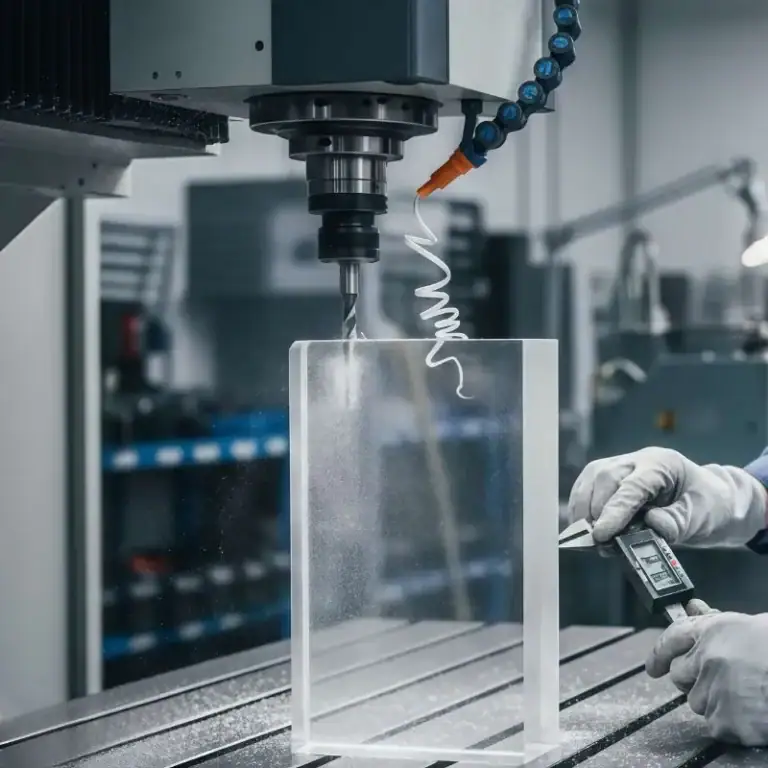
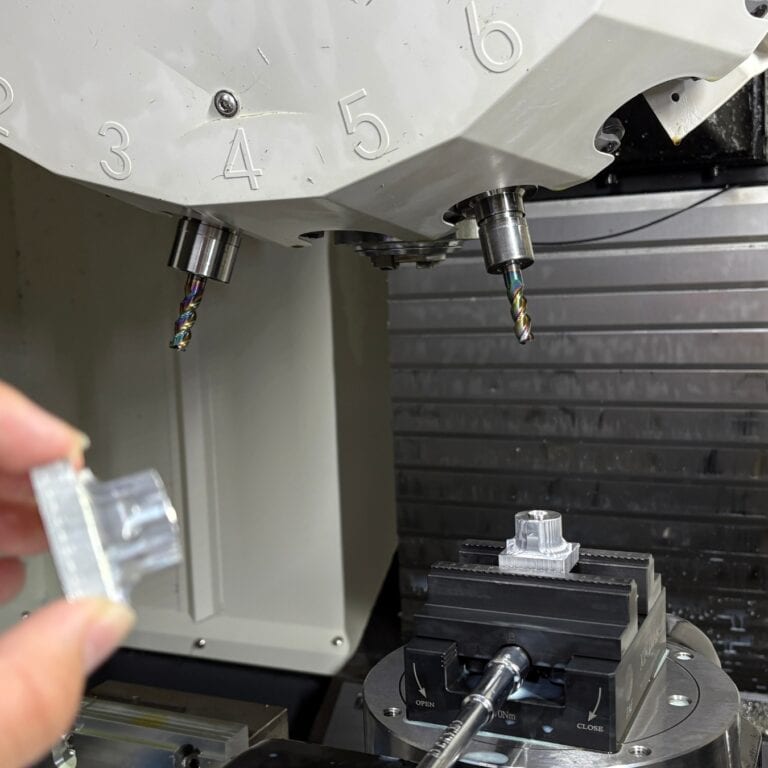
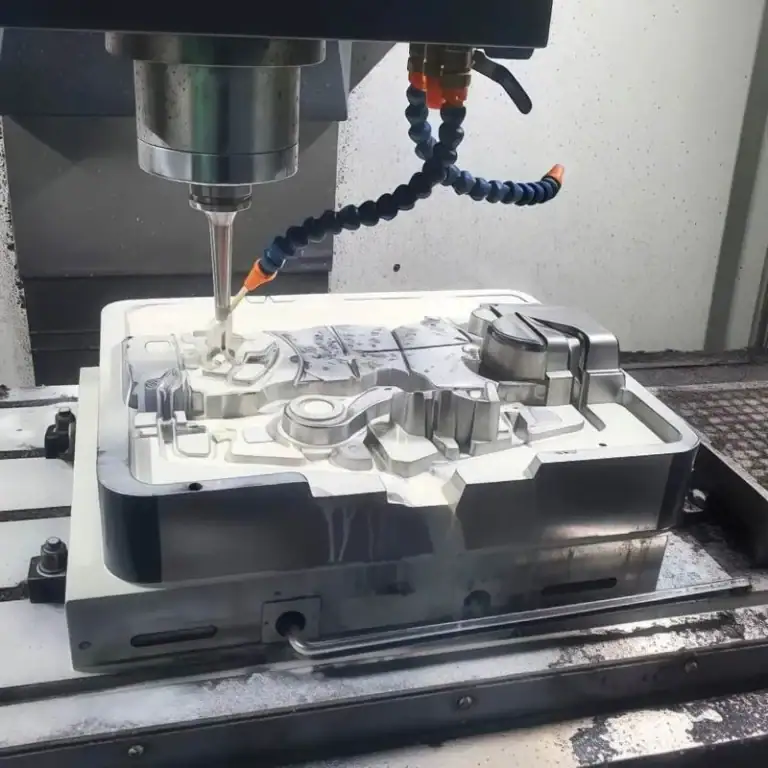
In practice, this oxide layer reaches hardness levels comparable to case-hardened steel while remaining fully bonded to the base metal, making it widely used in CNC machining manufacturing for precision parts that require durable, wear-resistant surfaces.
How Black Hardcoat Anodize Works
Black hardcoat anodize works by growing an extremely thick aluminum oxide layer through electrochemical oxidation, then coloring and stabilizing it to deliver maximum hardness, wear resistance, and corrosion protection.
Oxide Layer Formation
In Type III hardcoat anodizing, aluminum parts act as the anode in a sulfuric acid electrolyte. Under low temperature and high current density, oxygen ions react with the aluminum surface to form a dense, porous aluminum oxide layer.
From my experience, this layer typically reaches 50–75 μm in thickness and achieves hardness comparable to hardened steel, while remaining integral to the base metal.
Black Dyeing
The hardcoat oxide layer contains microscopic pores. These pores absorb black dye or metal salts (such as nickel or cobalt in electrolytic coloring), producing a deep, non-reflective black surface.
Unlike decorative anodizing, the coloring step here is secondary to mechanical performance.
Sealing
Sealing closes the pores using hot deionized water or steam. The oxide hydrates and swells, locking in the color and significantly improving corrosion resistance.
In practice, some hardcoat applications are left unsealed to preserve maximum hardness.
Key Properties
Black hardcoat anodize is defined by three critical performance factors: surface hardness, corrosion resistance, and dimensional stability. Together, these properties determine whether a part can survive long-term wear, harsh environments, and tight tolerance assemblies.
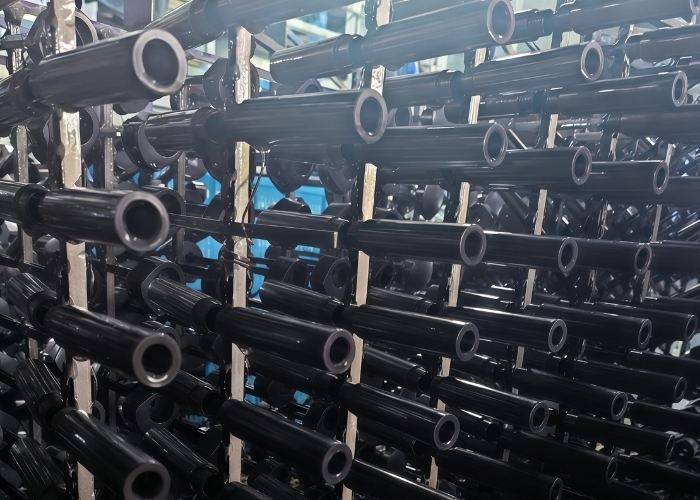
Hardness & Wear Resistance
Black hardcoat anodize (Type III) forms a dense aluminum oxide layer with hardness typically reaching 400–600 HV, comparable to case-hardened steel.
In my experience, this significantly reduces abrasive wear on sliding or rotating parts such as bushings, pistons, and guide surfaces.
Corrosion Resistance
The thick oxide layer acts as a strong barrier against moisture, chemicals, and salt spray. When properly sealed, hardcoat anodized aluminum can withstand hundreds of hours of salt fog testing.
This makes it suitable for outdoor, marine, and industrial environments where standard anodizing may fail.
Dimensional Stability
Hardcoat anodizing grows both outward and inward from the original surface, typically adding 25–35 μm per side.
From a manufacturing perspective, this requires dimensional compensation during CNC machining to maintain tight tolerances, especially for precision fits.
Durability & Appearance
Black hardcoat anodize is valued not only for its extreme durability, but also for its stable, functional appearance. Compared with standard black anodizing, it delivers superior resistance to wear, scratching, and color degradation in demanding environments.
Wear and scratch resistance
Thanks to its thick Type III oxide layer (typically 25–75μm), black hardcoat anodize reaches hardness levels of 400–600 HV. In real applications, this significantly reduces abrasion on sliding, rotating, or contact surfaces such as guides, bushings, and housings.
Color stability
Although dyed black, hardcoat anodize shows better UV and heat stability than standard Type II black anodizing. In my experience, color variation is minimal when used indoors, in industrial settings, or under moderate outdoor exposure, especially when proper sealing is applied.
Practical insight
For parts where appearance must remain consistent over long service life—without frequent refinishing—black hardcoat anodize offers a strong balance between aesthetics and performance.
Cost and Lead Time
Black hardcoat anodize involves stricter process control than standard anodizing, which directly impacts cost and lead time. However, its extended service life often offsets the higher upfront expense.
Cost factors
Costs are influenced by coating thickness, part size, surface area, and masking requirements. Compared to Type II anodizing, hardcoat processing typically costs 20–50% more due to longer cycle times and higher energy consumption.
Lead time considerations
Typical lead time ranges from 3–7 working days, depending on batch size and quality requirements. For precision parts, additional inspection steps may be required.
Engineering perspective
From my experience, customers targeting long-term durability often reduce total lifecycle cost by choosing hardcoat instead of repeating refinishing or part replacement.
Alternatives and Selection Guide
While black hardcoat anodize is ideal for many demanding applications, it is not always the best choice. Understanding alternatives helps engineers select the most cost-effective and functional solution.
Common alternatives
- Standard black anodizing (Type II): Better for decorative parts with moderate wear
- PTFE hard anodize: Lower friction, suitable for sliding components
- Acktar Black: Superior optical absorption, non-acid, environmentally clean
- Black PVD coating: High hardness, thin layer, limited corrosion resistance
How to Choose Black Hardcoat Anodize
In practice, I recommend selecting black hardcoat anodize based on the following factors:
-
Wear requirements – Ideal for sliding, rotating, or high-contact parts needing extreme wear resistance.
-
Tolerance sensitivity – Coating adds 25–75 μm, CNC machining manufacturing must allow dimensional compensation.
-
Optical & electrical needs – Suitable for non-reflective, electrically insulating surfaces.
-
Operating environment – Performs well in corrosive, outdoor, or industrial conditions.
-
Lifecycle cost – Higher upfront cost, but often reduces long-term wear and replacement risk.
Applications
Black hardcoat anodize is widely used in industries where wear resistance, corrosion protection, and dimensional stability are critical. Its ceramic-like oxide layer enables aluminum parts to perform reliably in demanding mechanical and environmental conditions.
| Industry | Typical Parts | Why Black Hardcoat Anodize |
| Aerospace | Brackets, housings, actuator parts | High wear resistance, non-reflective surface, tight tolerance stability |
| Automotive | Transmission parts, valve bodies, pistons | Improved abrasion resistance and corrosion protection |
| Industrial Equipment | Guide rails, bushings, tooling parts | Long service life, reduced maintenance, wear protection |
| Electronics | Enclosures, heat sinks, optical mounts | Electrical insulation, heat dissipation, light absorption |
Aerospace
In aerospace applications, black hardcoat anodize is commonly used for structural brackets, actuator components, housings, and sliding interfaces.
From my experience, its high hardness and non-reflective black finish make it ideal for parts exposed to vibration, temperature variation, and optical sensitivity, while maintaining tight tolerances.
Automotive
Automotive components such as transmission parts, valve bodies, pistons, and wear surfaces benefit from hardcoat anodizing.
The thick oxide layer improves abrasion resistance and corrosion protection, extending service life in high-load and high-friction environments.
Industrial Equipment
Industrial machinery frequently uses black hardcoat anodized aluminum for guide rails, bushings, cylinders, and tooling components.
In real production, this finish reduces maintenance frequency and minimizes wear-related failures in continuous-duty equipment.
Electronics
In electronics, black hardcoat anodize is applied to enclosures, heat sinks, optical mounts, and EMI-sensitive components.
Its dielectric properties, thermal stability, and light-absorbing surface make it suitable for precision electronic and optoelectronic assemblies.
FAQs
What Is Anodize Hardcoat?
Anodize hardcoat, or hard coat anodizing, is a low-temperature, high-current anodizing process. In my projects, Type III hard coat anodized parts are chosen for sliding, high-wear, or harsh environments where standard anodizing is not durable enough.
Can You Anodize Something Black?
Yes, aluminum can be anodized black by dyeing the porous oxide layer after anodizing. For hardcoat, the coating is dyed black for function and durability. Note: black anodized stainless steel is not true anodizing—it usually refers to PVD, black oxide, or coating alternatives.
How Hard Is Hard Anodize?
Hard anodize typically reaches 400–600 HV surface hardness. From my experience, this significantly improves wear and scratch resistance compared to standard anodizing, making it ideal for mechanical and industrial components.
How Much Does Hard Coat Anodizing Add?
Hard coat anodizing adds about 25–75μm (0.001–0.003 in) thickness. Roughly half penetrates the base metal and half builds outward, so I always account for this when designing tight-tolerance parts.
What Is the Difference Between Black Anodize and Black Hardcoat Anodize?
Black anodize (Type II) is mainly decorative with thinner coatings (0.0002–0.0008 in). Black hardcoat anodize (Type III) is thicker and more durable, designed for aerospace, automotive, and industrial applications.
Conclusion
Black hardcoat anodize is a Type III finish that delivers exceptional wear resistance, corrosion protection, and long service life for aluminum parts. Despite higher cost and added thickness, it is often the best choice for demanding, high-performance applications.
TiRapid specializes in Black Hardcoat Anodize with tight thickness control, wear-focused design, and CNC tolerance compensation. Trusted by aerospace and industrial clients—send your drawings for expert evaluation.