Black anodized aluminum is a popular surface finish that combines durability with a sleek black appearance. Through an electrochemical anodizing process, aluminum gains improved corrosion resistance, wear resistance, and visual appeal. This guide explains how black anodized aluminum is made, its key benefits, and where it’s commonly used.
What Is Black Anodized Aluminum?
Black anodized aluminum is aluminum that has been anodized and dyed black through an electrochemical process. This treatment improves corrosion resistance, wear performance, and appearance, making it widely used in both functional and decorative applications.
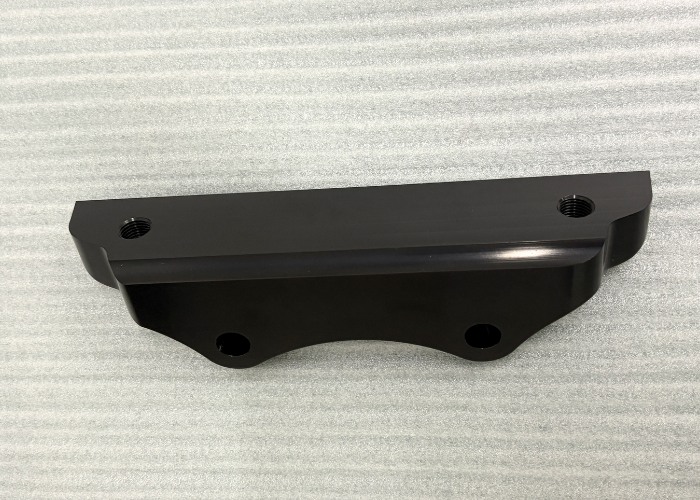
Black anodized aluminum is produced by first anodizing aluminum to form a porous aluminum oxide layer. This oxide layer is then dyed black using organic dyes, inorganic dyes, or electrolytic metal salts, followed by sealing to lock in color and performance.
The oxide layer is not a coating—it becomes part of the metal surface, typically ranging from 5–25µm in thickness for standard anodizing. In my experience, this integrated structure explains why black anodized aluminum resists peeling and fading far better than painted finishes.
Although aluminum is the most common substrate, metals such as magnesium and titanium can also undergo black anodizing, though with tighter process control and higher cost.
How Does Black Anodizing Work?
Black anodizing is a controlled electrochemical process that turns aluminum surfaces into a durable black oxide layer. By anodizing, dyeing, and sealing the metal, this process delivers enhanced corrosion resistance, wear protection, and thermal performance with a premium black appearance.
Black anodizing begins with standard anodizing, where aluminum is placed in an acidic electrolyte bath and connected as the anode. When electrical current flows, oxygen reacts with the aluminum surface to form a semi-porous aluminum oxide layer that becomes part of the metal itself.
This oxide layer typically ranges from 5–25µm thick and provides the foundation for durability and corrosion resistance.
Next comes the dyeing stage. The microscopic pores in the oxide layer absorb black dye, which can be introduced using three main methods:
- Electrolytic dyeing, where metal salts such as tin or nickel are deposited into the pores, offering excellent color stability.
- Inorganic dyeing, which uses pigments like cobalt sulfide for superior fade resistance.
- Organic dyeing, a cost-effective option where water-soluble dyes penetrate the pores, with darker shades achieved through longer immersion times.
Finally, the sealing process closes the pores using hot water or nickel acetate. This step locks in the dye, hardens the oxide layer, and prevents color bleeding or fading.
In my experience, properly sealed black anodized aluminum performs exceptionally well in high-heat, high-light, and chemically aggressive environments, such as aerospace, optical systems, and medical devices.
Types of Black Anodizing by Anodizing Standard
Black anodizing can be achieved through different anodizing standards, each offering distinct coating thickness, durability, and performance. Understanding Type I, Type II, and Type III anodizing helps select the right black anodized finish for specific environments and functional needs.
Black anodizing is typically classified according to three anodizing standards:
Type I – Chromic Acid Anodizing (CAA)
Type I anodizing produces the thinnest oxide layer, usually below 5µm. While its abrasion resistance is limited, it provides excellent corrosion protection when properly sealed. Because the pores are shallow, color absorption is limited, making black dyeing possible but less uniform. In practice, I often see Type I specified for aerospace components where dimensional stability and corrosion resistance matter more than appearance.
Type II – Sulfuric Acid Anodizing (SAA)
Type II is the most widely used anodizing method for black anodized aluminum. It forms a thicker oxide layer, typically 5–25µm, with deeper pores that readily absorb black dyes. This results in better wear resistance and more consistent color. In my experience, Type II black anodizing is the best balance of appearance, cost, and durability for industrial and consumer applications.
Type III – Hard Anodizing (Hardcoat Anodizing)
Type III anodizing creates a very thick and dense oxide layer, ranging from 25µm up to 150µm. This hardcoat structure offers maximum wear resistance, corrosion protection, and electrical insulation. Black hard anodizing is commonly used in extreme environments, such as aerospace, military, and heavy industrial equipment, where long-term performance outweighs cosmetic considerations.
Materials Suitable for Black Anodizing
Black anodizing is compatible with several metals, but not all materials respond the same way. Understanding which metals are suitable—and why—helps ensure consistent color, durability, and long-term performance.
While multiple metals can undergo black anodizing, aluminum remains the most practical and widely used option. Aluminum alloys form a porous oxide layer during anodizing, allowing black dye to penetrate evenly and remain stable after sealing. This results in excellent color uniformity, corrosion resistance, and surface hardness at a reasonable cost.
Other metals can also be black anodized, though with greater process complexity:
- Magnesium can be anodized black, but its oxide layer is softer and more prone to scratching. Extra sealing is required to maintain colorfastness and moisture resistance.
- Zinc allows limited black anodizing, but its oxide layer degrades faster, making it less suitable for long-term or outdoor use.
- Titanium forms an extremely hard, dense oxide layer. Although difficult to dye black, optimized processes using stronger acids and longer anodizing times can achieve exceptional wear resistance for high-temperature environments.
- Niobium responds well to specialized electrolytes, producing a durable matte black finish with excellent heat and chemical resistance.
- Tantalum can also be anodized black, though it typically results in a dark gray-black tone rather than deep black, offering outstanding stability in extreme conditions.
In my experience, aluminum is the best choice for most industrial and consumer applications, while titanium, niobium, and tantalum are reserved for high-performance or niche requirements.
Materials and Tools Required for Black Anodizing
Successful black anodizing depends not only on process control but also on the correct materials and tools. Each component—from electrolyte to power supply—directly affects coating quality, color uniformity, and long-term performance.
Black anodizing requires a controlled electrochemical setup with specific materials and equipment to ensure consistent results:
- Sulfuric Acid Electrolyte
Acts as the anodizing medium, enabling controlled oxide layer growth. Concentration and temperature directly influence coating thickness and pore structure.
- DC Power Supply
Provides stable direct current, typically 12–24V, to drive the anodizing reaction. Current density control is critical for uniform oxide formation.
- Cathode (Lead or Aluminum Plate)
Completes the electrical circuit inside the anodizing tank and ensures consistent current distribution.
- Acid-Resistant Tank
Usually made of polypropylene or PVC to safely contain the electrolyte without chemical degradation.
- Conductive Wire or Rack
Used to suspend aluminum parts while maintaining reliable electrical contact throughout the process.
- Dyeing Bath and Black Dye
After anodizing, parts are immersed in a black dye solution. Dye quality and immersion time determine color depth and uniformity.
- Sealing Solution
Commonly hot water or nickel acetate, used to close pores and lock in dye for improved corrosion resistance and color stability.
- Degreaser and Pre-Treatment Cleaners
Remove oils and contaminants before anodizing. In my experience, surface cleanliness is one of the most overlooked factors affecting final appearance.
Benefits of Black Anodized Aluminum
Black anodized aluminum combines appearance and performance in a single surface treatment. It delivers long-lasting corrosion resistance, wear protection, and a premium black finish, making it a preferred choice for both functional and decorative applications.
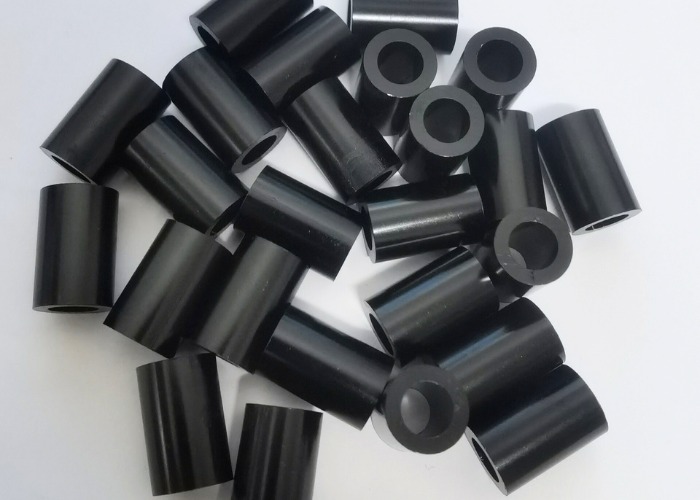
Black anodized aluminum offers a wide range of functional and aesthetic advantages:
Premium Decorative Appearance
The matte or satin black finish provides a high-end look similar to powder coating, but at a lower cost and with better durability.
Exceptional Durability
The anodized oxide layer is integrated into the aluminum surface, not applied on top. This structure resists scratching, abrasion, and long-term wear far better than paint.
Strong Corrosion Resistance
The oxide layer protects the aluminum from oxidation, moisture, chemicals, and salt spray. Corrosion affects only the coating, not the base metal.
Thermal Stability and Heat Emissivity
Black anodized aluminum maintains color and adhesion under high temperatures. Its high emissivity makes it ideal for heat sinks, electronics, and aerospace components.
High Color Fastness
When dyed with inorganic or electrolytic methods, black anodized parts retain color even under prolonged UV exposure.
Cost Effectiveness
Compared to powder coating, black anodizing requires less tooling and lower-cost dyes while delivering superior longevity.
Environmentally Friendly Process
Anodizing produces no VOC emissions and uses recyclable electrolytes, making it a cleaner alternative to many coating processes.
Excellent Adhesion and Low Maintenance
There is no risk of peeling or flaking. Cleaning typically requires only water and mild detergent.
From my experience, these combined benefits make black anodized aluminum one of the most reliable finishes for long-term industrial use.
Limitations of Black Anodized Aluminum
While black anodized aluminum offers excellent durability and appearance, it is not without limitations. Understanding these constraints helps engineers and buyers choose the right finish and avoid performance or aesthetic issues in real-world applications.
Despite its advantages, black anodized aluminum has several practical limitations that should be considered during design and material selection:
Material Compatibility Is Limited
Not all aluminum alloys respond well to black anodizing. In practice, aluminum series 5xxx, 6xxx, and 7xxx can be anodized, with 6xxx alloys offering the most consistent color and coating quality.
Risk of Surface Cracking Under Thermal Cycling
The anodic oxide layer and aluminum substrate expand at different rates. Under repeated heating and cooling, micro-cracks may form in the coating, especially in high-temperature or outdoor environments.
Potential Color Fading Over Time
Black anodized parts dyed with organic dyes are susceptible to UV exposure. Poor sealing or thin oxide layers accelerate fading or color bleeding. Inorganic or electrolytic dyes improve color stability but increase process cost.
Coating Wear Under Severe Abrasion
Although hard, anodized coatings are not immune to wear. Continuous friction or rough handling can gradually thin the oxide layer, eventually exposing the base aluminum.
Reduced Formability After Anodizing
Thicker anodic layers increase surface hardness but reduce ductility. Post-anodizing bending or forming is limited, especially on less ductile alloys.
Process Sensitivity and Quality Variability
Successful black anodizing requires precise control of cleaning, anodizing, dyeing, and sealing. Inconsistent processing leads to uneven color, poor adhesion, or reduced corrosion resistance.
Masking Increases Cost for Complex Parts
Areas that must remain conductive or dimensionally precise require masking. For complex geometries, masking adds labor, cost, and risk of rework.
Black Anodizing vs Black Oxide Coating: Key Differences
Choosing between black anodizing and black oxide can significantly impact part performance, durability, and long-term cost. While both finishes create a black appearance, they differ greatly in process, material compatibility, corrosion resistance, and applications. The comparison table below breaks down these key differences to help engineers and buyers select the right black finish with confidence.
| Comparison Aspect | Black Anodizing | Black Oxide |
| Process Principle | Electrochemical anodizing followed by dyeing and sealing, forming an integrated aluminum oxide layer | Chemical conversion process forming a thin magnetite (Fe₃O₄) layer on the surface |
| Compatible Materials | Primarily aluminum and aluminum alloys (limited use on magnesium, titanium) | Primarily steel, carbon steel, alloy steel, stainless steel |
| Coating Thickness | Typically 5–25µm (thicker for hard anodizing) | Approximately 0.5–2µm (very thin) |
| Bonding Mechanism | Oxide layer grows from the base metal and will not peel | Surface conversion layer, relies on post-treatment oil |
| Corrosion Resistance | High, especially after sealing; suitable for humid and outdoor environments | Low to moderate; requires oil or wax for protection |
| Wear Resistance | Medium to high (Type II), very high (Type III hard anodizing) | Low |
| Dimensional Impact | Predictable; coating thickness must be considered in design | Minimal dimensional change |
| Color Stability | High; resistant to fading (especially electrolytic/inorganic dyeing) | Moderate; surface color may wear or fade |
| Appearance | Deep black, matte to semi-gloss, premium finish | Uniform black or dark gray, industrial appearance |
| Electrical Conductivity | Non-conductive surface | Conductive surface maintained |
| Heat Dissipation & Light Absorption | Excellent; ideal for thermal and optical applications | Limited |
| Resistance to Heat & Chemicals | High; withstands heat and aggressive cleaning agents | Moderate; harsh chemicals may damage coating |
| Typical Applications | Aerospace, optics, medical devices, electronics enclosures, precision components | Fasteners, tools, firearms parts, mechanical components |
| Cost Level | Medium | Low |
| Service Life | Long | Short to medium (maintenance-dependent) |
Applications of Black Anodized Aluminum
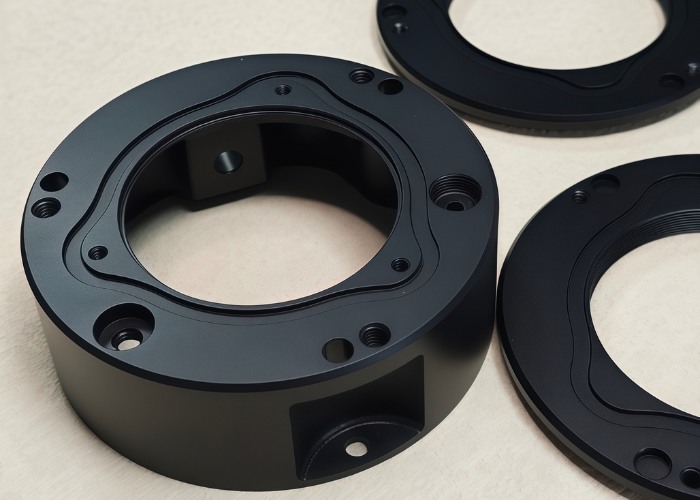
Black anodized aluminum is widely used across industries where durability, corrosion resistance, heat stability, and a premium black appearance are required. Its balanced performance makes it a reliable surface finish for both functional and aesthetic components.
Architectural Components
Black anodized aluminum is commonly used for windows, doors, railings, curtain walls, signage, gutters, and decorative trims. The anodized oxide layer protects against UV exposure, humidity, and pollution, making it ideal for long-term outdoor use with minimal maintenance.
Electronic Device Housings
Laptops, smartphones, tablets, audio equipment, and control panels benefit from anodized aluminum’s lightweight structure and excellent heat dissipation. The black finish also reduces glare and provides a high-end appearance for consumer electronics.
Automotive Components
Black anodized aluminum is used in pedals, shifters, trims, speaker grilles, and decorative panels. It resists chemicals, road salt, and weathering while maintaining dimensional stability and color consistency.
Industrial Machinery and Equipment
Valves, pulleys, rollers, housings, and protective covers often use black anodized aluminum due to its abrasion resistance and chemical stability. In my experience, it performs especially well in environments with frequent handling and cleaning.
Medical Equipment and Supplies
Walkers, wheelchairs, oxygen tanks, surgical tool housings, and medical frames use black anodizing for its corrosion resistance, cleanability, and non-flaking surface—important for hygiene and regulatory compliance.
Military and Defense Equipment
Flashlights, enclosures, optical mounts, and firearm components rely on black anodized aluminum for its hardness, thermal stability, and low reflectivity, which are critical in tactical environments.
Furniture, Appliances, and Commercial Products
Chair bases, shelving, lighting fixtures, kitchen appliances, and restaurant equipment benefit from black anodizing’s heat resistance, easy maintenance, and premium matte appearance.
From my experience, black anodized aluminum is often selected not just for looks, but because it delivers consistent performance across harsh, high-use environments.
FAQs
Is Black Anodized Aluminum Safe?
Yes. I consider black anodized aluminum safe because the anodizing process creates a non-toxic, chemically stable aluminum oxide layer. This surface does not peel or leach substances, making it suitable for consumer, medical, and industrial applications when properly sealed.
Does Black Anodized Aluminum Scratch Easily?
It is scratch-resistant but not scratch-proof. In my experience, the anodized layer is much harder than raw aluminum, yet sharp tools or repeated friction can still cause visible scratches that cannot self-repair.
Does Black Anodized Aluminum Rust?
No. Aluminum does not rust like steel. The anodized oxide layer protects the metal from corrosion, moisture, and chemicals, making black anodized aluminum highly corrosion-resistant.
Can Black Anodizing Be Removed?
Yes. Black anodizing can be chemically stripped or mechanically removed. However, once removed, the black color cannot be restored without re-anodizing the part.
How Do You Clean Black Anodized Aluminum?
I clean it with mild soap, warm water, and a soft cloth. Avoid abrasive pads, strong acids, or alkaline cleaners to protect the anodized surface and color.
Conclusion
Black anodized aluminum is a durable and visually refined surface finish created through an electrochemical anodizing, dyeing, and sealing process that forms an integrated oxide layer on aluminum. This structure delivers strong corrosion resistance, wear protection, thermal stability, and long-lasting color without peeling, making it suitable for demanding applications across architecture, electronics, automotive, medical, and industrial sectors.