Aluminum mill finish and anodized aluminum may look similar but perform very differently in real applications. Comparing aluminum mill finish vs anodized helps engineers balance durability, machining impact, cost, and overall production efficiency.
What Is Mill Finish Aluminum
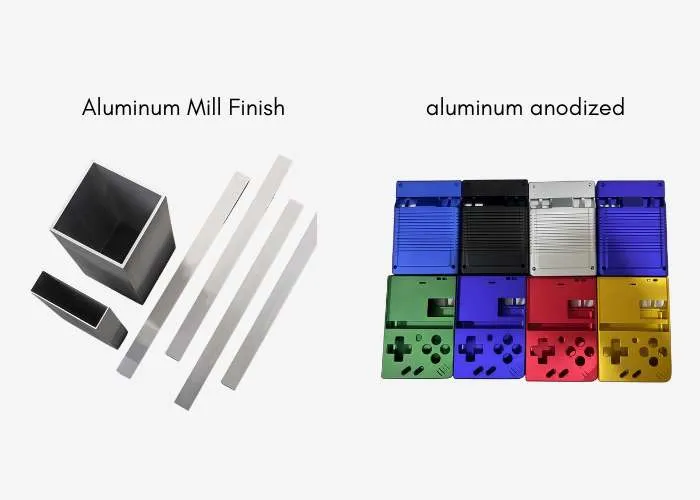
Mill finish aluminum refers to aluminum left in its natural state after rolling or extrusion, without any chemical or mechanical surface treatment. It is widely used in manufacturing where appearance is secondary to cost, conductivity, and machinability.
What Is Anodized Aluminum
Anodized aluminum is aluminum that has undergone an electrochemical process to grow a controlled oxide layer on its surface. This oxide layer improves corrosion resistance, wear performance, and appearance while remaining fully bonded to the base metal.
Mill Finish vs Anodized Aluminum: Side-by-Side Comparison
Mill finish and anodized aluminum differ fundamentally in how their surfaces are formed. One relies on the raw aluminum surface, while the other adds a functional oxide layer. In CNC machining manufacturing, these differences directly affect durability, appearance, electrical behavior, cost, and overall machining strategy.
Appearance
Mill finish aluminum has a natural matte gray appearance with visible rolling or extrusion marks that may vary between batches. Anodized aluminum offers a more uniform surface, either clear or colored, with improved visual consistency and depth.
Corrosion Resistance
Mill finish aluminum depends only on its naturally formed oxide layer, providing limited corrosion protection. Anodized aluminum forms a dense aluminum oxide film that significantly improves resistance to moisture, chemicals, and oxidation.
Wear Resistance
Mill finish aluminum scratches easily and shows surface wear quickly during handling or use. Anodized aluminum has a harder surface layer, offering better scratch and abrasion resistance for long-term service.
Electrical Conductivity
Mill finish aluminum maintains full surface conductivity. Anodized aluminum is electrically insulating at the surface due to the oxide layer, requiring masking or post-machining when electrical contact is needed.
Cost
Mill finish aluminum is the most cost-effective option, as it requires no additional surface processing. Anodized aluminum adds processing cost, typically justified by improved durability, appearance, and service life.
CNC Machining Impact
Mill finish aluminum is straightforward to machine, with no need to account for coating thickness. Anodized aluminum requires dimensional allowance for oxide growth and careful planning of machining sequence and masking.
Pros and Cons of Each Finish
Both mill finish and anodized aluminum have clear advantages and limitations. Understanding their trade-offs in cost, durability, appearance, and machining behavior helps engineers select the right surface finish for performance and production efficiency.
Mill Finish Aluminum: Pros
- Lowest material cost, ideal for budget-sensitive projects
- Excellent machinability with no coating thickness to compensate
- Full electrical conductivity on the surface
- Natural aluminum appearance without additional processing
- Fully recyclable and easy to rework
Mill Finish Aluminum: Cons
- Limited corrosion and wear resistance
- Visible rolling lines, stains, and batch inconsistency
- Scratches and fingerprints appear easily
- Unsuitable for marine or high-moisture environments
- Paint adhesion is weak and prone to chipping
Anodized Aluminum: Pros
- Significantly improved corrosion and wear resistance
- Hard, stable oxide layer bonded to the base metal
- Uniform appearance with clear or dyed color options
- Better surface durability for handling and long-term use
- Reduced maintenance compared to raw aluminum
Anodized Aluminum: Cons
- Higher processing cost than mill finish
- Surface becomes electrically insulating
- Dimensional changes require CNC machining compensation
- Cosmetic defects cannot be easily repaired
- Color variation may occur across alloys or complex parts
Typical Applications
Mill finish and anodized aluminum are used across a wide range of industries, but their applications differ based on durability, appearance, conductivity, and environmental exposure. Selecting the right finish ensures performance, longevity, and cost efficiency in real manufacturing scenarios.
Architecture and Structural Components
Mill finish aluminum is commonly used in structural frames, trims, brackets, and hidden building components where cost efficiency and basic corrosion resistance are sufficient. Anodized aluminum is preferred for visible architectural elements such as curtain walls, facades, doors, and exterior panels due to its improved weather resistance and appearance stability.
Industrial and Electrical Components
Mill finish aluminum is widely used for internal industrial parts, busbars, and electrical components where surface conductivity and machinability are critical. Anodized aluminum, with its insulating oxide layer, is often applied to housings, enclosures, and control panels where corrosion protection and surface durability are required.
Electronics and Consumer Products
In consumer electronics and products, anodized aluminum is commonly chosen for housings, frames, and decorative parts due to its uniform appearance, scratch resistance, and color stability. Mill finish aluminum is more often used for internal parts, packaging, and cost-sensitive consumer goods.
CNC Machined Parts
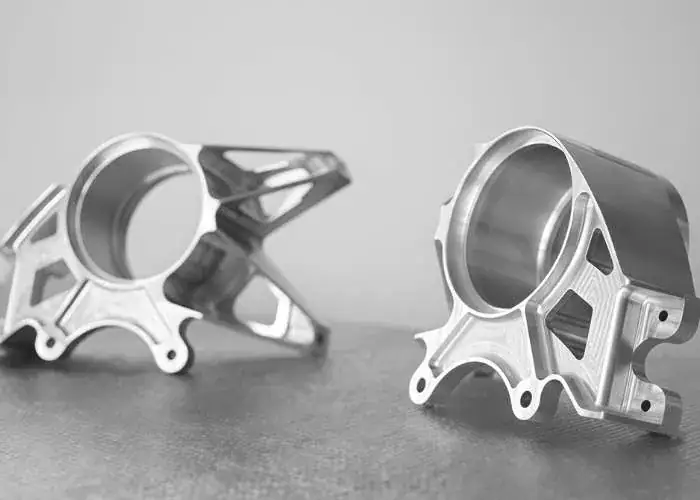
From manufacturing experience, mill finish aluminum is frequently used for CNC machined parts that require tight tolerances, secondary assembly, or further surface treatment. Anodized aluminum is selected when CNC machined components must combine precision, surface durability, and long-term appearance consistency.
How to Choose: Mill Finish or Anodized Aluminum
Choosing between mill finish and anodized aluminum depends on how the part will be used, processed, and maintained. Evaluating environment, appearance, cost, and machining needs helps avoid over-specification or premature failure.
Service Environment
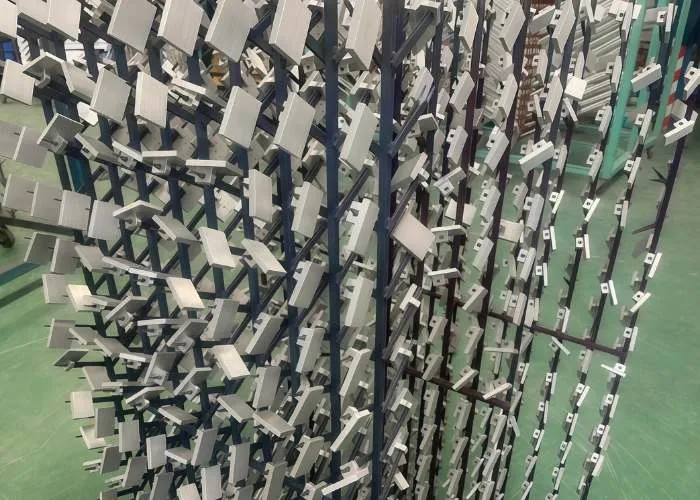
Mill finish aluminum performs well in dry, indoor, or low-exposure environments where basic corrosion resistance is sufficient. Anodized aluminum is better suited for outdoor, humid, or chemically exposed conditions due to its dense oxide layer and improved environmental protection.
Appearance Requirements
When appearance is not critical or parts are hidden after assembly, mill finish is often sufficient. Anodized aluminum is preferred for visible components requiring uniform color, reduced fingerprints, and long-term visual consistency.
Cost and Production Volume
Mill finish offers the lowest material and processing cost, making it ideal for large-volume or cost-sensitive production. Anodizing adds cost but can reduce lifecycle expenses by improving durability and reducing maintenance or rework.
Machining and Assembly Needs
Mill finish aluminum simplifies CNC machining because there is no coating thickness to compensate. Anodized aluminum requires dimensional allowance and careful sequencing of machining, masking, and surface treatment—especially for tight-tolerance assemblies.
FAQs
Is Anodized Aluminum Better Than Mill Finish Aluminum?
In my experience, anodized aluminum performs better in outdoor or corrosive environments. The anodic layer (about 5–25 µm) improves wear and corrosion resistance. By comparison, mill fnish aluminum or aluminium mill fnish is more suitable for indoor, cost-sensitive, or conductivity-critical applications.
How Can Mill Finish Aluminum Be Protected Effectively?
What is mill fnish? It refers to aluminum used in its raw, untreated state. Mill fnish aluminum relies on a thin natural oxide layer, which offers limited protection. In practice, anodizing, painting, or PVDF coating is commonly used to extend service life in humid or outdoor environments.
Does Mill Finish Aluminum Corrode Easily?
Yes. Mill fnish aluminum can oxidize and discolor when exposed to moisture, salt, or pollution. While it does not rust like steel, the natural oxide layer is thin and insufficient for long-term outdoor or marine exposure without additional surface treatment.
Conclusion
Mill finish aluminum focuses on low cost, conductivity, and easy machining, while anodized aluminum adds durability, corrosion resistance, and better appearance. The right choice depends on environment, appearance needs, and CNC machining requirements.
At TiRapid, we machine mill finish and anodized aluminum in-house with tight tolerance control, process sequencing expertise, and guaranteed surface quality—from prototype to production. Contact us to optimize your aluminum parts today.