ABS is an engineering thermoplastic valued for its balance of strength, toughness, and thermal stability. Understanding how ABS behaves when heated—how it softens, transitions, and reaches its melt range—is essential for predicting its performance, durability, and suitability across demanding applications. Knowing the ABS melting point also helps engineers optimize molding, machining, and 3D-printing settings for consistent and safe results.
What Is ABS
Acrylonitrile Butadiene Styrene (ABS) is a popular engineering thermoplastic valued for its balanced strength, toughness, and ease of processing. Its three-component structure gives it good impact resistance, heat stability, and smooth moldability. Because of this versatility, ABS is widely used in automotive parts, electronics housings, and functional prototypes across modern manufacturing.
It is made from three monomers—each providing a critical property:
Acrylonitrile → chemical resistance & thermal stability
Butadiene → impact strength & toughness
Styrene → rigidity, surface gloss, and easy processing
This combination forms a durable polymer capable of withstanding mechanical stress while maintaining dimensional stability. ABS typically softens around its glass transition temperature (~105°C / 221°F) and becomes fully moldable between 200–250°C (392–482°F), which makes it ideal for injection molding, extrusion, and 3D printing.
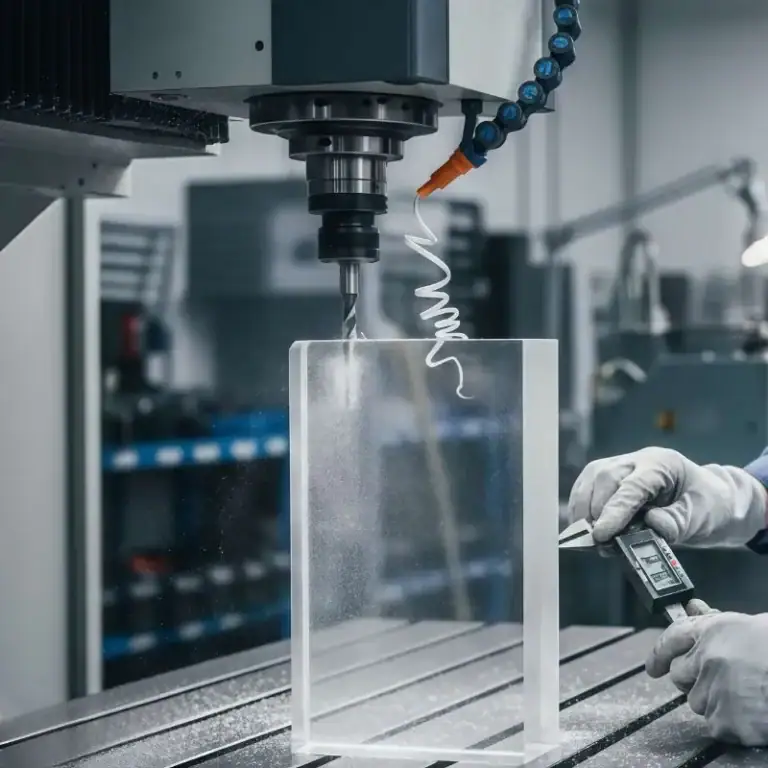
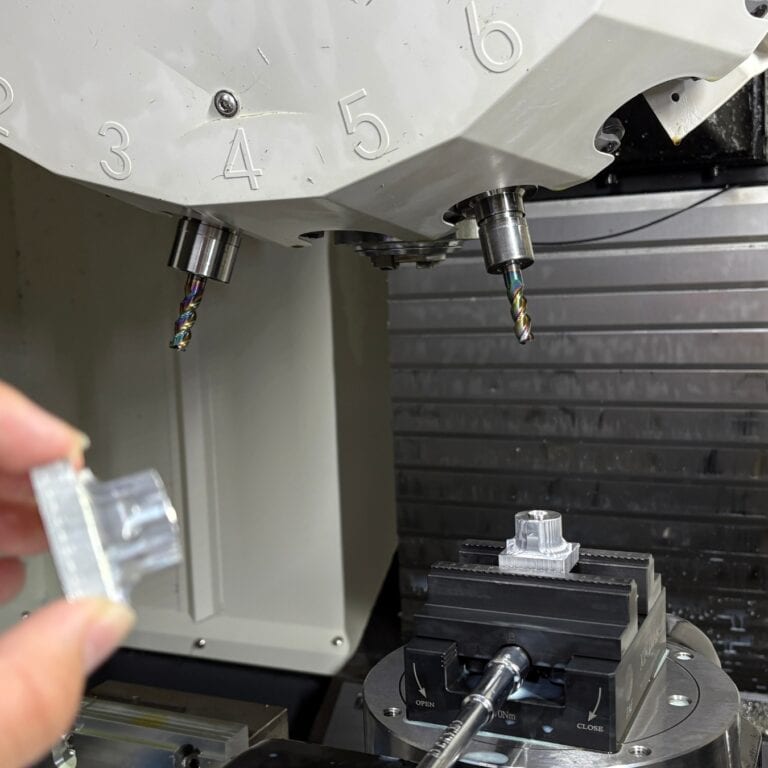
Its mechanical and thermal characteristics allow ABS to perform well in automotive parts, protective housings, plumbing components, and precision-engineered products. In my experience working with CNC machining clients, ABS is often selected for prototypes that require both strength and smooth finishing—especially for enclosures, test fixtures, or functional parts that undergo repeated use.
ABS’s versatility and affordability make it a preferred choice when manufacturers need a material that balances durability, appearance, and processing efficiency.
What Is the Melting Temperature Range of ABS
ABS melts gradually rather than at a single point, typically flowing well between 220–250°C (428–482°F). Below this range it remains too rigid to process, while above it risks degradation, yellowing, and loss of strength. This melting window is a defining feature of ABS as an amorphous thermoplastic.
Key Thermal Values of ABS
| Thermal Property | Temperature | Meaning |
| Glass Transition (Tg) | 105–115°C (221–239°F) | ABS becomes rubbery; stiffness decreases |
| Softening Temperature | 100–110°C | Begins losing rigidity but not fully molten |
| Processing / Melt Range | 220–250°C (428–482°F) | Ideal flow for molding, extrusion, and 3D printing |
| Maximum Service Temperature | 80–95°C | Recommended for continuous long-term use |
Knowing the appropriate melting window is essential for:
- Preventing overheating, which causes yellowing, odor, and polymer degradation
- Avoiding defects such as bubbles, burn marks, short shots, and warping
- Achieving proper flow during injection molding, extrusion, or thermoforming
- Improving layer adhesion in 3D printing
- Ensuring consistent part quality and dimensional accuracy
- Temperatures above 260°Cmay cause ABS to decompose, releasing unpleasant fumes and weakening mechanical properties.
In one ABS enclosure project for a robotics client, setting the melt temperature below 225°C resulted in poor flow, incomplete filling, and weak bonding.
When the temperature exceeded 250°C, the parts developed yellow coloration, slight burning, and reduced strength.
By optimizing the processing temperature to 235–245°C, we significantly improved:
- Surface finish
- Dimensional stability
- Overall mechanical performance
This real-world case demonstrates why understanding the ABS melting range is critical for achieving high-quality, repeatable production.
What Factors Affect ABS Melting Behavior
The melting temperature of ABS isn’t fixed—it changes based on its chemistry, additives, and processing conditions. Understanding these factors helps manufacturers set accurate molding or printing temperatures, avoid defects, and keep thermal performance stable.
1. Polymer Composition (Acrylonitrile / Butadiene / Styrene Ratio)
The monomer ratios have a direct effect on heat behavior:
- Acrylonitrile (15–35%) → increases heat resistance and chemical stability
- Butadiene (5–30%) → improves impact resistance but lowers thermal stability
- Styrene (40–60%) → enhances rigidity and processability
Grades with higher acrylonitrile content generally soften and melt at higher temperatures, while those with more butadiene tend to soften earlier due to increased molecular flexibility.
2. Molecular Weight & Polymer Structure
Molecular weight determines how tightly polymer chains are held together:
- Higher molecular weight → higher melting temperatures due to stronger intermolecular forces
- Uniform molecular weight distribution improves processing consistency
- Chain branching affects melt flow, especially in injection molding and extrusion
Materials with higher molecular weight often require 5–15°C higher processing temperatures to achieve equivalent flow.
3. Additives and Modifiers
ABS formulations frequently include additives that change its thermal behavior:
Plasticizers
- Increase ductility and flexibility
- Lower the effective softening temperature
- Increase chain mobility → earlier softening onset
Flame Retardants
- Improve fire resistance
- Do not significantly change the 200–250°C melt range
- May shift decomposition onset or off-gassing behavior
Stabilizers (Heat / UV)
- Prevent degradation during high-temperature processing
- Help maintain consistent melt flow
- Do not typically alter melting temperature directly
Fillers & Reinforcements
Examples: glass fiber, carbon black, talc, calcium carbonate
- Improve stiffness and dimensional stability
- Can increase heat deflection temperature
- May slightly change thermal conductivity and melting uniformity
Colorants
- Minimal effect on melting characteristics
- Certain pigments may influence localized heating or flow behavior
4. Processing History & Heating Rate
How ABS is heated or cooled affects its future melting behavior:
- Rapid heating can cause localized overheating or early degradation
- Slower heating promotes uniform softening
- Repeated thermal cycles can reduce molecular weight → lower melting resistance
- Cooling rate affects internal stresses, changing how heat spreads during the next cycle
In manufacturing, consistent heating rates—especially during injection molding—ensure predictable melt flow and reduce defects.
5.Practical Example From Real Production Work
In one of our prototype enclosure projects, two ABS grades with slightly different monomer ratios behaved very differently:
- Grade A (higher acrylonitrile): required 245–250°C nozzle temperature to achieve proper flow
- Grade B (higher butadiene): flowed well at 225–235°C, but warped if overheated
This reinforced how composition and additives directly influence the working melt window, and why checking the grade-specific data sheet before processing is essential.
Why Understanding These Factors Matters
A precise understanding of melting behavior allows engineers to:
- Optimize molding, extrusion, and 3D printing temperatures
- Avoid over- or under-heating, preventing yellowing, burn marks, or warping
- Improve cycle times and product consistency
- Maintain polymer integrity and long-term material performance
By matching processing temperature to material grade and formulation, manufacturers achieve stronger parts, smoother surfaces, and more efficient production.
How Does ABS Melting Behavior Compare to Other Materials
ABS melts at a moderate temperature compared to other plastics and is far easier to process than metals. Understanding how ABS’s melting range compares to materials like PLA, PC, Nylon, or PEEK helps engineers choose the right material for strength, heat performance, and manufacturing efficiency.
| Material | Melt / Processing Temp (°C) | Glass Transition Tg (°C) | Heat Deflection Temp HDT (°C) | Weight | Corrosion Resistance | Cost Level | Key Advantages / Notes |
| ABS | 220–250°C | 105–115°C | 85–100°C | Very Light | Excellent | Medium | Balanced strength, easy molding, ideal for consumer products & automotive interiors |
| PLA | 180–220°C | 60–65°C | 55–60°C | Light | Good | Low | Easy to print but low heat resistance; unsuitable for heat-loaded parts |
| PETG | 230–250°C | 80–85°C | 70–80°C | Light | Good | Medium | Tough, clear, better layer adhesion than PLA |
| Polycarbonate (PC) | 260–310°C | 145–150°C | 130–140°C | Medium | Good | High | Exceptional heat strength; used for impact-resistant & high-temp parts |
| Nylon (PA6) | 240–280°C | 47–60°C | 75–95°C | Medium | Moderate | Medium-High | Strong but absorbs moisture; heat distortion issues in long-term use |
| PEEK | 360–400°C | 143°C | 160–170°C | Medium | Excellent | Very High | High-performance polymer for aerospace/medical applications |
| HDPE | 120–180°C | – | ~50–70°C | Light | Excellent | Low | Very flexible, chemical-resistant, but poor heat resistance |
| PP (Polypropylene) | 130–171°C | – | 50–70°C | Light | Excellent | Low | Cheap, good chemical resistance, low structural strength |
| Aluminum (Metal) | ~660°C | – | – | Medium | Susceptible (unless coated) | Medium-High | Can be CNC-machined; strong but heavier and higher energy usage |
| Steel (Metal) | >1200°C | – | – | Heavy | Rusts without treatment | High | High structural strength; unsuitable for low-cost or lightweight consumer parts |
What Are the Processing Temperatures of ABS in Manufacturing
The processing temperatures of ABS typically fall between 220–250°C, which is the range where the material reaches optimal melt flow for molding and extrusion. Below this range, ABS may not fill molds properly; above it, the polymer risks yellowing and thermal degradation. Knowing this temperature window ensures stable processing and consistent part quality.
ABS transitions through distinct physical states during manufacturing, and each stage directly influences how the material flows, cools, bonds, and holds shape. These behaviors determine whether ABS performs well in processes like injection molding, extrusion, and 3D printing.
1.Solid State: Strong, Rigid, Dimensionally Stable
At room temperature, ABS remains in a solid state where intermolecular forces hold polymer chains tightly together. This gives ABS its durability and rigidity.
- High impact resistance
- Good dimensional stability
- Smooth machinability
In CNC machining projects I’ve supported, ABS often holds tolerances well and resists cracking during drilling or milling, making it a reliable plastic for prototypes and functional housings.
2.Glass Transition (~105°C / 221°F): Softening Begins
When ABS reaches its glass transition temperature (Tg), its polymer chains begin to loosen. It becomes rubbery instead of rigid.
What happens at Tg:
- Stiffness drops significantly
- Material becomes flexible
- Internal stresses begin to relax
This stage is critical in thermoforming, bending, or pre-heating operations.
3.Molten State (220–250°C / 428–482°F): Fully Flowable
Once ABS reaches its processing/melting range, thermal energy overcomes intermolecular forces, allowing polymer chains to move freely.
In molten form, ABS can:
- Fill mold cavities accurately
- Maintain good surface finish
- Form complex geometries
- Extrude smoothly through nozzles
However, above ~260°C, ABS can degrade, releasing fumes and losing strength—temperature control is essential.
Practical Tips for Working With ABS
Working with ABS requires precise control of temperature, moisture, and processing conditions. Understanding how ABS behaves during heating, molding, and cooling helps you prevent defects, improve part quality, and achieve consistent, high-performance manufacturing results.

1. Control Melt Temperature Carefully (200–250°C)
ABS must be processed within a stable temperature window.
Below 200°C: poor flow, short shots, weak weld lines
Above 250°C: risk of thermal degradation, yellowing, fumes
Maintaining a consistent melt temperature prevents burning and ensures smooth flow. In our shop, we keep most ABS grades between 235–245°C, producing cleaner surfaces and stronger structures.
2. Maintain Proper Mold Temperature (50–80°C)
Mold temperature heavily influences surface finish and internal stress.
Lower mold temps (50–60°C): faster cycles, but more internal stress
Higher mold temps (70–80°C): smoother surfaces, fewer flow marks, better dimensional stability
For glossy housings or cosmetic parts, we always raise the mold temperature above 70°C to reduce surface imperfections.
3. Apply Correct Injection Pressure & Speed
ABS typically requires 50–150 MPa of injection pressure.
High pressure = complete filling of detailed geometries
Too fast = flow lines or burn marks
Too slow = weld line weakness
Balancing speed and pressure improves consistency and minimizes defects.
4. Dry ABS Thoroughly Before Processing
ABS is hygroscopic, meaning it absorbs moisture.
Recommended drying: 2–4 hours at 80–90°C
If moisture is present → bubbles, silver streaks, pitting, or weak mechanical strength
We never skip drying ABS—90% of visual defects disappear when moisture is controlled.
5. Ensure Uniform Cooling & Careful Ejection
ABS contracts as it cools, so uniform cooling prevents warping.
Avoid sudden cooling, which increases brittleness
Use controlled ejection to avoid scratches or part deformation
For thin-wall parts, we extend cooling time slightly to improve dimensional accuracy.
6.Use Proper Runner & Gate Design
ABS flows best through:
Edge gates
Fan gates
These gate types reduce shear stress and minimize flow lines. Gate size must match part thickness to maintain consistent filling and avoid sink marks.
7. Understand the ABS Softening Temperature (Vicat 100–105°C)
The Vicat softening temperature indicates when ABS loses rigidity.
Softening point: 100–105°C
Above this limit, parts can deform under load
This is especially important in:
Automotive interiors exposed to sunlight
Mechanical parts near motors
3D-printed components that must support weight
8. Manage Heat Carefully in 3D Printing
Optimal settings for FDM printing:
Nozzle: 230–240°C
Bed: 100–105°C
Chamber: 45–60°C
Too cold → poor adhesion, warping
Too hot → stringing, discoloration, toxic fumes
An enclosed chamber significantly reduces layer separation.
9. Use Additives for Improved Stability
ABS performance can be enhanced using:
Antioxidants: prevent high-temperature degradation
UV stabilizers: protect outdoor parts
Flame retardants: improve safety for electronics
Glass fibers: raise HDT and increase rigidity
However, additives can shift melt behavior slightly—each formulation should be tested.
10. Avoid Long Exposure Above 260°C
Prolonged overheating can cause:
Polymer breakdown
Loss of mechanical strength
Release of acrylonitrile-based fumes
Brittleness after cooling
Always follow the safe thermal window for each grade.
Safety Considerations When Heating ABS
Heating ABS requires careful control because elevated temperatures can trigger several risks, including toxic fume release, polymer degradation, smoke generation, and potential ignition if overheated. Even within normal processing ranges, ABS can emit irritating VOCs, making proper ventilation and temperature monitoring essential. Understanding these safety concerns helps ensure cleaner operation, protects workers, and prevents damage to equipment and finished parts.
1. Toxic Emissions
When overheated, ABS can release:
- Styrene (irritant, possible carcinogen)
- Butadiene (known carcinogen)
- Hydrogen cyanide (from acrylonitrile)
- Carbon monoxide and VOCs
Proper ventilation or fume extraction is essential, especially in enclosed 3D-printing or molding spaces.
2. Fire Safety Risks
ABS is combustible:
- Flash point: ~400°C
- Auto-ignition: ~466°C
Heating equipment must be well-maintained, and Class ABC extinguishers should be accessible.
3. Processing Risks
Poor thermal control may cause:
- Warping – from uneven cooling or temperature swings
- Burn marks – caused by trapped air or excessive heating
- Short shots – due to improper melt flow
- Flow lines / sink marks – from inconsistent material temperatures
Correct mold temperature, venting, injection speed, and uniform cooling reduce these issues.
4. Real-World Note
In one of our injection-molding projects, a client overheated ABS above 260°C, causing yellowing, strong odor, and poor tensile strength. Once we stabilized the melt range to 235–245°C with improved ventilation, both part quality and operator safety increased.
FAQs
At What Temperature Does ABS Melt?
ABS doesn’t melt at a single temperature. It becomes fully moldable between 220°C and 250°C (428–482°F). In practice, 235–245°C works best for stable flow and good surface finish.Below 220°C, ABS won’t flow properly; above 250°C, it may yellow or start to degrade—typical behavior of an amorphous thermoplastic.
Does ABS Burn Or Melt?
ABS melts within 220–250°C but begins to degrade around 260°C. If heated too long or above its decomposition point, it can burn, especially near 400°C where ignition is possible. In normal use, ABS melts first—but will burn if overheated.
Does ABS Withstand Heat?
ABS handles moderate heat but has limits.
Its glass transition is ~105°C, and continuous use should stay below 80–95°C to avoid deformation.
It tolerates short heat spikes, but for high-heat applications, PC or PEEK is a better choice.
Can You Heat ABS Plastic?
Yes. ABS can be heated safely within set ranges:
- 100–110°Csoftening for bending
- 220–250°Cmelting for molding
Above 260°C, it degrades and releases fumes—ventilation is required.
Is ABS Toxic When Burned?
Yes. When overheated above ~260°C, ABS releases harmful compounds like styrene and acrylonitrile. Proper ventilation is essential during processing.
Is 260°C Too Hot for ABS?
Yes. 260°C is the upper limit where ABS begins degrading, causing yellowing, odor, and strength loss. Most grades run best at 230–245°C.
Will ABS Melt In Boiling Water?
No. ABS melts at 220–250°C, far above boiling water. It may soften because Tg is ~105°C, so hot water can deform it but won’t melt it.
Conclusion
Understanding the melting point and thermal behavior of ABS is key to achieving stable, high-precision CNC-machined parts. Because ABS softens gradually instead of melting sharply, proper cutting parameters, cooling control, and material preparation greatly influence tolerance stability and surface quality. Working with a CNC team experienced in thermoplastics ensures smoother edges and consistent results.