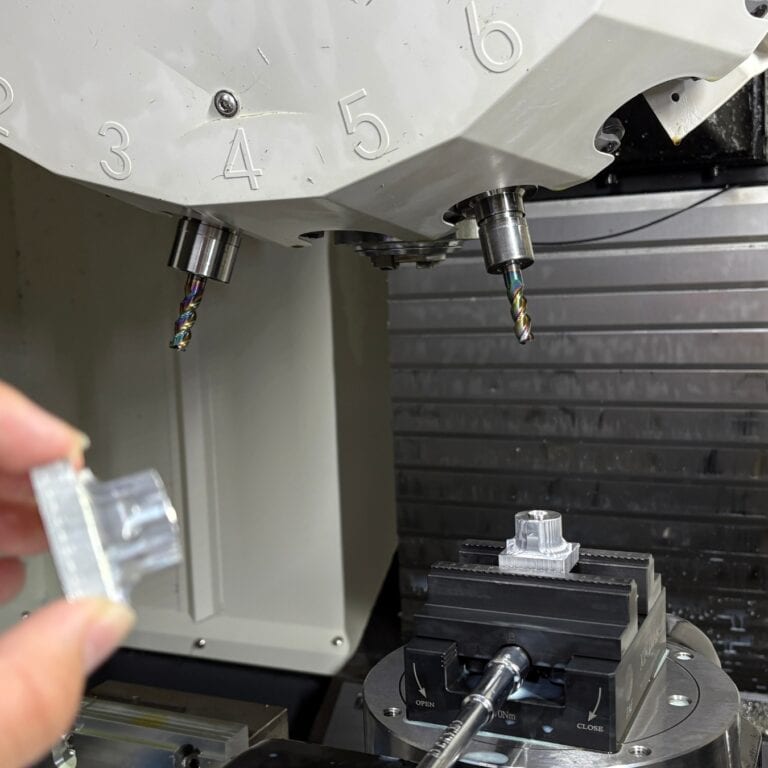
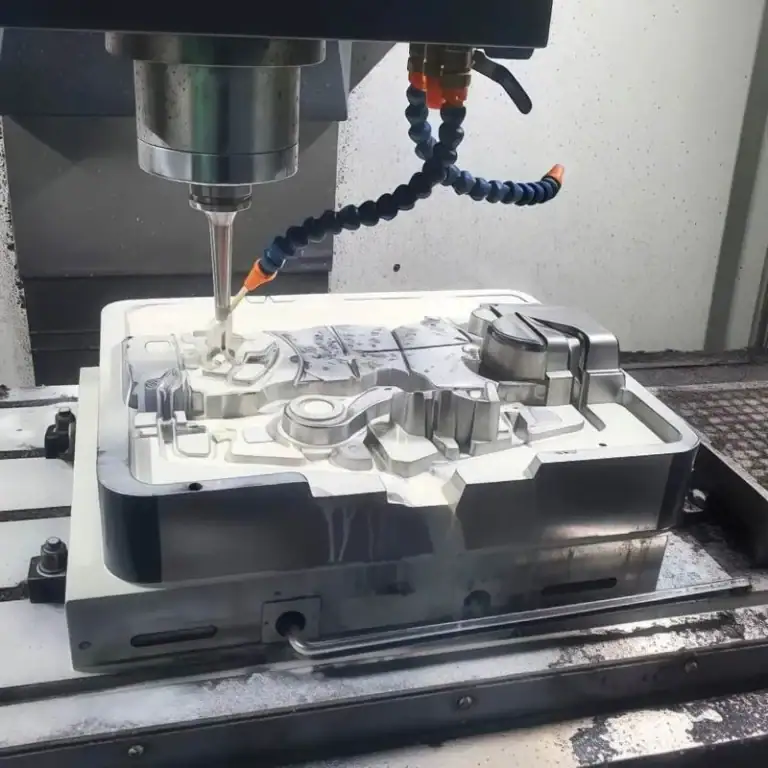
7 axis CNC machining enables unmatched flexibility and precision by allowing simultaneous multi-directional movement in a single setup. This capability is critical for aerospace, medical, and complex structural parts. In this article, we explain how 7-axis machining works, where it excels, and when it outperforms 5-axis systems.
What Is 7-Axis CNC Machining
7-axis CNC machining extends 5-axis technology by adding additional rotational control, allowing complex parts to be machined in one setup with micron-level accuracy, improved surface finish, and reduced repositioning—driven by aerospace and medical manufacturing requirements.
What Are the 7 Axes in 7-Axis CNC Machining
7-axis CNC machining uses linear and rotational axes to machine complex parts in one setup, delivering higher precision, better surface quality, and fewer setup errors.
Linear Axes in 7-Axis Machining
The three linear axes form the foundation of all CNC machining operations and control straight-line motion:
X-Axis
Controls left-to-right horizontal movement across the machine bed. It defines lateral positioning and is essential for width-related features.
Y-Axis
Controls vertical up-and-down movement. This axis enables precise height positioning and supports multi-level feature machining.
Z-Axis
Controls forward-and-backward movement and determines cutting depth. It directly affects dimensional accuracy and surface finish.
In real production, stable linear-axis accuracy is critical for maintaining micron-level tolerances on precision parts.
Rotational Axes in 7-Axis Machining
The four rotational axes dramatically expand machining flexibility beyond 3-axis and 5-axis systems:
A-Axis
Rotates around the X-axis, allowing angled machining without refixturing.
B-Axis
Rotates around the Y-axis, enabling smooth contouring and multi-face access.
C-Axis
Rotates around the Z-axis with continuous 360° motion, ideal for circular features and complex toolpaths.
E-Axis
An additional rotary or articulated axis that enhances tool orientation and motion freedom. This axis is what truly differentiates 7-axis machining from standard 5-axis setups.
Together, these seven axes allow tools to approach the workpiece from virtually any direction, reducing setups, improving accuracy, and enabling geometries that would otherwise be impossible.
Types of 7-Axis CNC Machines
7-axis CNC machines are built for highly complex parts, tight tolerances, and multi-directional machining in one setup. Different machine types are used depending on accuracy needs, part size, material, and production volume across aerospace, medical, and industrial applications.

| Machine Type | Precision Capability | Typical Workpiece Size | Material Suitability | Initial Investment | Best Applications |
| Machining Centers | ±0.00004 in (1 μm) | Small–Medium (≤2 ft³) | All materials incl. hardened steel | $500k–$1.2M | Aerospace parts, medical implants |
| Robot Arms | ±0.002 in (0.05 mm) | Medium–Large (≤8 ft³) | Aluminum, plastics, soft materials | $350k–$700k | Automotive prototypes, complex shapes |
| Swiss-Type Machines | ±0.00004 in (1 μm) | Very small (≤1.5 in Ø) | All materials incl. exotic alloys | $400k–$900k | Medical devices, watch components |
| Gantry Systems | Tool-dependent | Multi-machine handling | Loading/unloading automation | $600k–$1.3M | High-volume automated production |
From practical experience, machining centers and Swiss-type machines dominate high-precision industries, while robot arms and gantry systems focus more on flexibility, automation, and throughput rather than micron-level accuracy.
7-Axis vs 5-Axis CNC Machining
Choosing between 5-axis and 7-axis CNC machining depends on part complexity, tolerance requirements, and production efficiency rather than simply selecting the most advanced technology.
5-axis CNC machining is widely used for complex parts that require multi-face machining with limited undercuts. It offers an excellent balance between precision, cost, and programming complexity, making it suitable for aerospace brackets, housings, and most medical components.
7-axis CNC machining extends beyond 5-axis capabilities by adding extra rotational or auxiliary axes. This allows tools to access deep internal features, extreme undercuts, and complex geometries in a single setup. In my experience, 7-axis machining significantly reduces setup time and cumulative error for parts such as turbine blades, orthopedic implants, and high-end aerospace components.
While 7-axis machines involve higher equipment and programming costs, they deliver clear advantages for ultra-complex parts where precision, surface integrity, and efficiency are critical. For many standard aerospace or industrial parts, however, 5-axis machining remains the most cost-effective and reliable solution.
When to Choose 5-Axis CNC Machining
Parts have limited internal features or undercuts
Moderate to high production volumes with similar geometries
Budget or lead-time constraints favor simpler setups
Programming resources are limited
One or two part repositionings are acceptable
When to Choose 7-Axis CNC Machining
Parts feature complex internal channels or multiple undercuts
Tool access from many angles is required in one setup
Tight tolerances and superior surface quality are critical
Reducing setup time directly improves yield and accuracy
Advanced aerospace or medical applications justify higher investment
Advantages and Limitations of 7-Axis CNC Machining
7-axis CNC machines are built for highly complex geometries and tight tolerances in a single setup. Different machine architectures are selected based on part size, material, accuracy, and production needs across aerospace, medical, and industrial applications.

Advantages of 7-Axis CNC Machining
Single-setup machining for complex parts
7-axis systems allow tools to approach a workpiece from almost any direction, reducing or eliminating multiple setups. This improves accuracy and minimizes cumulative alignment errors.
Higher precision and surface quality
By maintaining continuous tool contact and optimal cutting angles, 7-axis machining achieves micron-level tolerances and smoother surface finishes, especially on complex contours.
Shorter lead times for advanced geometries
Complex internal features, undercuts, and multi-face parts can be completed in one cycle, significantly reducing overall machining time for high-end components.
Improved consistency for critical applications
In industries such as aerospace and medical, fewer setups mean better repeatability and lower risk of dimensional variation across batches.
Limitations of 7-Axis CNC Machining
Higher equipment and operating costs
7-axis machines require significant capital investment, advanced tooling, and higher maintenance costs compared to 3-axis or 5-axis systems.
Increased programming complexity
Multi-axis toolpaths demand experienced CAM programmers and longer preparation time, increasing engineering effort for each project.
Not cost-effective for simple parts
For parts with straightforward geometries, 7-axis machining may add unnecessary cost without delivering measurable benefits.
Longer learning curve for operators
Operating and maintaining 7-axis systems requires specialized training, which may limit accessibility for smaller machining shops.
Applications of 7-Axis CNC Machining
7-axis CNC machining is used where extreme precision, complex geometry, and minimal setups are required. Its ability to machine multiple faces and deep features in one setup makes it ideal for high-value, high-risk industries.

Typical application areas include:
Aerospace
Turbine blades, impellers, and structural parts with complex aerodynamic surfaces.
Medical Devices
Implants, surgical tools, and dental components requiring smooth surfaces and tight tolerances.
Automotive & Motorsport
Engine parts, transmission components, and performance prototypes with intricate internal features.
Military & Defense
Precision components for guidance systems, housings, and mission-critical assemblies.
7-axis machining reduces setups, improves accuracy, and shortens lead times for complex parts that are difficult to produce with 3-axis or 5-axis systems.
FAQs
What Are The 7 Axes On A CNC Machine?
In 7-axis CNC machining, I work with three linear axes (X, Y, Z) and four rotational axes (A, B, C, and an additional rotary or tool-orientation axis). This configuration allows the tool to approach the part from virtually any direction. Compared with lower-axis systems, 7 axes reduce repositioning, improve geometric accuracy, and enable complex internal features. In practice, this setup supports micron-level tolerances and significantly shortens total machining time.
What Is The Difference Between 5-Axis And 7-Axis CNC Machining?
The main difference I see between 5-axis and 7-axis CNC machining is tool access and setup efficiency. A 5-axis machine can handle complex surfaces but may still require repositioning for deep undercuts or internal features. A 7-axis system adds extra rotational freedom, allowing complete machining in a single setup. This reduces cumulative error, improves surface finish, and can cut setup time by up to 60–80% on highly complex parts.
What Is The Cost Of A 7-Axis CNC Machine?
A 7-axis CNC machine typically costs between $500,000 and $1.2 million. From my experience, this price reflects advanced mechanical structures, high-precision rotary assemblies, and sophisticated CNC control systems. The investment is justified when producing high-value aerospace, medical, or defense components where tolerances below ±0.005 mm and reduced setups directly impact quality, throughput, and long-term manufacturing cost efficiency.
How Many Axes Can A CNC Machine Have?
A CNC machine can have anywhere from 3 to more than 12 axes, depending on its design and application. I commonly see 3-axis machines for basic milling, 5-axis for complex surfaces, and 7-axis or higher for advanced precision work. As axis count increases, machines gain greater flexibility, improved accuracy, and better access to complex geometries, which is essential for aerospace, medical, and multi-feature precision components.
How Does 7-Axis CNC Machining Impact Production Efficiency?
7-axis CNC machining improves production efficiency by minimizing setups, manual intervention, and tool changes. In my projects, parts that once required four or five fixtures can often be completed in a single setup. This reduces handling time, lowers scrap risk, and increases spindle utilization. For complex components, I’ve seen overall cycle times reduced by 30–50% while maintaining tighter tolerances and consistent surface quality.
How Does 7-Axis CNC Machining Compare To Additive Manufacturing?
7-axis CNC machining and additive manufacturing serve different purposes. I rely on 7-axis machining when structural integrity, tight tolerances, and surface finish matter most. CNC machining achieves tolerances down to ±0.0025 mm and surface finishes below Ra0.4 μm. Additive manufacturing excels in design freedom but often requires post-processing. For flight-critical or load-bearing parts, 7-axis CNC remains the more reliable solution.
What Are The Programming Challenges For 7-Axis CNC Machines?
Programming a 7-axis CNC machine is significantly more complex than standard multi-axis systems. I must coordinate simultaneous motion across seven axes while avoiding collisions between tools, holders, and fixtures. This requires advanced CAM software such as PowerMILL or Mastercam and detailed simulation. Without proper verification, errors can be costly. However, once optimized, these programs deliver unmatched precision and repeatability for complex geometries.
Conclusion
7-axis CNC machining represents the highest level of multi-axis precision manufacturing. By minimizing setups and maximizing tool access, it delivers superior accuracy, surface quality, and efficiency for complex aerospace, medical, and high-value components where reliability and precision are non-negotiable.