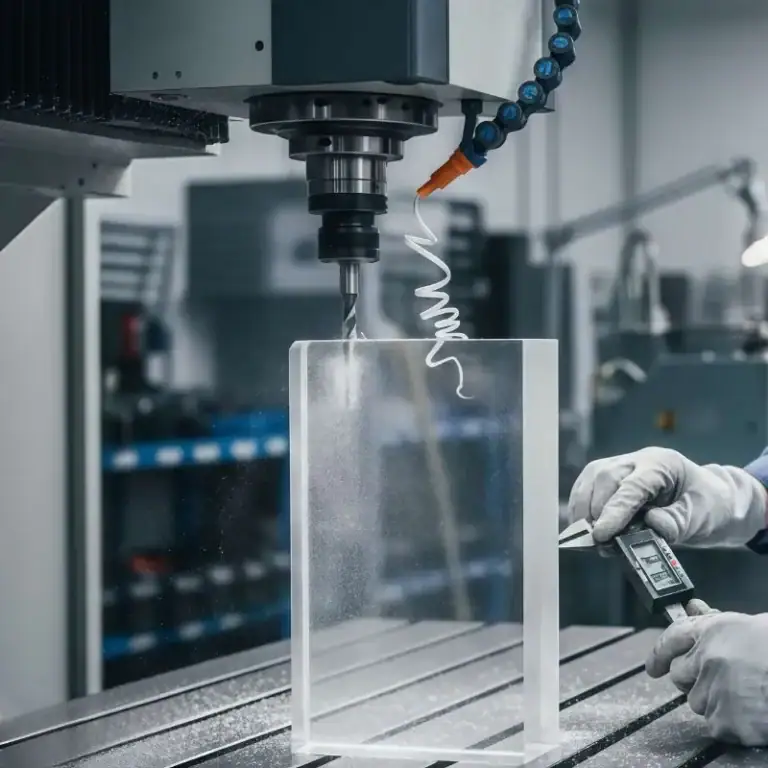
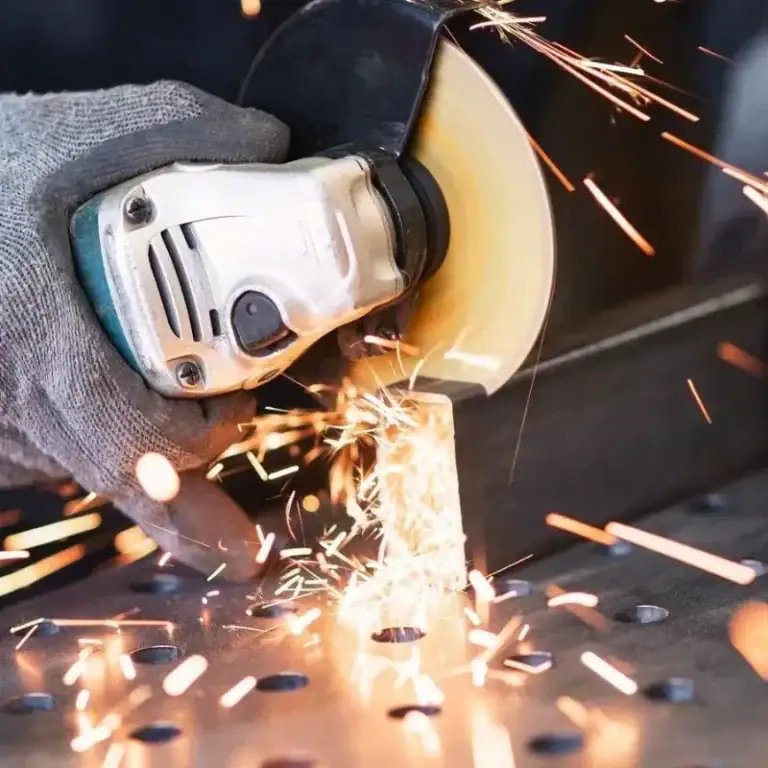
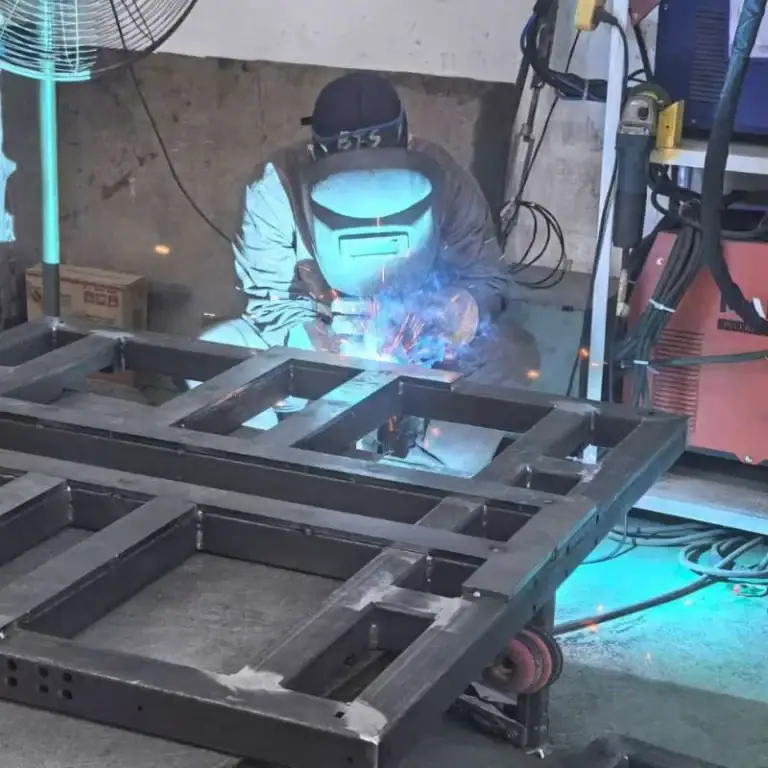
Tack welding is a temporary welding technique used to hold metal parts in position before the final weld is completed. These small welds help maintain alignment, control distortion, and ensure dimensional accuracy during fabrication. In industries such as automotive, structural steel, and precision manufacturing, proper tack welding can significantly improve weld quality and assembly stability.
Understanding what tack welding is, how it works, and when it should be used is essential for achieving reliable, high-quality welds in modern manufacturing.
What Is Tack Welding?
Tack welding is a temporary welding technique used to hold metal components in position before completing the final weld. A tack weld is a short weld bead placed at selected points along a joint to maintain alignment and prevent movement during fabrication.
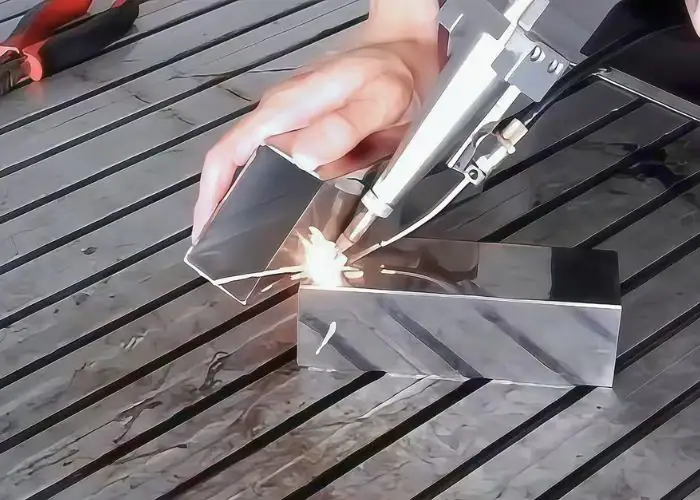
Although small in size, tack welds play an essential role in controlling distortion and ensuring dimensional accuracy. During welding, metal expands under heat and contracts as it cools. Without proper tack welds, parts may shift, warp, or lose alignment, which can lead to structural stress or costly rework.
Tack welding is not a separate welding process such as MIG, TIG, or stick welding. Instead, it is a positioning method performed using these standard welding techniques. The choice of process depends on material thickness, joint type, and production requirements.
When executed correctly, tack welding stabilizes the assembly, improves weld quality, and increases overall fabrication efficiency. However, incorrect tack size or spacing can introduce residual stress or weaken the joint, making proper technique critical in manufacturing.
What Is The Purpose Of Tack Welding?
The primary purpose of tack welding is to hold parts in precise alignment before final welding is completed. It acts as a temporary mechanical restraint, ensuring components remain in their intended position during fabrication.
In real manufacturing environments, heat input from welding can cause metal expansion, contraction, and distortion. Tack welds reduce movement and control dimensional variation by locking the joint in place at critical points. This is especially important in large assemblies, thin sheet metal structures, or precision components where tolerance deviation must be minimized.
Tack welding also improves workflow efficiency. By stabilizing the joint early in the process, welders can perform continuous weld passes with greater confidence and speed. Properly spaced tack welds reduce the need for clamps or external fixtures, saving setup time in both low-volume and high-volume production.
Additionally, tack welds help verify fit-up before full welding. If alignment issues are detected, adjustments can be made without scrapping the entire component. In this way, tack welding functions as both a positioning tool and a quality control checkpoint.
When correctly designed in terms of size and spacing, tack welds enhance final weld strength and reduce residual stress. However, excessive or poorly placed tacks may create stress concentration points, so planning and engineering judgment are critical.
How To Tack Weld Properly?
Proper tack welding is not just about placing small welds randomly. It requires planning, positioning, and control to ensure alignment, strength, and minimal distortion.
Prepare The Joint Surface
Clean the metal surfaces thoroughly before welding. Remove oil, rust, paint, and oxidation. Contaminants can cause weak tacks, porosity, or cracking. In structural fabrication, even minor surface contamination can reduce weld integrity by 15–30%.
Ensure Accurate Fit-Up
Before applying tack welds, confirm proper alignment and gap spacing. Uneven gaps lead to stress concentration and distortion. In precision assemblies, joint gaps are typically controlled within ±0.5 mm.
Use Correct Tack Size
Tack welds should generally be 1–2 times the material thickness in length. For example, for 3 mm steel, a 3–6 mm tack is common. Oversized tacks increase heat input and distortion, while undersized tacks may fail during final welding.
Control Spacing
Tack spacing depends on material thickness and joint length. For thin sheet metal (1–2 mm), spacing may be 50–100 mm apart. For thicker structural parts, spacing can extend to 150–300 mm. Proper spacing prevents warping and maintains stability.
Alternate Placement To Reduce Distortion
Avoid placing tacks sequentially in one direction. Instead, alternate sides or use a balanced pattern. This distributes heat evenly and reduces residual stress.
Match The Final Welding Process
Use the same welding process and filler material for tack welding as for final welding whenever possible. This ensures compatibility and prevents metallurgical inconsistencies.
Inspect Before Final Weld
After tacking, re-check alignment and squareness. Once final welding begins, correction becomes more difficult and costly.
When executed correctly, tack welding reduces distortion, improves weld quality, and increases fabrication efficiency. Poor technique, however, can create stress points or cracking that compromise the entire structure.
Tack Weld Vs Spot Weld
Before choosing a welding method, engineers must clearly understand the difference between tack weld vs spot weld. Although both involve small weld areas, their purpose, process, and structural role differ significantly. Selecting the wrong method can affect alignment accuracy, joint strength, production speed, and overall manufacturing cost. The comparison table below breaks down the technical and practical differences to help you decide when to use tack welding and when spot welding is the better solution.
| Comparison Category | Tack Weld | Spot Weld |
| Definition | A temporary weld used to hold parts in position before final welding | A permanent resistance weld used to join overlapping sheet metals |
| Primary Purpose | Alignment and positioning prior to full weld | Structural fusion of sheet metal components |
| Structural Strength | Low to moderate (not intended as final load-bearing weld) | Permanent structural joint with load capacity |
| Welding Process Type | Arc welding (MIG, TIG, Stick) | Resistance welding |
| Heat Generation Method | Electric arc heat | Electrical resistance + pressure |
| Typical Material Thickness | Medium to thick materials, frames, structural joints | Thin sheet metal (automotive panels, enclosures) |
| Production Volume Suitability | Low to medium production | High-volume mass production |
| Speed Per Weld | Manual control, seconds per tack | 0.1–0.5 seconds per spot weld |
| Role In Fabrication | Pre-weld stabilization | Final assembly method |
| Distortion Control | Helps reduce distortion before final welding | Limited distortion control in sheet assemblies |
| Removal After Welding | Usually remelted into final weld seam | Permanent weld nugget remains |
| Common Industries | Structural fabrication, pipe welding, heavy equipment | Automotive manufacturing, appliance production |
Tack Weld Symbol Explained
Understanding the tack weld symbol is essential for reading welding drawings and fabrication blueprints. In engineering documentation, symbols communicate welding requirements clearly and efficiently. Misinterpreting a tack weld symbol can lead to incorrect weld size, spacing errors, or structural defects.
What Is A Tack Weld Symbol?
A tack weld symbol is a graphical representation used on welding drawings to indicate where temporary tack welds are required. It follows standardized welding symbol systems such as:
- AWS A2.4 (American Welding Society)
- ISO 2553 (International Standard)
Unlike full weld symbols, tack welds are typically indicated using a fillet weld symbol with additional notes specifying “TACK” or intermittent spacing instructions.
How Tack Weld Symbols Are Represented
In most technical drawings, tack weld instructions include:
- Fillet weld symbol (triangle)
- Reference line
- Arrow pointing to the joint
- Optional note indicating tack spacing (e.g., 100 mm intervals)
Sometimes the drawing may specify:
- Weld length (e.g., 5 mm)
- Spacing (e.g., 150 mm center-to-center)
- “TYP” for typical application
Example notation:
5mm TACK @ 150mm
This means 5 mm long tack welds placed every 150 mm along the joint.
Key Elements Of A Tack Weld Symbol
| Symbol Component | Meaning |
| Arrow | Points to joint location |
| Reference Line | Base for weld instructions |
| Fillet Symbol | Indicates weld type |
| Weld Size | Length of each tack |
| Spacing | Distance between tacks |
| Tail | Additional notes (process or remarks) |
Why Proper Symbol Interpretation Matters
Incorrect interpretation can cause:
- Excessive heat input
- Distortion
- Weak temporary fixation
- Increased rework cost
In precision fabrication, tack spacing errors of even ±20 mm can lead to misalignment in long structural assemblies.
Types Of Tack Welding
Although tack welding is often described as a simple temporary weld, it can be applied in different forms depending on joint type, material thickness, and fabrication requirements. Understanding the different types of tack welding helps improve alignment accuracy, reduce distortion, and ensure a smooth final weld.
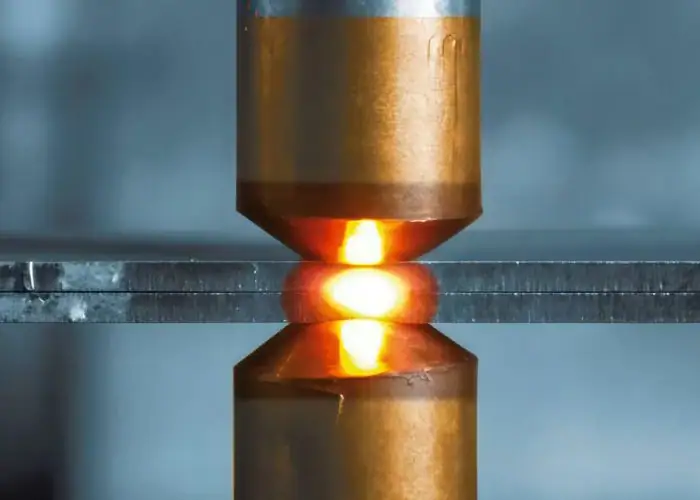
Single Tack Weld
A single tack weld is the most basic form. It consists of one small weld placed at a joint to hold two parts together.
It is commonly used in:
- Small assemblies
- Short weld seams
- Simple brackets or fixtures
However, relying on only one tack in long joints may allow movement during welding, especially in materials over 3 mm thick.
Multiple Tack Welds
Multiple tack welds are spaced evenly along a joint before final welding.
Typical spacing:
- 50–100 mm for thin sheet metal
- 150–300 mm for structural steel
This method improves alignment stability and reduces thermal distortion during full weld passes.
Bridge Tack Welding
Bridge tack welding is used when there is a gap between components. The tack weld bridges the gap to maintain positioning.
This technique is often applied in:
- Pipe fabrication
- Irregular joints
- Field welding conditions
It helps compensate for imperfect fit-up but must be carefully executed to avoid weak fusion.
Hot Tack Welding
Hot tack welding involves placing a tack weld and immediately reinforcing it slightly to improve strength.
This type is useful in:
- Heavy structural fabrication
- Thick materials
- Load-sensitive assemblies
It provides stronger temporary holding compared to standard small tacks.
Intermittent Tack Welding
In intermittent tack welding, tack welds are applied at specific intervals along long seams before final welding.
It is widely used in:
- Large frames
- Sheet metal panels
- Equipment housings
Proper spacing is critical to control distortion and maintain dimensional accuracy.
Tack Welding Equipment And Tools
Choosing the right tack welding equipment is essential for achieving stable alignment, controlled heat input, and consistent weld quality. Although tack welding is temporary, the tools and setup directly affect distortion control, joint integrity, and overall fabrication efficiency.
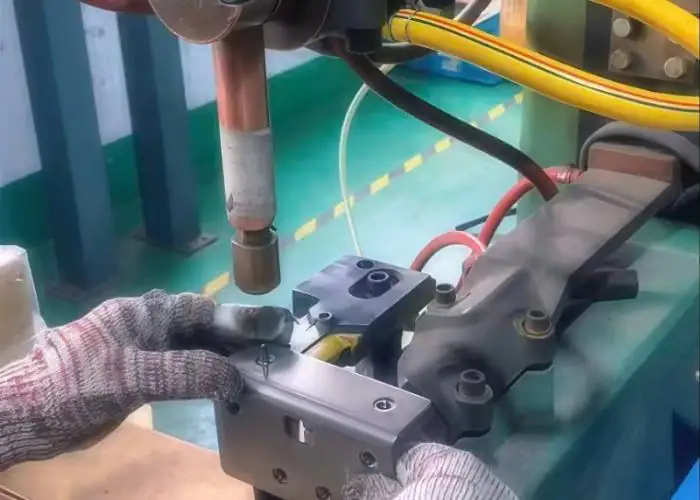
Welding Machines Used For Tack Welding
Tack welding does not require a dedicated machine. Instead, it uses standard welding equipment depending on material and application.
MIG Welder (GMAW)
- Most common for tack welding
- Suitable for mild steel, stainless steel, aluminum
- Fast and easy to control
- Ideal for production environments
MIG welding is preferred in 60–70% of general fabrication applications due to speed and simplicity.
TIG Welder (GTAW)
- Higher precision and control
- Suitable for thin materials (≤3 mm)
- Used in aerospace, medical, and high-precision fabrication
TIG tack welding provides cleaner welds but is slower than MIG.
Stick Welder (SMAW)
- Common in field welding
- Suitable for outdoor or heavy structural applications
- Less precise for thin sheet metal
Resistance Spot Welding Machine
In sheet metal industries, resistance welding machines are sometimes used for tack-like positioning before full seam welding.
- High-speed operation (0.1–0.5 sec per weld)
- Common in automotive production
- Suitable for thin overlapping sheets
Clamping And Positioning Tools
Even though tack welds stabilize joints, proper fixturing is still critical.
Welding Clamps
Used to hold components firmly during initial alignment.
Magnetic Squares
Helpful for 90° angle positioning.
Welding Fixtures And Jigs
Used in repetitive production to maintain consistency and reduce tolerance deviation.
Proper clamping reduces movement by up to 40% before tack placement.
Supporting Tools
- Wire brush (surface cleaning)
- Grinder (removing excess tack)
- Measuring tools (caliper, square ruler)
- Welding helmet and PPE
Surface preparation can improve tack fusion strength by 20–30%.
Advantages And Disadvantages Of Tack Welding
Tack welding plays a crucial role in fabrication, but like any welding technique, it has both benefits and limitations. Understanding these helps engineers decide when tack welding adds value—and when it may introduce risk.
Advantages Of Tack Welding
Improves Alignment Accuracy
Tack welding stabilizes components before final welding. In long structural joints, proper tack placement can reduce alignment deviation by up to 30–50% compared to unclamped joints.
Reduces Distortion
By fixing the joint in multiple locations, tack welds help distribute heat more evenly. This minimizes warping, especially in thin sheet metal assemblies.
Increases Welding Efficiency
Tack welding reduces reliance on external clamps and fixtures. In repetitive production, this can lower setup time and improve throughput.
Allows Fit-Up Verification
Tack welds act as a temporary checkpoint. If alignment is incorrect, adjustments can be made before committing to a full weld, reducing scrap risk.
Enhances Safety During Fabrication
Stabilized components are less likely to shift unexpectedly, reducing workplace hazards.
Limitations Of Tack Welding
Not Structurally Permanent
Tack welds are temporary and not designed for load-bearing use. Relying on tack welds without final welding can lead to joint failure.
Risk Of Stress Concentration
Improper tack size or spacing may create localized stress points, increasing the chance of cracking during final welding.
Additional Heat Input
Even small tack welds introduce heat. Excessive tacking may contribute to cumulative distortion in precision assemblies.
Requires Skilled Execution
Incorrect technique—such as poor fusion or contamination—can compromise final weld quality.
May Need Grinding Or Rework
In certain applications, tack welds must be removed or blended before final welding, adding labor time.
FAQs
Is Tack Welding Strong?
In practice, a tack weld provides limited holding strength—usually enough to maintain positioning but not full structural integrity. I consider tack welds to offer roughly 10–30% of the final joint strength, depending on size and penetration. They are designed for alignment, not load-bearing performance.
Is Tack Welding Permanent?
Technically, tack welds can be permanent if left in place and incorporated into the final weld pass. However, I usually treat tack welds as temporary fixtures. If not fused into the final weld, they may create stress points or discontinuities that reduce long-term joint reliability.
Which Weld Type Is Strongest?
From an engineering standpoint, full-penetration groove welds are typically the strongest, capable of matching or exceeding the base metal strength when properly executed. In structural applications, I often rely on complete joint penetration (CJP) welds to achieve near 100% material strength under tensile and bending loads.
Which Metal Is Hardest To Weld?
In my experience, high-carbon steels and certain aluminum alloys (such as 7xxx series) are among the hardest to weld due to cracking risk and heat sensitivity. Materials like titanium also require strict shielding and contamination control. Improper parameters can reduce joint strength by over 40%.
Conclusion
Tack welding is a temporary alignment method that stabilizes components before final welding. Though small, tack welds help control distortion, maintain dimensional accuracy, and improve overall fabrication efficiency. When properly sized and spaced, they reduce rework and ensure consistent weld quality in structural and sheet metal assemblies.
At TiRapid, we treat tack welding as a precision step, not just a temporary fix. Our team ensures accurate alignment, controlled heat input, and strict inspection before final welding. From prototypes to batch production, we help you reduce rework, improve weld stability, and deliver consistent, high-quality fabrication results.