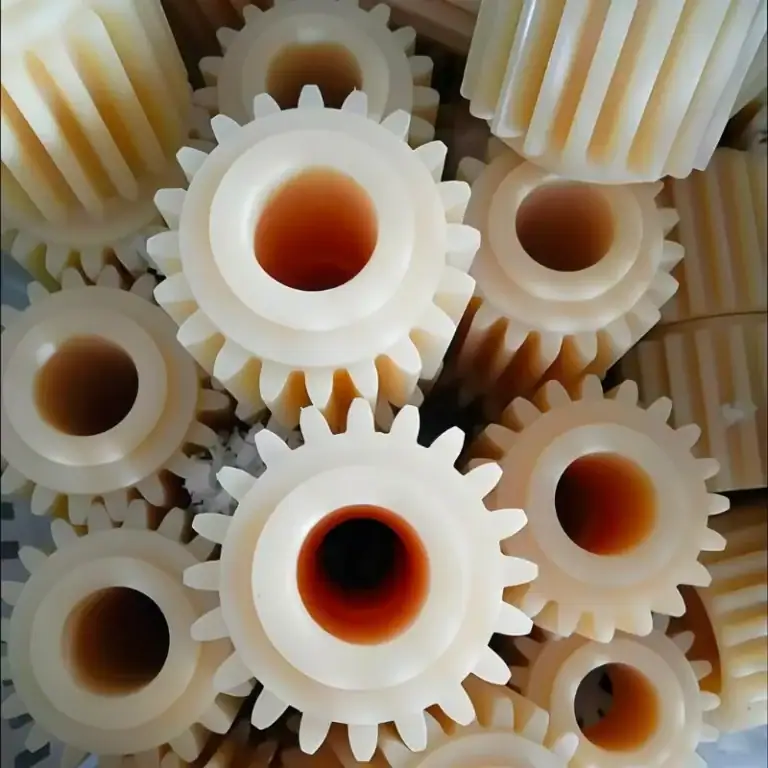
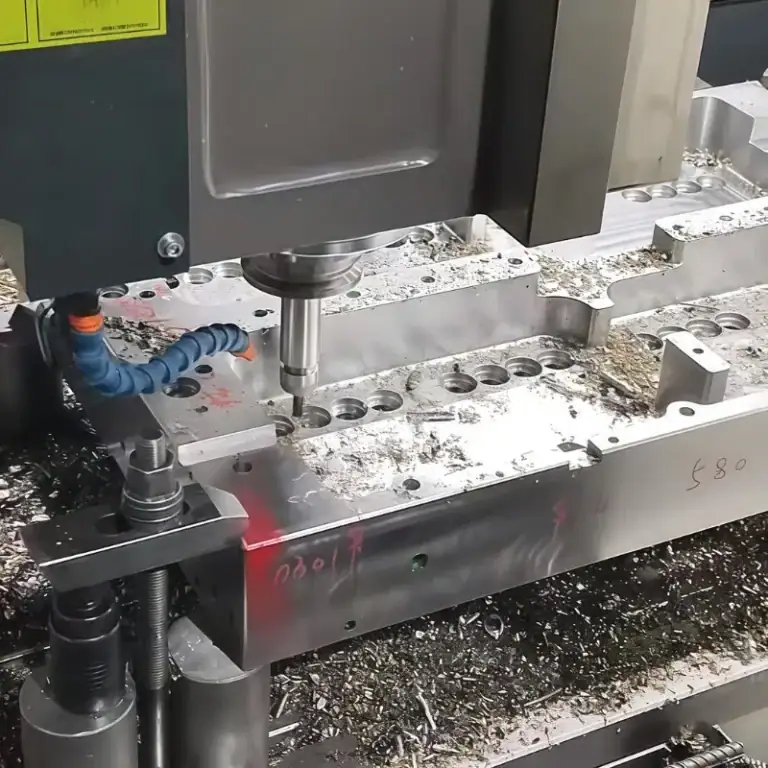
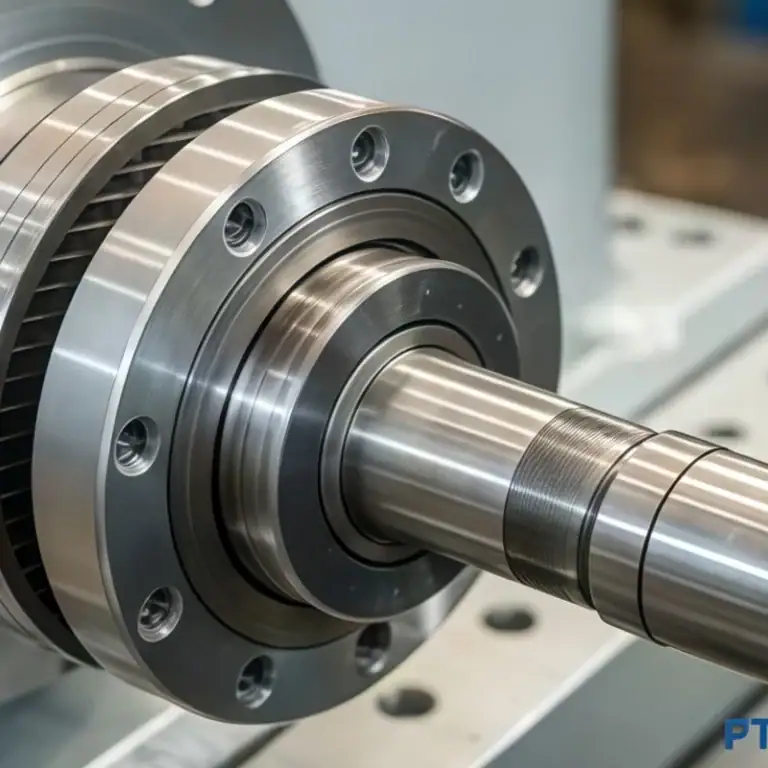
Cast iron and steel transmit strength, durability, and structural support in many engineering systems. In modern manufacturing, both materials are widely used to produce machine components, structural parts, and industrial equipment because of their reliability and mechanical performance.
In this guide, you will learn the key differences between cast iron vs steel, including their composition, strength, processing characteristics, and common applications in engineering and manufacturing.
What Is Cast Iron?
Cast iron is an iron-carbon alloy that typically contains more than 2% carbon, which gives it unique casting properties and distinguishes it from steel. This higher carbon content allows cast iron to melt and flow easily into molds, making it one of the most widely used materials in metal casting and industrial manufacturing.
Key advantages of cast iron include:
- High compressive strength, making it suitable for components under constant pressure
- Excellent vibration damping, helping reduce noise and mechanical vibration
- Good machinability due to the presence of graphite in the microstructure
- Excellent casting performance for producing complex shapes and large components
Because of these characteristics, cast iron is commonly used in:
- Engine blocks and automotive components
- Machine tool bases and industrial equipment housings
- Pipes, valves, and pump bodies
- Heavy mechanical structures requiring dimensional stability
In practice, cast iron is available in several types, including gray cast iron, ductile iron, white cast iron, and malleable cast iron. Each type offers different levels of strength, toughness, and wear resistance, allowing engineers to select the most suitable material for specific engineering applications.
What Is Steel?
Steel is an iron-based alloy that typically contains less than 2% carbon, giving it greater strength, toughness, and ductility compared with cast iron. This lower carbon content allows steel to withstand tensile forces and impact loads without fracturing easily, making it one of the most versatile engineering materials.
Because of its balanced mechanical properties, steel is widely used in many industries, including construction, transportation, manufacturing, and industrial machinery. Engineers often choose steel for applications that require strong structural support, durability, and reliability under dynamic loads.
Key characteristics of steel include:
- High tensile strength and toughness
- Good ductility and formability
- Excellent weldability and fabrication capability
- Wide range of alloy options for different performance needs
Steel can also be alloyed with elements such as chromium, nickel, manganese, and molybdenum to enhance corrosion resistance, heat resistance, and mechanical strength. These alloying elements allow steel to be tailored for specialized applications.
Compared with cast iron, steel is more adaptable to fabrication processes such as forging, rolling, welding, and precision machining, making it suitable for a wide range of structural and mechanical components.
What Are the Key Differences Between Cast Iron and Steel?
The key differences between cast iron vs steel involve carbon content, mechanical properties, manufacturing processes, and industrial performance. Although both materials are iron-based alloys, their composition leads to significant differences in strength, toughness, machinability, and applications.
Carbon Content and Chemical Composition
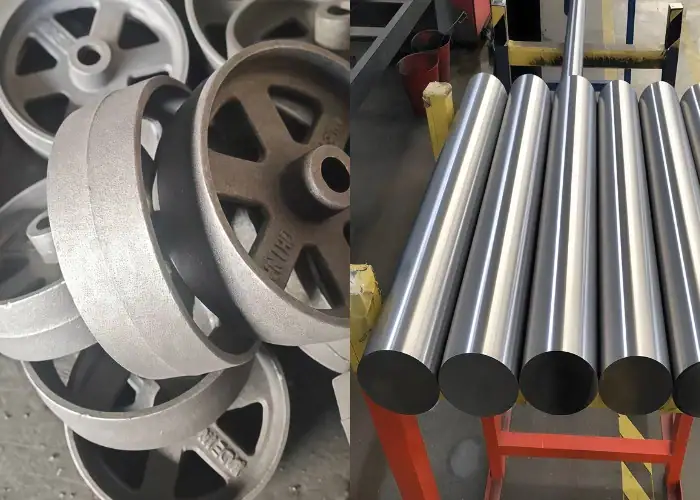
The most significant difference between cast iron and steel is carbon content. Cast iron typically contains 2–4% carbon, whereas steel generally contains less than 2% carbon. This difference in carbon content strongly affects the material’s hardness, brittleness, and manufacturing behavior.
Higher carbon levels give cast iron excellent fluidity when molten, allowing it to fill molds easily and form complex shapes. This is why cast iron is widely used for components such as engine blocks, pump housings, and industrial machine frames. Steel, with its lower carbon content, generally provides greater ductility and can be further enhanced through alloying elements.
Strength and Hardness
Steel usually offers higher tensile strength, while cast iron typically provides better compressive strength. This means steel performs better in applications involving pulling or bending forces, whereas cast iron performs well in components subjected to constant pressure.
For example, cast iron is commonly used for machine bases, engine blocks, and heavy equipment housings because these parts mainly experience compressive loads. Steel, on the other hand, is widely used for structural frames, gears, shafts, and construction materials that must withstand tensile stress and repeated mechanical loads.
Ductility and Toughness
Steel has significantly greater ductility and toughness compared with cast iron. Due to its lower carbon content, steel can deform under stress without fracturing immediately, making it more reliable in structural and high-impact applications.
Cast iron tends to be more brittle and can crack when exposed to tensile stress or sudden impact. However, certain types of cast iron, such as ductile iron, improve toughness by modifying the graphite structure, allowing the material to perform closer to steel in some engineering applications.
Melting Point and Heat Resistance
Steel generally has a slightly higher melting temperature than cast iron. This allows steel to maintain structural stability in many high-temperature environments.
However, cast iron also performs well in heat-related applications because the graphite in its structure helps dissipate heat and reduce thermal stress. For this reason, cast iron is frequently used in engine components, brake systems, and high-temperature industrial housings.
Wear and Abrasion Resistance
Cast iron often demonstrates excellent wear resistance due to the graphite present in its microstructure. The graphite acts as a natural lubricant, reducing friction and helping the material maintain durability in sliding or abrasive environments.
Steel can also achieve strong wear resistance through alloying and heat treatment. Alloy steels or hardened steels are commonly used in applications requiring high surface hardness and long service life.
Corrosion and Rust Resistance
Both cast iron and carbon steel are prone to rust when exposed to moisture and oxygen. Without protective treatments, these materials can corrode over time.
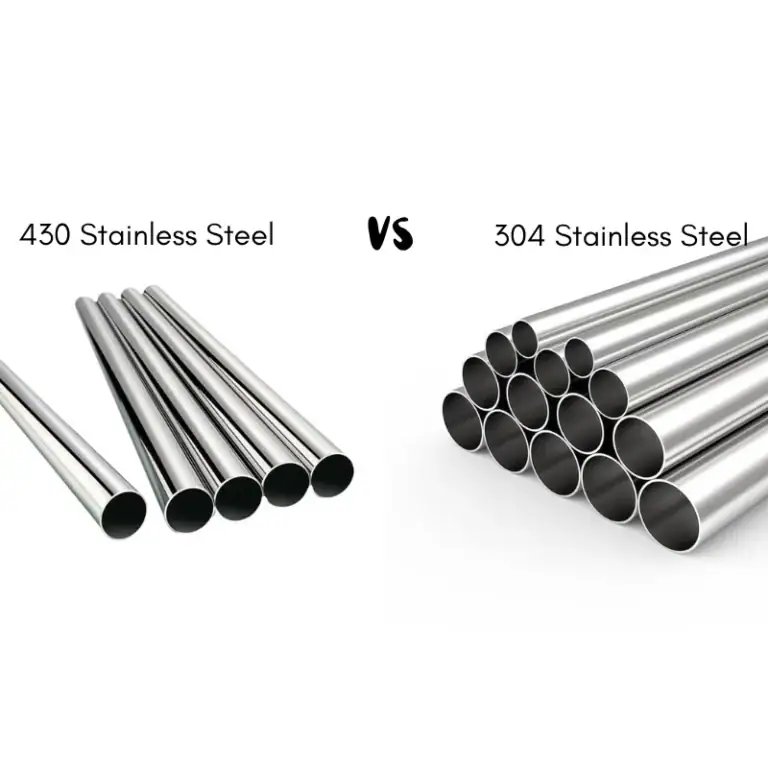
However, certain steel grades such as stainless steel contain chromium, which forms a protective oxide layer that significantly improves corrosion resistance. In many industrial applications, coatings, plating, or surface treatments are applied to both materials to improve their resistance to rust and environmental damage.
Weight and Density
Cast iron and steel have similar densities, although steel is usually slightly denser. Cast iron typically has a density around 7.2 g/cm³, while most steels average about 7.8 g/cm³ depending on their alloy composition.
In most engineering applications, this difference in density has minimal influence on material selection. Engineers generally focus more on strength, durability, and manufacturing requirements rather than the small weight difference between the two materials.
How Do Manufacturing and Processing Methods Differ Between Cast Iron and Steel?
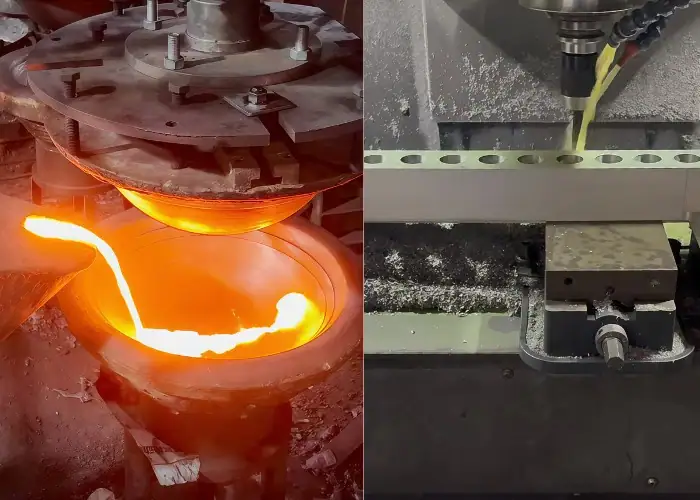
Cast iron and steel differ not only in composition and mechanical properties but also in how they are manufactured and processed. These processing differences directly affect part design, production efficiency, mechanical performance, and overall manufacturing cost. Cast iron is mainly shaped through casting processes, while steel can be processed through cnc machining. forging, rolling and welding.
CNC Machining
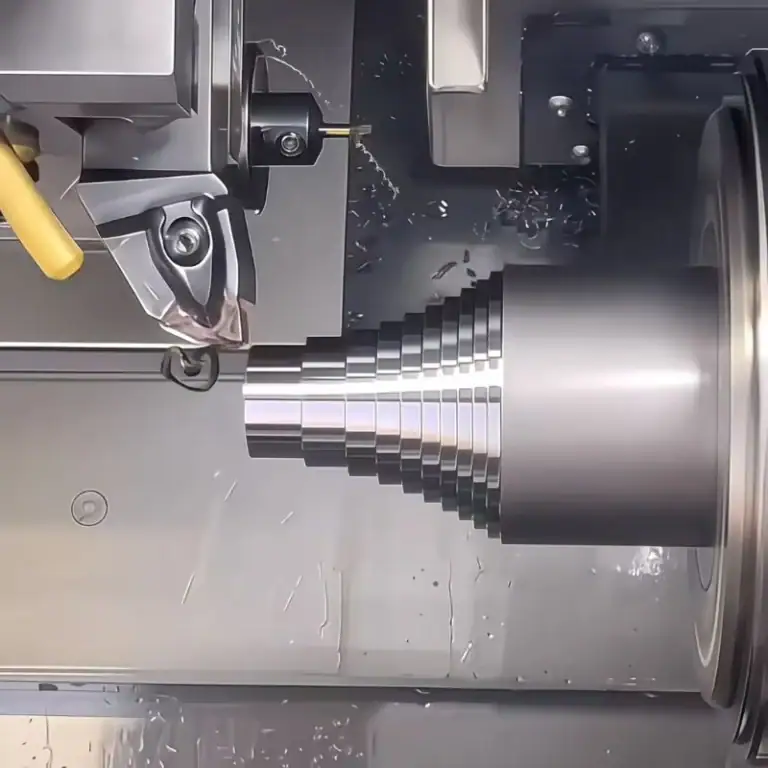
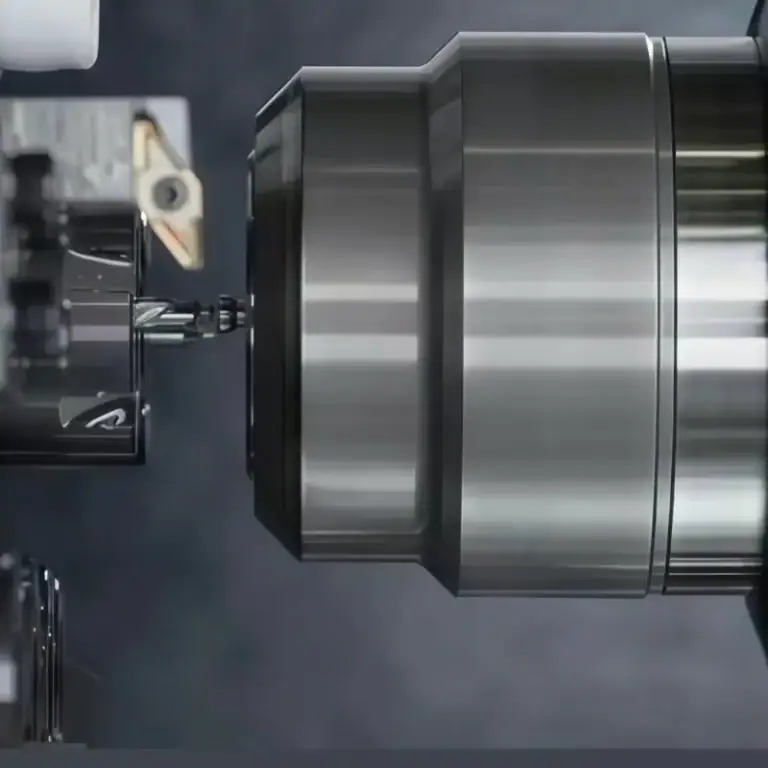
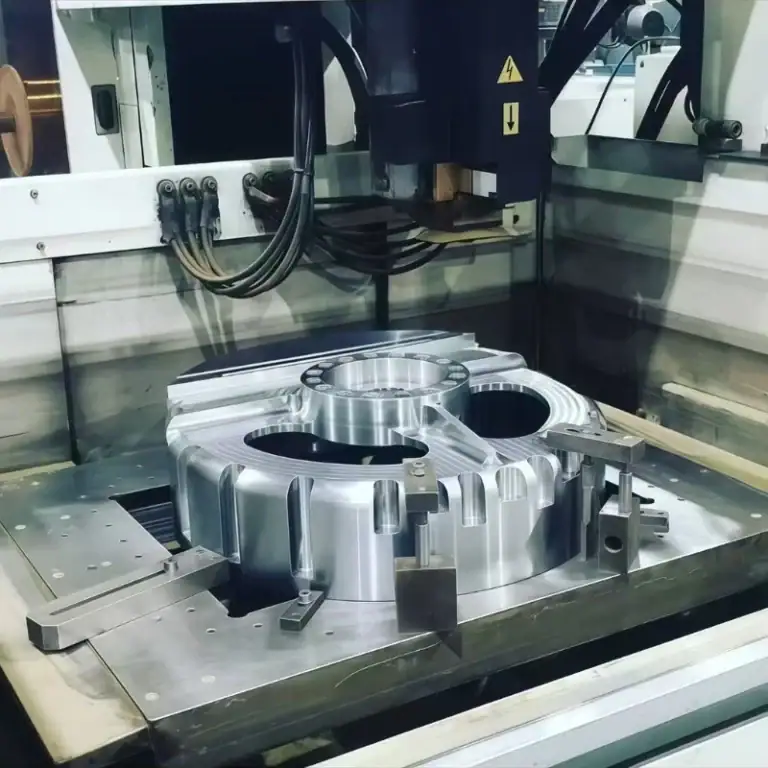
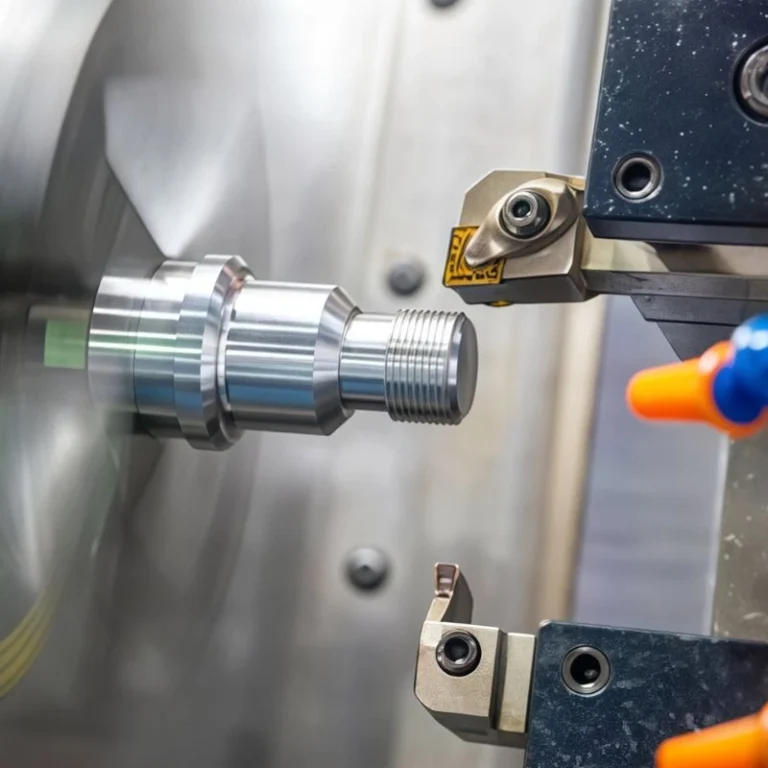
CNC machining is widely used to manufacture both cast iron and steel components with high precision. Processes such as CNC milling, CNC turning, drilling, and grinding allow manufacturers to produce parts with tight tolerances and consistent surface finishes.
Cast iron generally offers excellent machinability because graphite in its microstructure acts as a natural lubricant during cutting. This helps reduce tool wear and improves chip formation. Steel can also be machined effectively, but harder steels often require stronger cutting tools and optimized machining parameters.
Small machining methods often used include:
| CNC Process | Typical Function | Common Applications |
| CNC Milling | Produces flat surfaces and complex geometries | Machine bases, housings |
| CNC Turning | Machines cylindrical parts | Shafts, bushings |
| Drilling and Tapping | Creates holes and threads | Fastener holes, assemblies |
| Grinding | Provides high precision finishing | Precision mechanical parts |
Casting
Casting is the primary manufacturing process for cast iron components. Due to its high carbon content and excellent fluidity in molten form, cast iron can easily fill molds and reproduce complex shapes with good dimensional stability.
This makes cast iron suitable for large or intricate components such as machine bases, engine blocks, and pump housings. Steel casting is also possible, but it is typically more difficult due to higher melting temperatures and lower fluidity.
Common casting methods include:
| Casting Method | Characteristics | Typical Applications |
| Sand Casting | Cost-effective for large parts | Engine blocks, machine frames |
| Investment Casting | High precision and surface quality | Small complex components |
| Shell Mold Casting | Better surface finish than sand casting | Pump housings, valve parts |
| Centrifugal Casting | Ideal for cylindrical parts | Pipes, sleeves |
Forging
Forging is widely used for steel but rarely applied to cast iron. In the forging process, heated steel is shaped under compressive forces using dies or hammers. This process refines the grain structure of the metal, significantly improving strength, toughness, and fatigue resistance.
Because cast iron is brittle and contains graphite structures, it cannot tolerate the deformation required during forging.
Typical steel forging processes include:
| Forging Method | Characteristics | Typical Applications |
| Open-Die Forging | Suitable for large components | Shafts, heavy machinery parts |
| Closed-Die Forging | High dimensional accuracy | Automotive components |
| Hot Forging | Improves metal flow and strength | Structural steel parts |
| Cold Forging | High precision and surface finish | Fasteners, small components |
Welding and Fabrication
Steel has excellent weldability and fabrication flexibility. Most steel grades can be welded using common welding techniques such as MIG welding, TIG welding, and arc welding. This makes steel highly suitable for structural frames, pipelines, and fabricated mechanical assemblies.
Cast iron, however, is more difficult to weld because its high carbon content can lead to cracking during heating and cooling cycles.
Common fabrication processes for steel include:
| Fabrication Process | Function | Typical Applications |
| MIG Welding | High productivity welding method | Structural frames |
| TIG Welding | Precise welding with clean joints | Mechanical assemblies |
| Arc Welding | Heavy-duty industrial welding | Thick steel components |
| Cutting and Bending | Shapes sheet metal components | Industrial equipment structures |
Rolling and Forming
Steel can be rolled and formed into many shapes such as sheets, plates, bars, and structural profiles. Rolling improves dimensional accuracy and mechanical strength while allowing large-scale production.
Cast iron cannot be plastically formed in the same way due to its brittle nature. Instead, cast iron parts are usually produced directly through casting and then finished through machining.
Typical steel forming processes include:
| Forming Process | Characteristics | Typical Products |
| Hot Rolling | Produces plates and structural shapes | Steel beams, plates |
| Cold Rolling | Improves surface finish and accuracy | Thin sheets, strips |
| Extrusion and Drawing | Produces bars and tubes | Metal rods, pipes |
| Press Forming | Forms complex sheet metal shapes | Automotive panels |
Heat Treatment
Heat treatment is widely used to enhance the mechanical properties of steel. Processes such as quenching, tempering, annealing, and normalizing can significantly improve strength, hardness, and toughness.
Cast iron can also undergo certain heat treatment processes, although the range of property modification is generally smaller.
Common heat treatment processes include:
| Heat Treatment Process | Purpose | Result |
| Quenching and Tempering | Increase strength and hardness | Strong structural components |
| Annealing | Improve ductility and machinability | Easier machining |
| Normalizing | Refine grain structure | Balanced mechanical properties |
| Surface Hardening | Improve wear resistance | Long service life |
What Are The Advantages And Disadvantages Of Cast Iron Vs Steel?
Understanding the advantages and disadvantages of cast iron vs steel helps engineers choose the most suitable material for different engineering applications. Although both materials are iron-based alloys, their mechanical properties, manufacturing flexibility, and performance under different loads vary significantly.
Advantages Of Cast Iron
Cast iron offers several advantages in manufacturing and mechanical performance. One of its main strengths is high compressive strength, which makes it suitable for heavy equipment and machine structures. The graphite structure inside cast iron also provides excellent vibration damping, helping reduce noise and improve stability in industrial machines.
Another key advantage is its excellent casting ability. Molten cast iron flows easily into molds, allowing complex shapes to be produced efficiently and at relatively low cost. In addition, cast iron typically has good machinability because the graphite structure reduces cutting resistance during machining.
Disadvantages Of Cast Iron
Despite its advantages, cast iron also has some limitations. The material is relatively brittle compared with steel and has lower tensile strength. This means cast iron components may crack when exposed to impact loads or strong tensile stress.
Cast iron is also difficult to weld because the high carbon content increases the risk of cracking during heating and cooling. For this reason, it is usually used for cast components rather than fabricated or welded structures.
Advantages Of Steel
Steel provides excellent tensile strength, toughness, and structural reliability. These properties allow steel to withstand tensile forces, bending loads, and repeated mechanical stress, making it suitable for structural and mechanical applications.
Another advantage of steel is its manufacturing flexibility. Steel can be forged, rolled, welded, and heat treated to achieve a wide range of mechanical properties. Engineers can also modify steel by adding alloying elements such as chromium or nickel to improve corrosion resistance and strength.
Disadvantages Of Steel
Steel also has certain disadvantages in some applications. Compared with cast iron, steel generally provides less vibration damping, which means machines made from steel may transmit more vibration during operation.
| Comparison Aspect | Cast Iron | Steel |
| Strength Type | High Compressive Strength | High Tensile Strength |
| Toughness | Lower Toughness | Higher Toughness |
| Vibration Damping | Excellent | Moderate |
| Casting Ability | Very Good | Moderate |
| Machinability | Good | Good but Depends on Grade |
| Weldability | Difficult | Excellent |
| Manufacturing Flexibility | Mainly Casting | Forging, Rolling, Welding, Machining |
| Typical Applications | Machine Bases, Engine Blocks | Structures, Gears, Shafts |
In addition, some steel grades may require more complex manufacturing processes such as forging, heat treatment, or precision machining. These processes can increase production costs compared with simple cast iron components in certain applications.
How Do the Costs of Cast Iron and Steel Compare?
Cost differences between cast iron and steel depend on several factors, including raw material price, manufacturing processes, and long-term service performance. In many cases, cast iron offers a lower initial material cost, while steel may provide better overall value in applications that require higher durability, flexibility, or structural strength.
Material Cost Differences
Cast iron typically has a lower base material cost than many steel grades because it contains higher carbon content and fewer alloying elements. This cost advantage makes cast iron particularly attractive for producing large components and for mass production in industries such as automotive and heavy machinery.
Manufacturing and Machining Costs
Manufacturing costs can vary depending on the production method used. Cast iron is often more economical to produce when parts can be formed directly through casting, especially for complex shapes that would otherwise require extensive machining.
Steel components, on the other hand, are often manufactured through forging, rolling, or fabrication processes. These methods can require additional machining or forming operations, which may increase production costs depending on the part design.
Lifecycle Cost Considerations
Lifecycle cost includes not only the initial production expense but also durability, maintenance requirements, and long-term performance reliability. Cast iron can be highly cost-effective in applications involving stable loads and minimal impact forces.
Steel components may have higher initial costs, but they often provide longer service life under heavy loads, dynamic stress, or high-impact conditions. In such cases, the durability of steel can offset the higher upfront investment over the lifespan of the product.
Transportation and Weight Costs
Transportation and logistics costs can also affect the overall cost of cast iron and steel components. Cast iron parts are often heavier and thicker because they rely on compressive strength rather than tensile strength. This can increase shipping weight and transportation expenses for large components.
Steel components can sometimes be designed with thinner sections while maintaining high strength, which may reduce total material weight and lower transportation costs in large-scale projects.
Scrap and Recycling Value
Another cost factor is scrap value and recyclability. Steel generally has a higher recycling value and is widely reused in industrial production. Steel scrap can be melted and processed repeatedly without significant loss of mechanical properties.
Cast iron can also be recycled, but its reuse is often more limited depending on the casting process and material quality. In many manufacturing industries, the higher recycling value of steel can partially offset its higher initial material cost.
Where Are Cast Iron and Steel Commonly Used?
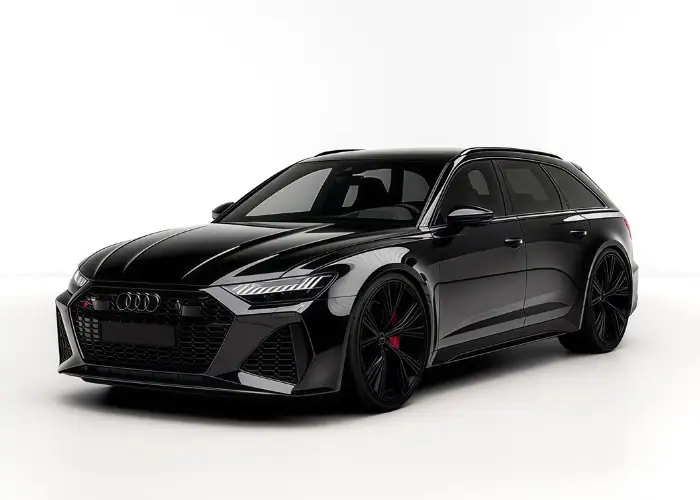
Cast iron and steel are widely used in many industries, but they are typically applied in different types of components. Cast iron is often used for heavy machine parts and components requiring vibration damping, while steel is commonly used for structural and load-bearing applications.
| Industry | Cast Iron Typical Applications | Steel Typical Applications |
| Automotive | Engine blocks, brake discs | Chassis structures, suspension parts |
| Construction | Drainage pipes | Structural beams, reinforcement bars |
| Industrial Machinery | Machine tool bases, equipment housings | Shafts, gears, structural frames |
| Manufacturing Equipment | Pump housings, valve bodies | Pressure vessels, pipelines |
| Heavy Equipment | Machinery bases, gear housings | Load-bearing frames, mechanical components |
What Should You Choose: Cast Iron or Steel?
Choosing between cast iron and steel depends on the mechanical requirements of the application. Factors such as load type, manufacturing method, cost, and durability all influence the material selection. In general, cast iron is suitable for components under compressive loads, while steel performs better in applications requiring tensile strength and structural reliability.
When Cast Iron Is a Better Choice
Cast iron is ideal when high compressive strength, good machinability, and vibration damping are required. Its excellent casting ability also allows complex shapes to be produced efficiently and at lower cost.
It is commonly used for engine blocks, machine tool bases, pump housings, and heavy equipment frames where structural stability is important.
When Steel Is a Better Choice
Steel is preferred when tensile strength, toughness, and structural reliability are critical. It performs well in applications involving dynamic loads, impact forces, or bending stress.
Common steel applications include structural beams, shafts, gears, automotive components, and other load-bearing mechanical systems.
FAQs
Is Cast Iron Stronger Than Steel?
Cast iron is stronger in compression, meaning it can withstand high compressive loads. However, steel is stronger in tension, offering better tensile strength and impact resistance, making it more suitable for structural and load-bearing applications.
What Materials Are Used to Make Steel?
Steel is primarily made from iron and carbon. To enhance its properties, small amounts of alloying elements like chromium, nickel, and manganese are often added to improve strength, corrosion resistance, and heat resistance.
Is Steel Produced in China?
Yes, steel is produced in many countries, including China. In fact, China is the world’s largest steel producer and provides a significant portion of the global steel supply for construction, manufacturing, and infrastructure.
Is Steel Considered a High-Quality Material?
Yes, steel is considered a high-quality engineering material due to its strength, durability, and versatility. It is widely used in industries like construction, automotive manufacturing, machinery, and industrial equipment.
What Are the Four Main Types of Steel?
The four main types of steel are carbon steel, alloy steel, stainless steel, and tool steel. Each type has different mechanical properties and is suited for specific engineering and manufacturing applications.
Conclusion
Understanding the differences between cast iron and steel helps engineers select the most suitable material for strength, durability, and manufacturing efficiency. The right material choice depends on factors such as load type, mechanical performance, production methods, and application requirements.
At TiRapid, we support engineers with precision CNC machining for cast iron, steel, and other metal components. Whether you need prototype parts or production components, upload your design to receive a customized manufacturing solution.