
Your CNC Grinding Service

mechanical-industry-grinding-machine-machining-robot-components-stainless-steel-316-products

What is CNC Grinding Service?

CNC grinding service uses computer numerical control technology to drive the grinding wheel to process the workpiece according to the pre-set path. In the early design stage, CAD software is used to convert the design ideas into digital models, and then CAM software is used to generate precise processing codes. Compared with traditional manual grinding, it can greatly reduce human errors and achieve high-precision processing. The characteristics of multi-axis linkage enable it to complete the carving of complex contours and fine details, and it is stable and efficient during mass production, effectively reducing costs.

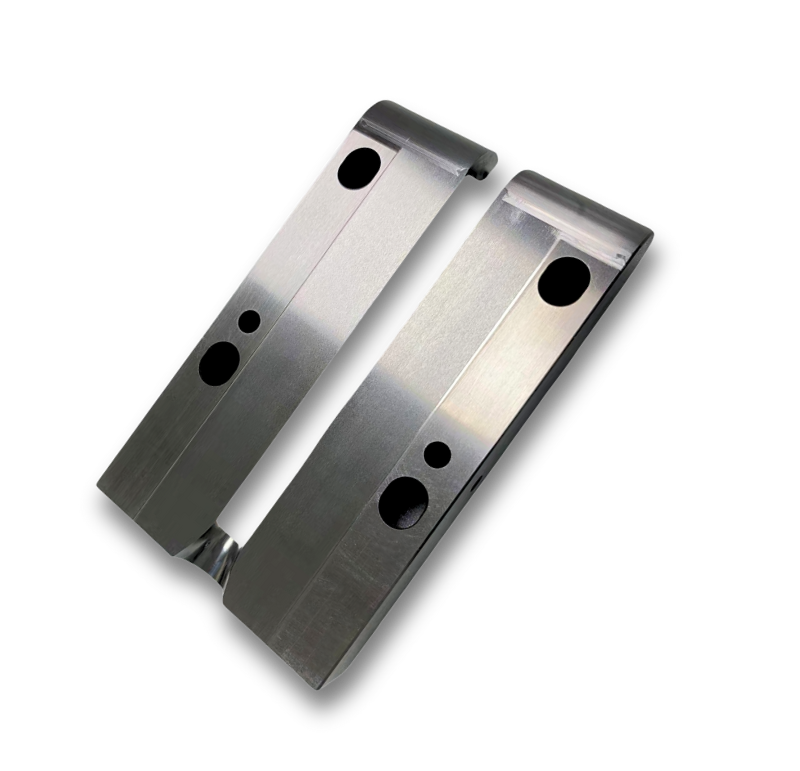
316-stainless-steel-precision-medical-parts-shown-separately

Why choose TIRAPID's CNC grinding services?

TIRAPID always puts customer needs first, responds efficiently and provides thoughtful service. Regardless of the size and complexity of your project, our CNC grinding services are designed to meet your exacting requirements. With extensive experience in many custom manufacturing projects and handling a variety of processing requirements, we can tailor-make high-quality solutions for our customers.

TIRAPID has passed ISO 9001 certification, which fully demonstrates our strict control over quality. Based on this, we continue to optimize our services and are committed to creating an excellent cooperation experience for our customers.

When it comes to CNC grinding parts with significant custom features, complex designs and geometries, TIRAPID is fully capable of meeting customers’ expectations with its years of experience in serving multiple industries.

What are the CNC grinding materials that can be processed by TIRAPID?

TIRAPID relies on a large and reliable partner network and advanced CNC equipment to deliver products that meet quality requirements on time. After the introduction of computer-aided manufacturing (CAM) technology, the processing capacity has been greatly improved, and high-precision and high-efficiency CNC grinding can be performed on metal materials such as aluminum alloy and stainless steel, as well as non-metallic materials such as acrylic and nylon.

If you would like to know the list of CNC grinding materials, please feel free to check it out. If the material you need is not on the list, please feel free to contact us.

If you require material not listed here, please contact us and we will provide it to you.

If the material you need is not on this list, please contact us and we will provide it for you.

If you require a material that is not on this list, please contact us and we will provide it for you.

What are the options for surface treatment of CNC grinding parts?

Our operating mechanism

TIRAPID’s CNC grinding service follows a three-step process: customers submit project requirements, our professional team evaluates and develops processing plans, and finally produces and delivers products under strict quality control. You can also watch the “How it Works” video to get an intuitive understanding of the service process.

Start your manufacturing journey! After sharing the details of your project, TIRAPID experts will analyze your needs in depth to ensure that every step is properly handled.

What are the common problems in CNC grinding services?

How can I get a quote?

The quickest route is to complete our intuitive online quote form. However, if you would like a more in-depth pre-quote discussion, simply contact our engineering team at teamcasia6216@gmail.com

Under normal circumstances, we will give you a detailed quotation within 24 hours. If your needs are urgent, we will start the expedited process and respond faster.

Yes, TIRAPID is ISO 9001 certified. It demonstrates our strong commitment to quality management systems and the benefits this brings to our customers.

With efficient production processes and a professional team, we can complete CNC grinding delivery within 2 days at the fastest.

In the world of anodizing, Type II is the standard variation. Clear coatings under Type II are typically 5 – 15 µm thick, while colored or tinted coatings are 10 – 25 µm thick. Type III anodizing, often referred to as “hard anodizing,” can be 20 – 80 µm thick. A useful design principle to remember is that 50% of the anodic coating is below the original surface and 50% is above it. For example, a 12 µm coating will add 6 µm to the part thickness, which is critical for precise design and assembly considerations.

TIRAPID’s machining capabilities extend to a wide range of thread specifications. We expertly process ISO metric threads (e.g. M3, M6, etc.) as well as BSPT, BSP and UNF threads. This broad compatibility ensures that our machined parts can be seamlessly integrated into a wide range of components across a wide range of industries.

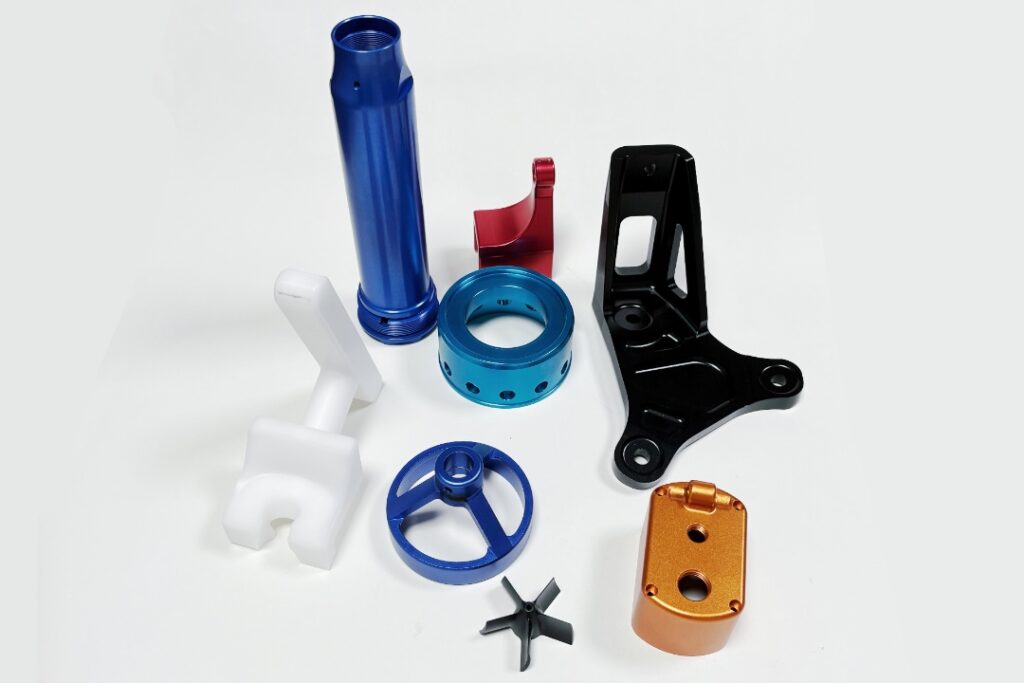
9-pieces-metal-and-plastic-machined-parts-display
Scroll to Top
Simplified Table