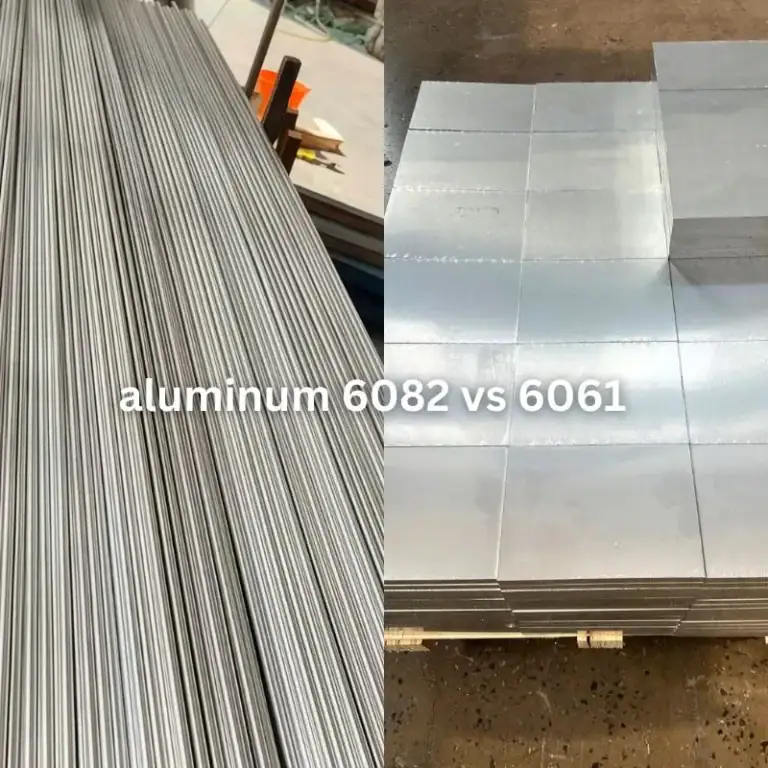
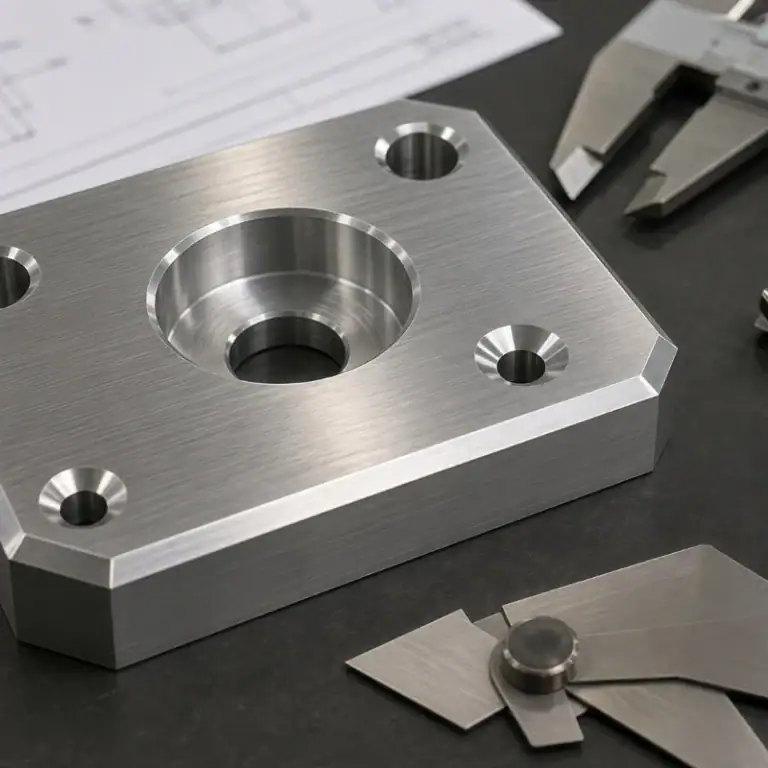
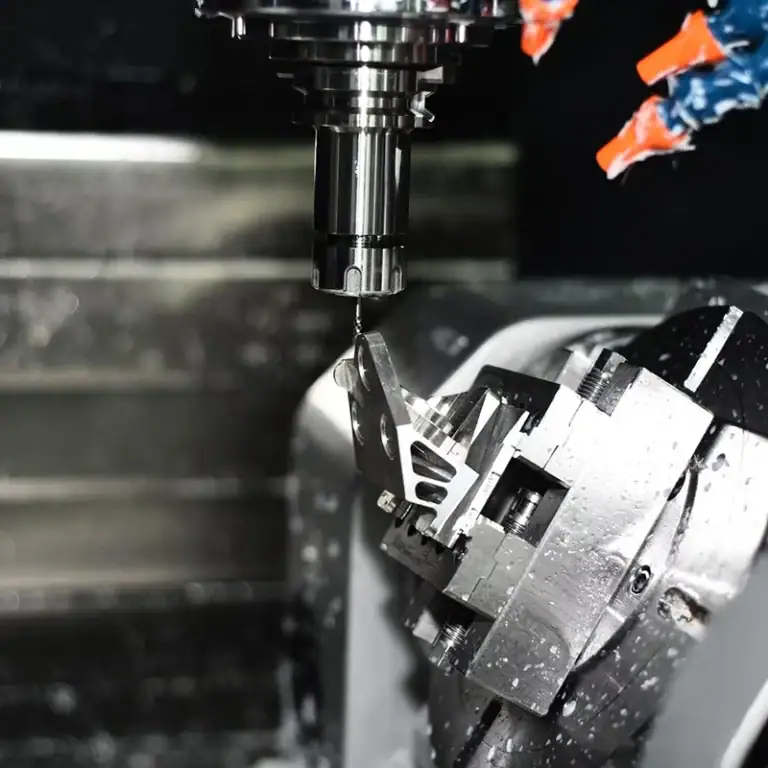
Aluminum 6082 and 6061 are heat-treatable 6000-series alloys commonly used for CNC-machined components, equipment frames, transportation structures, automation systems, electronic housings, and welded assemblies. Both provide a practical combination of strength, low weight, corrosion resistance, machinability, and surface-finishing capability. However, differences in alloy chemistry, mechanical strength, stock availability, fabrication behavior, and regional supply can affect which material delivers the lower manufacturing risk.
This guide explains the main aluminum 6082 vs 6061 differences in composition, temper, mechanical performance, CNC machining, welding, forming, corrosion resistance, anodizing, stock forms, cost, and engineering applications. It also shows how to select the appropriate alloy based on load, geometry, tolerance, production volume, surface finish, and supply-chain requirements rather than relying on alloy reputation alone.
Aluminum 6082 vs 6061: Quick Comparison
Aluminum 6082 and 6061 belong to the same alloy series and share many manufacturing characteristics. The clearest difference is that 6082 generally offers higher strength in comparable T6 conditions, while 6061 is usually selected for broad availability, established fabrication performance, and general-purpose CNC machining.
| Таңдау факторы | Алюминий 6082 | Алюминий 6061 |
| Қорытпалар сериясы | 6000 сериясы | 6000 сериясы |
| Main strengthening elements | Магний, кремний, марганец | Magnesium, silicon, copper, chromium |
| Термиялық өңдеуге жарамды | иә | иә |
| Typical T6 strength | Жалпы жоғары | Ортадан жоғарыға дейін |
| CNC өңдеу мүмкіндігі | жақсы | Good and widely established |
| Дәнекерлеу | жақсы | Өте жақсы |
| Formability in T6 | шектеулі | шектеулі |
| коррозияға төзімділігі | жақсы | жақсы |
| Anodizing capability | жақсы | жақсы |
| Common regional use | More common in Europe | More common in North America |
| Typical selection priority | Құрылымдық беріктігі жоғары | Әмбебаптығы және қол жетімділігі |
| Жалпы қосымшалар | Structural profiles and load-bearing parts | Housings, frames, fixtures, brackets, and welded assemblies |
The two alloys can overlap in many applications, but they should not be treated as automatic substitutes. Temper, stock form, thickness, heat treatment, machining allowance, welding requirements, and final surface treatment must be reviewed before changing from one alloy to the other.
Алюминий 6082 дегеніміз не?
Aluminum 6082 is a heat-treatable aluminum-magnesium-silicon alloy with a higher manganese content than 6061. It is commonly supplied as plate, bar, rod, tube, and extrusion for structural and precision-machined parts.
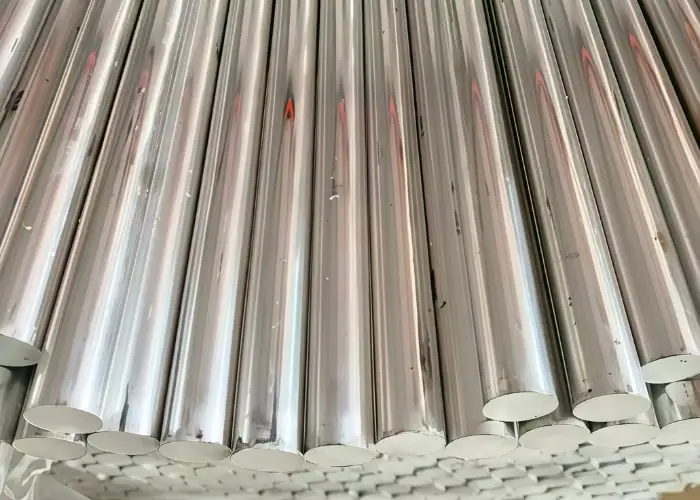
Материалдық сипаттамалары
The magnesium and silicon in 6082 form the basis of its precipitation-hardening response. Solution heat treatment, quenching, and artificial aging allow T6 and related tempers to develop relatively high tensile and yield strength.
Manganese is an important difference between 6082 and 6061. It supports grain control and contributes to the alloy’s structural performance, particularly in extruded and rolled products intended for load-bearing applications.
The material is available in several tempers. T4 offers greater formability, T6 emphasizes strength, and stress-relieved conditions such as T651 or T6511 can provide better dimensional behavior during extensive machining.
Common Applications of 6082
Aluminum 6082 is frequently used for machine structures, gantries, transportation frames, structural brackets, support plates, bridges, scaffolding, automation equipment, and high-load mechanical components.
It is also suitable for CNC-machined parts that require more strength than a general-purpose 6000-series alloy normally provides. Examples include structural mounting plates, robot bases, bearing supports, heavy brackets, and load-bearing fixtures.
Its suitability still depends on the complete manufacturing route. A welded assembly, deeply machined plate, bent profile, or appearance-critical anodized component may require more than a simple comparison of tensile strength.
Алюминий 6061 дегеніміз не?
Aluminum 6061 is a heat-treatable aluminum-magnesium-silicon alloy known for its balance of strength, machinability, weldability, corrosion resistance, stock availability, and surface-finishing performance.
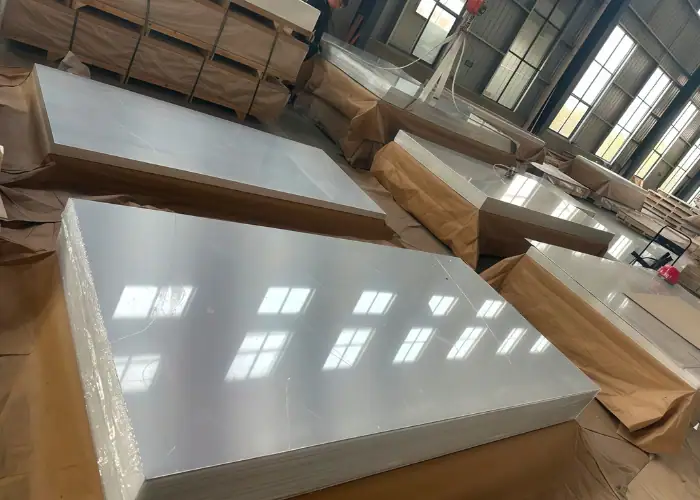
Материалдық сипаттамалары
6061 develops strength through precipitation hardening. T6 is commonly selected for structural and machined components, while T651 and T6511 include stress-relieving operations that can improve stability during material removal.
The alloy contains controlled additions of copper and chromium. These elements contribute to its mechanical properties and heat-treatment response while maintaining practical corrosion resistance and fabrication performance.
One of the largest advantages of 6061 is manufacturing familiarity. It is widely available in plate, bar, rod, tube, pipe, and extrusion forms, allowing multiple parts in the same assembly to be produced from a consistent alloy family.
Common Applications of 6061
Typical applications include CNC-machined housings, brackets, spacers, heat sinks, frames, fixtures, machine components, electronic enclosures, marine hardware, bicycle parts, and transportation equipment.
6061 is particularly practical for projects that combine machining and welding. It provides sufficient strength for many general engineering applications while supporting established cutting, joining, anodizing, painting, and inspection processes.
The alloy is also suitable for prototypes and low-volume production because standard stock sizes are often easier to source. This can reduce lead time, material waste, and the need to purchase oversized blanks.
Chemical Composition of Aluminum 6082 vs 6061
Both alloys contain magnesium and silicon, but their secondary alloying elements differ. These compositional differences influence strength, heat-treatment response, grain structure, fabrication, and final material performance.
| элемент | Алюминий 6082 | Алюминий 6061 | Main Engineering Influence |
| Кремний | Шамамен 0.7–1.3% | Шамамен 0.4–0.8% | Supports precipitation hardening |
| магний | Шамамен 0.6–1.2% | Шамамен 0.8–1.2% | Strength and heat-treatment response |
| Марганец | Шамамен 0.4–1.0% | Generally below 0.15% | Supports 6082 structural performance |
| мыс | Generally below 0.10% | Шамамен 0.15–0.40% | Contributes to 6061 strength |
| хром | Generally below 0.25% | Шамамен 0.04–0.35% | Grain and microstructure control |
| алюминий | Қалған | Қалған | Негізгі материал |
These values represent common specification ranges rather than purchasing limits for every product. Final material acceptance should follow the applicable standard and mill certificate.
Why 6082 Contains More Manganese?
The higher manganese content is one reason 6082 can provide greater strength than 6061 in comparable T6 extruded products. It influences microstructure and supports the alloy’s use in structural sections.
However, chemistry alone does not determine the finished component’s strength. Product thickness, quenching speed, aging cycle, grain direction, extrusion geometry, and material standard also affect the certified values.
A thick 6082 plate and a thin 6082 extrusion may not provide identical mechanical properties. Engineering calculations should therefore use data for the actual product form and temper.
Why 6061 Remains Widely Used?
6061 provides a highly practical combination of alloy chemistry and production behavior. Its copper and chromium additions support strength while preserving good welding, machining, and corrosion characteristics.
The alloy’s widespread use has also created a mature supply chain. Standard bars, plates, tubes, and profiles are commonly available, and machining parameters are well established across different production environments.
For many projects, this manufacturing predictability is more valuable than a moderate increase in material strength, particularly when the component is not operating near its structural limit.
6082 қарсы 6061 механикалық қасиеттері
Mechanical performance must be compared using the same temper, product form, thickness range, and test direction. Values taken from unrelated plates, bars, or extrusions can create an inaccurate selection.
Representative T6 Comparison
The following values illustrate a common comparison between selected T6 extruded products. They should not be used as universal design limits.
| меншік | Алюминий 6082-T6 | Алюминий 6061-T6 |
| Representative tensile strength | Around 310MPa | Around 260MPa |
| Representative yield strength | Around 260MPa | Around 240MPa |
| Серпімді модуль | Approximately 69GPa | Approximately 69GPa |
| тығыздығы | Approximately 2.70g/cm³ | Approximately 2.70g/cm³ |
| Relative structural strength | Жоғары | Орташа және жоғары |
| Relative stiffness | Ұқсас | Ұқсас |
The most important point is that 6082 can provide higher yield and tensile strength, but both alloys have almost the same density and elastic modulus.
Strength Does Not Equal Stiffness
Changing from 6061 to 6082 may increase allowable stress, but it does not create a proportional improvement in stiffness. Elastic modulus is broadly similar across most aluminum alloys.
If a bracket or plate is deflecting excessively, changing the alloy alone may not solve the problem. Increasing section thickness, adding ribs, shortening unsupported spans, or changing the load path may have a much larger effect.
This distinction is important for machine frames, robotic links, fixture plates, gantries, and automation structures where positional accuracy may be controlled by deflection rather than permanent material failure.
Temper and Thickness Effects
T6 material offers high strength but reduced forming capability. T4 material is easier to bend and shape but provides lower final strength until it is aged.
Mechanical values may also decrease as product thickness increases. Quenching is less uniform in thick sections, and the center of a large plate may respond differently from the surface.
Engineering drawings should specify the complete alloy and temper, such as 6082-T6, 6082-T651, 6061-T6, or 6061-T651. Listing only the alloy number leaves the strength requirement incomplete.
Шаршау және циклдік жүктеме
Neither alloy has a simple fatigue limit that can be applied to every component. Fatigue life depends on stress range, number of cycles, surface condition, geometry, holes, threads, welds, corrosion, and residual stress.
Higher static strength does not automatically guarantee longer fatigue life. A poorly designed 6082 part with sharp internal corners may perform worse than a properly designed 6061 component with smooth load transitions.
Fatigue-critical parts should use suitable radii, controlled surface finishes, stable machining processes, and appropriate joint designs. Tool marks, thread runouts, scratches, and handling damage should also be minimized.
Aluminum 6082 vs 6061 CNC Machining
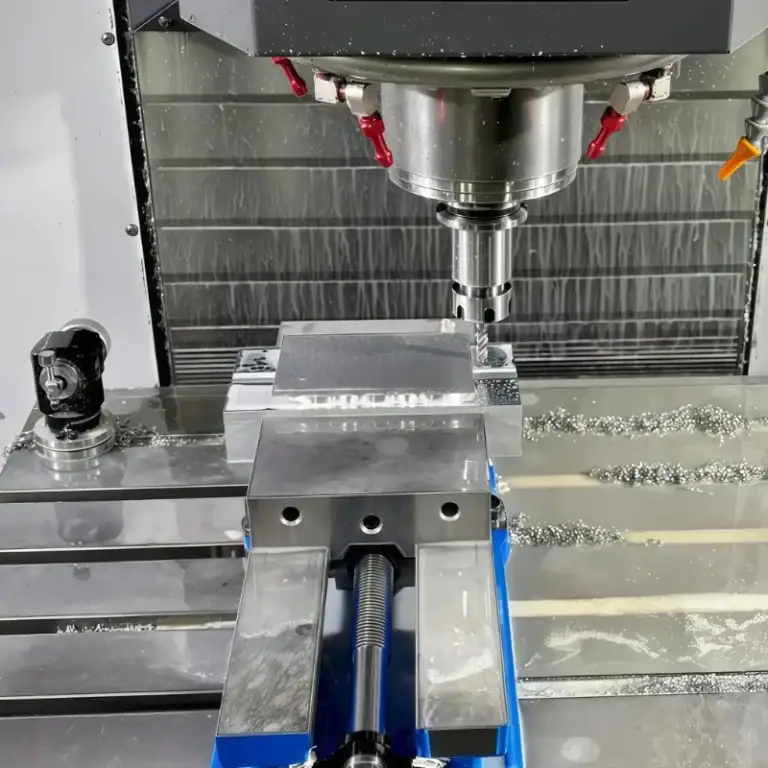
Both aluminum alloys can be milled, turned, drilled, bored, tapped, and reamed effectively. Their practical machining performance is influenced by temper, stock form, residual stress, tool geometry, lubrication, and part design.
Machining Aluminum 6082
6082-T6 provides good machining performance and can produce clean edges, accurate holes, and stable finished surfaces when sharp tools and suitable cutting parameters are used.
Its higher strength may generate slightly greater cutting forces than softer aluminum grades. Rigid workholding, polished aluminum-cutting tools, sufficient chip load, and effective coolant help prevent built-up edge and poor surface quality.
Continuous chips can occur during drilling or turning. Peck drilling, suitable chip-breaker geometry, and reliable coolant delivery reduce the risk of chip packing, tool rubbing, and damage to deep holes.
Machining Aluminum 6061
6061-T6 and T651 are widely used for precision CNC machining. The alloy supports high-speed milling, efficient drilling, tapping, turning, pocketing, and finishing.
Its main advantage is predictable production behavior. Tool manufacturers and machining suppliers have extensive parameter experience with 6061, making it practical for prototypes, repeat orders, and complex multi-operation parts.
6061 can still produce long chips, built-up edge, burrs, or dimensional movement if the tooling or setup is unsuitable. Familiarity with the alloy does not eliminate the need for proper process control.
Residual Stress and Part Distortion
Residual stress can be more important than the small machinability difference between the two alloys. Rolling, extrusion, quenching, stretching, and straightening can leave stress within the stock.
When a deep cavity or large amount of material is removed, the internal stress balance changes. The part may bow, twist, or move after being released from the fixture.
Large frames, thin plates, open housings, and asymmetric parts may require balanced rough machining, material removal from opposing faces, intermediate stabilization, and a separate finishing operation.
Stress-relieved T651 or T6511 stock is often preferred for precision components, but it does not guarantee zero distortion. Part geometry and machining sequence remain critical.
Төзімділік және бетті әрлеу
Both alloys can support close CNC tolerances on suitable features. Actual capability depends on feature size, wall thickness, unsupported geometry, tool reach, stock condition, temperature, and inspection method.
Tight tolerances should be applied to functional interfaces such as bearing seats, locating holes, sealing faces, and assembly datums. Applying the same tolerance to every surface increases machining and inspection cost unnecessarily.
Surface quality depends on tool sharpness, feed per tooth, spindle stability, coolant, chip evacuation, and finishing allowance. The selected anodizing or coating process should also be included when calculating the final dimensions.
Welding and Forming Differences
Both 6082 and 6061 can be welded, but welding changes the precipitation-hardened structure near the joint. The completed assembly should therefore be designed using welded-condition properties rather than parent-material T6 values.
Дәнекерлеу өнімділігі
6061 is frequently used for welded frames, tubes, brackets, marine equipment, and structural assemblies. Its established fabrication behavior makes it a practical choice when welding is a major part of production.
6082 also welds successfully and is widely used in structural assemblies. However, the higher strength of the unwelded parent material does not remain fully available in the heat-affected zone.
If the joint controls the design, choosing 6082 solely for its higher base-metal strength may provide less benefit than expected. Joint geometry, filler selection, weld size, inspection, and fatigue loading must be evaluated together.
Heat-Affected-Zone Strength
Heat from welding partially changes the T6 temper near the weld. This produces a lower-strength region that may become the limiting part of the assembly.
The original T6 strength should not be applied directly across the welded joint. Post-weld aging may recover some strength, but it does not automatically restore the original condition.
For heavily loaded welded structures, the engineering calculation should include the heat-affected zone, filler material, weld quality, joint efficiency, distortion, and expected load direction.
Иілу және қалыптау
T6 material has limited formability compared with O or T4 tempers. Attempting a tight bend in a thick T6 plate or extrusion can cause surface cracking.
Where significant forming is required, the part may be bent in a softer temper and then heat treated. This route adds process complexity because heat treatment can create distortion and dimensional changes.
Bend radius, material thickness, grain direction, tooling condition, edge quality, and temper should be confirmed through forming trials before production.
Corrosion Resistance and Surface Finishing
Both materials develop a natural oxide layer and provide good resistance in many industrial, outdoor, and transportation environments. Neither alloy is completely immune to corrosion.
Жалпы коррозияға төзімділік
6061 and 6082 perform well in normal atmospheric conditions. They can also be used in many marine and industrial applications when the joint design, drainage, cleaning, and surface protection are suitable.
Localized corrosion may occur around trapped moisture, salt deposits, aggressive cleaning chemicals, crevices, or contact with dissimilar metals.
Stainless-steel fasteners, carbon-steel frames, copper components, and electrically conductive fluids can increase galvanic-corrosion risk. Isolation washers, coatings, sealants, and drainage features may be required.
Анодирование
Both alloys can receive clear, colored, or hardcoat anodizing. Anodizing improves surface hardness, wear resistance, appearance, and environmental protection.
The final appearance depends on alloy batch, temper, stock form, machining direction, surface preparation, blasting, etching, anodizing thickness, and dye conditions.
Two parts made from different alloys may not match perfectly after anodizing. Appearance-critical assemblies should use production samples made from the actual material, machining process, and finishing specification.
Anodizing also changes dimensions. Precision bores, threads, sealing grooves, electrical contact surfaces, and close-fitting interfaces may require masking or machining allowance.
Bead Blasting and Coating
Bead blasting creates a uniform matte texture and can reduce the visibility of light machining marks. It is often performed before anodizing or coating.
The process can slightly round edges and change the surface condition of small features. Bearing seats, sealing faces, threads, and precision holes should be protected where necessary.
Painting and powder coating are suitable for either alloy when the surface preparation is correct. Coating thickness and cure temperature must be considered in the final tolerance plan.
Applications of Aluminum 6082 and 6061 Across Industries
Aluminum 6082 and 6061 are used in many of the same industries, but they often perform different roles within an assembly. Aluminum 6082 is commonly selected for load-bearing structures and mechanically demanding components, while 6061 is widely used for precision housings, brackets, fixtures, welded frames, and parts requiring flexible stock availability.
Автокөлік және өнеркәсіптік жабдықтар
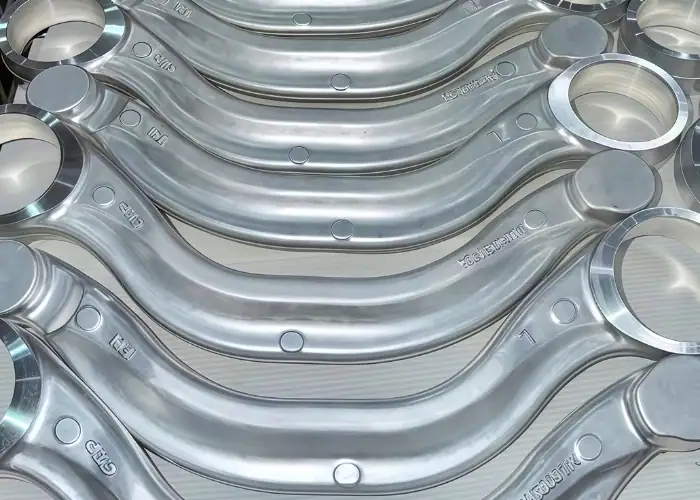
Automotive components must balance strength, weight, vibration resistance, corrosion performance, and manufacturing cost. Aluminum 6082 is suitable for structural supports, frame members, suspension-related brackets, mounting plates, and load-bearing parts where higher T6 strength helps the component resist permanent deformation.
Aluminum 6061 is commonly used for machined housings, spacers, sensor mounts, cooling-system components, welded frames, and general vehicle brackets. Its broad availability in plate, bar, tube, and extrusion forms makes it practical for assemblies containing several different component geometries.
In industrial equipment, 6082 is often used for machine bases, heavy fixtures, structural profiles, gantries, and support plates. Aluminum 6061 is generally preferred for guards, covers, equipment housings, positioning blocks, tooling plates, and welded structures where machining flexibility matters more than maximum strength.
Медицина және аэроғарыш
Medical equipment components require stable dimensions, clean surfaces, low weight, and compatibility with the selected cleaning or surface-finishing process. Aluminum 6061 is frequently used for instrument housings, laboratory fixtures, equipment frames, positioning components, and non-implantable mechanical assemblies.
Aluminum 6082 may be selected for medical equipment supports, structural bases, lifting mechanisms, and load-bearing machine components. Its higher strength can provide value when the design must support equipment weight or repeated mechanical loading without substantially increasing section size.
In aerospace applications, both alloys are generally limited to parts approved by the relevant material and design requirements. Aluminum 6082 can suit selected structural supports and ground equipment, while 6061 is widely used for fixtures, tooling, brackets, enclosures, test equipment, and non-critical aircraft-related components.
Automation, Electronics, and Robotics
Automation equipment uses aluminum for linear-motion supports, actuator mounts, machine frames, sensor brackets, fixture plates, and inspection-system structures. Aluminum 6082 is useful for gantries, structural beams, base plates, and heavily loaded supports where higher yield strength improves resistance to permanent deformation.
Aluminum 6061 is commonly selected for sensor housings, actuator components, tooling fixtures, locating blocks, electrical enclosures, and machined mounting brackets. Its predictable machining behavior supports complex pockets, threaded features, connector openings, and precision interfaces produced in prototype or production quantities.
Robotic systems often combine both alloys. Aluminum 6082 may be used for load-bearing links, bases, structural plates, and support frames, while 6061 is suitable for joint housings, electronic covers, end-effector fixtures, camera mounts, cable-management components, and replaceable machined parts.
Consumer Products and Aerospace & Defense
Consumer products require a combination of appearance, low weight, manufacturability, and reasonable cost. Aluminum 6061 is commonly used for camera components, sports equipment, bicycle accessories, audio housings, handles, frames, and products requiring bead blasting, anodizing, painting, or decorative machining.
Aluminum 6082 can be used for consumer products where structural loading is more important, including strong equipment frames, sports structures, mechanical supports, and high-load mounting components. However, availability, surface appearance, and the required stock form should be confirmed before replacing 6061.
Aerospace and defense applications require documented material traceability, certified properties, controlled manufacturing, and customer approval. Either alloy may be used for qualified tooling, fixtures, enclosures, supports, and ground equipment, but general alloy capability does not replace application-specific engineering validation.
Powersports and Oil & Gas
Powersports components experience vibration, impact, temperature changes, contamination, and repeated mechanical loading. Aluminum 6082 is suitable for frames, structural supports, mounting plates, and higher-load brackets, while 6061 is commonly used for housings, spacers, covers, clamps, and welded assemblies.
The final choice should also consider fatigue, fastener loading, anodizing, stone impact, corrosion exposure, and repair requirements. Increasing static strength alone may not improve service life when failure is controlled by vibration, poor geometry, sharp corners, or an unsuitable joint design.
In oil and gas equipment, 6082 may be used for structural supports and selected load-bearing machinery parts, while 6061 can suit instrument housings, fixtures, valve-related components, brackets, and equipment frames. Fluid compatibility, pressure, temperature, fire requirements, and industry standards must be reviewed before either alloy is approved.
How to Choose Between Aluminum 6082 and 6061?
The best selection depends on what limits the component. A strength-limited bracket, a stiffness-limited frame, a welded structure, and a cosmetic housing may require different priorities.
Алюминий 6082 таңдаңыз
Choose 6082 when higher T6 tensile and yield strength are important and the required stock form is readily available.
It is well suited to structural profiles, machine frames, transportation structures, load-bearing brackets, automation gantries, robot bases, and heavily loaded mounting plates.
6082 is also a logical choice when an existing European design, customer specification, or approved assembly already uses this alloy.
Before approval, confirm the temper, thickness-dependent properties, welding requirements, stock availability, machining distortion, and surface-finish expectations.
Алюминий 6061 таңдаңыз
Choose 6061 when the project requires a versatile aluminum alloy with broad stock availability, predictable CNC machining, established welding performance, and flexible surface-finishing options.
It is particularly suitable for housings, fixtures, brackets, frames, heat sinks, electronic enclosures, marine components, prototypes, and mixed-stock assemblies.
6061 is also practical when several plate, bar, tube, and extrusion components must be sourced quickly within the same alloy family.
Its lower representative strength compared with 6082 should still be checked against the actual load, safety factor, fatigue requirement, and section geometry.
Redesign Before Changing Alloy
Changing alloy is not always the best solution. If the component fails because of deflection, local stress concentration, poor support, or an unsuitable weld, a geometry change may provide a larger improvement.
Adding a rib, increasing section depth, changing the load path, increasing an internal radius, or moving a hole away from a highly stressed edge may improve performance without changing the material.
Material selection, geometry, machining, joining, and finishing should be treated as one engineering system.
Жиі қойылатын сұрақтар
Can aluminum 6082 directly replace 6061?
Not automatically. The alloys have similar density and general manufacturing behavior, but strength, chemistry, stock availability, temper options, welding response, and certification may differ. A substitution should be checked against the load, drawing, surface treatment, and material standard.
Which alloy is easier to CNC machine?
Both alloys machine well in T6 and stress-relieved conditions. 6061 is often considered more predictable because it is widely used and supported by established machining parameters. Residual stress, stock quality, geometry, workholding, and tool condition usually have a greater effect than the small difference between the two alloys.
Анодтау үшін қай қорытпа жақсырақ?
Both 6082 and 6061 can be anodized successfully. Final color and gloss depend on alloy batch, stock form, surface preparation, machining direction, blasting, etching, and anodizing conditions. Appearance-critical parts should be approved using representative production samples.
Is 6082 better for welded structural parts?
6082 provides higher parent-material strength in many T6 products, but welding reduces strength in the heat-affected zone. The completed joint must be evaluated rather than comparing only unwelded tensile values. Depending on the joint and fabrication requirements, 6061 may provide a more practical solution.
қорытынды
Aluminum 6082 and 6061 offer similar density, corrosion resistance, heat-treatability, and manufacturing capability, but they prioritize different engineering needs. 6082 is normally selected when higher T6 strength and structural performance are important, while 6061 is preferred for broad stock availability, predictable CNC machining, welding, and general-purpose fabrication. Final selection should always include temper, product form, geometry, load, finishing, and supply requirements.
At TiRapid, we provide precision CNC machining and manufacturing services for custom aluminum parts, helping customers evaluate alloy selection, stock condition, machining stability, dimensional accuracy, surface finishing, and functional performance for demanding engineering applications.