如何提高数控塑料加工的精度和表面质量?

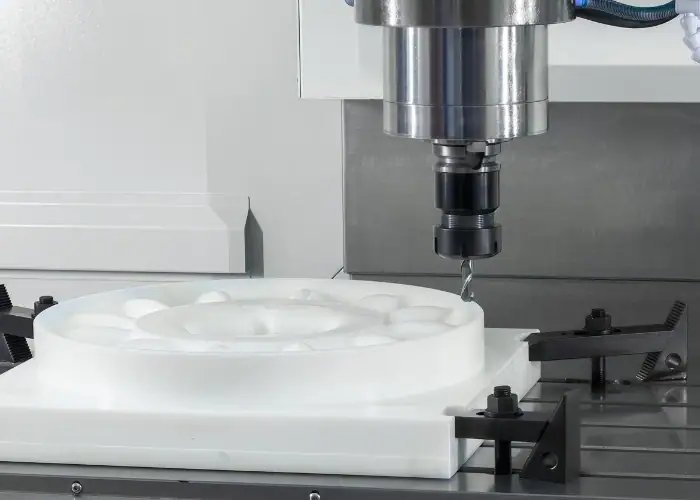
In CNC plastic machining, precision and surface quality are often the two most intuitive and concerning indicators for users. Precision determines whether a part can be assembled and meets functional requirements; surface quality directly affects appearance, feel, sealing, and subsequent performance. For plastic materials, these two requirements are more difficult to balance simultaneously than in metal machining because plastics are more susceptible to the effects of temperature, clamping force, cutting heat, and internal material stress.

获取免费报价

Why is plastic machining more likely to affect precision and surface quality?

They are not the same issue

Many people confuse “accurate dimensions” with “smooth surface,” but they are actually two different control objectives. Precision mainly refers to whether the dimensions, hole positions, flatness, and perpendicularity of the part meet the drawing requirements; surface quality includes appearance and tactile issues such as roughness, tool marks, burrs, whitening, and weld edges. A part may have very accurate dimensions but obvious tool marks on the surface; or the surface may look smooth, but key dimensions may deviate. Therefore, in CNC plastic machining, both objectives must be considered simultaneously; one cannot focus on only one.

Higher Machining Difficulty

Compared to metals, plastics have lower rigidity, more pronounced thermal expansion, and poorer thermal conductivity. This means that heat generated during cutting is not easily dissipated quickly, tending to accumulate locally, leading to material softening, deformation, or surface melting. Furthermore, some plastics inherently possess internal stress or hygroscopicity, which can cause dimensional changes before and after machining. Therefore, the precision and surface quality of plastic machining naturally rely more heavily on process control and experience than metal machining.

Direct Reflection of Process Skill

The smoothness, burr-free edges, whitening, and burn marks on the surface of plastic parts usually directly reflect the rationality of machining parameters, tool condition, and fixture method. Often, poor surface quality is not due to the material itself, but rather to an unreasonable cutting path, dull tools, poor chip removal, or inappropriate cooling methods. Therefore, improving surface quality is essentially improving the overall machining stability.

如何提高数控塑料加工的精度和表面质量?

How to Improve Precision and Surface Quality in the Machining Process?

Confirm Drawings and Structure Before Machining

To improve the precision of CNC plastic machining, the first step is not to start machining, but to optimize the design. Many problems are already brewing during the design phase, such as too many thin walls, excessively dense sharp corners, asymmetrical local structures, and large variations in wall thickness. These all increase the risk of processing deformation and surface defects. The design should strive for a more uniform structure and more balanced stress distribution, while also allowing sufficient entry space for the cutting tool. A well-designed initial structure makes subsequent processing much easier, and precision and surface quality are more easily stabilized.

Material Preparation and Pre-treatment

Before formal processing, it’s best to confirm whether plastic materials have undergone annealing, settling, or drying. Many plastic sheets already have internal stress at the factory; direct processing can lead to warping due to stress release after material removal. For highly hygroscopic materials like nylon, high moisture content can also affect surface quality. Stabilizing the material before processing significantly reduces dimensional drift and surface defects.

如何提高数控塑料加工的精度和表面质量?

Phased Processing

To improve precision and surface quality, a single cut to the end is insufficient. A typical approach is “roughing – semi-finishing – finishing.” Roughing primarily removes large excess material, semi-finishing stabilizes the structure and releases stress, while finishing is responsible for final dimensions and surface finish. This process reduces the workload at each step and minimizes the impact of the tool on the material, thus avoiding deformation, burrs, or excessively deep tool marks caused by excessive material removal at once.

Post-machining Inspection and Finishing

Many high-quality parts are not machined in one go but are inspected, allowed to rest, and finished as necessary before delivery. Plastic parts may continue to release stress for a short period after machining, so the final state cannot be determined immediately after leaving the machine. Dimensional re-measurement, visual inspection, and repair of critical parts can promptly address potential errors and avoid batch rework. This step is especially important for products with high appearance requirements.

The Key Factors Determining Precision and Surface Quality

Cutting Parameters Must Match Material Properties

Plastic machining is most vulnerable to two extremes: one is excessively high spindle speed, resulting in excessive heat generation during cutting; the other is excessively slow feed rate, causing the tool to “grind” rather than “cut” the material. The former (finishing) easily leads to melted edges, whitening, and dimensional thermal deformation, while the latter (finishing) easily produces burrs and rough tool marks. To achieve both precision and surface quality, it is necessary to select appropriate speed, feed, and depth of cut based on the material’s hardness, thickness, and structural characteristics, and to maintain a stable machining process, avoiding frequent abrupt stops and starts.

Tool condition directly affects the final surface finish

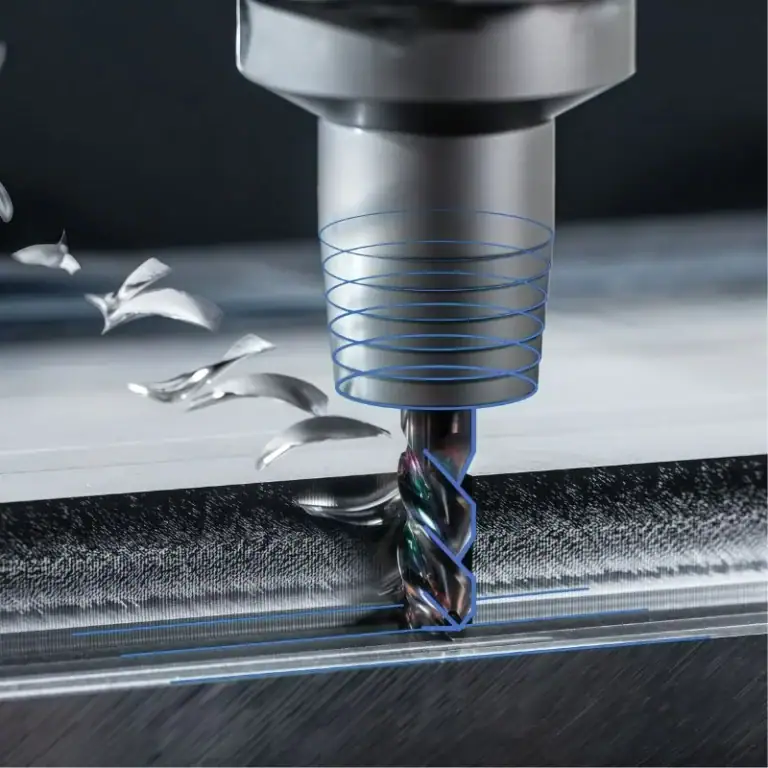
A sharper tool results in cleaner cuts and a smoother surface. Once the tool wears down, friction increases, and the temperature rises, making the plastic surface prone to stringing, burrs, burn marks, or whitening. For machining plastic parts, especially materials with high surface finish requirements such as acrylic, PC, and POM, sharp, high-chip-removal specialized tools should be prioritized, and tool condition should be kept stable. Good tool management often immediately improves surface quality.

Fixtures and supports determine whether parts will “go out of shape.”

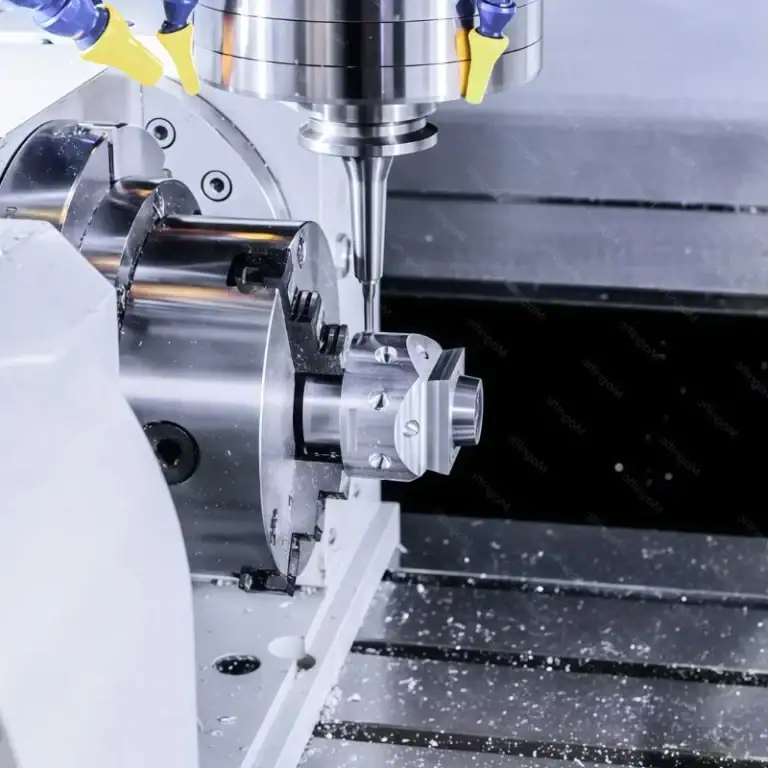
Plastic parts are softer than metals. If clamped too tightly, they may spring back and deform after machining. Insufficient support can cause thin walls and large flat surfaces to vibrate during cutting, leading to dimensional deviations and increased tool marks. Therefore, fixture design should strive for uniform force distribution, sufficient support, and appropriate clamping. For thin sheet metal, large-sized parts, or easily deformable parts, it is best to use vacuum adsorption, soft pad support, or multi-point distributed clamping to reduce local stress concentration.

Thermal control and chip removal are the core of surface quality

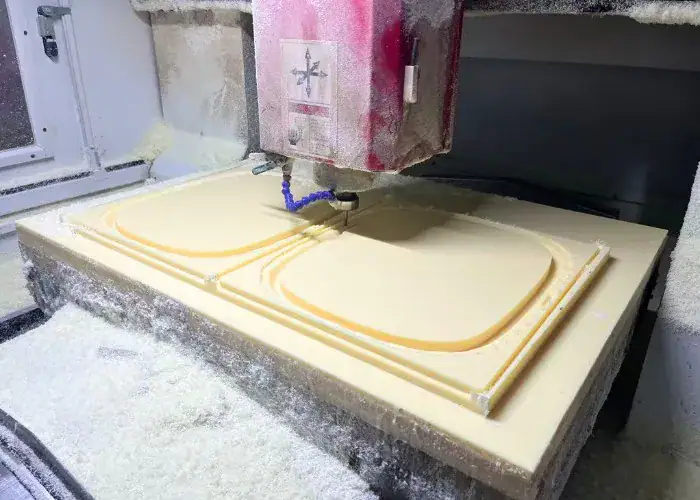
During plastic machining, if chips accumulate near the toolpath, they will repeatedly rub against the workpiece surface, leading to continuous heat accumulation, resulting in melted edges, tool sticking, or a burnt surface. Good chip removal not only allows for smoother cutting but also reduces surface damage caused by secondary friction. If necessary, air blowing can be used to assist chip removal, and a reasonable toolpath can be used to quickly remove chips from the machining area. Controlling heat and chip removal is essentially protecting the surface.

How to choose the right CNC machining material?

POM is suitable for parts requiring dimensional stability

POM has good dimensional stability, a low coefficient of friction, and ideal cutting performance, making it one of the most common high-quality materials in CNC plastic machining. It is suitable for structural parts, functional parts, and high-precision parts, and the surface is usually relatively clean, with less prone to severe burrs. 1. If customers prioritize assembly accuracy and stability, POM is generally a very reliable choice.

PMMA is suitable for parts where aesthetics are important

PMMA, or acrylic, has high transparency and a good surface finish, but it is very sensitive to machining parameters. Poor heat control during cutting can easily lead to whitening, cracking, or edge fogging. However, with sharp tools, appropriate parameters, and a reasonable machining path, it can also produce very attractive parts. Therefore, PMMA is more suitable for products with high aesthetic requirements but low structural loads.

ABS and PC are suitable for comprehensive needs

ABS and PC are widely used in machining. ABS has better machinability, while PC has higher strength and good transparency. Their advantage lies in their balanced overall performance, meeting certain accuracy requirements and being suitable for stable batch production. However, it should be noted that PC is more sensitive to heat, and ABS is prone to burrs at the edges, so cutting heat and tool conditions must still be controlled during machining.

Select Materials Based on Objectives

If the objective is high precision, prioritize dimensional stability; if the objective is high appearance quality, prioritize surface machinability; if the objective is strength and heat resistance, prioritize material properties. Choosing the right material makes subsequent processes much easier; choosing the wrong material will make it difficult to achieve the desired effect even with the best equipment. Therefore, material selection itself is a crucial step in improving precision and surface quality.

常见问题

Why do samples look good, but precision and surface quality decrease after batch production?

This is a common problem encountered by many customers. Sample production typically involves small quantities, ample processing time, and more meticulous operation, resulting in excellent appearance. However, in batch production, continuous equipment operation leads to temperature fluctuations, increased tool wear, and more significant differences in fixture condition and material batches. If the process is not standardized, the precision and appearance of batch products can easily fluctuate. Therefore, to maintain high quality in batch production, the focus is not just on “making a good sample,” but on stabilizing the entire process.

In conclusion

To improve the precision and surface quality of CNC plastic machining, the most important thing is not a single technique, but managing the entire process effectively. From the initial design to material pretreatment, cutting parameters, tool condition, fixture type, and post-machining inspection, every step affects the final result. Plastics are different from metals; they are more susceptible to heat and deformation under stress. Therefore, machining requires greater precision and stability. It’s not enough to simply aim for “fast cutting”; “accurate cutting” and “beautiful cutting” must also be considered. Precision refers to “whether the dimensions are correct,” while surface quality refers to “how good it looks and how smoothly it functions.” These two seemingly different aspects are actually inseparable from process control, material selection, and equipment condition. By ensuring sound initial design, stable machining parameters, proper tool and fixture management, and employing different methods for different materials, the overall quality of CNC plastic machining can be significantly improved. Truly good plastic machining doesn’t rely on luck, but on perfecting every detail.

滚动到顶部
简化表

为确保上传成功, 请将所有文件压缩到一个 .zip 或 .rar 文件中 上传之前。
上传 CAD 文件(.igs | .x_t | .prt | .sldprt | .CATPart | .stp | .step | .pdf)。